
How to Choose an Industrial 3D Printer: A Comprehensive Guide to Maximizing Additive Manufacturing Success
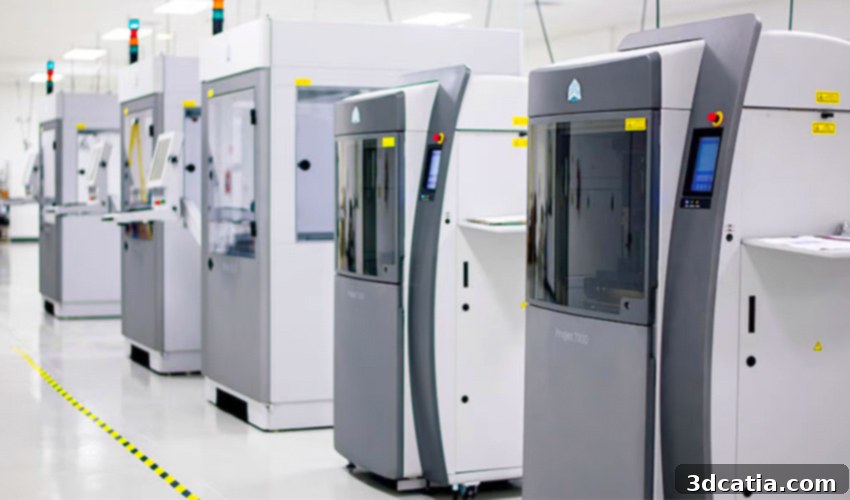
Additive manufacturing, often known as 3D printing, has rapidly transitioned from a niche technology to a cornerstone of modern industrial production. Companies across various sectors are increasingly recognizing its transformative potential, understanding that it represents the future of manufacturing processes. This paradigm shift isn’t merely about creating rapid prototypes; it’s about producing high-quality, functional end-use parts that can revolutionize product development, supply chains, and overall operational efficiency. The adoption of additive manufacturing brings with it unparalleled opportunities for innovation, enabling significant advancements in production methodologies while simultaneously driving down costs and accelerating manufacturing times. However, the path to integration can be complex. When considering an investment in an industrial 3D printer, many organizations encounter critical questions: What specific parameters should guide the selection process? What role do materials play in the success of industrial 3D printing initiatives? This comprehensive guide aims to address these vital inquiries, offering clarity and strategic insights for making informed decisions.
Understanding Industrial Fused Deposition Modeling (FDM) Technology
The landscape of 3D printing technologies is vast and diverse, encompassing methods such as stereolithography (SLA), selective laser sintering (SLS), and material jetting, among others. To provide focused guidance, we will delve into fused deposition modeling (FDM) technology, also commonly referred to as Fused Filament Fabrication (FFF). Historically, FDM has often been misconstrued as a technology primarily suited for desktop-level, small-scale machines and hobbyist applications. This perception, while partially true in its early days, has been dramatically altered by relentless technological evolution and significant advancements in material science. Today, industrial-grade FDM printers stand as robust, reliable, and highly capable tools, offering compelling advantages for a wide array of industrial applications. They are no longer just for prototypes; they are integral to creating functional components, manufacturing aids, jigs, fixtures, and even direct end-use parts. It is crucial, however, to distinguish between a consumer-grade FDM machine with a large build volume and a truly industrial FDM system designed for rigorous, continuous production environments. The distinction lies in precision, reliability, material capabilities, and overall integration into demanding manufacturing workflows.
Strategic Planning Before Investing in an Industrial 3D Printer
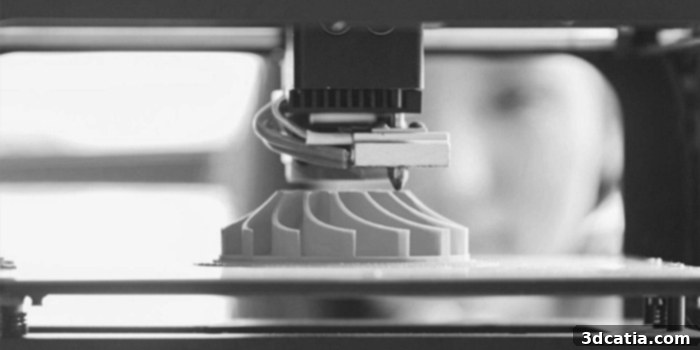
The decision to acquire an industrial 3D printer is a strategic investment that requires thorough preparation and clear objectives. Before proceeding with any purchase, it is imperative to conduct a detailed internal assessment. Begin by meticulously outlining the specific applications you intend to target with the machine. Are you looking to produce functional prototypes, manufacturing jigs and fixtures, tooling, custom spare parts, or low-volume end-use components? Understanding these core applications will dictate the necessary capabilities of your printer. Furthermore, identify where within your existing production chain the integration of additive manufacturing will yield the most significant benefits. This could range from accelerating design iterations in R&D to optimizing assembly processes on the factory floor or even enabling on-demand production closer to the point of use. Once your application roadmap is clear, directly engaging with reputable manufacturers of industrial 3D printers becomes the next crucial step. During these consultations, focus on key operational considerations: the range of compatible materials the machine can reliably process, its ability to consistently produce high-quality, repeatable end-use parts, and the practical printing volume required for your specific applications. Beyond these technical specifications, inquire about warranty, service agreements, technical support, and available training programs, as these are vital for long-term operational success. Always evaluate the machine’s quality-to-price ratio comprehensively, considering not just the upfront cost but the total cost of ownership. A critical final step is to request sample parts printed by the machine. This hands-on experience allows you to directly assess the print quality, surface finish, dimensional accuracy, and material properties, providing invaluable insight before committing to a purchase.
Essential Parameters for Evaluating Industrial 3D Printers
While the optimal characteristics for an industrial 3D printer can vary depending on a company’s specific needs and target performance metrics, certain fundamental parameters are universally important when comparing different brands and models. A meticulous evaluation of these factors will ensure that your investment aligns perfectly with your strategic objectives for additive manufacturing. Here are some of the most critical considerations:
-
Print Speed and Throughput Efficiency
The print speed of an industrial 3D printer is a direct determinant of its overall throughput and, consequently, its operational efficiency and cost-effectiveness. In a production environment, faster print speeds translate directly into lower manufacturing costs per part and significantly shorter lead times. This enables quicker iteration cycles for prototypes and faster delivery of end-use components, which is crucial for competitive advantage. Factors contributing to effective print speed include the extrusion system’s capabilities, the machine’s motion system (kinematics), nozzle design, and advanced slicing software algorithms. A machine capable of higher speeds without compromising part quality is essential for maximizing productivity and achieving a quicker return on investment in a demanding industrial setting.
-
Compatibility with High-Performance Materials
The true industrial capability of a 3D printer is often defined by its ability to process a wide range of advanced, high-performance materials. These materials are sought after primarily for their superior mechanical properties, including high temperature resistance, chemical inertness, excellent tensile strength, and long-term stability under stress. For industrial production, a machine must support engineering-grade thermoplastics like PEEK (Polyether Ether Ketone) and ULTEM (Polyetherimide), known for their exceptional strength-to-weight ratio and ability to withstand harsh environments. Furthermore, compatibility with composite materials reinforced with carbon fiber or glass fiber is increasingly vital for producing lightweight yet incredibly strong parts. To reliably process these demanding materials, an industrial 3D printer must feature a fully enclosed and actively heated build chamber capable of maintaining temperatures well over 170ºC. This controlled thermal environment is crucial for preventing warping, ensuring optimal layer adhesion, and allowing the materials to achieve their full isotropic mechanical properties, making the parts suitable for critical applications.
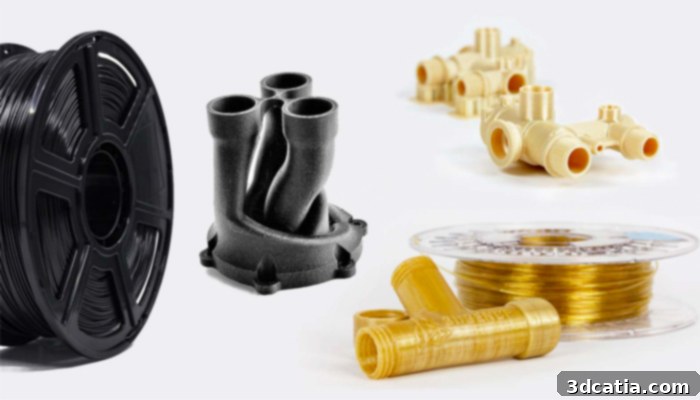
Compatibility with high-performance materials, such as PEEK and carbon fiber composites, is a key consideration for industrial applications (photo credits: 3DGence).
-
Advanced Dual Extrusion Systems
The integration of advanced dual extrusion systems significantly enhances the versatility and capabilities of an industrial 3D printer. This functionality allows for simultaneous printing with two different materials, offering several distinct advantages. Firstly, it can effectively double production capacity for certain parts if identical models are printed concurrently. More importantly, dual extrusion enables the creation of multi-material components, combining different functional properties within a single part. A prime example is the use of soluble support materials, which are invaluable for printing complex geometries with intricate overhangs and internal channels. Soluble supports dissolve away easily after printing, eliminating the need for tedious manual post-processing and reducing the risk of damage to delicate features. This capability dramatically expands design freedom, enabling the production of parts that would be impossible or exceedingly difficult to create with single extrusion systems, ultimately leading to superior surface finishes and reduced labor costs.
-
Time-Saving and Automation Features
An industrial 3D printer should be a tool for maximizing efficiency and reducing overall manufacturing time, not just printing speed. Therefore, it is critical to evaluate machines based on their integrated time-saving and automation systems. Features such as automatic calibration (e.g., bed leveling, Z-offset adjustment) significantly reduce setup times and operator intervention, ensuring consistent print quality across multiple builds. Beyond calibration, look for automated material handling systems, such as automatic filament loading or drying cabinets, which maintain material integrity and minimize downtime. The ability to integrate with cloud-based software platforms for remote job submission, monitoring, and print farm management is also a substantial time-saver, allowing engineers to manage print queues and check print progress from anywhere. Other valuable automation includes active process monitoring with integrated cameras, early error detection systems, and automated build plate removal or exchange, all contributing to a more streamlined and less labor-intensive workflow.
-
Total Cost of Ownership (TCO)
When investing in an industrial 3D printer, the goal is to reduce long-term operational costs and generate value, not incur additional expenses. Therefore, a thorough understanding of the Total Cost of Ownership (TCO) is paramount, extending far beyond the initial purchase price of the machine. Consider the ongoing costs associated with materials – whether the machine operates on an open material system, allowing the use of third-party filaments, or if it locks you into proprietary materials from the manufacturer. Open systems generally offer greater flexibility and often lower material costs in the long run. Additionally, factor in maintenance requirements, including parts replacement and service contracts. Energy consumption, software licensing fees, and the cost of operator training are also significant components of TCO. Lastly, evaluate the labor costs associated with post-processing. A machine that produces high-quality parts with minimal need for finishing will significantly reduce labor expenses and improve overall production economics.
Beyond these core parameters, several additional features can significantly enhance the efficiency, reliability, and user experience of an industrial 3D printer. These “quality of life” improvements include the integration of an internal camera for remote monitoring and time-lapse recording, automated nozzle cleaning systems, and automatic filament roll change mechanisms that minimize interruptions during long prints. Other valuable features might include advanced air filtration systems to ensure a safe working environment, robust safety interlocks, and intuitive user interfaces. Finding the ideal industrial 3D printer can indeed be a complex undertaking, given the myriad of options and technical specifications. However, by consulting with industry experts and clearly defining your application requirements, you can navigate this landscape effectively. Partnering with knowledgeable professionals will ensure you select a machine that not only meets your current production demands but also supports your long-term growth and innovation objectives in additive manufacturing.
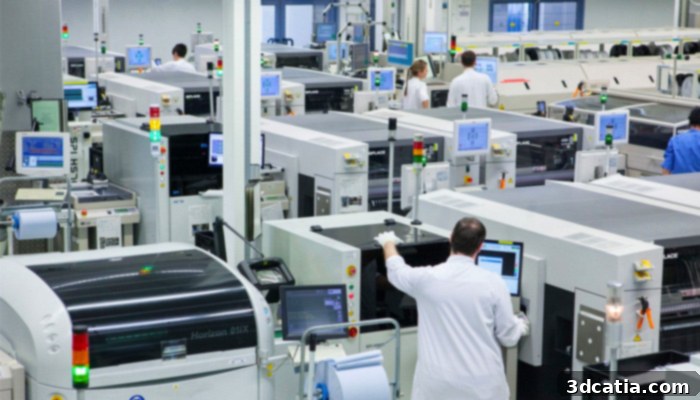
When adopting industrial 3D printing, we highly recommend consulting an expert in the field to ensure optimal machine selection and integration.
We hope these recommendations provide valuable insights for your journey into acquiring an industrial 3D printer. Your feedback is important to us! Please share your thoughts and experiences in the comments section below or connect with us on our LinkedIn, Facebook, and Twitter pages. To stay updated with the latest advancements and news in the additive manufacturing industry, don’t forget to sign up for our free weekly Newsletter here, delivered straight to your inbox! You can also explore our extensive library of videos and tutorials on our YouTube channel for more in-depth content.
*Cover Photo Credits: 3D Systems