
Technical Ceramics in 3D Printing: Unlocking Advanced Manufacturing Capabilities
While many initially associate the term “ceramics” with traditional pottery or fine porcelain, a distinct class of materials known as technical ceramics represents some of the most robust and resilient substances on Earth. These advanced materials are engineered for superior performance under extreme conditions, far surpassing the capabilities of conventional ceramics. They are broadly categorized into two main groups: oxides and non-oxides. The fundamental distinction lies in their chemical composition: oxide ceramics contain at least one oxygen atom bonded with another element, which significantly influences their properties. Non-oxide ceramics, conversely, do not contain oxygen as a primary constituent, often resulting in superior electrical conductivity and exceptional hardness. Oxide ceramics are typically easier to process, melt, and sinter, simplifying their integration into various manufacturing processes.
The unique attributes of technical ceramics – including their high temperature resistance, wear resistance, electrical insulation, and biocompatibility – make them invaluable across a multitude of high-performance applications. It is therefore no surprise that these advanced materials are increasingly being integrated into additive manufacturing (AM), commonly known as 3D printing. This convergence of advanced materials and cutting-edge fabrication techniques is revolutionizing industries from aerospace and defense to automotive, electronics, and even the biomedical sector. Technical ceramics can be processed in various forms suitable for 3D printing, including filaments, powders, and resins, allowing for the creation of complex geometries and bespoke components previously unattainable. This article delves into the specific types of technical ceramics compatible with 3D printing, exploring their properties, advantages, and diverse applications, while focusing exclusively on engineered ceramics rather than traditional materials like clay.
Oxide Ceramics: High Performance Through Oxygen Bonds
Oxide ceramics are a class of technical ceramics characterized by the presence of oxygen atoms within their chemical structure. This atomic bonding configuration often imparts properties such as high thermal stability, excellent electrical insulation, and good corrosion resistance, making them ideal for applications demanding reliability in harsh environments. Their processing typically involves sintering at high temperatures to achieve dense, strong components. In additive manufacturing, oxide ceramics are particularly valued for their versatility and the ability to produce complex parts for demanding applications in electronics, medical devices, and high-temperature industrial settings. Let’s explore some of the most prominent oxide ceramics used in 3D printing.
Alumina (Aluminum Oxide)
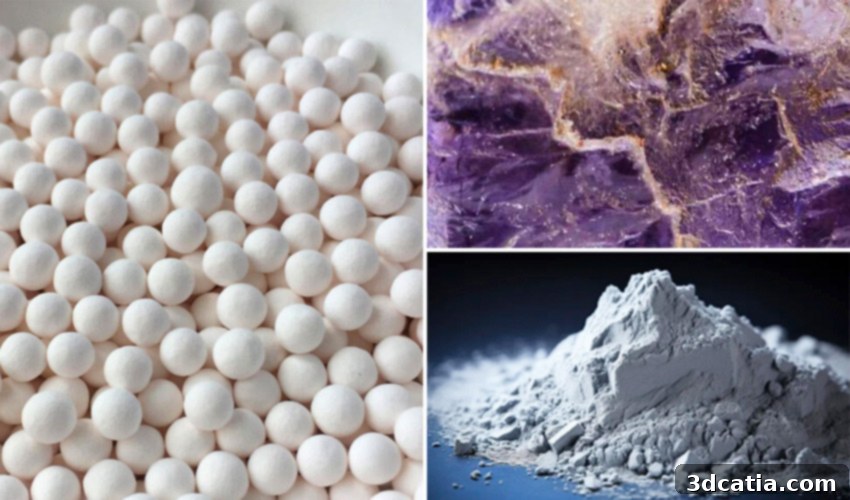
Alumina, or aluminum oxide (Al2O3), stands as one of the most widely utilized technical ceramics compatible with additive manufacturing, owing to its exceptional blend of properties. With an impressive melting point exceeding 2000°C, alumina exhibits remarkable resistance to extremely high temperatures and thermal shock, maintaining its structural integrity even under rapid temperature fluctuations. Its outstanding hardness, second only to diamond among naturally occurring materials, makes it highly resistant to wear and abrasion. Beyond these mechanical strengths, alumina is also prized for its excellent electrical insulation capabilities, good thermal conductivity (especially at higher purities), and inertness to most chemicals. Its biocompatibility further expands its utility, making it a material of choice for critical applications.
In additive manufacturing, alumina is used to produce components for diverse industries. In electronics, it serves as an indispensable insulator for substrates and protective housings due to its dielectric properties. In the biomedical field, its biocompatibility and wear resistance make it suitable for prostheses, dental implants, and other medical devices where long-term stability and inertness are paramount. Its extreme hardness and wear resistance are leveraged in cutting tools, grinding media, and wear parts for industrial machinery. Furthermore, the aerospace industry benefits from alumina’s high-temperature stability in components for engines and thermal management systems. The ability of 3D printing to create intricate and customized alumina parts opens new avenues for optimized designs and functional integration across these demanding sectors.

Photo Credits: Umicore
Zirconia (Zirconium Oxide)
Zirconium oxide, commonly known as zirconia (ZrO2), is another high-performance oxide ceramic with outstanding mechanical properties across a wide temperature range, from ambient to extremely high temperatures. Often referred to as “ceramic steel” due to its exceptional fracture toughness and strength, zirconia’s unique phase transformation toughening mechanism allows it to resist crack propagation more effectively than many other ceramics. It boasts relatively low thermal conductivity at room temperature, making it an excellent thermal barrier material, yet remarkably, at temperatures exceeding 1000°C, zirconia transitions to become an excellent electrical conductor. This dual nature makes it incredibly versatile.
Its high hardness, superior wear resistance, remarkable chemical inertness, and ability to resist attack by molten metals make it a material of choice for a vast array of demanding applications. In the biomedical sector, zirconia’s biocompatibility and aesthetic qualities are highly valued for dental implants, crowns, and bridges, as well as surgical instruments and joint replacements. Its durability is also exploited in high-end jewelry, where it serves as a robust and beautiful diamond simulant. In electronics, it’s used for oxygen sensors and solid oxide fuel cells (SOFCs) due to its ionic conductivity at high temperatures. Additive manufacturing enables the fabrication of intricate and patient-specific zirconia components, particularly in dentistry, where precise fit and complex geometries are critical for optimal function and aesthetics.
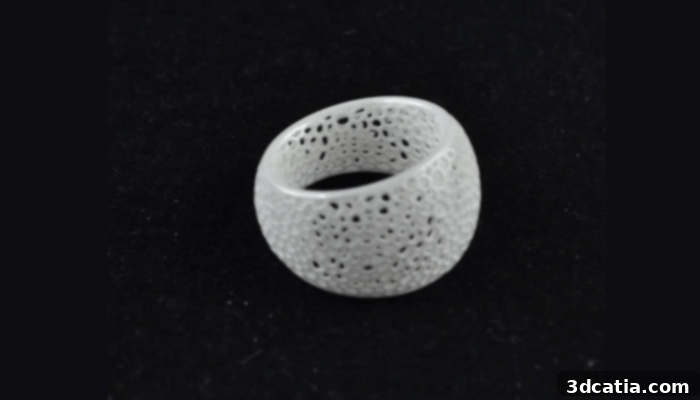
Photo Credits: 3DCeram
Silicore (Silicon Dioxide-Based Foundry Cores)
Silicore represents a specialized ceramic material primarily composed of silicon dioxide, uniquely formulated for use in additive manufacturing, particularly for producing foundry cores. Its exceptional porosity is a key asset, significantly simplifying the removal of complex structures from metal castings after solidification, and facilitating thorough washing processes. This open-pore structure ensures that the core can be easily leached out without damaging the intricate internal features of the cast part, which is especially critical for components with complex internal geometries like engine blocks or turbine blades.
Beyond its porosity, silicore offers outstanding mechanical strength and robustness, enabling it to withstand the thermal and mechanical stresses encountered during metal casting without deformation or collapse. This combination of properties allows for the creation of highly complex and precise internal channels within castings, which would be impossible with traditional manufacturing methods. Silicore is compatible with nearly all metal alloys, with the primary exception of those containing cobalt, demonstrating its broad applicability in various foundry operations. Its remarkable stability, even at the extremely high temperatures associated with molten metal, ensures consistent performance and high-quality castings, making it an invaluable material in advanced manufacturing processes where intricate internal structures are required.
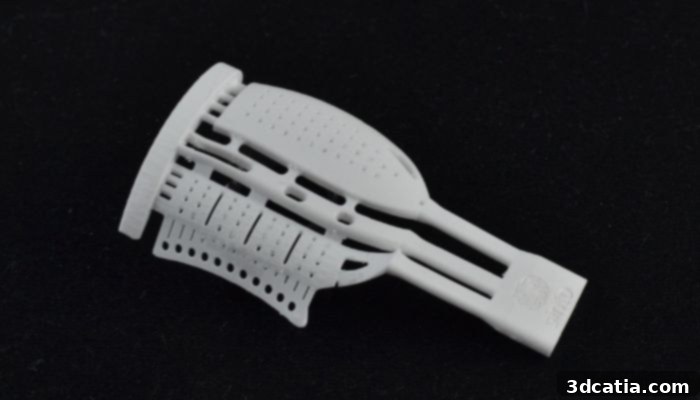
Photo Credits: 3DCeram
Cordierite
Cordierite, sometimes referred to as iolite in its gemstone form, is a magnesium iron aluminum cyclosilicate, meaning it belongs to the silicate minerals made up of silicon dioxide tetrahedra arranged in ring structures. Technical ceramics derived from cordierite are highly valued for their distinctive properties, particularly their exceptionally low coefficient of thermal expansion. This characteristic translates directly into outstanding resistance to thermal shock, making cordierite an ideal material for applications where rapid and significant temperature fluctuations are common.
While primarily known for its use in the aerospace industry for optical parts requiring dimensional stability across varying temperatures, cordierite also finds extensive use in electrical heating technology. For instance, in sectors adopting additive manufacturing, cordierite is employed in the insulating bodies of electric instantaneous water heaters, as supports for heating conductors, and as inserts in gas burners. These applications leverage its low thermal conductivity, which helps in efficient heat management, and its good mechanical strength, ensuring durability. Cordierite also offers good wear resistance. A distinction is often made between porous and dense cordierite. Porous cordierite, while having lower flexural strength, offers superior thermal shock resistance due to its microstructure, making it suitable for catalytic converters and diesel particulate filters. The ability to 3D print cordierite allows for the creation of complex, custom-designed components with optimized thermal properties for specialized heating and insulation systems.
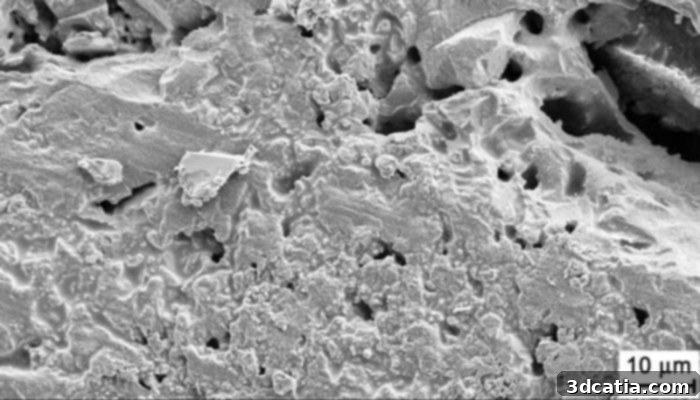
Photo Credits: Keramikverband
Hydroxyapatite (Bioceramic for Medical Applications)
Hydroxyapatite (Ca10(PO4)6(OH)2) is a remarkable bioceramic material, fundamentally important due to its biomimetic nature. It is a naturally occurring mineral that forms the principal inorganic component of bone and teeth, closely mimicking the biological structure and composition of human hard tissues. This makes it exceptionally valuable in the biomedical sector, particularly for bone reconstruction and repair. As a bioactive material, hydroxyapatite possesses the unique ability to form direct chemical bonds with living bone and soft tissues, promoting osteointegration and tissue regeneration without eliciting adverse immune responses.
One of its most significant advantages in medical applications is its absorbable nature; hydroxyapatite implants can gradually dissolve and be replaced by new bone growth, eliminating the need for subsequent surgical removal. In conjunction with 3D printing and other advanced manufacturing technologies, hydroxyapatite is extensively used for creating patient-specific implants. This allows for unparalleled customization, leading to better fit, faster recovery, and improved outcomes. Key applications include the production of cranial implants for neurosurgery, spinal implants for vertebral fusion, and various orthopedic implants for repairing bone defects. The precision and complexity achievable through 3D printing with hydroxyapatite are revolutionizing regenerative medicine, enabling innovative solutions for challenging musculoskeletal conditions.
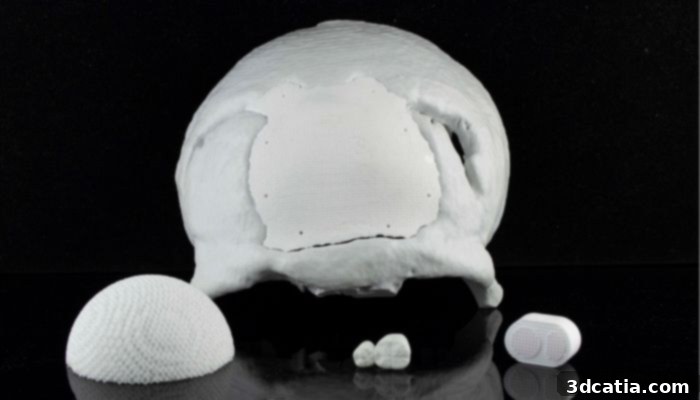
Photo Credits: 3DCeram
Alumina-Reinforced Zirconia (ZTA/ATZ)
The combination of alumina (aluminum oxide) and zirconia (zirconium oxide) results in a composite ceramic material that leverages the best properties of both. Alumina, known for its high hardness and chemical stability, forms the reinforcing phase within a zirconia matrix (Alumina Toughened Zirconia, ATZ) or zirconia particles are dispersed within an alumina matrix (Zirconia Toughened Alumina, ZTA). This synergistic combination creates an exceptional ceramic material with significantly enhanced fracture toughness and flexural strength compared to either material used alone. Zirconia’s phase transformation toughening mechanism, when combined with the inherent strength of alumina, produces a ceramic that is remarkably resistant to crack propagation and mechanical stress.
Alumina-reinforced zirconia is particularly well-suited to the biomedical sector, especially in dentistry, where its remarkable hardness, toughness, and wear resistance are crucial. It provides superior mechanical performance for demanding applications like oral implants, dental prostheses, and other components requiring exceptional durability and biocompatibility. Its high resistance to thermal shock and corrosion further ensures long-term stability in the human body. Beyond biomedical applications, this composite ceramic also finds use in industrial settings requiring extreme wear resistance and mechanical strength, such as in cutting tools, pump components, and grinding media. Additive manufacturing of alumina-reinforced zirconia allows for the creation of complex, customized parts that meet the stringent requirements of these high-performance applications, pushing the boundaries of material science and engineering.
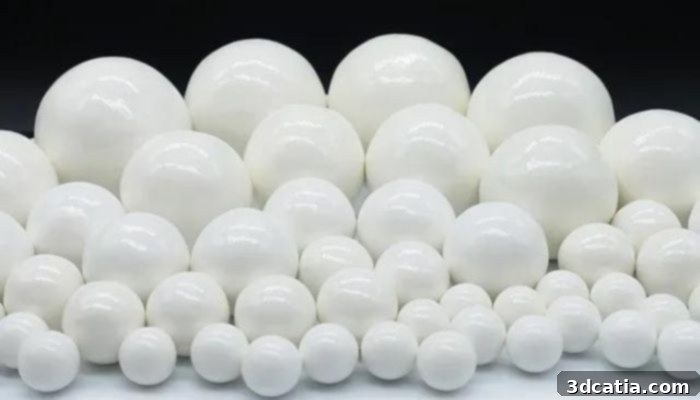
Photo Credits: CHEMCO
Non-Oxide Ceramics: Strength and Resilience Without Oxygen
Non-oxide ceramics are a distinct class of technical ceramics that do not contain oxygen as a primary constituent. Instead, they are typically formed from compounds of carbon, nitrogen, and boron with other elements, such as silicon or aluminum. This composition often endows them with extraordinary properties, including exceptional hardness, high strength, superior wear resistance, and excellent performance at very high temperatures. Many non-oxide ceramics also exhibit good electrical conductivity and chemical inertness, making them suitable for environments where oxide ceramics might not perform optimally. Their robust nature makes them invaluable in extreme industrial conditions, armor, and specialized electronic applications. Additive manufacturing with non-oxide ceramics presents unique challenges but also opens up possibilities for creating highly durable, lightweight, and intricate components.
Boron Carbide (B4C)
Boron carbide (B4C) is revered as one of the hardest known materials in the world, surpassed only by diamond and cubic boron nitride. This extraordinary hardness, combined with excellent resistance to wear, compression, and heat, positions boron carbide as a leading material for extremely demanding applications. Its low density also contributes to its appeal, especially where weight reduction is critical. Boron carbide is chemically stable and boasts low thermal conductivity, which is advantageous in certain thermal management scenarios.
Its primary applications are found in aerospace for the manufacture of lightweight, high-performance nozzles (e.g., for rocket engines and abrasive blasting), in nuclear applications due to its high neutron absorption cross-section for shielding and control rods, and in the production of armor equipment, including bulletproof vests, ceramic plates for body armor, and tank armor, where its hardness provides superior ballistic protection. In additive manufacturing, boron carbide is less common than some other technical ceramics due to processing difficulties but can be found in specialized forms. It is typically processed as a filament, where boron carbide particles are suspended within a polymer binder, or as a powder for binder jetting or slurry-based techniques. These methods enable the creation of complex shapes while harnessing the exceptional protective and abrasive properties of boron carbide.
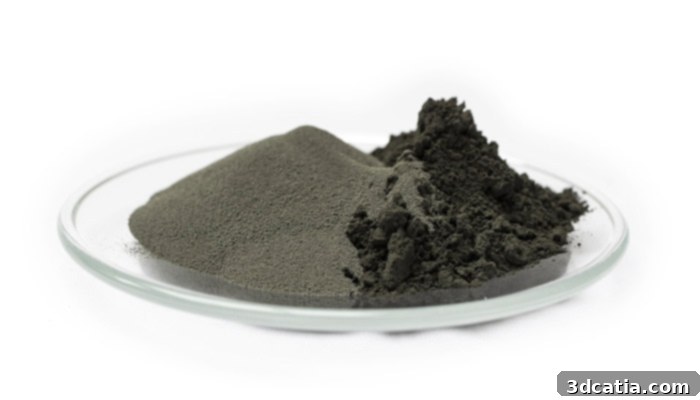
Photo Credits: Fiven
Silicon Nitride (Si3N4)
Silicon nitride (Si3N4) is one of the most intriguing and high-performing technical ceramics for additive manufacturing, known for its outstanding combination of properties. Although it can be found naturally as the rare mineral nierite in certain meteorites, it is typically synthesized by heating silicon powder in a nitrogen atmosphere to temperatures up to 1400°C. In terms of properties, silicon nitride is highly resistant to abrasion, corrosion, and cracking, exhibiting excellent fracture toughness for a ceramic. It maintains high strength and hardness even at elevated temperatures, making it ideal for demanding thermal and mechanical environments.
Beyond its mechanical robustness, silicon nitride is an excellent electrical insulator and boasts low wettability to molten metals, making it invaluable in metal processing and high-temperature furnace applications. This unique combination of properties makes it an ideal material for creating lightweight, dimensionally stable parts that can withstand severe operating conditions. When used in conjunction with additive manufacturing, silicon nitride enables a wide variety of advanced applications across numerous industries. Its most striking uses include the creation of high-temperature bearings, engine components (such as glow plugs and turbocharger rotors), semiconductors in demanding electronic devices, valve and pump components in corrosive fluid handling, and heating pipes in industrial furnaces. The ability to 3D print complex geometries with silicon nitride unlocks new possibilities for enhanced performance and efficiency in these critical components.
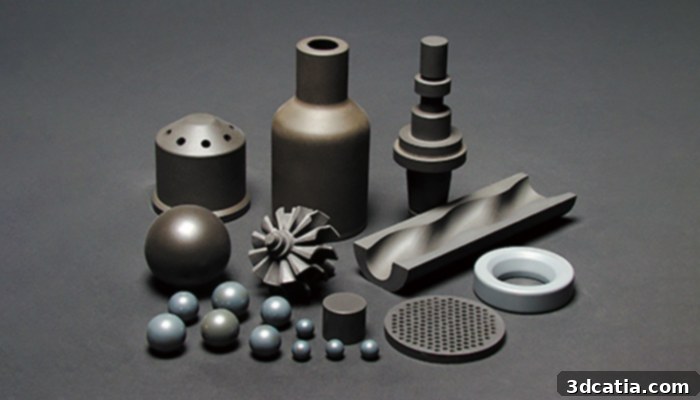
Photo Credits: UBE Corporation
Aluminum Nitride (AlN)
Aluminum nitride (AlN) is a compelling non-oxide ceramic formed by the chemical combination of aluminum and nitrogen. Its suite of properties makes it a cornerstone material in modern electronics and thermal management. Foremost among its characteristics are its exceptionally high thermal conductivity, which allows for efficient heat dissipation, coupled with excellent electrical insulation, ensuring circuit integrity. These properties are critical for managing heat in compact, high-power electronic devices without compromising electrical performance. Furthermore, AlN exhibits appreciable mechanical strength and chemical stability.
These characteristics make it a preferred choice in the electronics industry, particularly in microelectronics. Aluminum nitride is frequently used as a substrate material in semiconductor manufacturing, providing a robust and thermally conductive base for integrated circuits. It is also extensively employed as a heat sink in high-brightness LED technology, power electronics, and other high-frequency applications where heat management is paramount. An additional advantage of aluminum nitride is its remarkable resistance to plasma erosion, which is crucial in semiconductor processing equipment. It is also generally considered safe to use during processing, adding to its industrial appeal. Additive manufacturing techniques are enabling the fabrication of AlN components with complex internal cooling channels and customized geometries, further enhancing thermal management solutions in advanced electronic systems.
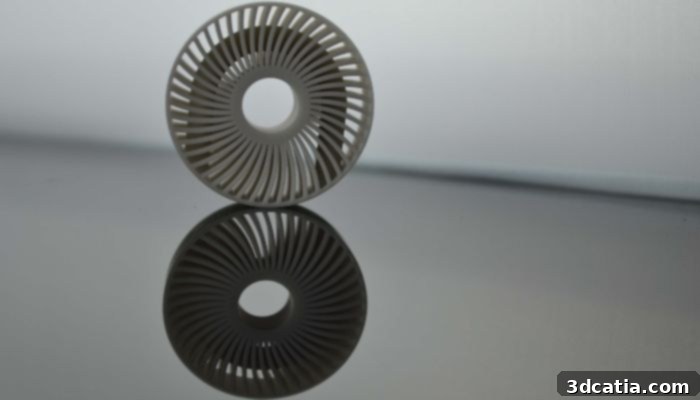
Photo Credits: 3DCeram
Silicon Carbide (SiC)
Silicon carbide (SiC), also known as carborundum, is an extraordinarily resistant chemical compound that belongs to the non-oxide ceramic family. Despite the significant size differences between carbon (C) and silicon (Si) atoms, which might intuitively suggest structural instability, SiC forms extremely strong covalent bonds, resulting in properties that rival those of diamond. Silicon carbide exists in various crystalline polytypes and can be produced in several forms, including sintered or recrystallized, yet all share common properties that establish them as remarkable technical ceramics, particularly suitable for additive manufacturing.
These ceramics are distinguished by their excellent resistance to thermal shock, enabling them to withstand rapid temperature changes without damage, a crucial property for high-temperature applications. They also exhibit superior wear resistance and maintain high thermal conductivity, an unusual combination that makes them ideal for demanding thermal and abrasive environments. Combined with exceptional corrosion resistance, very high hardness, and outstanding mechanical properties at elevated temperatures, silicon carbide is an ideal composite for the automotive, energy, and aerospace industries. Key applications include the manufacture of components for high-temperature heating systems, friction materials for brakes, and power electronics in electric vehicles (EVs) and EV charging stations, where its ability to handle high voltage and temperature is critical. Additive manufacturing with silicon carbide facilitates the creation of intricate heat exchangers, lightweight structural components, and custom parts with optimized performance for extreme operating conditions, driving innovation in these vital sectors.
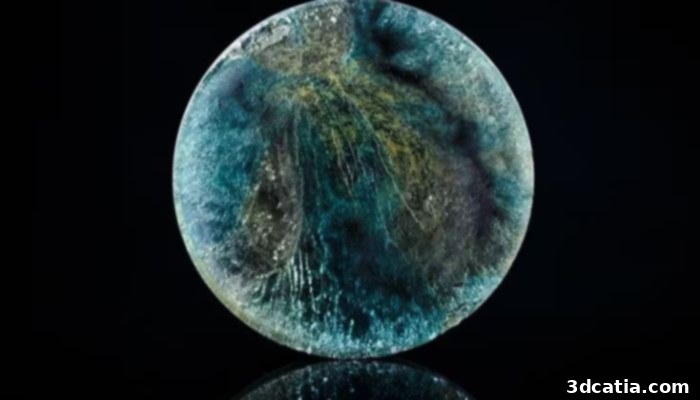
Photo Credits: Arrow.com
The integration of technical ceramics into additive manufacturing represents a significant leap forward in material science and engineering. From the high-temperature resilience of alumina and the exceptional toughness of zirconia to the specialized functionalities of cordierite, hydroxyapatite, boron carbide, silicon nitride, aluminum nitride, and silicon carbide, these materials are pushing the boundaries of what’s possible. Their diverse properties enable the creation of high-performance components for aerospace, defense, automotive, electronics, and biomedical fields, offering solutions for extreme environments, precision engineering, and critical medical applications. The ability of 3D printing to create complex geometries and customized designs with these advanced ceramics is unlocking new levels of innovation, leading to lighter, stronger, more efficient, and more functional parts across a multitude of industries. As additive manufacturing technologies continue to evolve, the potential for technical ceramics to transform modern manufacturing will only grow, promising a future of unprecedented material capabilities and design freedom.
What are your thoughts on the incredible range of technical ceramics applicable in additive manufacturing? Share your insights in a comment below or connect with us on our Linkedin, Facebook, and Twitter pages! Don’t forget to sign up for our free weekly Newsletter here to receive the latest 3D printing news straight to your inbox! You can also find all our videos on our YouTube channel.