
Exploring the Future: Top 5 Transformative 3D Printing Videos and Additive Manufacturing Innovations
This week, we delve into the groundbreaking world of additive manufacturing, showcasing five must-watch videos that highlight how 3D printing is fundamentally reshaping global production processes. From intricate medical applications to high-performance automotive solutions, this revolutionary technology has permeated countless industrial sectors, driving unprecedented innovation and efficiency. Our carefully curated selection offers a glimpse into the cutting-edge developments that are defining the future of manufacturing. We invite you to explore these fascinating projects and stay abreast of the latest advancements. For even more insightful content, be sure to visit and subscribe to our dedicated YouTube channel. We hope you enjoy this inspiring collection and have a wonderful day!
Top 1: Pioneering Advances in Bioprinting Projects
3D bioprinting stands at the forefront of medical innovation, representing a complex and fascinating process that involves precisely combining living cells with advanced biomaterials. The ultimate vision behind this technology is to engineer functional tissues or even entire organs that closely mimic their natural counterparts, ultimately preparing them for transplantation into the human body. While the goal of fully functional, 3D-printed organs ready for widespread clinical use remains a long-term aspiration, the field is experiencing an explosion of encouraging research and development. Scientists and engineers globally are making significant strides in creating simpler tissue structures, scaffolding for cellular growth, and even miniature organ models for drug testing and disease research. These projects promise to revolutionize regenerative medicine, offering solutions to organ donor shortages, enabling personalized therapies, and significantly accelerating pharmaceutical development. By watching this video, you’ll gain deeper insights into some of the most compelling and transformative bioprinting projects currently underway, revealing the immense potential this technology holds for the future of healthcare.
Top 2: Revolutionizing Engine Manufacturing with 3D Printed Molds
MeiMai Foundry is a distinguished company renowned for its expertise in rapid prototyping, alongside traditional sand and investment casting techniques. Faced with the challenge of manufacturing an electric motor that required an exceptionally short test and implementation phase, MeiMai Foundry turned to the transformative capabilities of additive manufacturing. The conventional methods for creating molds often involve lengthy lead times and significant costs, which were prohibitive for this particular project’s aggressive schedule. Utilizing a state-of-the-art VX2000 voxeljet machine, known for its impressive print volume of 2 x 1 x 1 meters, MeiMai Foundry successfully employed a Binder Jetting process to produce the necessary metal casting molds. This advanced 3D printing method allowed them to achieve unparalleled efficiency and speed. In an astonishingly short period of just 72 hours, the company was able to print 60 high-quality molds. This dramatically accelerated the overall production timeline, reducing the total lead time for manufacturing the entire engine to a mere three weeks. In stark contrast, achieving the same result through conventional processes would typically extend the lead time to two to three months, illustrating a remarkable 70-80% reduction in manufacturing time. This achievement by MeiMai Foundry not only demonstrates the power of industrial 3D printing in accelerating product development but also highlights its potential for creating complex, customized components with unprecedented speed and precision, ultimately optimizing manufacturing workflows and reducing costs.
Top 3: Siemens Harnesses Additive Manufacturing for Power & Gas Design
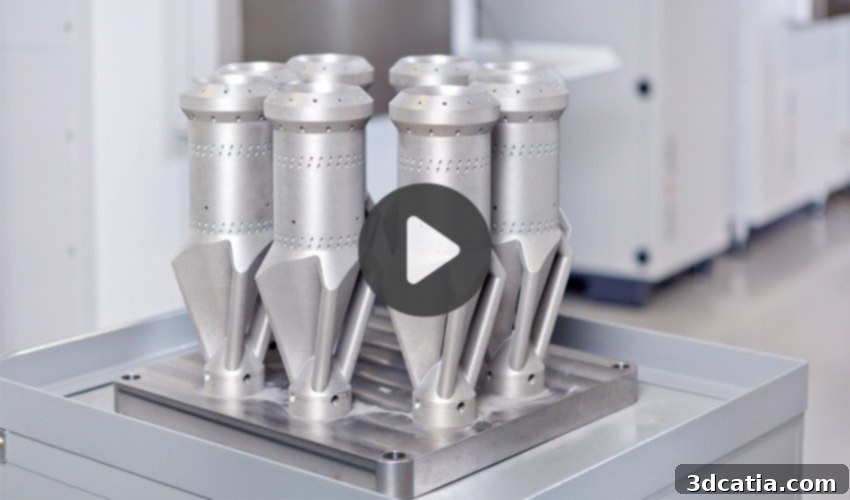
Siemens, a global powerhouse in the industrial sector, has strategically embraced additive manufacturing to enhance the design and production of critical components for its advanced gas turbines. This strategic shift represents a significant investment in digital manufacturing, particularly leveraging sophisticated EOS machines known for their precision and reliability in metal 3D printing. By integrating additive manufacturing into its Power & Gas business, Siemens has achieved remarkable improvements across its development and manufacturing cycles. The company proudly reports a staggering 75% reduction in development lead times, allowing for much faster iteration and optimization of designs. Furthermore, manufacturing lead times have been cut by 50%, significantly accelerating the delivery of complex, high-performance parts. One of the most impactful benefits highlighted by Siemens is the dramatic consolidation of components. Through intelligent design and the unique capabilities of 3D printing, they have managed to reduce the number of parts for certain assemblies from a complex 13 down to a single, monolithic component. This not only simplifies the supply chain and assembly process but also often leads to superior performance, reduced weight, and enhanced durability. The manufacturing process itself has seen a tenfold increase in speed for these consolidated parts, demonstrating the immense efficiency gains. This strategic adoption underscores Siemens’s commitment to innovation, allowing them to offer quicker, more cost-effective, and highly optimized solutions for the demanding energy sector, ultimately strengthening their competitive edge in advanced turbine technology and industrial gas applications.
Top 4: The Amprove Solution: Optimizing Additive Manufacturing with Simulation
In the rapidly evolving landscape of additive manufacturing, achieving precision, efficiency, and cost-effectiveness often presents significant challenges. Traditional trial-and-error approaches can lead to considerable material waste, extended development cycles, and an increased risk of printing errors. Recognizing these critical pain points, Altair, a leading global technology company specializing in simulation, high-performance computing, and data analytics, has developed innovative software solutions specifically tailored for additive manufacturing processes. To further enhance these capabilities, Altair collaborated with the dynamic start-up Amprove, pooling their expertise to create a cutting-edge simulation solution for 3D printing. This powerful software is designed to empower users with unprecedented agility in their additive manufacturing endeavors. By accurately predicting how materials will behave during the printing process, optimizing print parameters, and identifying potential failure points before physical production begins, the Amprove solution delivers multiple tangible benefits. Users can significantly reduce the amount of material required for successful prints, leading to substantial cost savings. The software dramatically increases the agility of the 3D printing process itself by minimizing rework and failed attempts, thereby accelerating design iterations and time-to-market. Crucially, it drastically reduces the risk of errors such as warping, internal stresses, and structural weaknesses, ensuring that parts are produced correctly the first time. This collaborative effort by Altair and Amprove is transforming how companies approach 3D printing, making it a more predictable, reliable, and economically viable manufacturing method across various industries, from aerospace to consumer goods.
Top 5: Advancing Automotive Manufacturing with 3D Printing at BMW
The automotive industry is in a perpetual state of evolution, driven by demands for greater customization, faster product development cycles, and enhanced vehicle performance. BMW, a pioneering car manufacturer renowned for its engineering excellence and innovation, consistently showcases its commitment to advanced manufacturing techniques. As part of its initiative to highlight internal talent and cutting-edge projects, BMW monthly features a doctoral candidate who shares insights into their work and strategic objectives within the company. This particular month, we have the privilege of meeting Philip, a dedicated researcher and engineer whose work directly involves leveraging additive manufacturing (AM) to produce both intricate components and small series parts for BMW vehicles. Philip’s core objective is to develop and implement concepts that enable the seamless automation of the entire production process, from the initial rapid prototyping phase all the way through to final production. His research focuses on deeply understanding how this automation process can be effectively integrated and scaled, and critically, how it harmonizes with the unique capabilities of 3D printing. This includes exploring automated post-processing, quality control, and material handling systems that complement the flexibility and design freedom offered by AM. BMW’s investment in this area underscores the growing importance of 3D printing in creating custom tools, jigs, fixtures, and even end-use parts, allowing for faster design validation, reduced lead times, and the production of lightweight, complex geometries that are challenging or impossible to achieve with traditional methods. Philip’s work is a testament to how 3D printing, combined with intelligent automation, is shaping the future of automotive manufacturing, driving efficiencies, fostering innovation, and paving the way for the next generation of personalized and high-performance vehicles.
We hope this exploration of transformative 3D printing applications has been both informative and inspiring. These videos vividly demonstrate the incredible potential of additive manufacturing to revolutionize industries, solve complex challenges, and drive unparalleled innovation. What are your thoughts on these groundbreaking applications? We encourage you to drop a comment below and share your insights, or join the conversation on our Facebook and Twitter pages! To ensure you never miss out on the latest advancements, industry news, and exclusive content in the dynamic world of 3D printing, don’t forget to sign up for our free weekly Newsletter, delivered straight to your inbox. Stay connected, stay informed, and continue exploring the future of manufacturing with us!