
Bridging the Divide: Addressing the Gender Pay Gap in Additive Manufacturing
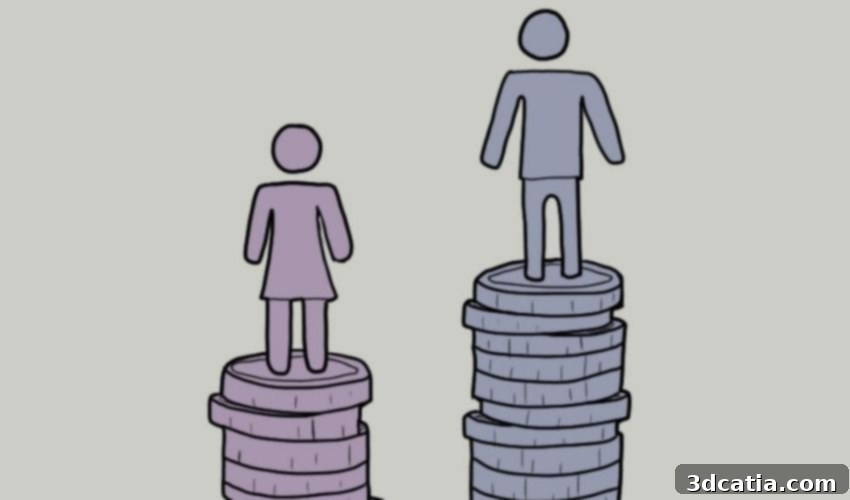
Yesterday, we celebrated International Women’s Day, a momentous occasion highlighting the myriad accomplishments of women in additive manufacturing and countless other fields. While it’s crucial to acknowledge these achievements, it’s equally important to recognize that the journey towards true equality is far from over. This ongoing effort is powerfully underscored by the latest Diversity for AM (DfAM) report from Women in 3D Printing (WI3DP), which meticulously examines the persistent gender pay gap within the dynamic additive manufacturing sector. The gender pay gap, fundamentally defined as the disparity between the salaries of men and women – particularly those in comparable positions with similar qualifications and experience – remains a pervasive global issue, impacting numerous industries worldwide. As WI3DP’s insightful report confirms, this critical challenge unfortunately persists within the innovative realm of additive manufacturing, demanding our immediate attention and concerted action.
Women in 3D Printing: Advocating for Equality and Transparency
For those unfamiliar, Women in 3D Printing is a highly respected non-profit organization dedicated to fostering the growth, advancement, and support of women professionals actively engaged in the 3D printing industry. Since its inception, WI3DP has been at the forefront of addressing numerous critical issues, notably the stark underrepresentation of women in the sector, with only an estimated 13% of roles filled by women and a mere 11% of businesses in the industry being women-owned. Founded by the visionary Nora Touré in 2014, the organization is currently led by the dynamic Kristin Mulherin, under whose guidance it continues to expand its global reach and impact. The DfAM report, which is the focus of this discussion, represents a key component of WI3DP’s broader Diversity, Equity, and Inclusion (DEI) initiative. This comprehensive report builds upon crucial insights initially shared during a compelling talk at TIPE 2022, presented by industry experts Alex Kingsbury and SJ Jones, which illuminated the systemic issues at play. Through impactful activities such as this rigorous report, WI3DP steadfastly works towards cultivating greater equality and representation across the additive manufacturing sector, remaining true to its inspiring guiding principle: to “support an industry that reflects the world in which it operates.” By meticulously analyzing and openly presenting data on disparities, the organization empowers stakeholders to identify areas for improvement and collectively work towards a more equitable and inclusive future for 3D printing.
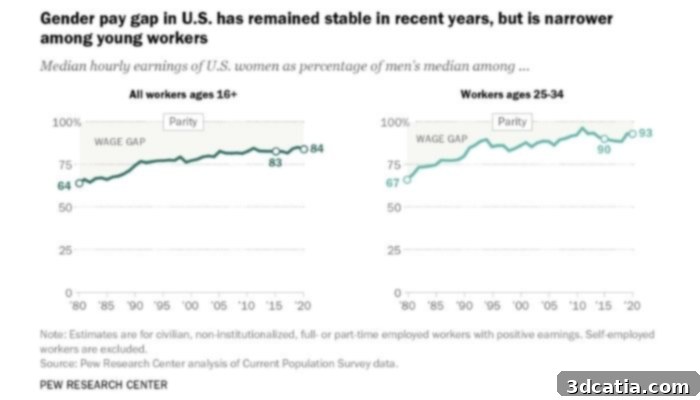
Research from Pew Research Center shows that the gender gap still exists for women in the United States (photo credits: Pew Research Center)
Unveiling the AM Gender Pay Gap: Data and Disparities
So, what precisely does the DfAM report aim to achieve? Its explicitly stated objective is “to shed light on current circumstances when it comes to the gender gap in AM, in particular when it comes to equal (or inequal) pay.” This ambition is set against the backdrop of a pervasive global issue: the gender pay gap. While its extent varies significantly from one country to another, its existence is undeniable. A striking report from the Pew Research Center, for example, revealed that “In 2020, women earned 84% of what men earned in an analysis of median hourly earnings of both full- and part-time workers.” This translates into a significant economic disadvantage, as the report further elaborated, “Based on this estimate, it would take an extra 42 days of work for women to earn what men did in 2020.” The situation is even more dire and complex for women of color and those navigating other intersectional identities, including individuals with disabilities, varying socio-economic statuses, or parental responsibilities. These groups often face compounded disadvantages, experiencing wider pay gaps and more significant barriers to career progression. Crucially, the WI3DP report demonstrates that these very specific and challenging issues are not absent from the additive manufacturing sector but are actively impacting many women working within 3D printing today. This highlights that despite the industry’s cutting-edge nature, it is not immune to broader societal inequalities.
Key Findings and Recommendations from the DfAM Report
The WI3DP DfAM report is meticulously structured into six comprehensive sections, offering an in-depth exploration not only of the overall pay gap but also delving into specific manifestations of this disparity within additive manufacturing. Utilizing a blend of rigorous empirical data and compelling anecdotal evidence, the report conclusively illustrates the quantifiable differences in pay between men and women across various roles in the industry. For instance, one particularly illuminating section highlighted a concerning trend: despite a positive shift between 2020 and 2021 where more women transitioned into higher-level positions, their satisfaction with wages had paradoxically decreased when compared to their male counterparts in similar roles. This finding suggests a critical issue where increased responsibility is not always met with equitable compensation for women, indicating a deep-seated inequality beyond mere job titles. Other indicators further underscore the existence of wage inequality, revealing discrepancies in starting salaries, promotion rates, and bonus structures that disproportionately affect women. The report also sheds light on the impact of factors such as negotiation biases and a lack of transparent salary structures, which often disadvantage women in salary discussions and career progression.
Beyond merely exposing these disparities, the DfAM report moves proactively to offer a comprehensive set of recommendations aimed at mitigating and ultimately eliminating the wage gap. A cornerstone of these recommendations is the imperative for greater wage transparency across the industry. When salaries are open and clearly defined for specific roles, it becomes significantly harder for unconscious biases to lead to unequal pay for equal work. Transparency empowers employees to negotiate fairly, helps companies identify and rectify internal discrepancies, and fosters a culture of accountability. Furthermore, the report suggests other crucial strategies, including the implementation of regular pay equity audits to proactively identify and correct pay imbalances, the adoption of structured salary bands for all positions, and the establishment of clear, merit-based promotion criteria. It also advocates for unconscious bias training for hiring managers and leadership, enhanced mentorship and sponsorship programs for women, and flexible work policies that support work-life balance without penalizing career progression. By embracing these multifaceted recommendations, the additive manufacturing industry can move closer to its potential as an innovative and equitable field. To learn more about these findings and access the full breadth of insights, you can download the report for free HERE. This free resource provides invaluable data and actionable strategies for individuals and organizations committed to fostering a more equitable workplace.
Driving Change: Towards a Fairer Future in AM
The continued existence of the gender pay gap in additive manufacturing, as illuminated by the WI3DP DfAM report, serves as a powerful call to action for everyone in the industry. It reminds us that technological innovation must be accompanied by social progress, ensuring that the future of 3D printing is built on foundations of fairness, equity, and inclusion. Addressing these disparities is not just a matter of social justice; it is also a strategic imperative. Diverse teams, where every individual feels valued and fairly compensated, are proven to be more innovative, productive, and resilient. By actively working to close the gender pay gap, the additive manufacturing sector can attract and retain top talent, fostering a vibrant and dynamic environment where all professionals, regardless of gender, can thrive and contribute their full potential. This will ultimately accelerate industry growth and cement its position as a leader in both technological advancement and progressive workplace practices. Let us collectively strive to create an additive manufacturing landscape that truly reflects the diversity and potential of the world it seeks to shape.
What are your thoughts on the ongoing gender pay gap in additive manufacturing and the steps needed to address it? We encourage you to share your perspectives and engage in this vital conversation. Let us know in a comment below or join the discussion on our Linkedin, Facebook, and Twitter pages! Don’t forget to sign up for our free weekly Newsletter here, to receive the very latest 3D printing news, insights, and updates directly to your inbox! You can also find all our compelling videos and interviews on our dedicated YouTube channel, offering a visual dive into the world of additive manufacturing.
*Cover Photo Credits: Ben Lacasse/The State Press