

Revolutionizing Space Exploration: Morningbird Space Corporation’s Additive Manufacturing Innovations
In the burgeoning era of space exploration and aerospace innovation, additive manufacturing, commonly known as 3D printing, has emerged as an indispensable technology. Much like artificial intelligence, it has rapidly become a cornerstone for designing and producing more efficient, complex, and lightweight parts and tools crucial for ventures beyond Earth. This transformative context defines the operational landscape of the American company, Morningbird Space Corporation. Dedicated to pioneering solutions that significantly advance space conquest and exploration, Morningbird Space leverages cutting-edge technology to address the unique challenges of the cosmos.
At the heart of Morningbird Space’s innovation lies its strategic embrace of additive manufacturing. The company has developed a groundbreaking range of multi-material 3D printers, capable of simultaneously creating components from up to six different materials, including various plastics, metals, and advanced composites. This multi-material capability is a game-changer for producing integrated, functional structures vital for space applications. Beyond industrial applications, Morningbird Space is also committed to fostering the next generation of innovators. To this end, they have engineered a unique 3D printable humanoid robot designed to simplify access to critical production methods and technologies such as CAD modeling, 3D printing, and coding. To delve deeper into these remarkable projects and Morningbird Space’s vision, we had the privilege of speaking with Dr. Chance Glenn, the visionary founder and president of the corporation.
3DN: Could you introduce yourself and explain your connection to additive manufacturing?
“My name is Chance Glenn, and I hold a full professorship in Electrical Engineering at Alabama A&M University, alongside my role as the founder and President of Morningbird Space Corporation. My academic foundation is a Ph.D. in Electrical Engineering from the Johns Hopkins University Whiting School of Engineering. My lifelong fascination with science fiction, particularly the original Star Trek series, has been a profound source of inspiration, compelling me to create innovative technologies for the space industry.
The imaginative world depicted in Star Trek, with its advanced technologies and wonders – from warp drive to energy shields and especially the iconic ‘replicators’ – fueled my dreams of achieving similar feats. I was captivated by the ingenuity of characters like Science Officer Mr. Spock and Chief Engineer Mr. Scott, whose problem-solving capabilities were central to the show. This inspiration directly led me to pursue a career in engineering, setting me on a path of invention and discovery. Furthermore, I am deeply motivated to share the benefits of knowledge with my students, fostering a continuous cycle of learning, as I firmly believe that education has the power to transform lives.
3D printing, in its essence, closely mirrors the concept of the ‘replicators’ from Star Trek lore – the ability to materialize complex objects on demand. Not long ago, my esteemed colleague, Dr. Wing Chan, and I embarked on a research journey that culminated in the development and patenting of a novel set of materials and a process for 3D printing functional electronic devices. This breakthrough was significant, as it allowed for the integration of various electronic properties directly into 3D printed structures. Following this academic success, we diligently worked to commercialize this innovative technology, which eventually took the form of the Electronic Alchemy eforge system. Our pioneering work in this area was generously funded by the NASA SBIR program, an initiative that has been instrumental in building Morningbird Space Corporation into a robust entity. Through this invaluable support, our company has amassed a wealth of knowledge and expertise in additive manufacturing, positioning us at the forefront of this exciting field.”

Dr Chance Glenn, Founder and President of Morningbird Space Corporation
3DN: What is Morningbird Space, and why was it created?
“Morningbird Space Corporation is a dynamic technology development company fundamentally focused on creating, developing, and commercializing groundbreaking innovations specifically for the burgeoning space industry. Our expertise spans critical areas, and we are actively developing advanced technologies in additive manufacturing, advanced propulsion systems, and autonomous construction methodologies. These three pillars are crucial for enabling sustainable human presence and exploration in space.
We have been fortunate to receive funding from and establish strong collaborative ties with leading organizations in the space sector, including NASA, the National Science Foundation, and SpaceX, among others, as well as various other influential space technology organizations. These partnerships are vital for accelerating our research and bringing our innovations to fruition. Additionally, we have cultivated a robust relationship with the Alabama A&M Research, Innovation, Science, and Engineering (AAMU-RISE) Foundation. This collaboration is part of our overarching mission to translate cutting-edge science and technology from the laboratory into practical, commercial realities that will redefine space exploration and our capabilities within it. Our creation stems from a deep-seated belief that humanity’s future is inextricably linked with space, and we aim to provide the foundational technologies that make this future accessible and sustainable.”
3DN: Can you tell us more about Morningbird Space’s eforge 3D printers? Why are they suitable for space missions?
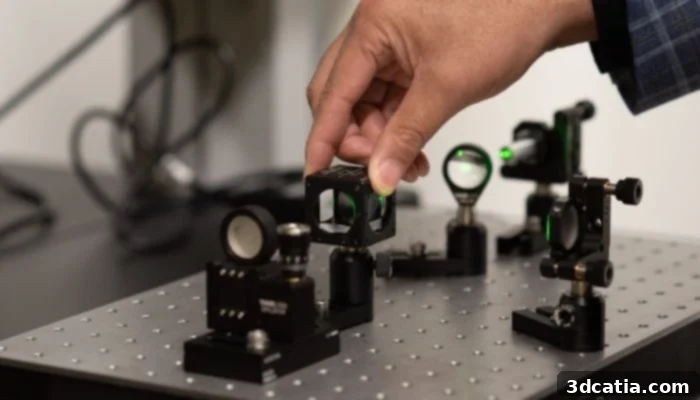
3DN: What kind of applications are you creating with your 3D printing technology?
“At this very moment, the product we are most enthusiastic about bringing to the market is the AppBot Educational Platform. The AppBot is not just a robot; it’s a completely 3D printable humanoid robot designed with a singular, powerful purpose: to train students in critical STEM (Science, Technology, Engineering, and Mathematics) related skills in a way that is both incredibly fun and profoundly exciting. This innovative platform covers a wide array of essential skills, including additive manufacturing itself, computer-aided design (CAD), robotics, coding, an introduction to artificial intelligence, electronics, mechanical design principles, and, crucially, teamwork.
The comprehensive process of printing, assembling, testing, and ultimately operating the AppBot can easily span an entire semester or even an academic year for our target audience of K-12 students. This extended engagement ensures a deep understanding and hands-on experience across multiple disciplines. What truly elevates the ‘cool’ and ‘wow’ factor of the AppBot is that, once constructed, it is driven by a user-friendly smartphone app. This intuitive control mechanism brings the robot to life and allows for immediate, interactive engagement. Users will also become an integral part of the vibrant AppBot Developers Community, an online ecosystem where they can freely share ideas, modifications, custom control sequences, pictures, videos, and various other enhancements to enrich their learning and creative experience.
The AppBot platform is also perfectly suited for fostering healthy competition and innovative challenges. Students can participate in design competitions, robotic races, dance-offs, or even robot fashion shows, all designed to inspire creativity and problem-solving. To make this educational tool as accessible as possible, users will be provided with all the necessary digital files required to 3D print the robot’s parts. The electronic components and servos, which are standardized and readily available, can be sourced conveniently from platforms like Amazon. The entire educational package is projected to be priced affordably at $399.99, making it a viable and attractive option for educational institutions seeking to integrate advanced STEM learning into their curricula. Our overarching goal is to democratize knowledge and the ability to engage in STEM fields, spreading these invaluable opportunities to as many communities worldwide as possible. We are actively engaged in discussions with major educational organizations and institutions to forge partnerships in this significant global endeavor.”
3DN: How do you see the future of additive manufacturing in aerospace?
3DN: Any last words for our readers?
What are your thoughts on Morningbird Space Corporation’s innovative approach to additive manufacturing and space exploration? We invite you to share your perspectives in a comment below or join the conversation on our LinkedIn or Facebook pages! Don’t forget to sign up for our free weekly Newsletter to receive the latest 3D printing news directly in your inbox. You can also explore all our insightful videos on our YouTube channel. For more detailed news and updates specifically within the aerospace and defense sectors, be sure to check out our dedicated page HERE.
*All Photo Credits: Morningbird Space Corporation