
WASP and Dior Redefine Luxury Retail with 3D Printed Eco-Friendly Pop-Up Store in Dubai
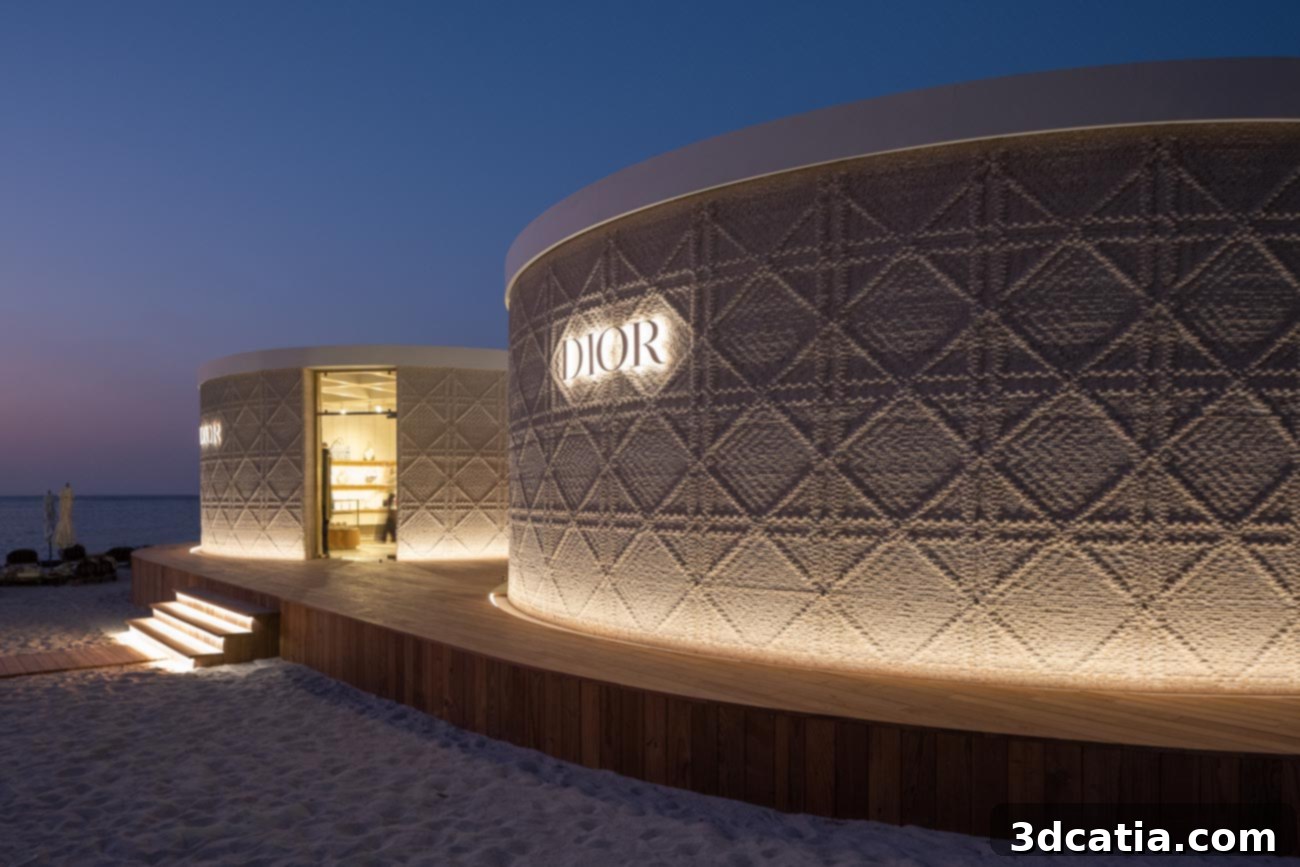
In a groundbreaking collaboration that marries high fashion with cutting-edge sustainable technology, French luxury brand Dior partnered with Italian 3D printer manufacturer WASP (World’s Advanced Saving Project) to create an innovative pop-up store in Dubai. This ambitious project, located on the picturesque Jumeirah beach, serves as a striking showcase for Dior’s latest collections while simultaneously demonstrating the immense potential of eco-conscious construction methods. The two distinctive modular structures that comprise the pop-up were entirely 3D-printed using natural materials, a specialized area in which WASP has established itself as a global leader.
The architectural design of the pop-up store is as meticulously crafted as Dior’s fashion pieces. Its outer walls are adorned with Dior’s iconic *cannage* motif, a recognizable geometric pattern famously associated with the brand’s popular ‘Lady Dior’ bags. This intricate detailing, precisely executed through 3D printing, adds a layer of bespoke luxury to the temporary retail space. Conceived by WASP, the circular buildings house Maria Grazia Chiuri’s vibrant ‘Dioriviera’ collection, essential beachwear from Dior Maison, and a curated selection of pieces from the Dior Cruise 2022 collection. Beyond its commercial function, this endeavor significantly advances WASP’s ongoing research mission to develop and deploy 3D-printed eco-housing solutions using readily available natural resources, pushing the boundaries of what sustainable architecture can achieve. The concept store welcomed visitors from October 25, 2021, and remained open through March 22, 2022, offering a unique blend of luxury shopping and architectural innovation.
Advanced Digital Construction: The Crane WASP System in Action
For this high-profile project with Dior, WASP leveraged its sophisticated Crane WASP collaborative 3D printing system, renowned for its ability to construct large-scale structures with precision and efficiency. The deployment of this advanced AM technology allowed WASP to create structures that not only met the stringent aesthetic demands of a luxury brand but also upheld the highest standards of environmental responsibility. By utilizing advanced digital construction techniques, WASP achieved the remarkable feat of 3D printing the circular buildings with minimal material waste, drastically reducing the ecological footprint when compared to conventional construction methods. This approach aligns perfectly with a growing global imperative for more sustainable building practices.
The construction of the Dior concept store was a testament to the efficiency and scalability of WASP’s technology. Two Crane WASP printers operated simultaneously, orchestrating a complex build process that required surprisingly little human intervention once initiated. This automated and collaborative printing setup not only expedited the construction but also enhanced safety and precision. The entire structure, spanning an impressive total surface area of 80 square meters, was brought to life using 55 tons of specialized printing material derived from natural sources. Despite the substantial scale and intricate design, the modular structures were printed in a remarkably efficient 120 hours, showcasing the rapid deployment capabilities of large-scale additive manufacturing in real-world applications. This project served as a powerful demonstration of how 3D printing can revolutionize temporary and semi-permanent architectural installations, offering speed, customization, and environmental benefits that traditional construction struggles to match.
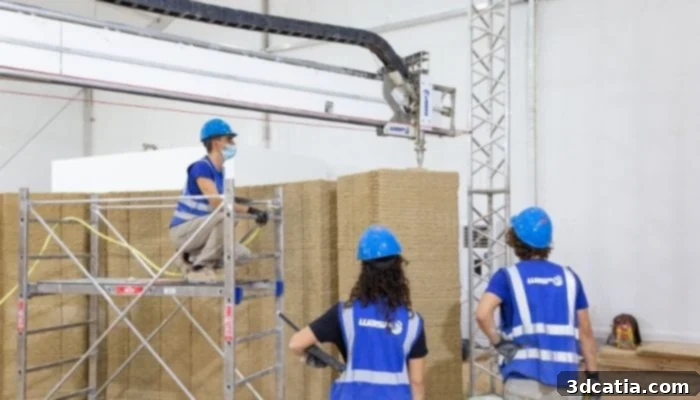
Crane WASP constructing the Dior pop-up on Jumeirah beach in Dubai. (Photo Credit: Ismail Noor / WASP)
Pioneering Sustainable Architecture with Crane WASP
WASP has consistently demonstrated its commitment to creating truly eco-friendly architecture, making significant and pioneering headway in its corporate mission. While many other 3D-printed architecture projects rely heavily on concrete, a material known for its substantial carbon footprint during production, WASP distinguishes itself by focusing on natural, locally sourced, and often recycled materials. This commitment to sustainability is at the core of their design and manufacturing philosophy, seeking to minimize environmental impact at every stage of the construction lifecycle.
A prime example of WASP’s dedication to sustainable building is the acclaimed TECLA eco-house project. Back in October 2019, WASP embarked on this ambitious collaboration with architectural specialists from the School of Sustainability in Italy. The goal was to design and construct an entirely 3D-printed eco-habitat using earth and other natural materials, showcasing a viable model for truly sustainable living. The TECLA project reached completion earlier, laying a robust foundation for subsequent ventures. Its success proved the practical application and scalability of WASP’s technology for creating habitable, energy-efficient structures from raw earth. This invaluable experience directly informed and enabled projects like the Dior pop-up, allowing WASP to deploy its advanced research in sustainable building materials in a commercial and high-profile setting, further validating its innovative approach to construction.
The Versatility of the Crane WASP Printer and Its Future Potential
The Crane WASP printer is a marvel of additive manufacturing engineering, boasting extraordinary versatility in its material capabilities. One of its most remarkable features is its ability to transform readily available natural stones into usable and durable building material, offering a sustainable alternative to conventional processed aggregates. Furthermore, the printer holds the capacity to recycle and reuse construction ruins, effectively turning waste into valuable new material for future projects. This circular economy approach significantly reduces landfill waste and the demand for virgin resources. The Crane WASP can also mix geo-polymers with clay to create innovative construction material compositions. While this particular capability is still undergoing intensive research and development, according to the WASP website, it represents a promising frontier for creating even more robust and environmentally friendly building compounds. These advanced material capabilities underscore WASP’s commitment to continuous innovation and its role in shaping the future of sustainable architecture. You can learn more about the Crane WASP and the specifics of the Dior project by visiting WASP’s dedicated page HERE.
Luxury Fashion Embraces Sustainable Innovation
Dior’s decision to utilize 3D printing with natural materials for its pop-up store in Dubai marks a significant moment for the luxury fashion industry. It signifies a growing awareness and commitment to sustainability that extends beyond product sourcing to encompass brand presentation and retail infrastructure. Luxury brands, often at the forefront of design and innovation, are increasingly recognizing the importance of aligning their practices with environmental responsibility. This collaboration with WASP not only positions Dior as a pioneer in sustainable luxury retail but also sets a precedent for how temporary structures and experiential marketing can be executed with minimal environmental impact. The unique aesthetic achieved through WASP’s technology, combining high-end design with organic textures, creates a distinctive and memorable experience for consumers, reinforcing Dior’s reputation for exclusivity and forward-thinking vision.
The success of the Dior and WASP collaboration opens up exciting possibilities for the future of retail spaces, particularly in sectors where temporary and modular designs are frequently employed. Imagine quickly deployable retail environments for global events, disaster relief housing built from local earth, or bespoke architectural elements created on-site with unprecedented speed and customization. This project demonstrates that 3D printing with sustainable materials is not just a niche application but a viable, scalable solution for a wide range of architectural and commercial needs. It champions a future where innovation and ecological consciousness go hand-in-hand, redefining the very essence of how we build and interact with physical spaces. The Dubai pop-up stands as a beacon for what is achievable when visionary brands and pioneering technology come together to create something truly transformative.
What are your thoughts on WASP’s 3D-printed concept store for Dior? Do you believe this innovative approach will become a standard for luxury brands and sustainable construction? We’d love to hear your perspective! Share your comments below or connect with us on our Linkedin, Facebook, and Twitter pages! Don’t miss out on the latest advancements in additive manufacturing—sign up for our free weekly Newsletter here to get the freshest 3D printing news delivered straight to your inbox! You can also find all our compelling videos and interviews on our YouTube channel.
Cover Photo Credit: Mohamed Somji / WASP