
LEGO’s Leap into the Future: The Iconic Wooden Duck Reimagined with 3D Printing
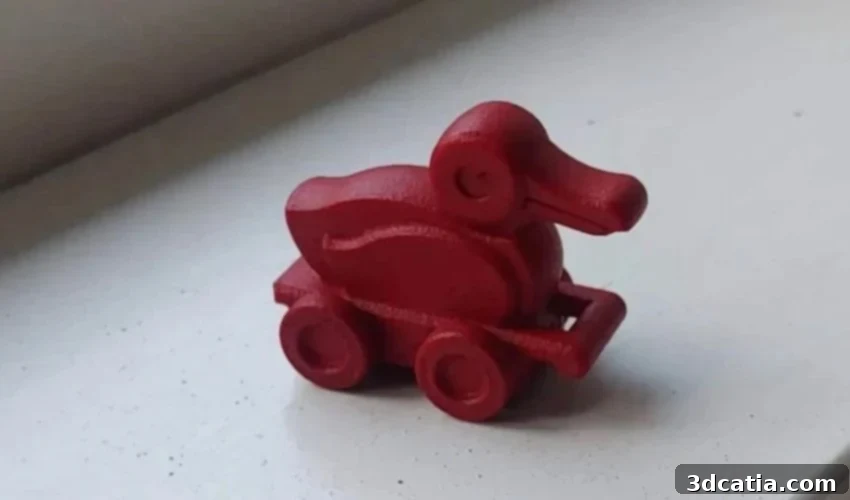
Few toys have captured the imagination of generations quite like LEGO. From humble beginnings in a small Danish workshop, these vibrant bricks have grown into a global phenomenon, inspiring creativity and problem-solving in children and adults alike. LEGO’s influence extends far beyond mere play; it’s a testament to innovative design, enduring quality, and a profound connection to its community of builders. Recently, at a special event hosted at the LEGO House – the ultimate experience center for LEGO enthusiasts – adult fans were treated to a truly unique unveiling: the second officially produced LEGO element created using cutting-edge 3D printing technology. This remarkable piece is a meticulously crafted duck, serving as an exact replica of a highly sought-after collectible, the LEGO House exclusive 40501 The Wooden Duck from 2020. This intersection of nostalgic heritage and advanced manufacturing signifies a pivotal moment for the company, showcasing its commitment to exploring new frontiers while honoring its rich legacy.
The Enduring Legacy of the LEGO Wooden Duck
To truly appreciate the significance of this 3D-printed marvel, one must understand the storied history of its inspiration. The original LEGO Wooden Duck, first introduced by company founder Ole Kirk Christiansen in 1935, is much more than a toy; it’s a symbol of LEGO’s foundational values and craftsmanship. Before the iconic plastic bricks dominated the market, LEGO produced a wide array of wooden toys, and the pulling duck was among its most popular and enduring designs. This early wooden duck featured a clever mechanism: as it was pulled along by a string, its beak would charmingly open and close, mimicking a real duck’s movement. This simple yet ingenious design encapsulated the playful spirit and mechanical ingenuity that would later define the LEGO System of Play.
Fast forward to 2020, LEGO released the 40501 The Wooden Duck, a highly coveted set designed as a tribute to this historical piece. This modern interpretation wasn’t made of wood but constructed entirely from LEGO bricks, comprising a total of 621 parts. Measuring approximately 28.5cm x 26cm x 7.5 cm, it faithfully recreated the original’s functionality, allowing its beak to open and close when pulled. This brick-built version quickly became a must-have for collectors and a poignant reminder of LEGO’s journey from a small carpentry shop to a global toy empire. The reverence for this design and its historical context is what makes the subsequent 3D-printed version so compelling – it represents a bridge between LEGO’s past, present, and future.
Bridging Heritage and Innovation at the LEGO House Event
The LEGO House in Billund, Denmark, serves as a beacon of LEGO’s heritage and a hub for creative exploration. It was the perfect setting for showcasing how retrospective children’s toys and modern technologies like 3D printing can harmoniously converge. The event, specifically tailored for adult LEGO fans, underscored the company’s appreciation for its most dedicated community members. These fans, who often delve deep into LEGO’s history and technological advancements, were uniquely positioned to grasp the profound implications of receiving a 3D-printed duck. Each attendee was gifted one of these intricately produced figures, offering them a tangible piece of LEGO’s innovative future.
Ronen Hadar, Senior Director of Additive Design and Manufacturing at LEGO, expressed immense satisfaction with the outcome of this pioneering project. He remarked, “The team has been working hard to develop, approve and manufacture this super cool element, in collaboration with our talented designers. This is an important milestone for the team. We are looking forward to share more news with you in the coming future.” Hadar’s comments highlight not only the technical achievement but also the collaborative spirit within LEGO that drives such innovations. It signals a clear intent from LEGO to continue exploring and integrating additive manufacturing into its operations, hinting at exciting possibilities yet to be revealed to the global fan community.
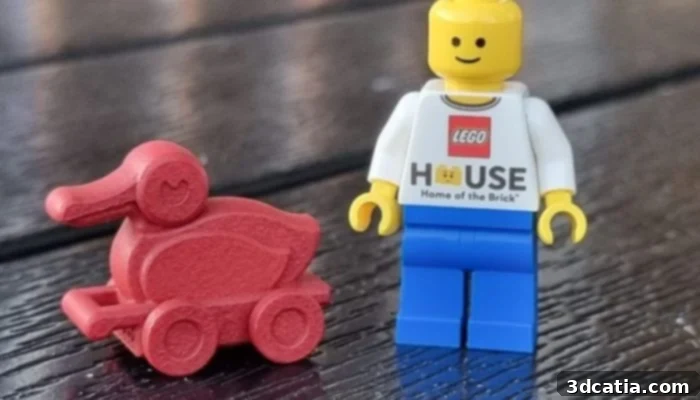
The 3D-printed duck was crafted using powder bed fusion and additive manufacturing techniques, demonstrating LEGO’s innovative approach.
Using 3D Printing for the LEGO Duck: A Technical Deep Dive
The mechanical complexity of the original wooden duck and its 2020 LEGO brick replica presented a fascinating challenge for 3D printing. The original wooden duck utilized a simple wire mechanism for its movement. In the 2020 brick-built release, this was ingeniously replaced with a combination of LEGO Technic elements, demonstrating the versatility of the LEGO system. For the miniature 3D-printed duck, the goal was to retain these essential functionalities – the moving beak and rolling wheels – but on a significantly smaller scale and as a single, cohesive part.
To achieve this, LEGO employed **powder bed fusion** technology. This additive manufacturing process involves using a laser or electron beam to selectively fuse powdered material layer by layer, building the object from the bottom up. For the LEGO duck, this method allowed the creation of the entire intricate toy as a single, monolithic piece, encapsulating the complex internal mechanisms within its solid structure. This approach is particularly advantageous for producing parts with complex geometries and integrated functionalities, making it ideal for the duck’s design. The ability to produce the entire functional model in one go significantly streamlines the manufacturing process for such specialized items, bypassing the need for assembly of multiple smaller parts, which would be typical for traditional LEGO construction.
This 3D-printed duck isn’t LEGO’s first foray into additive manufacturing. In 2019, the company unveiled its first official 3D-printed LEGO part: an arm for a drawing machine. This drawing machine was itself an integral part of an illustration used during the opening ceremony of the System House, an office building constructed in Billund in 1959. That initial venture into 3D printing was a proof-of-concept, demonstrating the viability of the technology for creating unique, custom components. The 3D-printed duck, however, marks a significant evolution, moving from a functional prototype part to a commemorative, collectible item that embodies the company’s heritage while pushing technological boundaries.
Why Additive Manufacturing? LEGO’s Strategic Embrace of 3D Printing
The decision by the Danish-based company to utilize additive manufacturing for the 3D-printed duck was a strategic one, primarily driven by the specific requirements of this project. Unlike mass-produced LEGO bricks, which are manufactured in staggering quantities using highly efficient injection molding, the 3D-printed ducks were produced in a very small, limited run. For such small batches, traditional injection molding would be prohibitively expensive due to the high upfront costs of tooling (molds). Additive manufacturing, with its ability to produce parts directly from digital designs without expensive molds, offered a far more cost-effective and agile solution for this particular application.
While it’s acknowledged that the surface quality achieved through powder bed fusion might not always match the ultra-smooth finish characteristic of injection-molded LEGO elements, 3D printing offered a critical advantage: the ability to maintain the duck’s complex functional capabilities. The integration of the moving beak and rolling mechanism into a single, small 3D-printed part would have been exceptionally difficult, if not impossible, to replicate with traditional methods for such a limited edition. This flexibility in design and manufacturing underscores why 3D printing is becoming an invaluable tool for companies like LEGO, allowing for rapid prototyping, production of intricate custom parts, and creation of niche, collectible items that wouldn’t be feasible otherwise.
This move also signals LEGO’s commitment to continuous innovation and exploring new manufacturing paradigms. While the 3D-printed duck is currently considered a temporary, commemorative part rather than a mass-produced item, its very existence opens doors to future possibilities. Could we see more limited-edition collectible items produced via 3D printing? Or perhaps custom parts for specialized sets, or even personalized LEGO elements for consumers? The potential for customized, on-demand manufacturing could revolutionize how LEGO interacts with its vast community of creators and collectors. This technology offers an unparalleled opportunity for LEGO to push the boundaries of what’s possible, not just in design, but in direct engagement with its fan base.
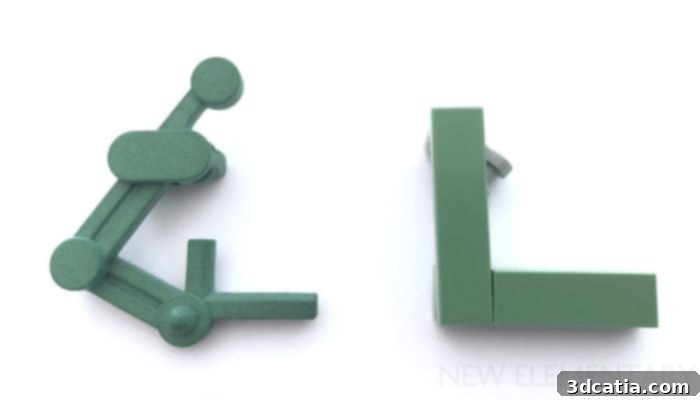
The official first 3D-printed LEGO part, a component for a drawing machine, debuted in 2019, paving the way for future additive manufacturing projects.
The Future of Play: What Does This Mean for LEGO and 3D Printing?
The introduction of the 3D-printed duck is more than just a novelty; it’s a profound statement about LEGO’s vision for the future of play and manufacturing. By embracing additive manufacturing, LEGO is demonstrating its dedication to pushing creative and technological boundaries, much like its founder did with wooden toys almost a century ago. This move suggests that 3D printing could play an increasingly vital role in various aspects of the company’s operations, from accelerating product development and prototyping to creating unique, intricate elements that would be difficult or impossible to produce using conventional methods. Imagine designers being able to rapidly iterate on complex new brick designs or even produce highly detailed minifigure accessories without the delays and costs associated with traditional tooling.
Furthermore, this venture into 3D printing aligns with a broader trend in the toy industry towards personalization and customization. While mass production remains core to LEGO’s business, additive manufacturing could unlock new avenues for offering bespoke products or short-run collectible items that cater to specific fan interests. This could deepen engagement with the adult fan community, who often seek unique and rare items. It also showcases LEGO’s commitment to sustainability by potentially enabling more localized production or reducing material waste in certain manufacturing processes, even if indirectly. The comments from Ronen Hadar about sharing “more news” in the future strongly hint at ongoing projects and a deeper integration of additive manufacturing into LEGO’s long-term strategy, promising exciting developments for fans and the industry alike.
What are your thoughts on LEGO’s innovative 3D-printed duck? Do you believe this marks a significant shift in how LEGO might produce special parts or even future sets? We’d love to hear your opinions! Let us know in a comment below or join the conversation on our LinkedIn, Facebook, and Twitter pages! Don’t forget to sign up for our free weekly Newsletter here to get the latest 3D printing news straight to your inbox! You can also find all our videos and more insights on our YouTube channel.
*All Photo Credits: LEGO