
Revolutionizing Aerospace: UK’s New Additive Manufacturing Hub for Future Flight Technology
The aerospace industry stands as a global beacon of innovation, perpetually pushing the boundaries of what’s possible in design, engineering, and manufacturing. This relentless pursuit of excellence is driven by an inherent need for unparalleled quality, exceptional durability, and absolute appropriateness of every single component, given the incredibly high stakes involved in flight technology. In this dynamic landscape, the recent establishment of a pioneering additive manufacturing (AM) space within a prominent aerospace center in the South West of the UK signals a transformative shift. This strategic development is poised to redefine how aircraft components are designed, produced, and certified, potentially paving a groundbreaking path for the next generation of flight capabilities and technological advancements.
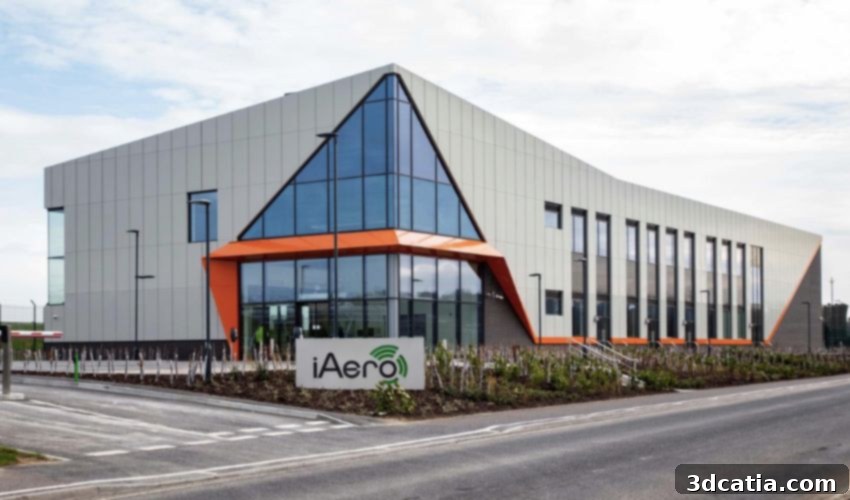
This visionary initiative is the result of a powerful collaboration between industry leaders and educational institutions. Leonardo Helicopters, a global aerospace giant, has partnered with Markforged, a leader in industrial 3D printing, alongside Yeovil College, a key educational provider, and Mark3D, Markforged’s trusted UK distributor. Together, they are injecting cutting-edge additive manufacturing capabilities into the aerospace center in Yeovil, Somerset. This ambitious project is spearheaded by the dedicated team behind the iAero project, known for its commitment to fostering innovation within the regional aerospace cluster. The facility itself is a testament to this commitment, boasting an expansive 2,398 square meters equipped with state-of-the-art machinery and flexible spaces designed to facilitate intensive research, development, and collaborative efforts. Austin Chick, the insightful Head of iAero, articulated the core ambition behind this endeavor: to cultivate “new products and high-value design and engineering solutions.” The overarching goal is to transform conceptual ideas into tangible realities, and additive manufacturing has been strategically chosen as the primary vehicle to achieve this. Beyond product development, the team is deeply committed to nurturing a vibrant ecosystem where seamless collaboration between established industries and agile startups flourishes, ultimately fostering a culture of entrepreneurship and forward-thinking innovation.
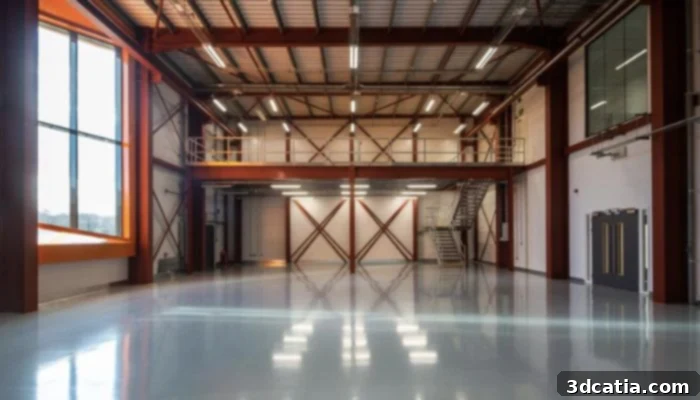
The center has big spaces suitable for conferences, collaborations, tests and workforces.
State-of-the-Art Technology and Material Innovation Driving Aerospace Forward
At the heart of this new additive manufacturing center lies a comprehensive suite of advanced technology. The facility is being meticulously equipped with Markforged’s full range of industrial 3D printers, including their flagship FX20 model. This arsenal of machines is complemented by an extensive array of material solutions, providing unparalleled versatility for aerospace applications. From high-performance ULTEM polymer, renowned for its strength, heat resistance, and chemical stability, to advanced composite materials like continuous carbon fiber, which offers an exceptional strength-to-weight ratio crucial for aerospace, and various engineering metals, the center is poised for diverse innovation. This broad spectrum of materials will empower the team to develop an impressive array of products, each possessing unique properties tailored for specific uses within the demanding aerospace environment. The ability to iterate designs rapidly and produce functional prototypes with flight-grade materials marks a significant leap forward in aerospace development cycles.
Beyond mere production, a critical aspect of this collaboration involves rigorous testing and certification. Leonardo Helicopters, leveraging its extensive expertise and stringent industry standards, will undertake the vital task of evaluating and certifying parts produced by Markforged printers. This process is not just about validating the technology; it’s about ensuring that these additively manufactured components meet the exacting safety, performance, and reliability requirements for flight applications. The data gathered from these tests will be instrumental in demonstrating the airworthiness of 3D printed parts, paving the way for their broader adoption in critical aerospace systems. This commitment to thorough validation underscores the industry’s cautious yet determined approach to integrating new manufacturing paradigms into an inherently safety-critical field. The potential for lighter, stronger, and more complex geometries, previously unachievable with traditional manufacturing methods, promises to unlock new levels of performance and efficiency in aircraft.
The South West: A Global Aerospace Powerhouse Embracing the Future
The choice of Somerset and the wider South West of England as the location for this cutting-edge facility is no coincidence. This region has long been recognized as a preeminent hub for the global aerospace industry, boasting a rich heritage of aviation innovation and a robust ecosystem of skilled professionals and advanced manufacturing capabilities. According to insightful data from iAero, the aerospace industry within this region exhibits a remarkable productivity rate, standing 30% higher than the national average across the broader economy. This impressive statistic underscores the inherent strength and efficiency of the local aerospace sector. The South West is home to significant operational branches of major international companies, including defense and security giant BAE Systems, industrial conglomerate Honeywell Helicopters, and the Italian aerospace and defense powerhouse Leonardo itself. These established players form the bedrock of a thriving aerospace cluster. The strategic introduction of state-of-the-art additive manufacturing technologies into this already formidable environment signifies a collective commitment from these leading firms to fully capitalize on the immense possibilities offered by 3D printing. This move not only solidifies the region’s position at the forefront of aerospace innovation but also demonstrates a forward-thinking approach to manufacturing that embraces advanced digital workflows, material science breakthroughs, and optimized production processes to maintain a competitive edge on the global stage.
This new additive manufacturing center will serve as a powerful catalyst, further enhancing the South West’s reputation as a dynamic hub for aerospace research and development. The integration of advanced manufacturing techniques promises to foster greater resilience in supply chains, enable rapid prototyping of complex designs, and facilitate the production of lightweight components that contribute to fuel efficiency and reduced operational costs. The economic ripple effects of such an investment are substantial. It is expected to create high-value jobs, attract further investment into the region, and stimulate the growth of ancillary industries supporting additive manufacturing. Moreover, by continuously pushing the boundaries of what is achievable with 3D printing in an aerospace context, the center will not only secure the region’s existing industrial strengths but also position it as a hotbed for future aerospace technologies, from advanced drone systems to next-generation commercial aircraft, ensuring that the South West remains an indispensable player in the global aerospace arena for decades to come.
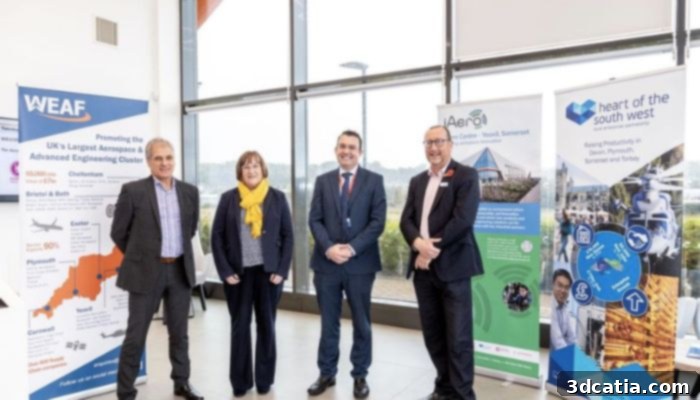
L-R Cllr David Woan Associate Lead Member for Economic Development & Inward Investment at SCC, Paula Hewitt, SCC’s Director for Economic and Community Infrastructure, Adam Clarke, Managing Director at Leonardo Helicopters UK and David Ralph, CEO of the LEP (Photo credit: Somerset County Council)
Fostering Talent and Sustainable Growth Through Multi-Sector Collaboration
While undeniably an industry-led collaboration, the scope and impact of this project extend far beyond mere corporate partnerships. It represents a truly integrated ecosystem, actively involving local government entities and the vital education sector. This multi-faceted approach ensures that the benefits of this innovation hub are widely distributed and contribute to sustainable regional development. A prime example of this integrated model is the direct involvement of Yeovil College, whose students will gain invaluable access to the state-of-the-art center. This direct exposure to industrial-grade additive manufacturing equipment and real-world aerospace engineering challenges provides an unparalleled educational opportunity. It allows younger generations to acquire crucial, in-demand skills in additive manufacturing and advanced aerospace technologies, directly addressing the growing skills gap within the industry. By bridging the divide between academic learning and practical application, the collaboration ensures a pipeline of highly qualified professionals ready to contribute to the future of aerospace.
This collaborative model champions a sustainable and socially conscious approach to industrial development. By investing in education and fostering local talent, the project not only secures the future workforce for the aerospace sector but also ensures that technological advancement is coupled with community empowerment. The center serves as a beacon for knowledge transfer, allowing students to learn directly from industry experts and participate in projects that have real-world implications. This initiative echoes similar progressive movements seen globally, such as Collins Aerospace’s decision to open a comparable additive manufacturing center in the US. Such examples clearly illustrate a growing international recognition among diverse groups — from multinational corporations to governmental bodies and educational institutions — of the profound possibilities offered by additive manufacturing. This technology is increasingly viewed not just as a tool for production, but as a strategic enabler for innovation, economic growth, and the cultivation of future engineering talent. To delve deeper into the specifics and broader vision of the iAero project, interested parties can gain further insights by clicking HERE.
The Future of Flight Takes Shape in the UK’s Aerospace Core
The establishment of this advanced additive manufacturing center in Yeovil signifies a pivotal moment for the UK aerospace industry and indeed, for global flight technology. By bringing together the formidable expertise of Leonardo Helicopters, the cutting-edge technology of Markforged, and the educational commitment of Yeovil College, the iAero project is creating a powerful nexus of innovation. This hub is not merely about producing parts; it’s about pioneering new design philosophies, validating novel materials, and fundamentally reshaping the entire aerospace manufacturing paradigm. The ability to rapidly prototype, customize, and produce intricate, lightweight components on demand will accelerate development cycles, reduce lead times, and enhance the overall performance and efficiency of future aircraft. This investment underscores a strategic vision that looks beyond immediate manufacturing needs, aiming to cultivate a resilient, innovative, and highly skilled ecosystem capable of tackling the complex challenges and seizing the incredible opportunities that lie ahead in advanced aviation.
The impact of this center will resonate across several critical areas. It promises to enhance supply chain resilience by enabling localized production of essential components, reducing reliance on distant or vulnerable global supply chains. Furthermore, the focus on testing and certification by a major player like Leonardo will accelerate the adoption of additive manufacturing in flight-critical applications, setting new benchmarks for quality and reliability. For the South West region, it cements its status as a global leader in aerospace innovation, attracting talent and investment. For the broader aerospace community, it serves as a powerful demonstration of how collaborative efforts, cutting-edge technology, and a commitment to education can drive transformative change. As the aerospace industry continues its trajectory towards more sustainable, efficient, and technologically advanced solutions, this additive manufacturing hub in the UK is perfectly positioned to play a crucial role in designing, developing, and delivering the flight technology of tomorrow.
What are your thoughts on this groundbreaking project and its potential impact on aerospace manufacturing? We invite you to share your insights and comments below, or engage with us on ourLinkedIn,Facebook, andTwitter pages! Don’t miss out on the latest advancements in 3D printing; sign up for our free weeklyNewsletter here to get news delivered straight to your inbox. You can also explore all our engaging videos and content on ourYouTube channel.
*Cover photo credit: Leonardo