
3D Printing Prosthetics: A Beacon of Hope in Humanitarian Crises and Remote Regions
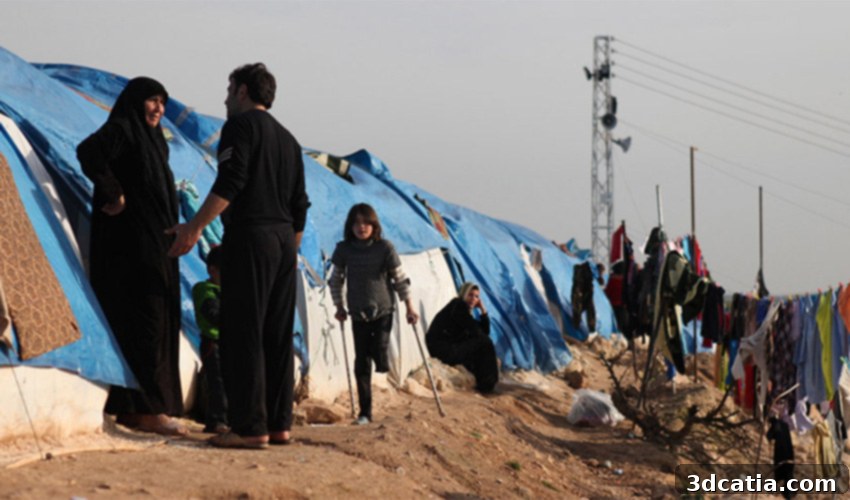
In an increasingly volatile world, the need for agile and accessible humanitarian solutions has never been more pressing. The ongoing Syrian conflict, for instance, saw the number of refugees skyrocket from 60,000 to 272,000 civilians in mere days, highlighting the urgent demand for efficient, affordable, and rapidly deployable tools. Amidst this backdrop of escalating crises, 3D printing technology is emerging as a transformative force, revolutionizing not just manufacturing but also the critical field of prosthetics, offering a tangible beacon of hope for millions.
Worldwide, an estimated 100 million individuals require orthopedic equipment, yet a staggering majority—between 85% and 95% in high-risk and remote areas—lack access to these essential devices. Traditional methods of prosthetic production face numerous hurdles in conflict zones and isolated communities: high costs, complex logistical chains, the scarcity of trained professionals, and the challenge of custom-fitting devices for unique patient needs. This is where additive manufacturing, commonly known as 3D printing, presents a powerful alternative. Its inherent advantages—significantly faster production cycles, limitless customization capabilities, and minimal material waste—make it an ideal solution for addressing the dire need for prosthetics in vulnerable populations.
LimbForge: Innovating Custom Prosthetics Through 3D Printing
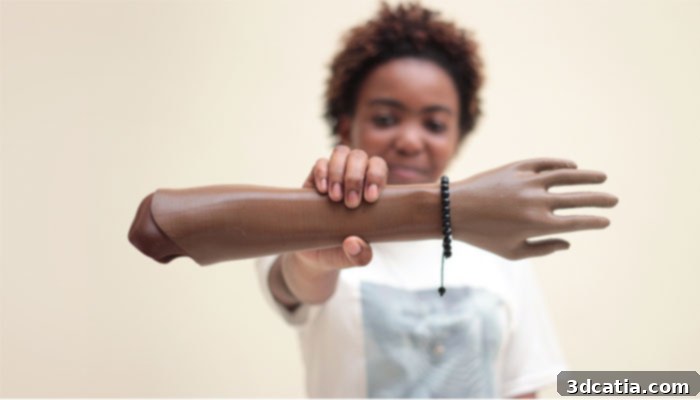
The potential of 3D printed prosthetics has garnered significant attention, moving beyond theoretical discussions to practical applications that are changing lives. We have previously highlighted inspiring stories, such as that of Dan Lasko, who received a 3D printed prosthetic after losing his leg during a tour in Afghanistan. His experience underscores the profound impact these custom-fitted devices can have on an individual’s mobility and quality of life. Indeed, the landscape of 3D printing prosthetics projects is diverse and continually expanding, catering to a wide spectrum of needs and challenging circumstances. Organizations like LimbForge stand at the forefront of this innovation, dedicated to providing advanced and affordable prostheses to developing countries and regions affected by conflict. Their work exemplifies how localized, technology-driven solutions can overcome the logistical and financial barriers that traditionally impede access to vital medical equipment.
LimbForge, for instance, utilizes advanced design software and 3D printing technology to create highly functional and aesthetically pleasing prosthetic limbs. By fostering partnerships with local clinics and technicians, they empower communities to produce prosthetics on-site, significantly reducing costs and lead times. This model not only delivers essential medical devices but also builds local capacity, ensuring a sustainable solution for long-term care. Their focus on user-centric design means that each prosthetic is tailored to the individual’s specific physical requirements and lifestyle, promoting better fit, comfort, and acceptance, which are crucial for successful rehabilitation and reintegration into daily life.
Humanity & Inclusion: Pioneering 3D Printed Prosthetics in Challenging Environments
Another prominent humanitarian aid association making significant strides in this area is Humanity & Inclusion (HI), formerly known as Handicap International. Renamed earlier this year, HI has been a pioneer in leveraging innovative technologies to assist vulnerable populations. Recognizing the transformative potential of additive manufacturing, HI launched a groundbreaking test project in 2016, aptly named “3D Prostheses.” This initiative was strategically deployed in diverse and challenging settings, including Togo, Madagascar, and war-torn Syria. The pilot study yielded exceptionally promising results, validating the efficacy and feasibility of 3D printed solutions in areas where conventional methods are impractical or impossible.
The core objectives of HI’s project were dual-faceted: to dramatically reduce the equipment costs associated with prosthetic limbs and to significantly broaden accessibility for people residing in hazardous or geographically isolated regions worldwide. Traditional prosthetics often involve expensive materials, specialized manufacturing facilities, and extensive fitting processes, making them inaccessible to many. By contrast, 3D printing offers a decentralized and cost-effective approach. The initial phase of the trial involved 19 carefully selected individuals, each representing a unique case study. The process began with the use of a small, lightweight 3D scanner to create a precise digital mold of the amputated limb. This digital model was then meticulously adapted to the patient’s specific needs through advanced digital modeling software, allowing for unparalleled levels of customization. Finally, the prosthetic socket—the critical interface between the residual limb and the prosthetic—was produced using a 3D printer. This innovative workflow ensured the creation of a cost-efficient, custom-fitted socket that perfectly matched the unique shape of the limb, providing superior comfort, fit, and functionality compared to mass-produced alternatives.
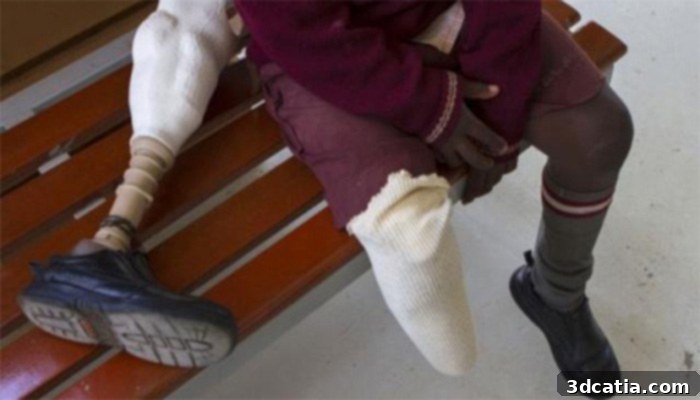
Building on the initial success and invaluable experience garnered from the pilot project, Isabelle Urseau, Head of Rehabilitation at Handicap International (now Humanity & Inclusion), confidently declared, “We will conduct a large-scale study to treat more patients in many parts of the world.” This commitment signaled a pivotal shift into phase two, where the trials were expanded to include a larger cohort of patients across multiple new locations, allowing for a more thorough evaluation and refinement of the methods. By the close of 2017, HI had set an ambitious goal: to equip over 200 patients in India and Syria with 3D printed prosthetics, demonstrating the scalability and global applicability of their approach. This expansion not only provided crucial support to individuals in dire need but also generated vital data for further improving the technology and deployment strategies.
The project’s scope further broadened with the initiation of a new, targeted initiative in West Africa. This expansion was specifically designed to reach disabled children and adults living in some of the most isolated areas of Togo, Mali, and Niger. To achieve this, HI established a network of four dedicated rehabilitation centers, with the actual 3D printing operations centralized in a specialized printing center located in Togo. This hub-and-spoke model allows for efficient production and distribution, ensuring that the technology and expertise are accessible to those who need it most, even in remote communities. The establishment of local printing capabilities also fosters economic development and knowledge transfer within these regions, creating sustainable solutions that go beyond merely providing devices.
The #Bodycantwait Campaign: Raising Global Awareness
To amplify their message and garner broader public support for their life-changing work, Humanity & Inclusion launched the compelling #Bodycantwait campaign in March of the preceding year. This impactful initiative was brought to life with the invaluable pro bono assistance of a dedicated production team and the creative minds at the Hérézie agency. The campaign’s strategy was ingeniously simple yet profoundly effective: it involved briefly outfitting a dozen iconic statues around Paris, each missing a limb, with custom-designed artificial prostheses. This powerful visual statement served to dramatically highlight the urgent need for prosthetic development and to galvanize fundraising efforts to support HI’s critical projects worldwide. The choice of public statues, often revered symbols of beauty and history, created an arresting juxtaposition that forced passersby to confront the stark reality faced by millions of amputees globally.
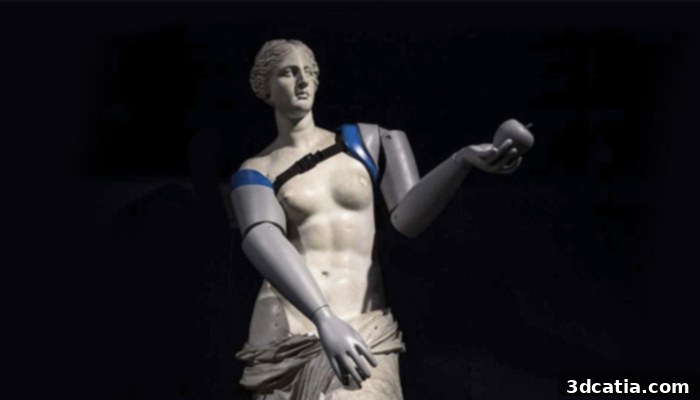
Venus de Milo with a 3D printed prosthetic arm, part of the #Bodycantwait campaign
The campaign strategically invited a select group of journalists and photographers to witness key moments, such as the temporary augmentation of the replica of the Venus de Milo outside the Louvres-Rivoli metro station. For several hours, this reimagined classical masterpiece, now adorned with a 3D printed prosthetic arm, became a poignant symbol of the campaign’s message. Subsequently, statues within Monceau Park were similarly equipped with prostheses, each installation meticulously documented to generate widespread media coverage. The goal was to “immortalize the moment” and leverage the power of visual storytelling to spread the word and create viral awareness through the #Bodycantwait hashtag across social media platforms. This innovative approach successfully transcended traditional awareness campaigns, engaging the public in a unique and memorable way, driving home the message that for individuals awaiting prostheses, every moment counts.
This initiative represents a monumental step forward in advocacy, bringing much-needed attention and resources to the plight of war victims and other individuals worldwide who have lost limbs. It underscores the incredible potential of innovative campaigns to foster empathy and drive action. However, Humanity & Inclusion is not alone in harnessing the power of 3D printing for humanitarian relief; other esteemed organizations are also actively contributing to this vital field, demonstrating a collective commitment to leveraging technology for good.
Doctors Without Borders (MSF) Embraces 3D Printing for Enhanced Patient Care
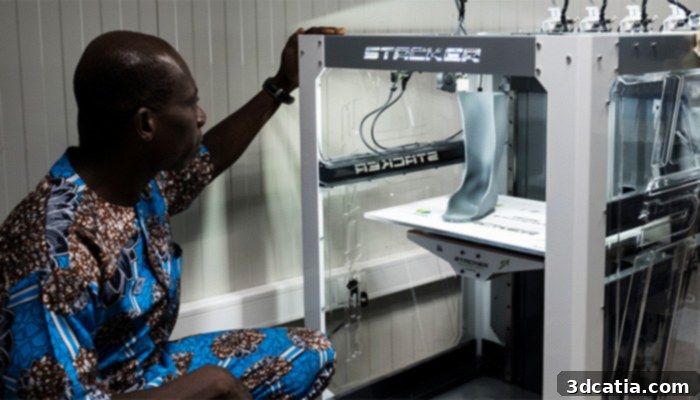
Doctors Without Borders (Médecins Sans Frontières, MSF), renowned for its critical medical humanitarian aid in crisis zones, has also been at the forefront of developing and implementing 3D printed solutions. Their impactful trial took place at the MSF Reconstructive Surgery Hospital, located within the Al-Mowasah Hospital in Amman, Jordan. This facility is strategically positioned to treat individuals severely injured in the Syrian conflict, as well as those affected by crises in Iraq and Yemen. In this highly challenging environment, MSF has similarly found 3D printing to be an undeniable success. Their findings unequivocally conclude that 3D printed prostheses offer a simple, speedy, and remarkably cost-effective solution, all while retaining the crucial ability to tailor each piece precisely to the individual patient’s unique needs. This level of customization is paramount for ensuring comfort, functionality, and successful rehabilitation, particularly for complex injuries sustained in conflict. The efficiency of 3D printing allows MSF to rapidly respond to urgent needs, providing high-quality prostheses much faster than traditional methods, thereby accelerating the healing and recovery process for countless patients. The flexibility of the technology also means that adjustments can be made easily, adapting to changes in the patient’s condition or growth, especially vital for children.
The success stories from organizations like Humanity & Inclusion and Doctors Without Borders paint a compelling picture of a future where advanced medical solutions are not exclusive to affluent nations but are readily available to those in the most desperate circumstances. The inherent advantages of 3D printing—its ability to produce complex, customized items on demand, with minimal waste, and often using relatively inexpensive materials—make it perfectly suited for the dynamic and resource-constrained environments of humanitarian aid. This technology facilitates localized production, reducing reliance on lengthy and vulnerable supply chains, which is a game-changer in remote or conflict-affected areas where infrastructure is often compromised. Furthermore, the capacity for rapid iteration and modification means that prosthetics can be quickly adapted and improved based on patient feedback and evolving needs, leading to better outcomes and higher patient satisfaction. This innovative approach not only restores mobility but also dignity and hope to individuals who have endured unimaginable trauma, empowering them to rebuild their lives.
What are your thoughts on the profound potential of 3D printed prosthetics as a transformative solution in remote and crisis-stricken areas? We invite you to share your perspectives and experiences in the comments section below, or connect with us on our Facebook and Twitter pages. Stay informed about the latest breakthroughs in additive manufacturing by signing up for our free weekly Newsletter, delivering all the essential 3D printing news directly to your inbox!