

HERON Project: Pioneering Sustainable Aeronautics with Advanced Additive Manufacturing
The esteemed Zaragoza-based Aitiip Technology Center has embarked on a pivotal journey, taking the helm of the groundbreaking European HERON project. This ambitious initiative stems directly from Europe’s resolute commitment to environmental stewardship, particularly in addressing the substantial carbon footprint of the aeronautics industry. At its core, the HERON project aims to revolutionize the production systems within this sector, which currently stands as one of the largest contributors to global CO2 emissions. In this transformative endeavor, Aitiip plays a crucial role, dedicating its expertise to developing an innovative suite of technological solutions. These solutions are specifically designed for manufacturing the essential tooling required to achieve the project’s objectives. Critically, these advanced tools will then be instrumental in producing next-generation components, including an environmentally friendly airplane wing demonstrator, setting a new benchmark for sustainable aviation.
In contemporary manufacturing, additive manufacturing, commonly known as 3D printing, and sustainability are increasingly recognized as intertwined concepts. Numerous studies and practical applications have repeatedly demonstrated that 3D technology offers significant environmental advantages over conventional manufacturing methods. These benefits are manifold: from substantial reductions in production times and material consumption, as only the precise amount of material needed is used, to minimizing waste and lowering energy expenditure during the manufacturing process. Furthermore, additive manufacturing processes often result in lower emissions of harmful gases compared to traditional techniques. Despite these advancements, the journey towards comprehensive sustainability, particularly within the highly demanding aeronautical industry, still presents considerable challenges and opportunities. The statistics underscore this urgency: according to data from the European Union, air transport accounts for approximately 2% of the staggering 36 billion tons of CO2 generated annually by human activities worldwide. This figure, though seemingly small, represents a growing challenge as air travel continues to expand globally. It is precisely for these reasons that 3D printing has been positioned as a central pillar of the HERON project, leveraging the innovative solutions pioneered by the Aitiip technology center to fundamentally alter these environmental impact figures.
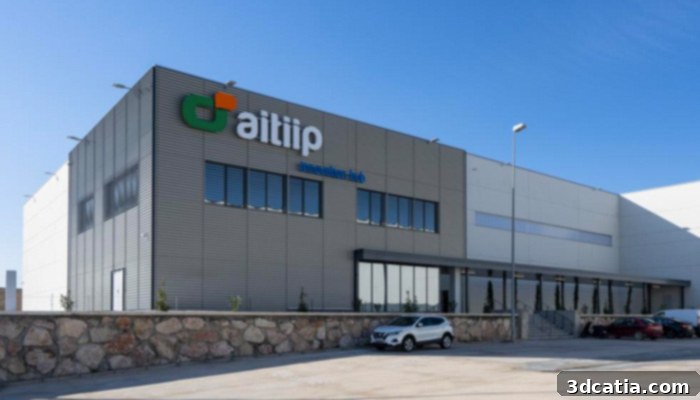
The Aitiip technology center leads the HERON project together with other European organizations, aiming for sustainable aviation.
Unveiling the Vision: What is the HERON Project?
The HERON project represents a significant European commitment to industrial innovation and environmental responsibility, backed by nearly 1 million euros in funding from the European Commission. This substantial investment highlights the strategic importance placed on transforming aeronautical manufacturing processes. The project’s core focus is the advanced development and production of specialized tools specifically designed for the intricate components of aircraft wings. These crucial parts include the leading edge, the torsion box, and the trailing edge – all vital for the aerodynamic performance and structural integrity of an aircraft. The overarching goal of HERON is to make aeronautical production processes not only more profitable but also inherently sustainable by thoroughly integrating the principles of the circular economy throughout the entire value chain. This means moving beyond linear “take-make-dispose” models towards processes that prioritize resource efficiency, waste reduction, and material reuse. To achieve this ambitious vision, the consortium of collaborating organizations within the project is dedicated to developing a sophisticated suite of advanced and intelligent technologies. This innovative approach combines the strengths of hybrid additive manufacturing techniques with ultra-high precision machining processes, promising unprecedented levels of accuracy, efficiency, and sustainability in tool production.
The advanced tooling produced through the HERON project’s innovative methodologies is set to usher in a new era of aeronautical design and performance. These tools will enable the manufacturing of aircraft wing components with significantly improved aerodynamic and kinematic parameters. Such enhancements directly translate into a more efficient aircraft design that consumes less fuel during operation. The project’s ambitious yet achievable target is to reduce CO2 emissions from new aircraft by a remarkable 30%. This reduction would represent a monumental step towards mitigating the environmental impact of air travel, contributing significantly to global climate goals. The HERON project’s methodology is intricately structured around several key strategic axes, each meticulously planned to address distinct facets of the challenge. These axes encompass material innovation, process optimization, digital integration, and circular economy principles. For instance, the project explores novel lightweight materials combined with advanced manufacturing techniques to create tools that are not only durable but also reduce the energy required for their production and use. The integration of intelligent technologies, such as real-time monitoring and AI-driven optimization, promises to enhance precision and minimize defects, further contributing to efficiency and waste reduction. Furthermore, the commitment to the circular economy extends beyond mere material recycling, aiming for a holistic lifecycle approach that considers energy consumption, emissions, and resource depletion at every stage, from raw material to end-of-life. This comprehensive strategy ensures that sustainability is embedded into the very fabric of the manufacturing process, rather than being an afterthought. While the development and implementation phases are underway, the potential impact of these initiatives and the integration of cutting-edge technologies into the final production processes are eagerly anticipated. The success of HERON could serve as a blueprint for other industrial sectors seeking to adopt more sustainable and efficient manufacturing practices. For those interested in delving deeper into the specifics of this groundbreaking European project and its ongoing progress, more information is available HERE.
The collaborative spirit driving the HERON project, bringing together leading European organizations and scientific expertise, underscores the collective commitment to fostering a greener future for aviation. By focusing on the foundational elements of manufacturing – the tools themselves – Aitiip and its partners are creating a ripple effect that will positively influence the entire aerospace supply chain. This approach ensures that sustainability is not just a feature of the final product but an intrinsic part of its genesis. The development of hybrid additive manufacturing capabilities, blending the precision of traditional machining with the design freedom and material efficiency of 3D printing, represents a paradigm shift. This synergy allows for the creation of complex, high-performance tools that are lighter, more durable, and produced with significantly less environmental impact. The direct benefit of these advanced tools, enabling the production of more aerodynamically efficient aircraft components, promises a tangible reduction in fuel consumption across airline fleets globally. This means not only a greener planet but also more economically viable operations for the aviation industry. The vision extends beyond the current project scope, aiming to establish new standards for manufacturing in aerospace and inspiring further innovation in sustainable practices across various high-tech industries. The HERON project is a testament to what can be achieved when innovation, collaboration, and environmental responsibility converge to tackle some of the most pressing challenges of our time.
The potential broader implications of the HERON project are vast. If successful, the methodologies and technologies developed could be scaled and adapted for other critical components of aircraft, and even applied to other transportation sectors striving for similar environmental improvements. The emphasis on a circular economy throughout the value chain is particularly forward-thinking, demonstrating a model where resources are conserved, waste is minimized, and materials are reused or recycled, effectively closing the loop in manufacturing. This holistic approach is essential for achieving true long-term sustainability. The technical innovations, particularly in hybrid additive manufacturing, showcase a path forward where the limitations of traditional manufacturing are overcome by combining the best of both worlds. This allows for the production of tools with complex internal structures that were previously impossible to create, leading to better performance and lighter weight, which are critical factors in aerospace. The project’s success will not only reduce CO2 emissions but also enhance Europe’s competitive edge in advanced manufacturing and green technologies. It represents a proactive step towards meeting the ambitious goals set by the European Green Deal, demonstrating how cutting-edge research and development can translate into real-world environmental and economic benefits. The lessons learned and the technologies developed through HERON will provide a robust framework for future sustainable initiatives in high-value industries. The continued progress of this project is therefore a beacon of hope for a more sustainable and efficient future in aeronautics and beyond.
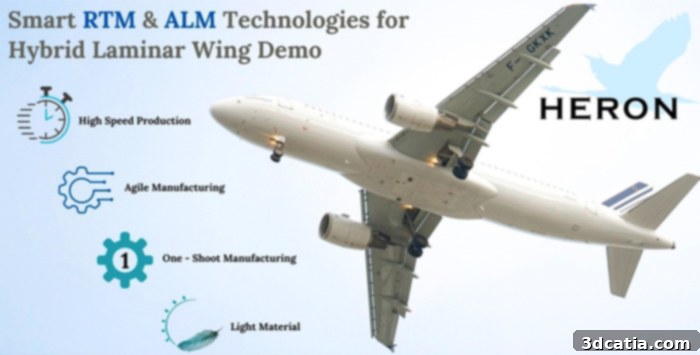
Photo Credit: HERON Project – Illustrating the future of sustainable aviation tooling.
We invite your thoughts on the groundbreaking advancements showcased by the HERON project and its potential impact on sustainable aviation. Share your insights in a comment below or join the conversation on our Facebook and Twitter pages. To stay informed about all the latest news in 3D printing and advanced manufacturing, don’t forget to sign up for our free weekly newsletter, delivered directly to your inbox!