
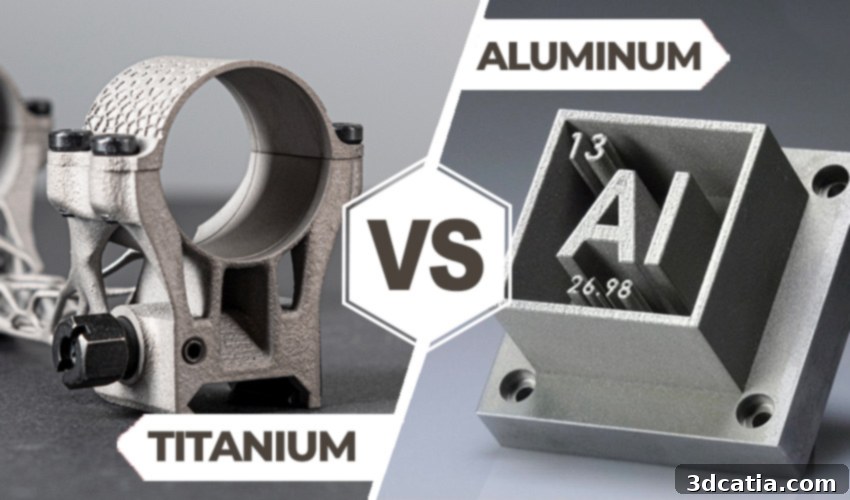
Titanium vs. Aluminum in 3D Printing: A Deep Dive into Properties, Processes, and Applications
In the rapidly evolving landscape of additive manufacturing, metal stands out as one of the most sought-after materials. Its exceptional properties, including high strength, durability, and performance under demanding conditions, make it the material of choice for critical industrial applications. This comprehensive article delves into two of the primary metals extensively utilized in industrial 3D printing: titanium and aluminum. These materials are predominantly processed through advanced techniques such as Laser Powder Bed Fusion (L-PBF) and Directed Energy Deposition (DED). For most industrial 3D printers, both metals are primarily available in powder form, enabling the creation of intricate and high-performance components. Here, we will explore their unique characteristics, understand their respective advantages and disadvantages in additive manufacturing, and compare their diverse applications across various sectors.
Titanium: Properties, Production, and Alloys for 3D Printing
The Extraction and Characteristics of Titanium
Titanium, a remarkable transitional metal, is not found as a free element in nature. Instead, it is primarily extracted from minerals like rutile (TiO2) and ilmenite (FeTiO3). The journey from ore to pure titanium is an intricate and energy-intensive process. The most widely adopted method for producing pure titanium is the Kroll method, a metallurgical process developed by William J. Kroll in 1940. This method involves several critical steps: initially, titanium dioxide (TiO2) is reacted with chlorine gas (Cl2) and carbon to produce titanium tetrachloride (TiCl4). This volatile liquid is then reduced with magnesium (Mg) in an inert atmosphere to yield titanium metal and magnesium chloride. While the Kroll method is effective in isolating pure titanium, it is known for its high operational costs and significant energy consumption. Furthermore, titanium’s inherent reactivity, particularly with oxygen and nitrogen at elevated temperatures, makes achieving ultra-high purity challenging. Consequently, a purity level of 99.9% is generally considered “commercially pure” titanium, and it is often combined with other elements to form alloys that enhance specific properties.
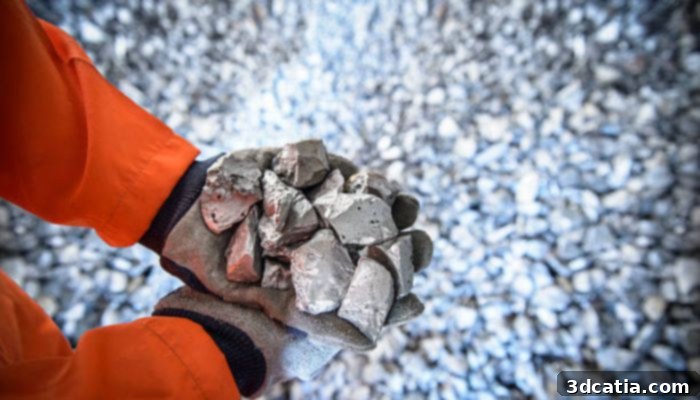
Photo Credits : Getty Images
The versatility of titanium stems from its extraordinary combination of properties, making it invaluable across numerous industries. While frequently used in alloy form to leverage synergistic effects with other elements, pure extracted titanium also finds specific applications, most notably in the medical industry due to its outstanding biocompatibility. Key characteristics of titanium include its exceptionally high mechanical strength, remarkable rigidity, and a low density that contributes to an excellent strength-to-weight ratio. Moreover, it boasts superior corrosion resistance, particularly against chlorinated environments, acids, and salt water, which broadens its utility in harsh operating conditions. These attributes make titanium a prime candidate for demanding applications where performance and reliability are paramount.
Key Titanium Alloys in Additive Manufacturing
The primary titanium alloys prevalent in 3D printing are:
- Titanium 6Al-4V, Grade 5: This is by far the most significant and widely used titanium alloy in additive manufacturing. Comprising titanium, 6% aluminum, and 4% vanadium, it is prized for its exceptional balance of high strength, impressive durability, and excellent corrosion resistance. Its ability to perform reliably in high-temperature and corrosive environments makes it ideal for critical components in aerospace, automotive, and industrial applications.
- Titanium 6Al-4V, Grade 23: Often referred to as “ELI” (Extra Low Interstitial), Grade 23 is a purer version of Grade 5, with reduced oxygen and iron content. This modification enhances its ductility and fracture toughness, making it the preferred choice for medical implants and prostheses where superior biocompatibility and fatigue resistance are crucial for long-term integration with the human body.
- Titanium Beta 21S: This high-strength beta titanium alloy offers superior oxidation resistance and better creep resistance compared to conventional alpha-beta alloys. Its unique metallurgical structure allows for excellent workability and heat treatment response, making it suitable for advanced applications such as orthopedic implants, high-performance aerospace engine components, and specialized orthodontic devices where higher strength and deformation resistance are required.
- Cp-Ti (Commercially Pure Titanium), Grade 1, 2, 3, 4: These grades represent unalloyed titanium with varying oxygen content, influencing their strength and ductility. Grades 1 and 2 are particularly favored in the medical industry for a wide range of applications, including dental implants and surgical instruments, owing to their excellent biocompatibility and formability. They offer a good balance of strength and ductility for less mechanically demanding applications compared to alloys.
- TA15: An advanced titanium alloy primarily composed of titanium, with precise additions of aluminum and zirconium. Components manufactured from TA15 exhibit outstanding strength and high-temperature resistance, making them exceptionally well-suited for robust parts in demanding aerospace structures and jet engines. Furthermore, its impressive strength-to-weight ratio contributes significantly to weight reduction in aircraft designs.
Aluminum: Characteristics, Production, and Alloys for 3D Printing
From Bauxite to Pure Aluminum: Production Methods
Aluminum is a light metal renowned for striking an excellent balance between lightness and strength, making it a cornerstone in modern engineering. Beyond its low density, it offers impressive corrosion resistance and good weldability. While pure aluminum is occasionally used, it is more commonly employed in alloy form, where the addition of elements like silicon and magnesium significantly enhances its physical and mechanical properties. The production of pure aluminum from its primary ore, bauxite, involves two sequential industrial processes. The first is the Bayer process, which refines bauxite into aluminum oxide (alumina). This involves washing and crushing the bauxite, dissolving it in caustic soda to form sodium aluminate, filtering out impurities, and then precipitating pure aluminum hydroxide. The hydroxide is subsequently heated to produce white alumina powder. The second stage is the Hall-Héroult process, an electrolytic reduction process that converts alumina into pure aluminum. This energy-intensive process typically takes place in large smelters, which are often strategically located near bauxite mines or abundant sources of electricity to minimize transportation costs and leverage lower power prices, given that electricity accounts for a substantial portion of the production cost.
Photo Credits: Getty Images
Versatile Aluminum Alloys for 3D Printing
As previously noted, aluminum alloys are far more prevalent than pure aluminum in industrial applications due to their superior performance characteristics. These alloys are highly valued for their exceptional strength-to-weight ratio, which is critical in industries like aerospace and automotive, where mass reduction is paramount. They also exhibit very good fatigue resistance, ensuring structural integrity under cyclic loading, and excellent corrosion resistance, protecting components from environmental degradation. Additionally, aluminum alloys are highly recyclable, promoting sustainability in manufacturing. Their impressive thermal and electrical conductivity makes them suitable for heat exchange and electrical components, and their low toxicity ensures safety in various applications, including consumer products.
The main alloys specifically designed or adapted for aluminum 3D printing include:
- AlSi10Mg: This is the most common and widely adopted aluminum alloy for additive manufacturing, primarily due to its excellent printability and favorable mechanical properties. Composed of aluminum, 10% silicon, and magnesium, it is ideal for producing solid, complex geometries. Its versatility allows it to be used for a diverse range of objects, including lightweight housings, intricate engine parts, and durable production tools, often where a balance of strength, ductility, and thermal properties is required.
- Al2139: Heralded as one of the strongest aluminum alloys available for additive manufacturing, Al2139 offers a compelling combination of lightweight characteristics, high strength, and superior chemical resistance. It was specifically engineered for additive manufacturing, demonstrating performance capabilities that often surpass those of many traditional aluminum alloys. Its impressive attributes have led to its adoption by prestigious organizations such as the U.S. Air Force, Mercedes-Benz, and Airbus, particularly for applications demanding peak performance under stress.
- Al 7000 series: This well-known series of aluminum powder alloys is characterized by exceptionally high tensile strength and excellent resistance to low temperatures. Alloys within this series, typically incorporating zinc as the primary alloying element, are highly sought after for structural applications in aerospace and defense where maximum strength and reliability in challenging environments are non-negotiable.
- Al 6061 & Al 7075: Recently, 3D printing manufacturers have achieved considerable success in adapting these traditional wrought aluminum alloys for additive manufacturing. While Al 6061 exhibits lower tensile strength and hardness, it offers good weldability and general-purpose utility. Conversely, Al 7075, with its higher zinc content, provides superior impact resistance and reduced deformation, making it preferable for applications requiring higher strength and fatigue resistance, though it can be more challenging to print.
- A201.1: Belonging to the 200 series of copper-aluminum alloys, A201.1 is distinguished by its very high strength, although it has historically been challenging to cast using traditional methods. With advancements in additive manufacturing, these challenges are being overcome, making A201.1 increasingly viable. These alloys are particularly recommended for applications where a paramount strength-to-weight ratio is crucial, such as in high-performance transportation and critical aerospace components.
Titanium vs. Aluminum: A Comparative Analysis of Their Core Differences
When evaluating titanium and aluminum for additive manufacturing, several key differences emerge that dictate their suitability for specific applications. In terms of strength-to-weight ratio, titanium is generally considered the superior choice. Its exceptional inherent strength combined with relatively low density makes it ideal for components where high robustness and structural integrity are critical, such as medical implants that must withstand physiological stresses or satellite components requiring minimal mass with maximum performance. Aluminum, while lighter and significantly more affordable, possesses a lower absolute strength compared to titanium. However, its excellent strength-to-weight balance still makes it highly competitive for many lightweighting applications.
Thermal properties also present a clear distinction. Aluminum excels in applications requiring high thermal conductivity, efficiently dissipating heat, which is beneficial for heat sinks or cooling channels. Titanium, conversely, stands out for its high melting point (approximately 1,668°C) and superior high-temperature performance, making it an optimal material for parts exposed to extreme heat, such as aerospace engine components and exhaust systems, where aluminum’s lower melting point (around 660°C) would be a limiting factor. Both metals boast excellent corrosion resistance, forming a passive oxide layer that protects them from degradation. However, titanium’s inertness extends to biological environments, granting it superior biocompatibility over aluminum, which is why it is almost exclusively used for long-term medical implants that interact directly with human tissue.
Material Forms and Compatibility with Additive Manufacturing Technologies
Optimizing Metal Powder for 3D Printing: Atomization Techniques
For the majority of metal additive manufacturing processes, titanium and aluminum are supplied in powder form, although wire forms are also available for certain technologies, notably from suppliers like Virtual Foundry or Nanoe. The quality and characteristics of this metal powder are paramount to the success and final properties of the 3D printed part. Alloy powders are primarily produced using atomization techniques, which transform molten metal into fine, spherical particles. Two prominent methods are plasma atomization and gas atomization.
Plasma atomization is an advanced process where a high-temperature plasma torch melts a metal wire or rod, and the molten stream is then disintegrated into fine droplets by a high-velocity inert gas (often argon or helium) within a controlled atmosphere. This process generates exceptionally high-quality, highly spherical, and clean metal powders with low oxygen content, making them ideal for critical applications requiring superior material properties and consistent performance. The resultant powders are also known for their excellent flowability, crucial for powder bed fusion processes.
Gas atomization, on the other hand, involves melting the metal in an induction furnace and then pouring the molten stream through a nozzle into a chamber where it is fragmented by high-pressure gas jets (air, argon, or helium). This is a highly efficient and widely used process for producing fine, spherical metal powders across various alloys. While generally cost-effective, the powder quality can vary depending on the gas type and atomization parameters. The chosen atomization technique significantly influences the powder’s morphology, size distribution, purity, and flowability, all of which directly impact the printability and final mechanical properties of the 3D printed component.
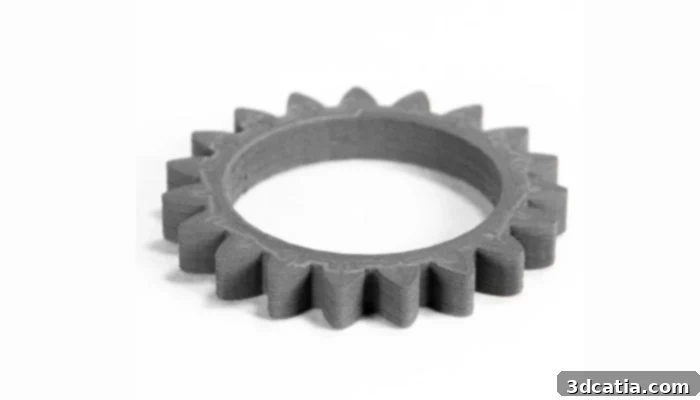
Unsintered 64-5 titanium gear (photo credits: SAPPHIRE3D)
3D Printing Technologies: Tailoring Processes for Titanium and Aluminum
The choice of 3D printing technology depends heavily on the specific metal being used and the desired application. Titanium can be processed using a variety of additive manufacturing techniques, including Laser Powder Bed Fusion (L-PBF), Directed Energy Deposition (DED), and Binder Jetting. For aluminum, in addition to these, Cold Spray technology is also gaining traction.
In Laser Powder Bed Fusion (L-PBF), a high-powered laser selectively melts thin layers of metal powder according to a digital design, solidifying them to build the object layer by layer. Titanium’s high melting point (approximately 1,668°C) necessitates powerful lasers and precise process control to manage the thermal and mechanical stresses induced during solidification. This process is excellent for producing intricate, high-density titanium parts with superior mechanical properties. Aluminum, with a much lower melting point (around 660°C), presents different challenges in L-PBF due to its high reflectivity and thermal conductivity. The laser energy tends to be reflected rather than absorbed, and heat dissipates quickly, which can lead to issues like incomplete fusion or porosity. Furthermore, aluminum forms a stable, thin oxide layer on its surface, which can interfere with the melting process and laser absorption, potentially slowing down the build and affecting print quality. Advanced machine parameters and specific powder chemistries are often required to overcome these challenges for aluminum.
Directed Energy Deposition (DED) is a process where metal powder or wire is fed into a melt pool created by a laser, electron beam, or plasma arc as it is deposited through a nozzle. The material melts as it is deposited, allowing for direct repair of existing components or the creation of new parts. DED typically offers higher material deposition rates and often results in lower cost per unit volume compared to L-PBF, making it suitable for larger components and repairs. Both titanium and aluminum can be processed efficiently with DED, offering flexibility in material form (powder or wire).
Binder Jetting involves depositing a liquid binding agent onto a powder bed, layer by layer, to selectively bond metal particles together. Unlike L-PBF or DED, the metal powder itself is not melted during this printing phase. The “green” parts produced are very fragile and porous, requiring extensive post-processing. This typically involves a debinding step to remove the binder, followed by a high-temperature sintering process in a furnace, which consolidates the metal particles and achieves the final mechanical properties and density. Binder jetting offers high production throughput and the ability to print complex geometries with various metals, including titanium and aluminum, making it a cost-effective option for mass production.
Cold Spray is another additive manufacturing process where metal powder particles are accelerated to very high velocities (supersonic speeds) and deposited onto a substrate. Upon impact, the particles deform plastically and bond to the substrate without melting, thanks to their kinetic energy. A key advantage of cold spray is that it avoids the heat-induced distortions and metallurgical changes associated with melting processes. Furthermore, it does not typically require a protective inert atmosphere, which simplifies the setup and reduces operational costs. This process is particularly useful for repairing parts, adding material to existing components, or producing thick coatings, and is compatible with both aluminum and titanium.
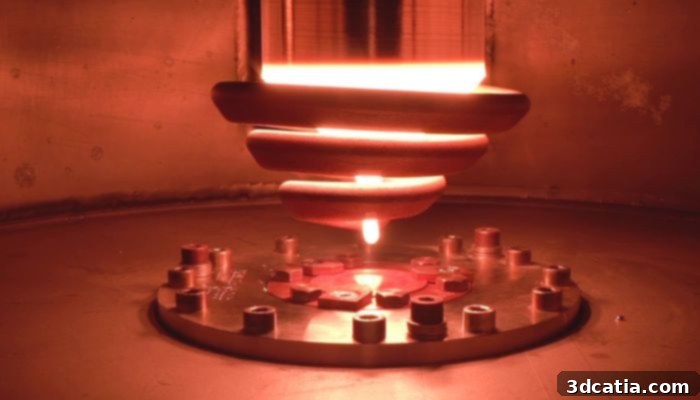
Photo Credits: Sandvik
Essential Post-Processing Steps for 3D Printed Metal Parts
To achieve optimal mechanical properties, dimensional accuracy, and surface finish, 3D printed metal parts, whether titanium or aluminum, invariably require one or more post-processing steps. While the fundamental principles apply to both materials, the specific parameters might vary based on material characteristics and application requirements. Since both titanium and aluminum are frequently employed in mechanically stressed applications, surface enhancement techniques like bead blasting and shot peening are highly beneficial.
In bead blasting, fine abrasive media, often small metal or ceramic beads, are propelled at high velocity against the surface of the part. This process cleans the surface, removes residual powder, and creates a uniform matte finish. More importantly, it induces a controlled compressive stress layer on the surface, which can improve the adhesion of subsequent coatings, reduce the likelihood of micro-cracks propagating, and enhance the part’s fatigue life. Shot peening, a similar but more aggressive process, uses spherical media (shot) to impact the surface, inducing deeper compressive residual stresses. This technique is particularly effective at increasing resistance to fatigue failure, stress corrosion cracking, and galling, essentially improving the part’s structural integrity and prolonging its service life by increasing its resistance to surface-initiated failures.
Another critical post-processing option involves combining additive manufacturing with traditional machining methods. CNC machining is a highly suitable technique for finishing 3D printed metal parts, as it ensures tight dimensional tolerances and achieves the desired surface finish. This is especially crucial for parts produced via DED technology, which often results in a relatively rough surface due to the nature of direct material deposition. Therefore, CNC machining is almost always necessary for DED parts to achieve smooth, precise, and functionally defined surfaces required for assembly or critical performance.
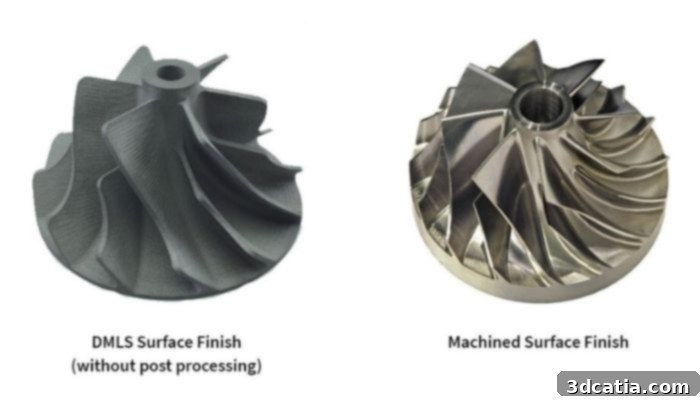
Photo Credits: FacFox
Solution annealing is a specific heat treatment option primarily employed for aluminum alloys, though similar treatments exist for titanium. This process involves heating the printed part to an elevated temperature, holding it for a specified period to dissolve alloying elements into a solid solution, and then rapidly cooling it (quenching). This alters the material’s microstructure, significantly improving its ductility – the ability to deform plastically under tensile stress before fracturing – and reducing internal stresses. Ultimately, solution annealing can lead to a considerable improvement in the overall mechanical properties of the part, making it more robust and reliable in service.
Finally, sintering is an absolutely essential post-processing step for both aluminum and titanium parts produced through indirect 3D printing processes, such as Binder Jetting or metal FDM (Fused Deposition Modeling) with composite filaments. After the initial printing phase, these “green” parts consist of metal powder bound together by a polymer binder. They must first undergo a debinding process to remove the polymer. Subsequently, the parts are heated in a specialized sintering furnace to a temperature just below the metal’s melting point. During sintering, the metal particles bond together through solid-state diffusion, consolidating the final object. This process densifies the part, closing the microscopic cavities left by the removed binder, and results in components with very low porosity and significantly enhanced mechanical strength, achieving their final functional properties.
Real-World Applications of 3D Printed Titanium and Aluminum
Aerospace: Lightweighting and Performance
The aerospace industry has been at the forefront of adopting additive manufacturing for titanium components, leveraging its exceptional strength-to-weight ratio, high-temperature resistance, and corrosion immunity. Titanium is an ideal material for manufacturing critical aerospace parts, such as complex jet engine components, gas turbine parts, and structural elements, where significant weight reduction without compromising performance is paramount. A prime example is Boeing’s landmark partnership with Norsk Titanium to produce large structural components for the 787 Dreamliner. Utilizing DED technology, this collaboration has reportedly achieved production speeds 50 to 100 times faster than powder-bed systems and reduced titanium waste by 25% to 50% compared to traditional forging methods, leading to potential savings of up to $3 million per aircraft. This not only enhances fuel efficiency but also allows for more design freedom and reduced lead times.
While titanium makes strides in space exploration through 3D printing, aluminum applications in the aerospace industry have also multiplied, driven by its lightweight nature and cost-effectiveness. Boeing, for instance, has innovated by producing 3D printed parts from aluminum alloys coated with nanoparticles during the cooling phase. This breakthrough enables the welding of extremely strong aluminum alloys without susceptibility to hot cracking, a common issue. The resulting manufactured parts are substantially lighter, contributing to improved fuel efficiency for aircraft and extending their range on the same amount of fuel, offering significant operational advantages and environmental benefits.
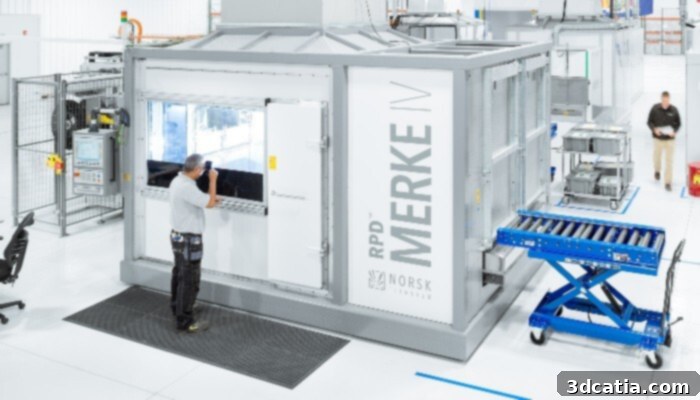
This machine makes parts for the Boeing 787 (photo credits: Norsk Titanium)
Automotive: Enhancing Performance and Efficiency
In the automotive sector, while the higher cost of titanium may limit its widespread adoption, its use is steadily increasing, particularly in the luxury and high-performance segments. Here, 3D printing is leveraged to create bespoke parts where an optimal weight-to-performance ratio is critical. A notable illustration is Bugatti’s use of SLM (Selective Laser Melting, a type of L-PBF) technology to 3D print brake calipers for its titanium brake system. This complex component was produced in just 45 hours, resulting in a part reportedly 40% lighter than a conventionally milled aluminum brake caliper. Despite its reduced weight, the 3D printed titanium caliper maintains exceptional elasticity, superior temperature resistance, and robust mechanical properties required for extreme braking forces, showcasing the transformative potential of additive manufacturing in pushing automotive performance boundaries.
Aluminum, on the other hand, is even more prevalent in the automotive industry due to its advantageous combination of light weight, strength, and cost. Porsche has embraced 3D printing to create high-performance aluminum pistons for its flagship 911 GT2 RS model. By utilizing this technology, the 700-hp twin-turbo engine achieved an impressive gain of up to 30 hp and improved overall efficiency, demonstrating the tangible benefits of optimized component design possible with AM. Furthermore, in 2020, Porsche successfully produced an entirely 3D printed aluminum housing for an electric transmission, which passed all of the company’s rigorous quality and load tests, paving the way for further integration of additive manufacturing in electric vehicle components and powertrain systems.
Medical: Biocompatible Implants and Custom Devices
The medical industry finds titanium an incredibly attractive material due to its unique blend of high strength, excellent corrosion resistance, and, crucially, its exceptional biocompatibility. These properties make it the ideal choice for a wide array of orthopedic and dental implants, where direct contact with biological tissue and long-term integration are essential. 3D printing further augments titanium’s utility by enabling the creation of intricate porous structures that closely mimic the texture and architecture of natural bone. This biomimetic design significantly enhances osseointegration, promoting rapid healing, improved bone ingrowth, and successful tissue regeneration around the implant. A compelling example is TrabTech in Turkey, which specializes in manufacturing trabecular titanium implants, such as custom hip components, tailored to individual patient anatomy, thereby improving surgical outcomes and patient recovery. While titanium dominates the medical implant sector, aluminum is less common for direct implant applications due to its lower biocompatibility. However, it can still be utilized for certain medical devices, external prosthetics, or non-implantable orthopedic and dental applications where its lightweight properties and affordability offer advantages.
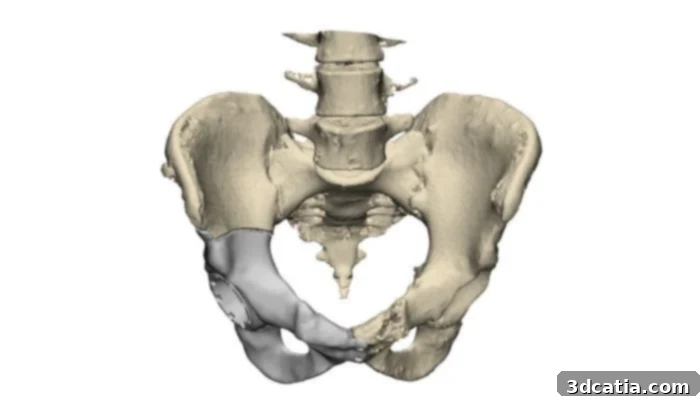
TrabTech manufactures trabecular titanium implants (photo credits: TrabTech)
Cost Considerations and Leading Manufacturers in Metal 3D Printing
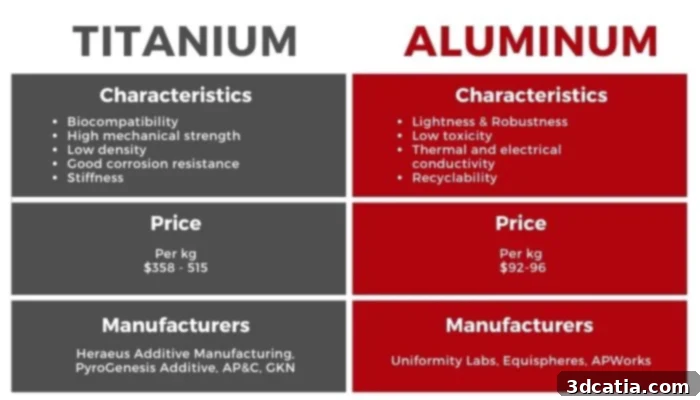
One of the most significant factors differentiating titanium and aluminum in additive manufacturing is their cost. Titanium’s intricate extraction process, combined with its high demand for critical applications, contributes to its premium price point. According to Wohlers Report 2021, Ti-6Al-4V titanium alloy powder or commercially pure Grade 2 titanium typically costs around 363 USD per kilogram, placing it squarely in one of the highest price segments for metal powders. In stark contrast, aluminum is considerably more affordable. For instance, AlSi7 aluminum alloy powder is available for approximately $94/kg, and AlSi10Mg for about $98/kg. This substantial price difference makes aluminum a more accessible and cost-effective choice for a broader range of industrial applications, particularly where high volumes or lower material budgets are a concern.
On the manufacturing side, several key players specialize in producing high-quality metal powders for additive manufacturing. Heraeus Additive Manufacturing, a German company renowned for its expertise in precious metal processing, produces various grades of titanium powder, including the widely used 6Al-4V (Grade 5) and the biocompatible 6Al-4V (Grade 23). GKN Additive, another global leader, offers a range of pure titanium powders and specialized alloys like Beta 21S titanium. In the aluminum segment, Uniformity Labs and Equispheres are prominent suppliers known for their advanced AlSi10Mg aluminum alloy powders, engineered for superior printability and mechanical properties. APWorks, a subsidiary of Airbus, specializes in developing and producing high-performance aluminum alloy powders, including advanced 7000 series aluminum alloys, pushing the boundaries of what’s possible with aluminum in additive manufacturing. These manufacturers are continually innovating to improve powder characteristics, enabling more efficient and reliable 3D printing of both titanium and aluminum components.
Conclusion
Both titanium and aluminum have carved out indispensable niches in metal additive manufacturing, each bringing a unique set of advantages to the table. Titanium, with its unparalleled strength-to-weight ratio, exceptional corrosion resistance, high-temperature performance, and critical biocompatibility, remains the material of choice for the most demanding applications in aerospace, defense, and medical implants, despite its higher cost. Aluminum, on the other hand, offers a compelling balance of lightness, good strength, excellent thermal conductivity, and affordability, making it highly versatile for automotive, general industrial, and more cost-sensitive aerospace components. Understanding their distinct properties, complex production methods, specific alloy compositions, and compatibility with various 3D printing technologies is crucial for engineers and designers to make informed material selections. As additive manufacturing continues to advance, the capabilities and applications of both titanium and aluminum are set to expand, driving innovation across countless industries and enabling the creation of components that were once impossible to fabricate.
Do you primarily utilize titanium or aluminum in your additive manufacturing projects? Share your insights and experiences in the comments section below, or connect with us on our LinkedIn, Facebook, and Twitter pages! For the latest updates and breaking news in 3D printing, don’t forget to sign up for our free weekly Newsletter here. You can also explore our extensive video library on our YouTube channel.