
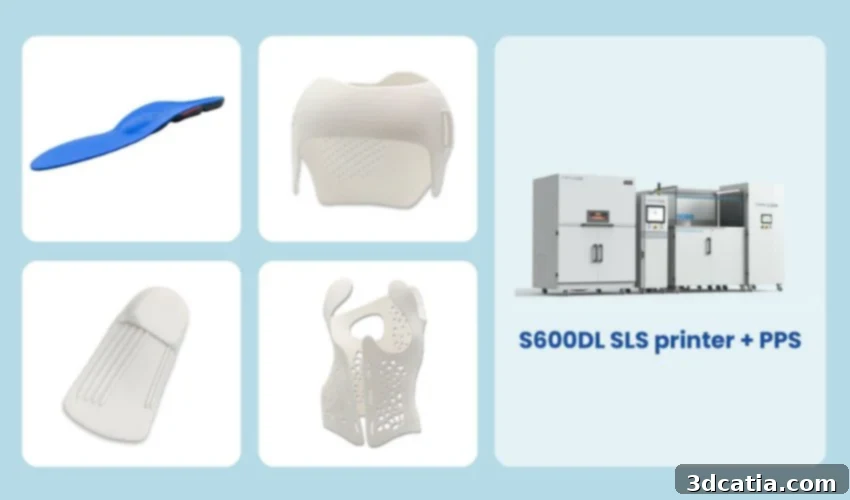
Edser & TPM3D: Pioneering Personalized Orthotics with Advanced SLS 3D Printing for Enhanced Patient Care
In an increasingly interconnected and rapidly advancing world, the demand for customizable solutions tailored to individual wishes and needs has become a pervasive phenomenon. This trend is evident across all aspects of modern life, from our communication methods and professional landscapes to consumer choices and, crucially, healthcare. Modern medicine, in particular, is dedicated to delivering bespoke solutions designed to significantly improve patient care and enhance the quality of life for those affected by various conditions. A pivotal technology enabling such personalization in medical devices and therapeutic aids is additive manufacturing, widely known as 3D printing. Embracing this cutting-edge approach, Edser, a renowned Spanish manufacturer with a rich history in orthotics and insoles, has successfully adopted 3D printing, thereby achieving unparalleled flexibility, adaptability, and superior quality in its production processes.
Edser brings nearly three decades of invaluable experience to the manufacturing of clinical orthotics, specialized medical insoles, and custom-designed fashion and performance soles. With profound international expertise, the company serves a broad and diverse customer base, offering a comprehensive range of solutions. Their product line includes vital orthotics for patients dealing with complex conditions such as scoliosis, cerebral palsy, or strephenopodia/strephexopodia. Beyond these highly specialized clinical applications, Edser also produces protective masks, high-performance shin guards for athletes, and a variety of insoles for everyday use, including those tailored for normal shoes, high heels, and specialized insoles for individuals with diabetic foot conditions, among other unique requirements. This expansive product portfolio underscores Edser’s deep commitment to addressing a wide spectrum of patient needs, where customization and precision are not merely desirable but absolutely essential for effective treatment and maximum comfort.
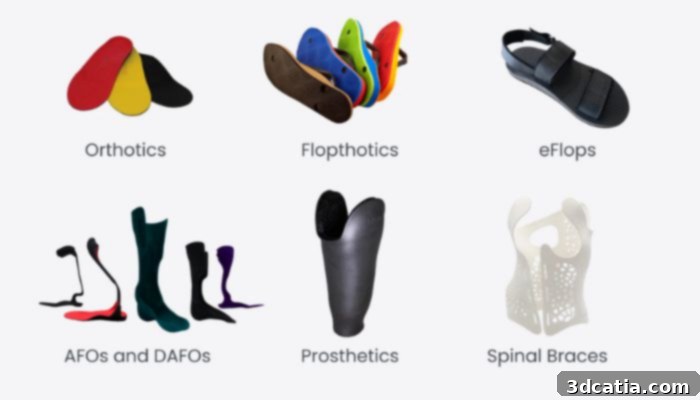
Edser’s extensive product range, illustrating the versatility of custom medical devices.
In response to the escalating demand for rapid and highly customized medical products, Edser strategically transitioned to 3D printing. This pivotal move led them to establish a strong alliance with TPM3D, a leading Chinese manufacturer of advanced 3D printing solutions. This collaboration has been instrumental in transforming Edser’s traditional production methods into a streamlined, efficient digital workflow. Through this synergistic partnership, Edser has effectively migrated to high-volume, high-precision, and truly personalized manufacturing using Selective Laser Sintering (SLS) 3D printing technology. This integration has empowered Edser to produce its innovative medical devices faster and more cost-effectively than ever before, directly translating into heightened user satisfaction and superior patient outcomes. The inherent capabilities of SLS printing, allowing for the creation of intricate designs and complex geometries without the limitations of traditional molds, have opened up new avenues for personalized medical device innovation.
A Seamless Digital Workflow for Faster, More Precise Orthotic Manufacturing
The success story of Edser’s enhanced production capabilities is rooted in an incredibly efficient digital workflow, where powerful 3D printing solutions serve as the core enabling technology. To fully appreciate this transformation, let’s explore the step-by-step process, using the example of customized insoles, which exemplifies the precision, speed, and patient-centric approach that this new paradigm offers in personalized healthcare.
The initial and critical phase of this workflow involves acquiring accurate 3D data of the patient’s foot. This is performed either by the patient themselves or, more commonly, by a qualified podiatrist. To facilitate this crucial step, Edser has developed its own innovative scanning application, WIKYSCAN. This proprietary app harnesses advanced LiDAR technology, which uses laser pulses to measure distances and create highly detailed three-dimensional models. The significant advantage of WIKYSCAN is its broad compatibility with readily available devices like iPhones or iPads, making the scanning process remarkably accessible and user-friendly. The high-resolution data captured by LiDAR ensures an exceptionally precise digital representation of the foot, forming the fundamental basis for creating perfectly fitting and functionally effective orthotic devices.
Once the detailed 3D scan data is acquired, it undergoes a meticulous digital processing stage. During this phase, an experienced podiatrist plays an active role, utilizing specialized software to review, refine, and adapt the design of the insole. This involves more than just simple manipulation; it’s a precise, expert-driven process where the podiatrist can meticulously tailor the insole’s geometry, support structures, and pressure distribution. These adjustments are made in strict accordance with the individual patient’s specific medical needs, unique foot conditions, and the precise prescriptions provided by healthcare professionals. This integrated approach, blending human expertise with digital design tools, ensures that each custom insole is not just uniquely shaped but also therapeutically optimized to address the wearer’s distinct biomechanical requirements, maximizing both comfort and clinical efficacy.
Following the precise digital design, the manufacturing process moves to the core of additive manufacturing: 3D printing. For this pivotal stage, Edser utilizes the cutting-edge TPM3D S600DL system, a highly advanced SLS printer. This industrial-grade machine is equipped with dual 140 W lasers, which significantly accelerate printing speeds and enhance efficiency, and features an exceptionally generous build platform measuring 600 x 600 x 800 mm. The S600DL adheres to rigorous EU safety standards and holds TÜV CE certification, affirming its reliability and safety for demanding medical applications. A proprietary algorithm intelligently coordinates the two lasers, ensuring optimal print quality with remarkable detail and superior surface finish. Furthermore, a rapid scan speed of up to 2 x 25 m/s guarantees high throughput, essential for customized serial production. For Edser, the sheer size of the build platform was a decisive factor, as a company representative articulated: “It is one of the few 3D printers on the market with such capability in volume printing, for manufacturing large parts and revolutionizing the orthotic world. It enables the creation of designs in one piece that are fully adapted with complex geometries.” This unparalleled capacity is critical for efficiently producing large orthotic devices or batching multiple custom insoles in a single print job, thereby drastically shortening production cycles and boosting output.
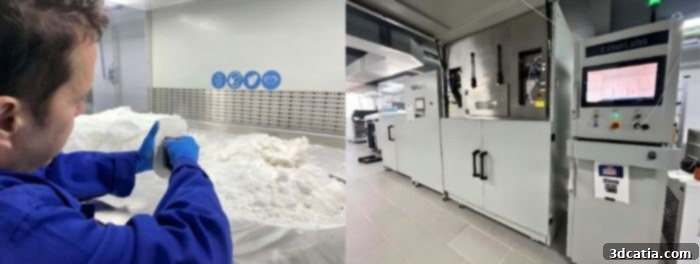
Depowdering, a crucial post-processing step for SLS 3D printed medical devices (credits: Edser).
The selection of the right material is paramount for ensuring the performance, durability, and comfort of medical orthotics. Edser exclusively employs TPM3D PP Pro, an advanced polypropylene-based powder specifically formulated for SLS 3D printing. This material is highly regarded for its exceptional mechanical strength and robust chemical resistance, making it incredibly durable for daily use and varied environments. Furthermore, PP Pro exhibits very low water absorption, which contributes to maintaining hygiene and structural integrity over time. Its inherent lightness is a significant benefit for wearable medical devices, ensuring patient comfort without adding unnecessary bulk. A standout characteristic of PP Pro is its excellent malleability: after printing, the material can be easily reshaped with heat, allowing for precise comfort adjustments to the orthotic device—a feature highly valued in custom medical applications where fine-tuning is often necessary. Beyond its superior physical attributes, TPM3D PP Pro also contributes significantly to a positive overall ecological balance and cost-efficiency. The innovative powder system requires only 20% new powder per batch, with the remaining 80% efficiently recovered and recycled from previous prints. This dramatically reduces material waste. When combined with intelligent nesting software and strategic print planning, this process can achieve nearly 100% material utilization. This not only minimizes environmental impact by reducing waste but also substantially cuts down manufacturing costs, making personalized orthotics more accessible and sustainable.
Addressing any potential skepticism regarding the transition from traditional manufacturing materials, Edser confidently asserts that TPM3D PP Pro performs exceptionally well, often matching or even surpassing its conventional counterparts. As an Edser representative noted, “PP Pro is quite similar to traditional polypropylene used for making insoles and customers like it, because they can adapt and work as usual. Like other technologies, using PP for printing requires a very good understanding of environmental conditions and the rugosity of the part, but we achieved similar results in terms of mechanical properties from TPM3D PP Pro material and traditional PP.” This assurance highlights the material’s ability to consistently replicate the desirable mechanical properties of traditional polypropylene, ensuring that the 3D-printed orthotics deliver equivalent or superior performance and feel, while leveraging the numerous advantages of additive manufacturing.
Once the printing phase is complete, the crucial post-processing stages begin, transforming the raw printed parts into final, patient-ready medical devices. TPM3D’s advanced powder post-processing station (PPS) plays a vital role in streamlining this complex workflow. The PPS efficiently manages several critical tasks: automated powder removal from the printed components, systematic powder recovery for reuse, precise mixing of recycled and fresh powder, and real-time feeding of new powder back into the printer for continuous operation. This automated system is particularly invaluable for Edser’s high-volume series production requirements, as it substantially reduces the need for manual handling, minimizes potential human error, and ensures a consistently clean and highly efficient workspace. In addition to powder management, other specialized processes are employed in the finishing of the printed parts to enhance their functionality, aesthetics, and patient comfort. These include vapor smoothing, which refines the surface finish and improves the tactile feel of the device, and sandblasting, which can be used to achieve specific textures or further prepare surfaces for additional treatments. Once these comprehensive post-processing steps are completed, the personalized 3D-printed medical devices are meticulously prepared for direct delivery to the patient, marking the successful culmination of an efficient and highly customized production cycle.
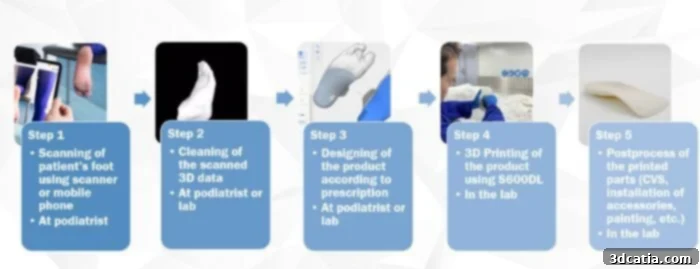
Edser’s integrated digital workflow, powered by TPM3D technology, for efficient custom orthotic production (credits: Edser).
SLS 3D Printing: Transforming Orthotic Production for Superior Patient Outcomes and Cost Efficiency
The strategic adoption of TPM3D’s advanced SLS 3D printing solutions has empowered Edser to effectively overcome numerous production challenges commonly encountered in traditional manufacturing processes. Critically, Edser can now provide patients with highly customized medical products, such as orthotics and insoles, within significantly reduced lead times. This accelerated product development and manufacturing cycle is a game-changer in healthcare, dramatically shortening patient waiting periods and facilitating faster therapeutic interventions. Beyond mere speed, other notable achievements include profound improvements in overall operational efficiency and enhanced product performance, establishing new benchmarks for personalized medical device manufacturing.
A fundamental factor contributing to this newfound efficiency is the expansive build volume of the TPM3D S600DL printer. This generous capacity enables the simultaneous production of multiple parts in a single print run, whether these are large, complex orthotic devices or numerous small batches of custom-designed insoles. This capability is vital for both scaling production to meet high demand and managing diverse, individualized orders effectively. Furthermore, the printer’s innovative dual-laser scanning system has dramatically cut down the printing speed per layer by almost 50%, translating into substantially quicker completion times for even the most intricate designs. This powerful combination of large-scale batch production and accelerated printing is indispensable for addressing the burgeoning demand for personalized medical devices with efficiency and precision.
Moreover, SLS 3D printing inherently excels at facilitating the creation of highly complex geometries, including intricate hollow structures and sophisticated lattice designs, all without the need for cumbersome support structures that typically require time-consuming removal during post-processing. This unparalleled design freedom has profoundly elevated the performance and functionality of Edser’s 3D-printed products. For example, in the context of insoles, the ability to integrate advanced lattice structures allows for meticulous fine-tuning of hardness and flexibility in different areas of the device. This provides targeted support and cushioning precisely where it’s needed most, while simultaneously ensuring the product remains exceptionally breathable and lightweight. These advanced structural features are not only therapeutically beneficial but also greatly impress customers and patients, who deeply appreciate the enhanced comfort and truly personalized fit. The resulting end products, particularly the custom insoles, adapt with unmatched precision to the unique contours and biomechanics of each patient’s foot, delivering superior comfort and optimal therapeutic performance, which stands as a powerful testament to the efficacy of personalized medicine.
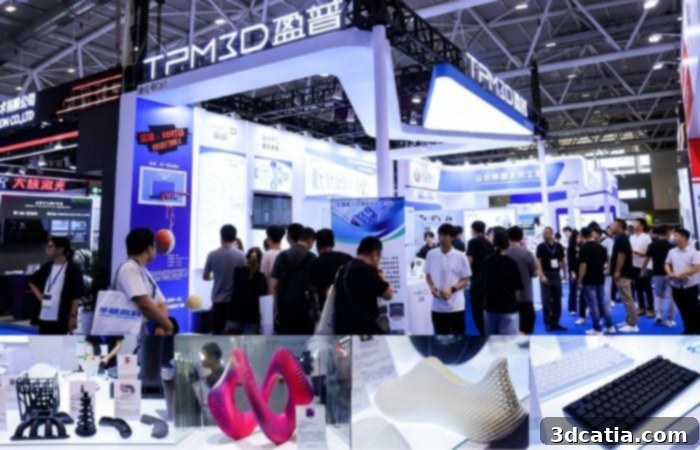
TPM3D offers diverse solutions designed to reduce production time and costs, enhancing efficiency across various industries (credits: TPM3D).
Another profoundly significant advantage realized by Edser through its investment in TPM3D’s SLS 3D printing technology is a substantial reduction in overall production costs. This remarkable cost-efficiency is primarily attributable to the TPM3D S600DL printer, which offers a first-class Return on Investment (ROI), especially when synergistically combined with TPM3D’s high-yield PP Pro material and its highly efficient, integrated powder management system. The seamless interplay between these advanced components minimizes material waste, optimizes resource utilization, and reduces labor, directly contributing to significantly lower operational expenditures without compromising on quality, precision, or performance. This economic benefit makes advanced, personalized medical devices not only more accessible to patients but also more sustainable for manufacturers.
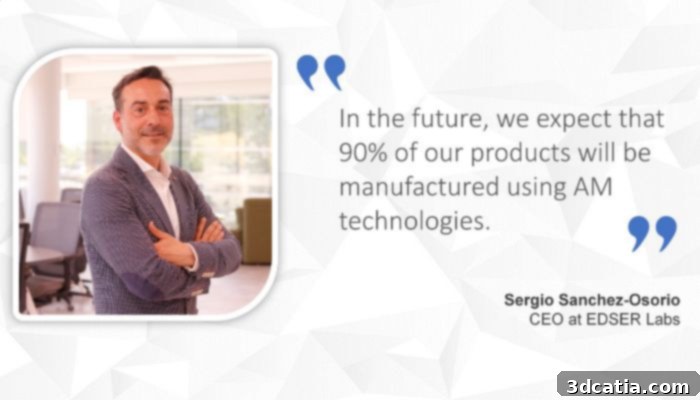
For Edser, the strategic decision to invest in TPM3D SLS 3D printers has undeniably paid off, yielding returns that extend far beyond initial financial projections. This technological leap enables patients to receive superior, more targeted, and truly personalized care, which is of paramount importance in the evolving landscape of modern healthcare. Furthermore, by fully embracing digital production, Edser has taken a momentous stride towards future-proofing its operations and solidifying its position at the forefront of medical manufacturing innovation. Sergio Sanchez-Osorio, CEO at EDSER Labs, emphatically underscores this forward-thinking vision: “Looking ahead, we expect that 90% of our products will be manufactured using AM technologies.” This bold statement highlights Edser’s profound confidence in additive manufacturing as the definitive method for their future production and expansion.
The trajectory of 3D printing, particularly its applications in the medical field and specifically SLS printing, is poised for significant and rapid development in the coming years. TPM3D recognizes its crucial responsibility in actively shaping these advancements, and to that end, the company is continuously innovating, improving, and expanding its comprehensive portfolio of solutions. Illustrating this unwavering commitment, TPM3D recently showcased its latest innovations at Formnext Shenzhen, an international platform where it presented its cutting-edge technologies to both Chinese and global audiences. Among the highlights were their state-of-the-art dual-laser SLS 3D printers and the highly efficient Powder Processing Station (PPS). Beyond hardware, TPM3D also demonstrated a wide array of diverse SLS applications, spanning from robust industrial applications, intricate art and design pieces, and innovative consumer goods, all the way to critical medical and electronics components. These demonstrations powerfully underline the versatility and broad applicability of SLS technology across various sectors, further cementing its role as a key driver of innovation. To learn more about TPM3D and explore the diverse range of users benefiting from their advanced solutions, please visit their official website HERE.
We invite your thoughts and feedback: What are your impressions of TPM3D’s cutting-edge 3D printing solutions and their impactful applications within the medical sector? Share your insights by leaving a comment below, or engage with us on our LinkedIn or Facebook pages. To stay abreast of the latest developments in additive manufacturing, don’t forget to sign up for our free weekly Newsletter, delivering the most current 3D printing news directly to your inbox. All our informative videos are also available on our YouTube channel. For those particularly interested in more news regarding medical and dental 3D printing, we encourage you to visit our dedicated page HERE. We value your engagement and interest in the evolving landscape of 3D printing technology!
*Cover Photo Credit: Edser