
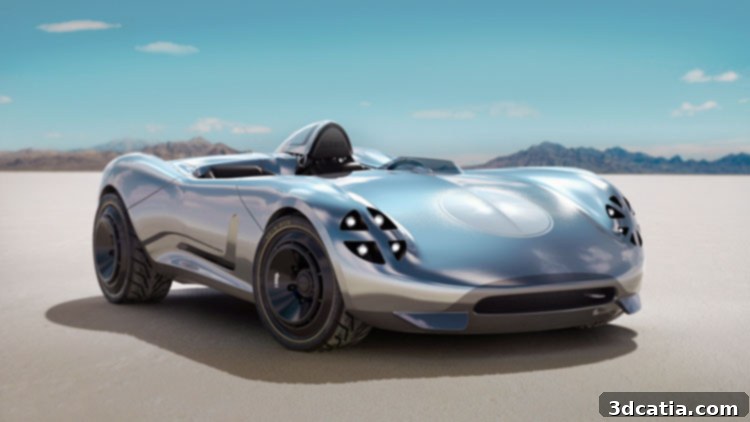
Pioneering the Future: Siemens and Hackrod Lead the Digital Transformation of Automotive Manufacturing with AI and 3D Printing
Siemens, a global powerhouse in industrial automation and digitalization, recently made headlines with two significant announcements that underscore its commitment to advancing modern manufacturing. These strategic moves highlight Siemens’ proactive approach to leveraging cutting-edge technologies like 3D printing and artificial intelligence to redefine industrial processes. One pivotal announcement involved a substantial new investment in Materials Solutions Ltd, a leading additive manufacturing facility based in Worcester, UK. This investment further solidifies Siemens’ footprint in metal 3D printing, an area critical for high-performance industrial applications.
The second, equally groundbreaking announcement, detailed a visionary collaboration with Hackrod, a California-based digital manufacturing company. This partnership aims to achieve a monumental feat: creating the world’s first full-size, structural alloy car designed entirely in virtual reality (VR), engineered with artificial intelligence (AI), and fabricated through advanced 3D printing techniques. This ambitious project, spearheaded by Hackrod with the robust backing of Siemens’ technological prowess, promises to democratize vehicle design and manufacturing, empowering consumers to become co-creators in an unprecedented way.
Hackrod stands at the forefront of digital manufacturing, actively redefining the paradigms for how vehicles are conceived, engineered, and produced in the 21st century. Their innovative methodology is geared towards enabling the rapid prototyping and production of truly bespoke vehicle solutions, drastically reducing the traditional barriers of entry into the automotive space. By placing the consumer at the heart of the design process, Hackrod envisions a future where personalized transportation is not just a luxury, but an accessible reality.
At the core of Hackrod’s approach is the utilization of the very latest design and engineering methodologies. This includes advanced simulation, generative design powered by AI, and immersive virtual reality environments, all designed to facilitate rapid prototyping, iterative testing, and agile manufacturing. Crucially, their system minimizes the need for massive industry-level resources or prohibitively expensive tooling budgets that typically characterize traditional automotive production. They are developing a robust process that will serve as a flexible platform, enabling genuinely bespoke manufacturing solutions with guaranteed engineering integrity and performance. This represents a significant leap towards an “Industry 4.0” paradigm where digital tools drive efficiency and customization.
Introducing La Bandita: The World’s First AI-Engineered, VR-Designed, 3D-Printed Car
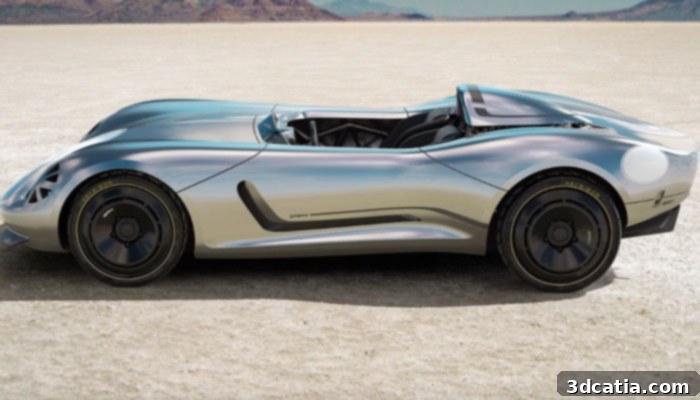
The fruit of this innovative collaboration is a groundbreaking vehicle dubbed ‘La Bandita’. This car is not merely a concept; it is Hackrod’s inaugural proof of concept, poised to lay the foundational roadmap for what the company confidently asserts will be the democratization of engineering design and manufacturing. With La Bandita, Siemens aims to help construct a revolutionary car production system that seamlessly integrates the consumer as an active creator within the automotive sphere, moving beyond mere customization to genuine co-design.
Hackrod further emphasizes that its “factory of the future,” powered by the comprehensive Siemens Digital Innovation Platform, will provide individuals and even small enterprises with unprecedented capabilities. This platform, encompassing advanced software for design, engineering, simulation, and manufacturing, will empower users to create complex products with the same ease and intuitiveness as playing a video game. Imagine designing your dream car with intuitive VR tools, having AI optimize its structure for safety and performance, and then witnessing it materialize through advanced 3D printing – that is the future Hackrod and Siemens are building.
The Power of Technological Synergy: VR, AI, and Additive Manufacturing
The creation of La Bandita exemplifies the powerful synergy between Virtual Reality (VR), Artificial Intelligence (AI), and advanced Additive Manufacturing (AM). VR provides an immersive design environment, allowing designers and even end-users to sculpt, refine, and visualize their vehicle concepts in a highly intuitive and interactive manner. This significantly accelerates the ideation and iteration process, bridging the gap between imagination and tangible design.
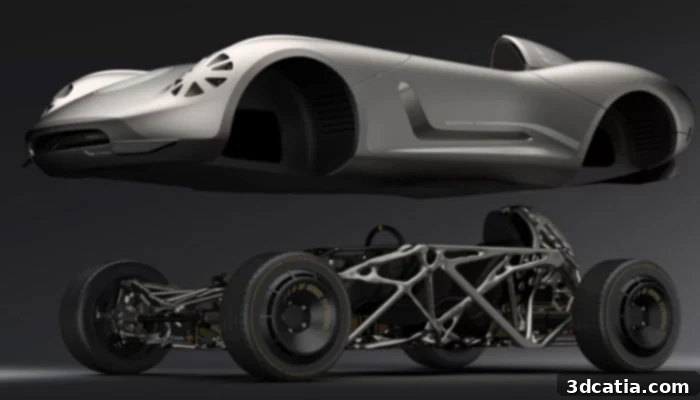
AI, on the other hand, takes on the heavy lifting of engineering. Through sophisticated algorithms, AI can perform generative design, automatically optimizing the vehicle’s structure for strength, weight, and performance based on specified parameters. It can conduct complex simulations, predict material behaviors, and even identify optimal manufacturing processes, ensuring that the 3D-printed car is not only aesthetically pleasing but also structurally sound and safe. This AI-driven engineering vastly reduces development cycles and enhances overall product quality.
Finally, additive manufacturing, specifically 3D printing with structural alloys, is the crucial step that brings these digital designs to physical reality. Unlike traditional subtractive manufacturing which carves away material, 3D printing builds objects layer by layer, allowing for incredibly complex geometries, lightweight structures, and part consolidation that would be impossible or prohibitively expensive with conventional methods. Using structural alloys means the resulting vehicle components possess the necessary strength and durability for real-world application, making full-size, functional 3D-printed cars a tangible possibility.
A Shared Vision for Automotive Innovation
Slade Gardner, CTO at Hackrod, articulated the profound significance of this partnership, emphasizing that it is built upon a deeply shared vision for the future of automobile design and engineering. Gardner highlighted the critical role of Siemens’ expertise in hardware connectivity for Industrial IoT (Internet of Things) and its advancements in multi-axis additive manufacturing. These capabilities are indispensable for Hackrod’s ambitious goals, which include rapid data collection for continuous product design and iteration, alongside the customized manufacturing of highly sophisticated mechatronic systems.
Gardner underscored the transformative potential: “Because the Hackrod vision includes rapid data collection for product design and iteration; and customized manufacturing of sophisticated mechatronic systems, Siemens’ hardware connectivity for Industrial IoT and multi-axis additive manufacturing are critical to success. The products of our partnership will illustrate the impact that an efficient and motivated team can have with access to world class digital design, engineering, visualization, manufacturing and inspection power.” This statement powerfully encapsulates the essence of modern industrial collaboration, where advanced digital tools empower human ingenuity to achieve unprecedented levels of innovation and efficiency.
Reshaping the Automotive Landscape: A New Era of Customization and Speed
The automotive industry is undeniably on the brink of a monumental transition. This shift is not merely confined to manufacturing processes but extends fundamentally to product evolution and consumer expectations. Gone are the days when consumer preferences were limited to a choice of colors or predefined models. Today’s consumers, especially the new-age demographic, demand bespoke solutions, deep personalization, and products that reflect their individual needs and lifestyles. This growing and diverse need has spurred Original Equipment Manufacturers (OEMs) globally to rethink their strategies and introduce products that truly resonate with this evolving market.
The Hackrod and Siemens partnership directly addresses these emerging trends. By enabling consumer co-creation through intuitive digital tools and facilitating rapid, on-demand manufacturing via advanced 3D printing, they are positioning themselves at the forefront of this automotive revolution. This approach offers significant advantages over traditional manufacturing, which is often characterized by lengthy design cycles, massive upfront tooling costs, and limited customization options. The “factory of the future” model promises agility, cost-effectiveness for small batch production, and unparalleled design freedom.
Beyond La Bandita: The Broader Implications for Manufacturing
While La Bandita is a compelling demonstration for the automotive sector, the methodologies and technologies pioneered by Hackrod and Siemens have far-reaching implications across various industries. The integration of AI for generative design, VR for immersive prototyping, and advanced additive manufacturing for complex geometries can transform sectors from aerospace and defense to medical devices and consumer goods. This paradigm shift towards digital manufacturing facilitates faster innovation cycles, reduces material waste, and opens up possibilities for entirely new product categories previously deemed unfeasible.
The concept of a “digital twin” – a virtual replica of a physical product or system – is central to this future vision. With the Siemens Digital Innovation Platform, a comprehensive digital twin can be created, allowing for continuous optimization throughout the product lifecycle, from design to production and even in-service operation. This holistic approach promises not only greater efficiency and personalization but also contributes to more sustainable manufacturing practices, reducing the environmental footprint of industrial production.
For automotive enthusiasts and innovators intrigued by the potential of La Bandita, Hackrod is already offering a pre-order option for the car on its website, inviting early adopters to be part of this groundbreaking journey.
What are your thoughts on this revolutionary concept by Hackrod and Siemens? Do you envision a future where everyone can design and 3D print their own custom vehicles? Share your insights and join the conversation in the comments below or connect with us on our Facebook and Twitter pages! Don’t miss out on the latest advancements in additive manufacturing – sign up for our free weekly Newsletter to get all the news in 3D printing delivered straight to your inbox!