
Top 5 3D Printing Innovations: A Weekly Roundup of Additive Manufacturing Breakthroughs
Welcome to our latest weekly showcase of the most captivating developments in the world of 3D printing and additive manufacturing! Each week, we scour the landscape of innovative projects and groundbreaking applications to bring you the top five videos that truly highlight the transformative power of this technology. From sustainable solutions to advancements in critical industries and even controversial applications, these videos offer a snapshot of how 3D printing is reshaping our world. We invite you to dive into these fascinating insights, share your thoughts in the comments below, or connect with us on 3Dnatives’ Facebook or Twitter account. Get ready to be inspired and informed by the cutting-edge innovations pushing the boundaries of what’s possible!
1. Sustainable Surfing: The Eco-Friendly 3D Printed Surfboard
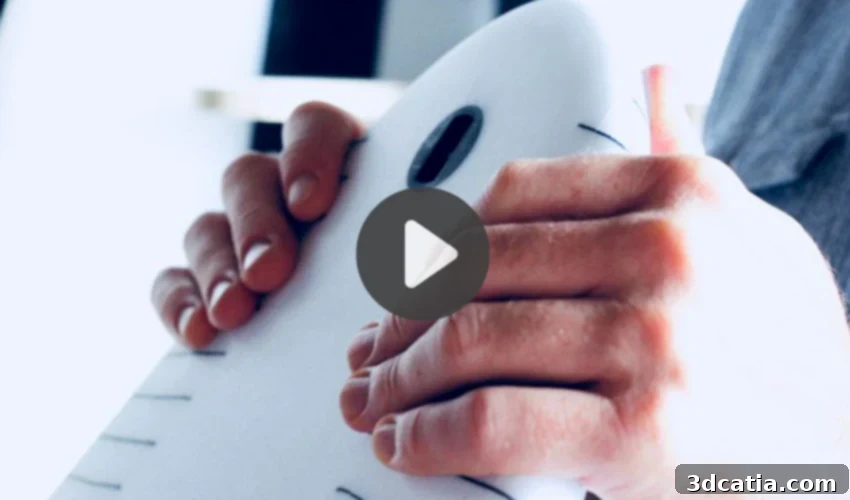
Surfing offers an unparalleled connection with nature, providing exhilarating experiences on the water. However, the lifecycle of traditional surfboards often contributes significantly to environmental waste, particularly when boards break and become unusable. This issue has long posed a challenge for enthusiasts and manufacturers alike, leading to a search for more sustainable alternatives. An Australian innovator is tackling this problem head-on by developing an ingenious solution: a 3D printed surfboard designed with sustainability in mind. This groundbreaking project aims to reduce the ecological footprint of surfing by leveraging additive manufacturing to create boards that are not only high-performing but also environmentally conscious. By exploring new materials and manufacturing processes, this initiative highlights how 3D printing can drive sustainability in sports equipment, offering a pathway to cleaner oceans and a greener future for watersports. The ability to customize designs and potentially use recycled or biodegradable materials could revolutionize the industry, making surfing even more harmonious with the natural world it celebrates.
2. Innovating Eco-Friendly Packaging: Biodegradable Cups Shaped by 3D Printed Molds
In an era dominated by concerns over plastic waste and its impact on our planet, the quest for truly sustainable and biodegradable alternatives for everyday products is more urgent than ever. CRÈME’s innovative HyO-Cup project presents a remarkable leap forward in eco-friendly design, offering a completely organic and biodegradable cup solution. What makes this project particularly fascinating is its clever integration of 3D printing technology into a natural growth process. These unique cups are crafted from gourds, which are cultivated and shaped inside custom-designed 3D printed molds. This ingenious method allows for precise control over the final form and functionality of the cups, guiding the gourds’ natural growth into specific designs. By utilizing 3D printing for the molds, CRÈME demonstrates how additive manufacturing can facilitate the creation of novel products from renewable resources. This approach not only provides a genuinely compostable product but also minimizes waste in the production process itself. It’s a compelling example of how advanced manufacturing techniques can work in harmony with nature to address critical environmental challenges, paving the way for a future where packaging is as transient and natural as its contents.
3. The Ethical Dilemma: 3D Printed Guns and the Digital Frontier
Few topics in the 3D printing world have sparked as much intense debate and controversy as the emergence of 3D printed guns. The ability to download blueprints and manufacture functional firearms from the comfort of one’s home raises profound questions about regulation, public safety, and the very definition of gun control in the digital age. What began as a legal battle surrounding the release of these digital files continues to evolve, pushing the boundaries of legislation and technology. Despite initial attempts to halt their distribution, blueprints for 3D printed guns have, at various points, become accessible online, allowing individuals to potentially print these devices without traditional manufacturing oversight or serial numbers. This development highlights a significant challenge posed by additive manufacturing: the democratization of production, which can have both beneficial and potentially dangerous implications. The ongoing controversy underscores the need for robust discussions among policymakers, legal experts, and the public to navigate the complex ethical and security implications of such technology. Understanding the history and current state of 3D printed firearms provides critical insight into the intersection of technology, individual liberty, and societal safety, demanding careful consideration from all stakeholders.
4. Soaring Ahead: Air New Zealand Explores 3D Printed Metal Aircraft Parts
The aerospace industry is consistently at the forefront of technological innovation, always seeking ways to enhance safety, improve efficiency, and reduce operational costs. Additive manufacturing, particularly metal 3D printing, has emerged as a game-changer in this sector, offering unprecedented opportunities for creating lightweight, complex, and highly customized components. Air New Zealand, a globally recognized airline, is actively embracing this potential through a strategic collaboration with Zenith Tecnica, a leading New Zealand-based company specializing in advanced manufacturing. Their joint endeavor focuses on investigating the viability and benefits of using 3D printed metal parts for aircraft components and tools. This partnership aims to leverage the unique capabilities of metal additive manufacturing, such as the ability to produce intricate geometries that are impossible with traditional manufacturing methods, thereby reducing weight without compromising strength. Lighter aircraft parts translate directly into lower fuel consumption and reduced emissions, contributing to a more sustainable aviation industry. Furthermore, 3D printing offers the advantage of on-demand production, streamlining supply chains and potentially reducing lead times for spare parts. The progress made in this collaboration showcases a clear path toward integrating advanced 3D printing solutions into commercial aviation, promising a future of more efficient, reliable, and environmentally friendly air travel. This initiative highlights how additive manufacturing is not just a trend but a fundamental shift in how critical components are designed, produced, and maintained in high-stakes industries like aerospace.
5. Building the Future: The World’s First Commercial 3D Printed Concrete Homes
The global housing crisis and the increasing demand for affordable, rapidly constructed, and sustainable homes have pushed the construction industry to explore revolutionary new methods. Among these, 3D printed housing stands out as a truly disruptive technology with the potential to redefine how we build. The world is on the cusp of a significant milestone in this domain, with the imminent arrival of the first batch of commercially available 3D-printed concrete homes. This ambitious project is taking shape in Eindhoven, Netherlands, where a pioneering consortium has joined forces. This powerful alliance includes the Dutch municipality of Eindhoven, the esteemed Eindhoven University of Technology (TU/e), and three innovative private firms. Their collective expertise and resources are being channeled into a groundbreaking initiative to construct five unique 3D-printed homes within Eindhoven, transforming the city into a hub for cutting-edge construction. These homes are not merely prototypes but represent a viable, scalable solution for future residential development. 3D concrete printing offers numerous advantages: significantly reduced construction time, lower labor costs, minimal material waste, and the ability to create complex architectural designs that would be challenging or impossible with traditional methods. Furthermore, the localized production of homes can lead to more resilient supply chains and tailored housing solutions for diverse communities. This pioneering project in Eindhoven is a powerful testament to the transformative potential of additive manufacturing in addressing critical societal needs, paving the way for a new era of construction that is faster, more efficient, and more sustainable.
We hope you enjoyed exploring this week’s captivating TOP 5 videos, from the eco-conscious 3D printed surfboard to the futuristic concrete homes. These examples vividly illustrate the diverse and far-reaching applications of 3D printing and additive manufacturing across various industries. The rapid advancements in this field promise continuous innovation and solutions to some of our most pressing global challenges. What were your favorite innovations, or what other exciting 3D printing projects have caught your eye? We’d love to hear from you! Drop a comment below, or share your thoughts on our Facebook and Twitter pages. And to ensure you stay at the forefront of this dynamic industry, don’t forget to sign up for our free weekly Newsletter, delivering all the latest news and breakthroughs in the 3D industry straight to your inbox!