
Latin America’s 3D Printing Revolution: Unlocking Growth, Innovation, and Future Potential
The year 2020 ushered in a transformative era for the 3D printing industry, necessitating rapid adaptations that ultimately showcased the profound potential of these advanced technologies. Despite the widespread economic challenges brought about by the global COVID-19 crisis, it paradoxically became a year of significant opportunities and increased democratization for additive manufacturing. This period of disruption catalyzed a remarkable surge in the global adoption of 3D printing, with one region, in particular, emerging as a vibrant hub of future growth: Latin America. Industry experts and economists alike anticipate that several countries within Latin America are uniquely positioned to navigate and overcome the health and economic setbacks more swiftly than many other regions. This resilience is creating an open door for the accelerated integration of cutting-edge technologies, including 3D printing, in the immediate future. To truly grasp the impending growth and evolution within the sector across this dynamic region in the coming years, it is imperative to explore fundamental questions: What is the current landscape of 3D printing in Latin America? Are robust local manufacturing capabilities already established? And, crucially, which industries are actively championing the adoption of additive manufacturing processes?
Economists largely concur that a selection of Latin American nations possesses inherent advantages that will enable them to recover from the 2020 economic downturn more rapidly than many developed economies. These countries present a compelling proposition for foreign investment and partnerships, largely attributable to their robust labor forces, burgeoning middle classes, and strategic geographical locations. The economic powerhouses of the region—Brazil, Mexico, Argentina, Colombia, and Chile—are consistently demonstrating positive growth projections. As articulated by Forbes magazine, “Continued economic growth, competitive labor costs, and proximity to key American markets appear to be factors driving the overall positivity toward Latin America as a viable business destination.” This confluence of favorable conditions establishes a fertile ground for technological expansion and industrial modernization.
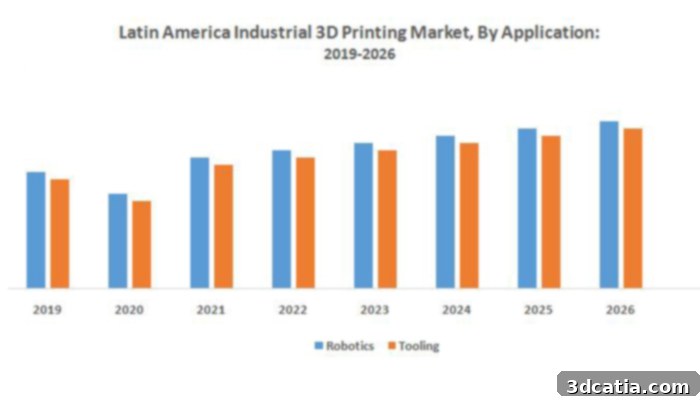
Additive manufacturing technologies are poised for significantly increased adoption throughout Latin America in the coming years, driven by regional economic recovery and a growing awareness of their benefits (photo credits: Maximize Market Research).
For a considerable period, numerous leading additive manufacturing companies have strategically focused their attention on Latin American markets. The Photocentric team insightfully noted, “Latin America represents close to 10 percent of the global population so it is definitely a promising market for any industry, including 3D printing.” This demographic advantage, coupled with evolving market dynamics, suggests that potential shifts and advancements within the additive manufacturing sector could profoundly accelerate its adoption across diverse industries in 2021 and beyond. Such widespread integration of 3D printing would not only modernize industrial practices but also significantly contribute to stimulating and bolstering the region’s overall economic prosperity, fostering innovation, and creating new job opportunities.
Addressing the Pace of 3D Printing Adoption in Latin America
While promising, the journey toward widespread 3D technology adoption in Latin America has, historically, progressed at a more deliberate pace compared to other global regions. This slower uptake is primarily attributed to several interconnected factors. For many businesses, particularly small and medium-sized enterprises (SMEs), the initial investment required for 3D printers and associated infrastructure represents a substantial financial commitment. This challenge is compounded by a prevalent lack of firsthand knowledge regarding the tangible benefits and return on investment that additive manufacturing can deliver. Consequently, there’s often an incomplete understanding of the vast possibilities and transformative potential that 3D printing offers across various applications. A pivotal study published by ResearchGate in 2015, titled “Additive Manufacturing: Importance and Challenges for Latin America,” highlighted this disparity, revealing that a mere 2% of the global published research on additive manufacturing technologies originated from Latin American countries at that time. This data underscores a significant gap in regional academic engagement and knowledge dissemination.
The aforementioned study further elucidated the systemic obstacles impeding technological progress: “Latin American countries face significant challenges with respect to the adoption of advanced technologies such as additive manufacturing; among these are limited access to high-value knowledge and inadequate government policies to stimulate strong technological innovation, even though countries such as Brazil and Mexico show the greatest progress in the adoption of additive manufacturing.” These structural impediments—ranging from insufficient educational resources to a policy landscape that has yet to fully embrace and incentivize technological innovation—create a complex environment for the rapid integration of advanced manufacturing techniques. Overcoming these challenges requires concerted efforts from both public and private sectors to foster an ecosystem conducive to technological growth.
A direct consequence of these challenges is a noticeable deficit in specialized training related to the 3D industry across Latin America. Recognizing this critical barrier, various initiatives are now actively working to bridge this knowledge gap through targeted 3D printing training programs. Irene Presti, Founder of the Argentine Chamber of 3D Printing and Digital Manufacturing, points out the dynamic yet incomplete nature of this evolution, stating that the educational sector is currently the primary adopter of these technologies. However, she adds a crucial nuance: “There is a lack of training in all areas. In many schools there is already a printer, the students are the ones who learn and adopt the technology the fastest. But teachers still find it difficult to incorporate it as another tool in the classroom. I think that little by little they will lose their fear.” This highlights the need for comprehensive training strategies that extend beyond early adopters to empower educators and a broader workforce, ensuring that the technology is not just present but effectively integrated into learning and industrial processes.
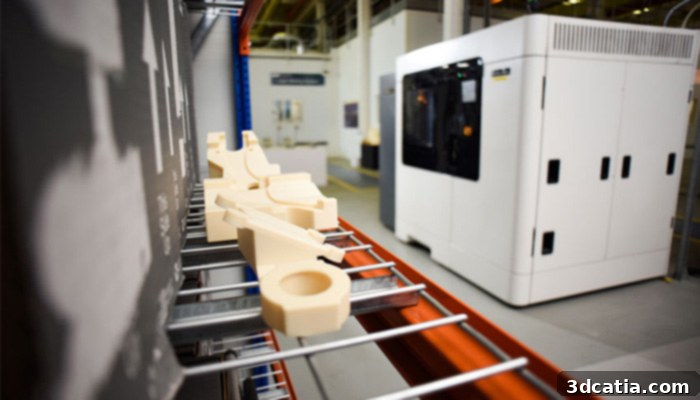
Companies in Latin America continue to predominantly adopt polymer-based additive manufacturing technologies, with Stratasys emerging as one of the fastest-growing companies in the region in recent years (photo credits: Stratasys).
Across the American continent’s southern territories, the predominant additive manufacturing technologies in use are primarily linked to polymer manufacturing. This preference means that their application largely revolves around prototyping, serving critical roles in sectors such as automotive, where rapid iteration of design components is crucial; aerospace, for developing lightweight and complex structures; and medical, enabling custom prosthetics, surgical guides, and anatomical models. Despite this strong focus on polymer technologies, an increasing number of companies specializing in metal additive manufacturing are recognizing the region’s potential and establishing a presence. Esteemed names like Desktop Metal and EOS are strategically entering these markets, indicating a maturing landscape and a diversification of available 3D printing capabilities beyond just polymers, hinting at future high-value production applications.
While the overall adoption rate in Latin America has been comparatively slower than in European countries, specific instances of remarkable growth highlight the region’s immense potential. Companies like Stratasys, a global leader in polymer 3D printing, have reported extraordinary growth rates, reaching up to 200% in recent years within Latin American countries. This impressive expansion is largely attributed to strategic investments, such as the establishment of their Additive Manufacturing Hub in Mexico. Carlos Ramirez, Territory Manager of Stratasys Mexico, emphasizes the transformative impact of these technologies: “We are sure that additive manufacturing is changing the way of designing, manufacturing, implementing and even selling final products; the effects of the change can be seen from the beginning in the improvement that they achieve in their designs.” Growth of this magnitude serves as a powerful testament to the burgeoning demand and untapped opportunities, making the region increasingly attractive for diverse manufacturers and companies across the additive manufacturing sector.
Currently, Mexico stands out as the frontrunner in the Latin American 3D printing market, largely due to its strategic proximity and strong trade ties with the United States. It hosts the main brands of both desktop and professional 3D printers, followed closely by Brazil and Colombia, which are also experiencing significant market development. These three nations have witnessed the notable arrival and expansion of major international players, including HP, 3D Systems, Big Rep, and Desktop Metal, as well as highly regarded desktop machine manufacturers like Ultimaker and Formlabs. Beyond international brands, the region is also fostering a vibrant ecosystem of local manufacturers, such as Colibrí 3D in Mexico and makeR in Colombia. Argentina, in particular, has garnered attention for its surprising number of indigenous machine manufacturers, with companies like Trideo and Smart 3D already making successful leaps into the international market, showcasing the region’s growing capacity for innovation and self-sufficiency in 3D printing hardware development.
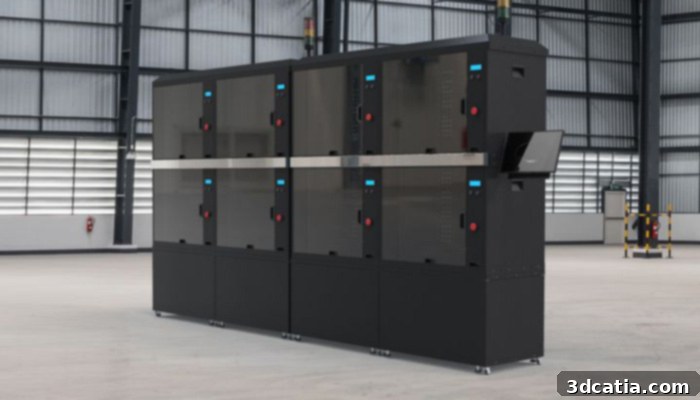
Smart 3D, an industrial machinery manufacturer based in Argentina, successfully expanded its operations into Europe in 2020, exemplifying the increasing international reach of Latin American 3D printing companies (photo credits: Smart 3D).
To further catalyze the growth and widespread adoption of 3D technologies, several Latin American countries, including Mexico and Argentina, have proactively established consortiums and chambers. These organizations play a pivotal role in fostering collaboration, knowledge exchange, and mutual support among companies within the sector. A prime example is the Consortium of Additive Manufacturing in Latin America (CONMAD), which received a significant investment exceeding $13 million in 2018. This substantial funding was allocated to specifically enhance regional knowledge and accelerate the adoption of 3D technologies across various industries. Similarly, in Argentina, the Argentine Chamber of 3D Printing and Digital Manufacturing has been diligently working since 2016 to democratize these advanced technologies throughout the country, organizing events, providing training, and advocating for supportive policies. Such initiatives are crucial for building a cohesive and dynamic additive manufacturing ecosystem, ensuring that the benefits of 3D printing are accessible to a wider array of businesses and individuals.
The Future Horizon: What to Expect from Latin America’s 3D Printing Sector
While 3D printing in Latin America has demonstrated impressive strides, the journey towards full integration and optimization is still ongoing, with considerable room for continued learning and adoption. The most critical immediate step lies in intensifying specialized training programs related to 3D printing. Empowering a skilled workforce with comprehensive knowledge of how to effectively leverage these adopted technologies is paramount. Initiatives such as the formation of business associations and consortiums represent significant advancements, providing invaluable platforms for companies to gain deeper insights into the expansive possibilities offered by 3D printing. These collaborative efforts are essential for fostering a robust knowledge base and encouraging widespread application.
Looking ahead, anticipated political shifts within the region and the broader global landscape, particularly changes in relations with the United States, are expected to significantly influence the trajectory of 3D printing in Latin America. A renewed emphasis on cooperation and investment from the U.S. could reopen avenues for substantial capital injection into Latin American industries. This re-strengthening of economic and trade ties would undoubtedly unlock new opportunities, translating directly into heightened innovation across various sectors and, consequently, accelerating the growth of 3D printing capabilities and applications throughout the continent.
Although achieving complete and ubiquitous adoption of additive manufacturing in these countries may still be a few years away, the initial transformative changes are already visible. We anticipate a rapid influx of novel materials, more sophisticated management software solutions, and a significant increase in the adoption of metal additive manufacturing technologies. The future of 3D technologies is poised to shine brightly in the southern part of the American continent. Irene Presti succinctly summarizes a key competitive advantage: “The great advantage we have is that there are highly trained human resources. That is a differential that allows very good projects around these technologies.” This combination of burgeoning economic potential, strategic international interest, robust local initiatives, and a dedicated, skilled workforce positions Latin America as a pivotal region in the global evolution of additive manufacturing.
What are your thoughts on the dynamic evolution of 3D printing in Latin America? Share your insights in the comments below or connect with us on our Facebook and Twitter pages! Don’t miss out on the latest 3D printing news—sign up for our free weekly Newsletter here, delivered straight to your inbox!