

BCN3D Sigma D25 Review: Elevating Professional Desktop FDM 3D Printing with IDEX Technology
Since its inception in 2012 by a trio of visionary students from the Polytechnic University of Catalonia (BarcelonaTech), BCN3D has steadily ascended to become a prominent force in the FDM (Fused Deposition Modeling) 3D printing landscape. What began with a focus on accessible kit machines has evolved significantly. By 2018, BCN3D had professionalized its offerings, introducing sophisticated, plug-and-play models designed for professional applications. Among these, the Sigma D25 3D printer stands out, embodying BCN3D’s hallmark IDEX (Independent Dual Extrusion) technology, which unlocks a diverse array of manufacturing modes like Mirror and Duplication for simultaneous part production, significantly boosting throughput and versatility.
BCN3D’s current generation of machines is thoughtfully segmented into two distinct series to cater to varied professional needs. The Sigma D range encompasses their “Desktop” 3D printers, serving as the manufacturer’s accessible entry point for professional users. In parallel, the Epsilon W range comprises robust “Workstation” printers, engineered for more demanding production environments. The naming convention is intuitive: each printer’s name starts with the initial of its series, followed by its print volume expressed in liters. This clarity gives us models such as the Epsilon W27, the Epsilon W50, and the subject of our detailed examination, the Sigma D25.
Following our comprehensive review of the Epsilon W50, we were eager to welcome the BCN3D Sigma D25 into the 3Dnatives Lab. As part of the desktop series, the Sigma D25 boasts a generous 25-liter print volume. Its feature set is impressive for its category, including a vibrant 5-inch full-color touch screen for intuitive control, high-precision Hiwin linear rails for smooth motion, and a reliable Dual Drive extrusion system from Bondtech™. Two specialized hotends, expertly developed by E3D, allow for printing temperatures up to 300 °C, while a heated print tray supports temperatures up to 80 °C, ensuring optimal adhesion and reduced warping. Priced at €3,495 without tax ($3,995.00), the Sigma D25 targets a specific professional segment. Who stands to benefit most from this printer? What are its capabilities in terms of part production? And how does it differentiate itself from other models within BCN3D’s esteemed portfolio? Our in-depth review aims to answer these questions, and we invite you to watch the accompanying video below for a visual walkthrough of our testing process.
Unpacking the BCN3D Sigma D25: A First Look at Professional Quality
The arrival of the BCN3D Sigma D25 is an experience that immediately conveys its professional-grade stature. Delivered in a substantial box mounted on a pallet, it signals that this is no ordinary desktop printer. The machine is meticulously protected by ample foam padding, ensuring its safe journey. Upon unpacking, the printer’s generous dimensions of 690 x 530 x 550mm (approximately 27″ x 20.9″ x 21.7″) and a total weight of 30kg (around 66lbs) become apparent, confirming its robust build. Due to its size and weight, it is highly recommended to have two people assist with its removal from the packaging to prevent injury and ensure careful handling.
Beyond the printer itself, the unboxing process reveals a thoughtful assortment of accessories designed to get users started quickly and efficiently. Included are two 500g rolls of PLA filament, a high-quality 420 x 300mm (approximately 16.5″ x 11.8″) glass print tray, and a suite of essential tools. These include a spatula for part removal, needle-nose pliers for minor adjustments, a bottle of Magigoo™ adhesive for enhanced bed adhesion, a set of three hex wrenches for maintenance, an SD card for file transfer, a power cable, hotend shims for precise alignment, a leveling shim, and all necessary documentation, including a warranty and a comprehensive getting started guide. This complete package underscores BCN3D’s commitment to a seamless user experience from the very beginning.
Aesthetically, the Sigma D25’s design pays homage to BCN3D’s previous generation of 3D printers, featuring a similar robust aluminum frame. However, this iteration sports an elegant off-white finish, contributing to a clean and professional appearance. The printer maintains a resolutely open architecture, allowing for easy access to the manufacturing platform and clear visibility of the printing process, which can be advantageous for monitoring and maintenance.

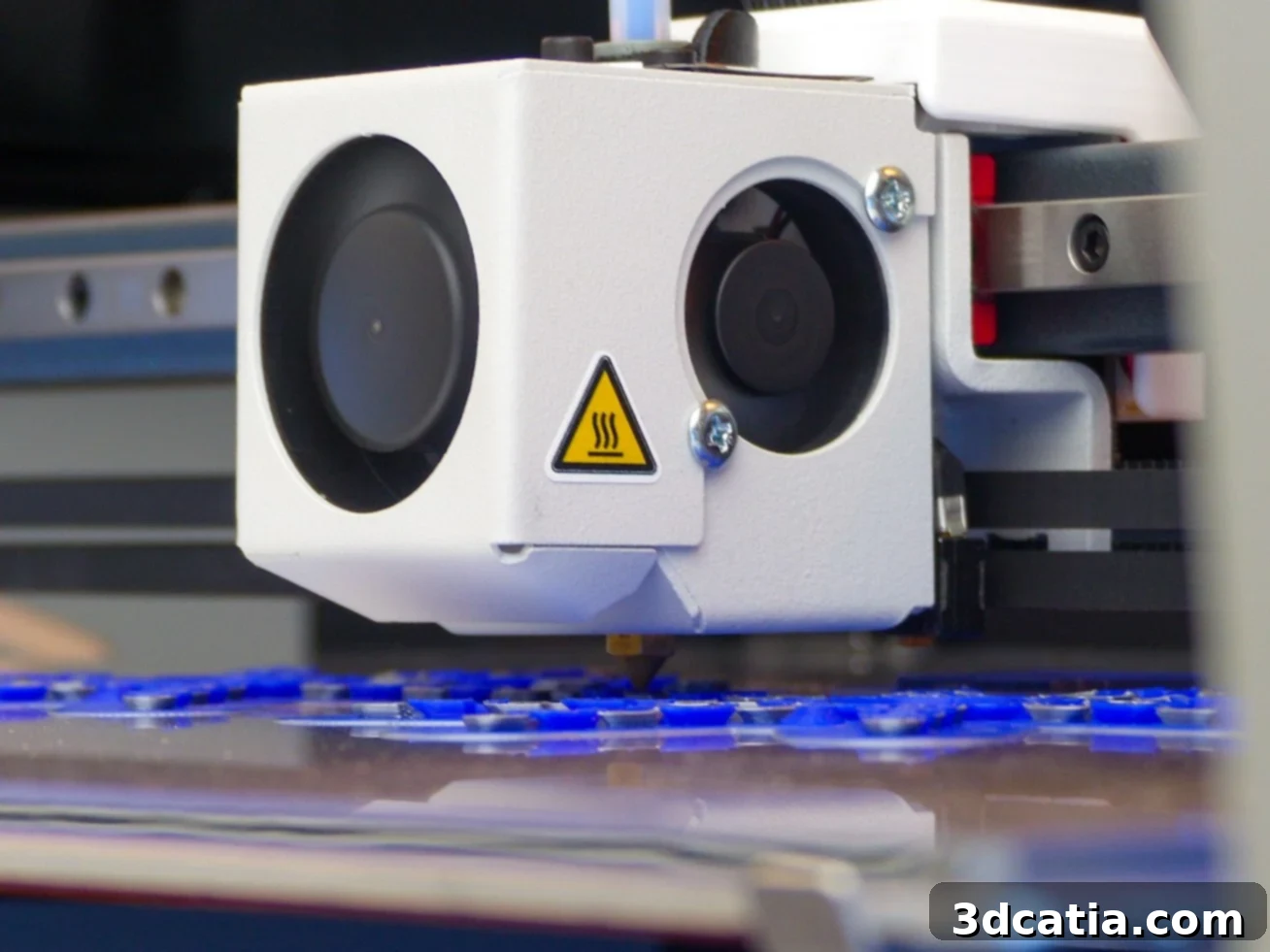
The D25 is solidly built with quality components like this E3D print head moving on Hiwin linear rails
Notably, BCN3D has evolved the form factor from the square build platform of the Sigma R19 to the more rectangular design found in its larger sibling, the Sigmax R19. The D25’s print volume measures 420mm (Width) x 300mm (Length) x 200mm (Height), translating to approximately 16.5″ x 11.8″ x 7.9″. This wider-than-tall orientation is somewhat unconventional, as many FDM printers prioritize a larger Z-axis (height). BCN3D’s deliberate choice here enables the efficient printing of longer, low-profile parts, such as an RC car chassis, which might be challenging on a more vertically oriented machine. This design decision highlights the printer’s utility for specific professional applications requiring broad horizontal prints.
Given its open build chamber and maximum temperatures of 300°C (572°F) for extrusion and 80°C (176°F) for the print plate, the Sigma D25 is optimally suited for printing standard engineering filaments like PLA, PETG, TPU, PVA, and BVOH. While it offers direct compatibility with any third-party 2.85mm filament, BCN3D recommends using its own branded filaments to achieve the best possible results and ensure peak performance. The machine incorporates two internal slots designed for 500g spools on each side of the build plate. For users who prefer larger filament spools, the printer also features convenient outer spool holders located at the back, accommodating higher-capacity rolls and extending printing autonomy.
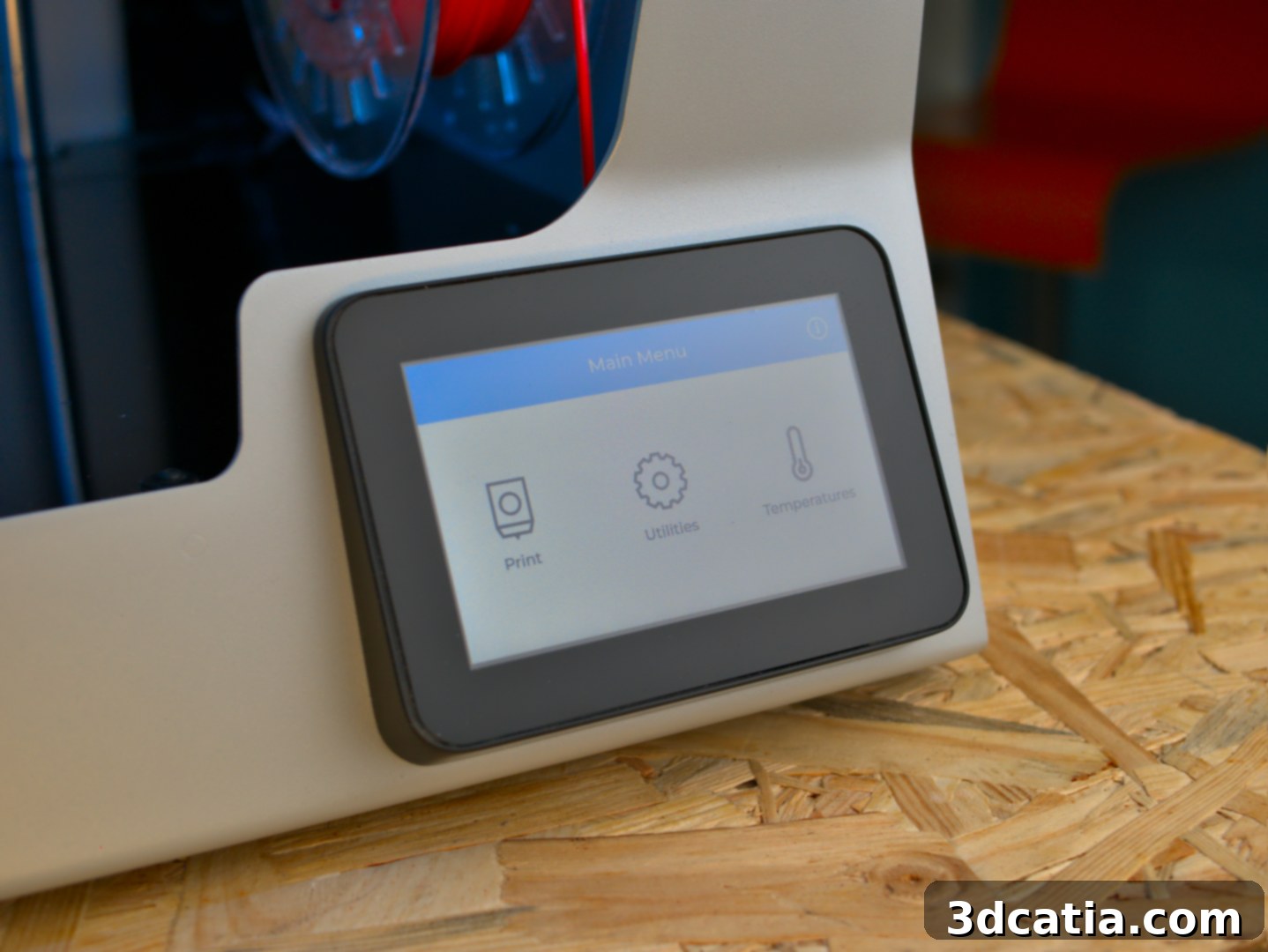
The interface on the 5″ touch screen allows you to start printing, calibrate and maintain the printer
Installing the Sigma D25 3D printer: A Guided and Streamlined Process
The installation of the BCN3D Sigma D25 is remarkably straightforward, thanks to its predominantly pre-assembled nature. Users are primarily tasked with a few simple steps to get the printer operational. This includes carefully installing the glass print plate onto the heated bed, securely clipping the two Bowden tubes that connect the remote extruders to their respective printheads, and loading a fresh spool of filament into each extruder. Once these physical connections are made, powering on the machine initiates an intuitive, step-by-step configuration process displayed on its full-color touch screen. This guided setup is highly efficient, taking approximately under 20 minutes to complete from start to finish.
During the initial startup, the printer prompts the user to connect it to an internet network, offering both wired (Ethernet) and Wi-Fi options for connectivity. This internet connection is crucial for integrating with a BCN3D Cloud account, which allows the printer to be identified and managed remotely within the cloud ecosystem. Furthermore, internet access is vital for ensuring the machine is equipped with the latest firmware updates, providing access to new features, performance enhancements, and bug fixes that BCN3D regularly releases. Staying updated ensures optimal printer performance and security.
Following network and cloud integration, the machine proceeds to its initialization process. This critical step involves the automated calibration of the two independent extruders. The system meticulously adjusts their height relative to the print plate and fine-tunes their alignment to each other. This precise calibration is fundamental for achieving high-quality dual-extrusion prints, preventing issues like nozzle collision or inconsistent first layers.

The Sigma D25 is equipped with two independent extruders (IDEX)
The entire setup process is designed for simplicity and user-friendliness. The Sigma D25 performs most of the complex work autonomously, leveraging its array of integrated sensors to achieve accurate calibration. Any manual adjustments required are minimal and made easy by the printer’s touch screen, which provides clear, detailed images and animated instructions. Once all the calibration steps are successfully completed, a visual animation confirms the success of the process, signaling that the printer is ready for action. The final step for the user is to download the BCN3D slicer software, BCN3D Stratos, to prepare their first models for printing. This intuitive and guided approach makes the D25 accessible even for users who might be new to professional-grade FDM systems, ensuring a smooth transition from unboxing to first print.
BCN3D’s Software Ecosystem: Stratos and BCN3D Cloud
BCN3D’s commitment to an open-source philosophy extends to the very core of its printers’ operating systems. Like all its other machines, the Sigma D25 utilizes Marlin, an open-source firmware renowned for its reliability, extensive features, and widespread adoption across thousands of 3D printers worldwide. This strategic choice allows BCN3D to leverage Marlin’s robust development and community experience, ensuring a stable and continuously evolving foundation for their hardware.
For slicing software, BCN3D has recently unveiled BCN3D Stratos, a significant evolution from its previous offering, BCN3D Cura, which was a modified version of the popular Cura. While Stratos remains based on the powerful Cura engine, BCN3D has invested considerable effort into custom refinement, delivering a modernized user interface and incorporating a wealth of additional features. These enhancements include advanced settings for build plate adhesion and support structures, allowing users greater control over print outcomes. Stratos also proudly sports its own distinct branding and logo, reflecting its identity as a comprehensive and tailored slicing solution for BCN3D printers.
Stratos is engineered to fully harness the power of BCN3D’s unique IDEX (Independent Dual Extrusion) system. It offers dedicated modes for Mirror printing, Duplication printing, and multi-material or multi-color applications, allowing users to maximize the efficiency and versatility of their Sigma D25. Beyond IDEX-specific functionalities, Stratos serves as the primary tool for preparing 3D models for printing. It enables users to slice their designs, configure print settings, and then seamlessly send the prepared G-code to the printer via Wi-Fi, thanks to its integrated BCN3D Cloud connectivity. For scenarios where cloud access isn’t feasible or preferred, users retain the flexibility to export the sliced model directly to an SD card (supplied with the printer) for offline printing, ensuring continuous workflow.
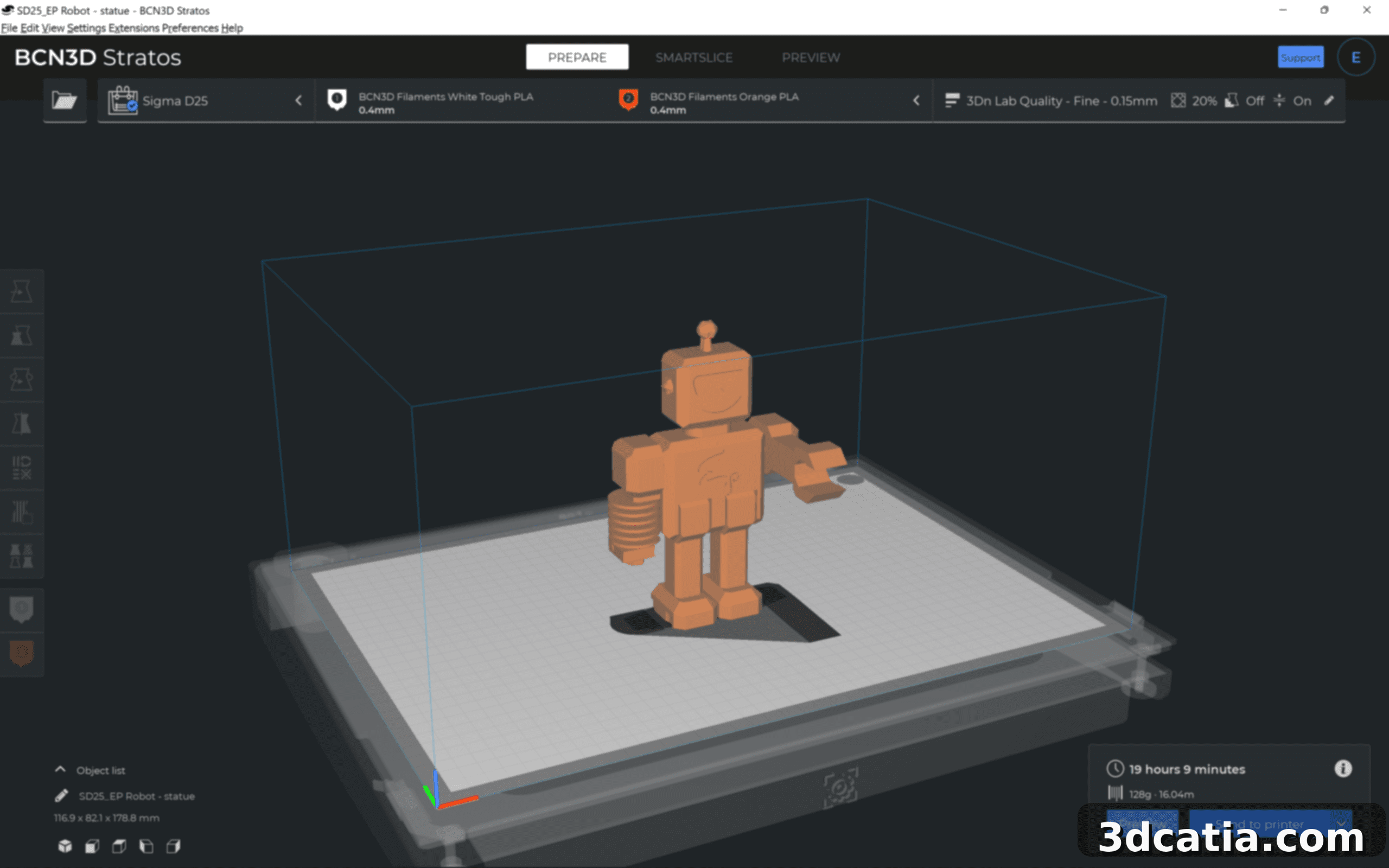
Stratos, the slicer developed by BCN3D is based on Cura
Further enhancing the BCN3D ecosystem, Stratos now integrates Smartslice, a subscription-based service designed to intelligently analyze the 3D model destined for printing. Smartslice provides users with expert recommendations on optimal slicing parameters and material selections, helping to achieve superior print quality and efficiency. The BCN3D Cloud extends its utility through a comprehensive web interface, offering additional remote management capabilities. Users can monitor the real-time status of their printer, track printing progress, view machine temperatures, and access a wealth of other data, providing unparalleled control and oversight from anywhere with an internet connection. This robust cloud integration streamlines workflows, particularly in professional environments where multiple machines or remote management are essential.
BCN3D demonstrates a strong innovative drive in the software realm. This is evidenced by their recent acquisition of Astroprint, a well-regarded wireless printing software, further bolstering their cloud capabilities. Moreover, BCN3D has forged a strategic collaboration with Autodesk, allowing users to slice their models directly within the popular CAD software Fusion 360. These advancements highlight BCN3D’s dedication to creating a holistic and user-centric software environment that integrates seamlessly into existing design and manufacturing workflows, distinguishing them in the competitive 3D printing market.
First 3D Prints with the Sigma D25: Performance and Versatility in Action
For our initial prints with the BCN3D Sigma D25, we utilized the PLA filament spools generously provided with the printer. Our first test involved a challenging torture test model, collaboratively developed by Kickstarter and Autodesk, designed to push the limits of a 3D printer’s capabilities. We leveraged BCN3D’s preconfigured profiles within Stratos for this print, aiming for an out-of-the-box performance assessment. Upon completion, we carefully removed the test pins designed to evaluate tolerances and then meticulously assessed the print according to our lab’s protocol. The BCN3D Sigma D25 achieved a commendable score of 24.5 out of 30 on this rigorous test. We observed only minor imperfections, specifically slight shrinkage issues that led to some stringing, and the tolerance was consistently validated up to 0.3 mm. Despite these small defects, the overall print quality was successful, indicating strong baseline performance for standard PLA applications.
Following this foundational PLA test, we embarked on a series of diverse PLA prints to gauge the printer’s versatility and reliability in practical applications. This included a prototype chassis for a model car, an intricate model of a Porsche 911, a functional storage station for a glue gun and its accessories, multiple bottle openers, a modular storage system for electronic cables, and a decorative flower pot, among others. Each of these prints proceeded smoothly and without significant issues, providing compelling evidence of the Sigma D25’s consistent repeatability and ability to produce high-quality parts across a range of geometries and functional requirements.
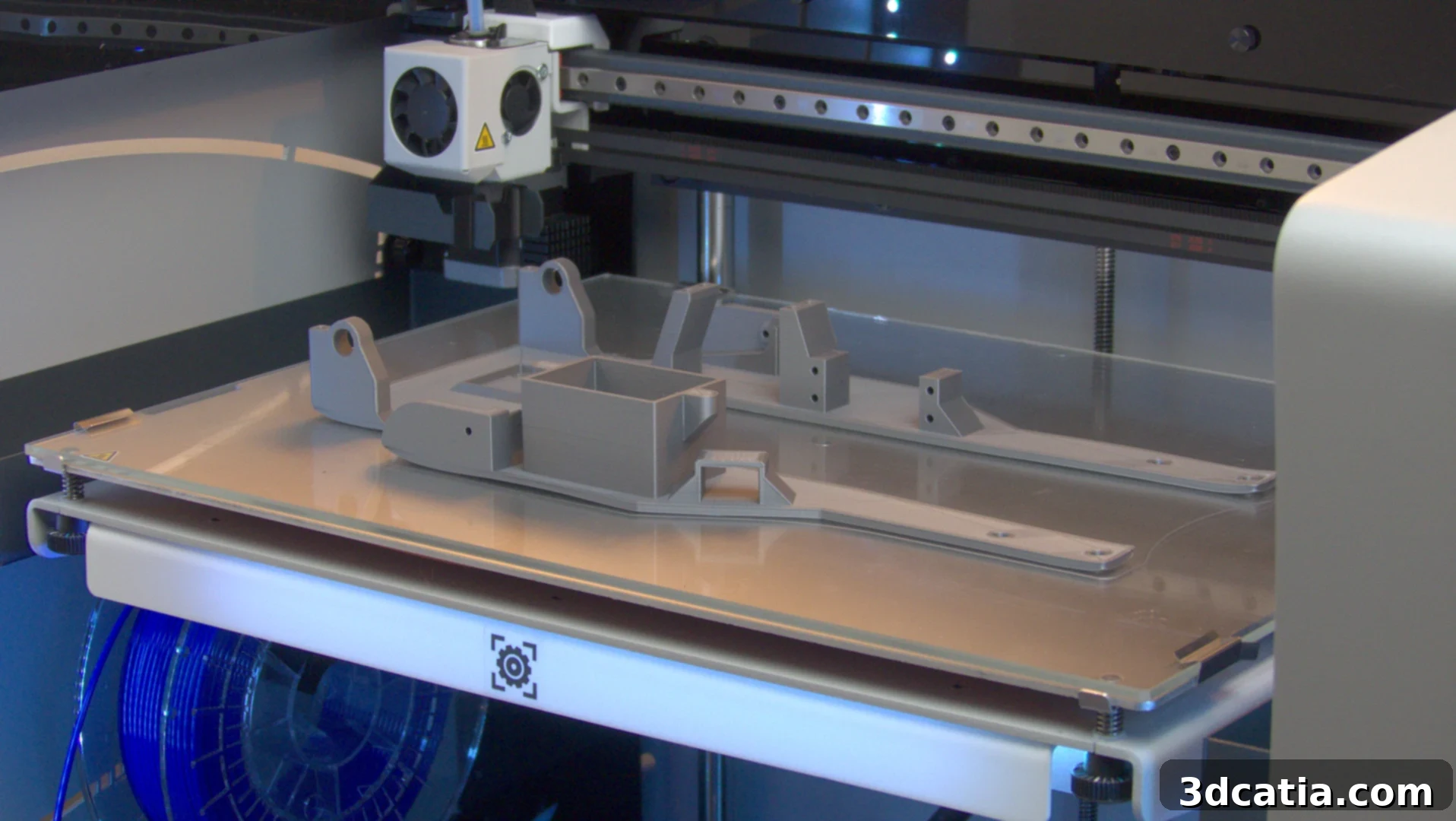
The width of the D25 platform allowed us to print prototypes for a thermal car chassis
During the initial stages of our printing journey, we did encounter a minor challenge: despite the automated initial plate calibration, the first layer of some impressions was not perfectly flat. To address this, we implemented a mesh leveling compensation. This manual fine-tuning step, easily accessible through the printer’s interface, quickly resolved the issue, resulting in consistently excellent first-layer adhesion and overall print quality.
To truly highlight the capabilities of BCN3D’s IDEX (Independent Dual Extrusion) system for PLA prints, we opted for a fun and illustrative project: a two-color octopus keychain. This model was printed as a single, fully assembled piece, requiring no post-print assembly. The IDEX system seamlessly managed the two different colors, resulting in a vibrant and detailed print. Once removed from the print tray, the octopus’s articulated parts wiggled freely, perfectly demonstrating the multi-material potential for intricate, movable designs.
The Sigma D25’s IDEX system also significantly boosted our printing efficiency. Utilizing the duplication mode, we successfully printed multiple bottle openers and phone holders simultaneously. This mode effectively halved the printing time for these parts, showcasing its value for small-batch production and rapid prototyping. Similarly, we leveraged the mirror mode to produce two symmetrical pencil pots in vase mode, demonstrating the system’s ability to create identical mirrored parts with equal efficiency, further diversifying its practical applications.
The Sigma D25’s IDEX system allowed us to combine 2 different colors when printing our moving octopus
Beyond multi-color and efficiency modes, the IDEX system truly shines with soluble support materials. We experimented with PVA, a water-soluble filament, to print a highly detailed model of a Mazda MX5. The car body was printed in PLA, while the intricate support structures were expertly laid down in PVA. The post-processing for this part was remarkably simple and clean: immersing the part in warm water for a few hours effectively dissolved the PVA, leaving behind a pristine PLA model with no visible support marks. This capability dramatically reduces post-processing time and effort, making it ideal for complex geometries and functional prototypes where surface finish is critical.
After thoroughly testing PLA and PVA, we moved on to PETG, another popular engineering polymer. PETG typically requires slightly higher printing temperatures than PLA, but the Sigma D25 handled it with remarkable ease. We printed a toaster-shaped torture test model in PETG, and the results were flawless. This test further confirmed the printer’s 0.3 mm tolerance and its ability to print unsupported angles up to 60 degrees with precision. The functional toast lever on the model popped up exactly as designed, demonstrating excellent mechanical performance from the PETG print.
Finally, to showcase the Sigma D25’s capacity for functional parts, we printed a laboratory jack. This complex model prints as a single piece, and once removed from the print tray, the integrated screw mechanism can be turned to smoothly raise and lower the jack tray. This fully functional print in PETG underscores the D25’s capability to produce working prototypes and end-use parts, making it an invaluable tool for engineers and designers. The consistent quality and diverse material handling capabilities demonstrated throughout these tests solidify the BCN3D Sigma D25’s position as a powerful and versatile professional desktop 3D printer.
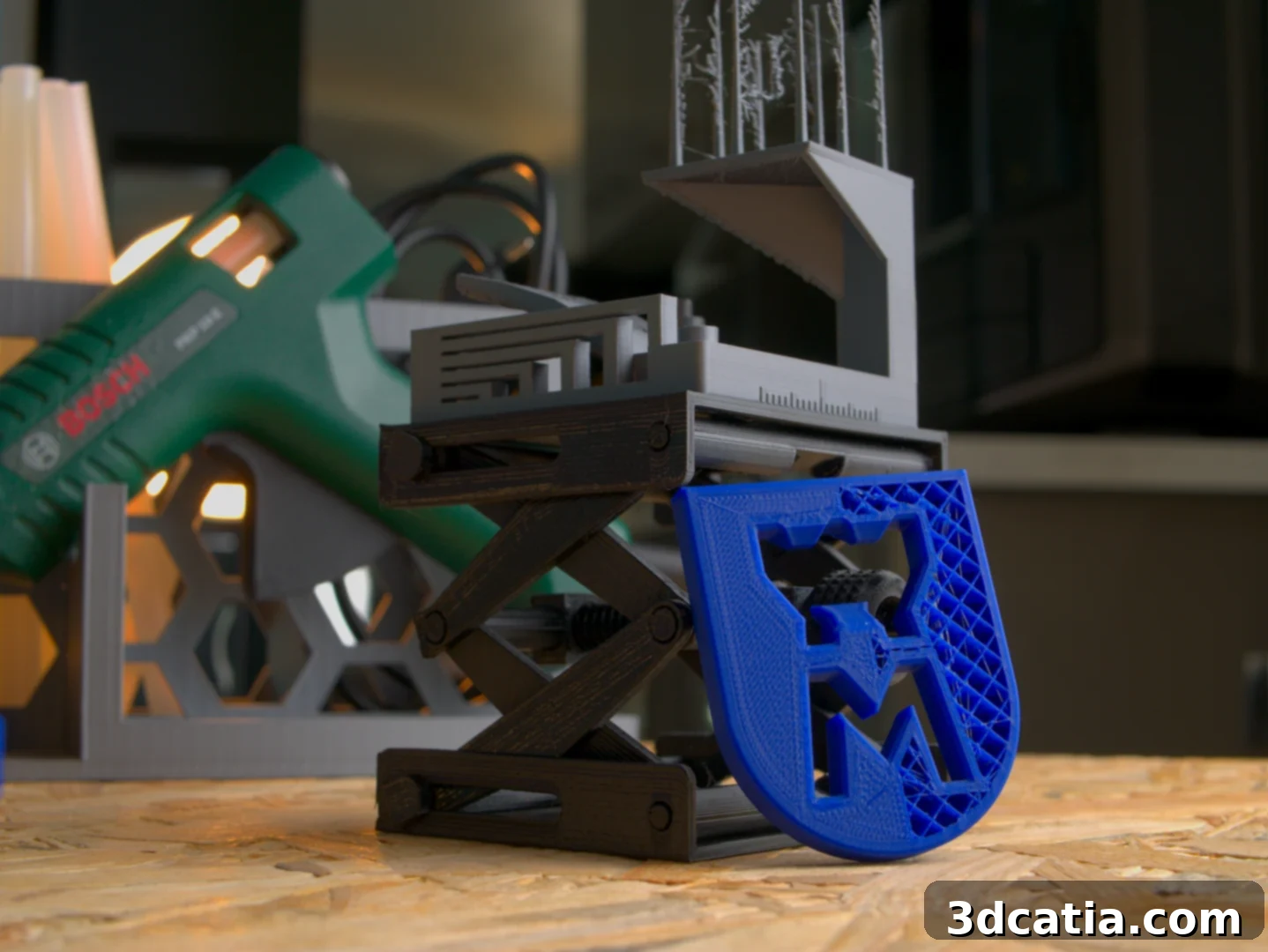
Laboratory jack printed using PETG, an FDM test, glue gun station and bottle opener printed in PLA
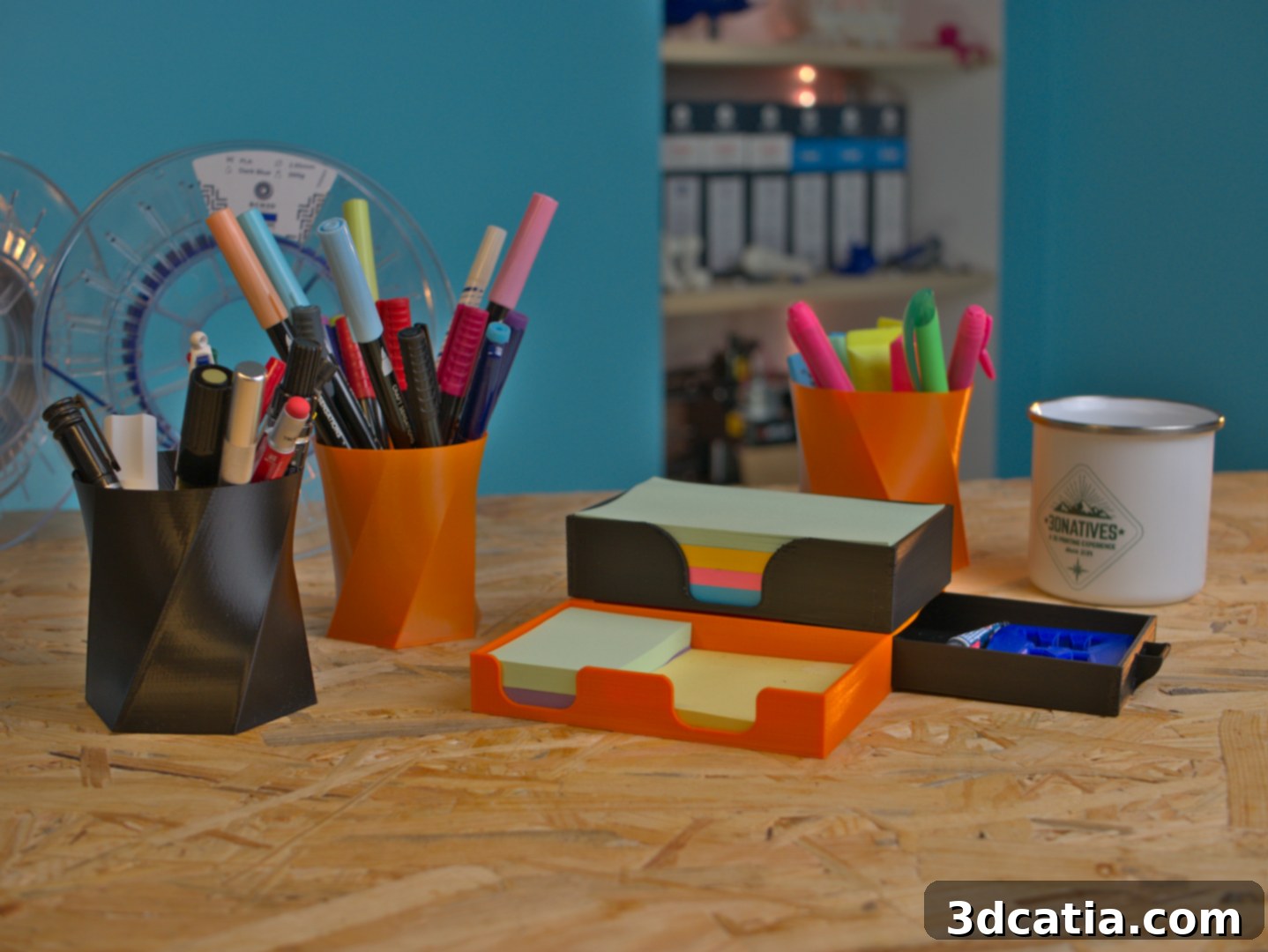
Various office accessories printed using the D25
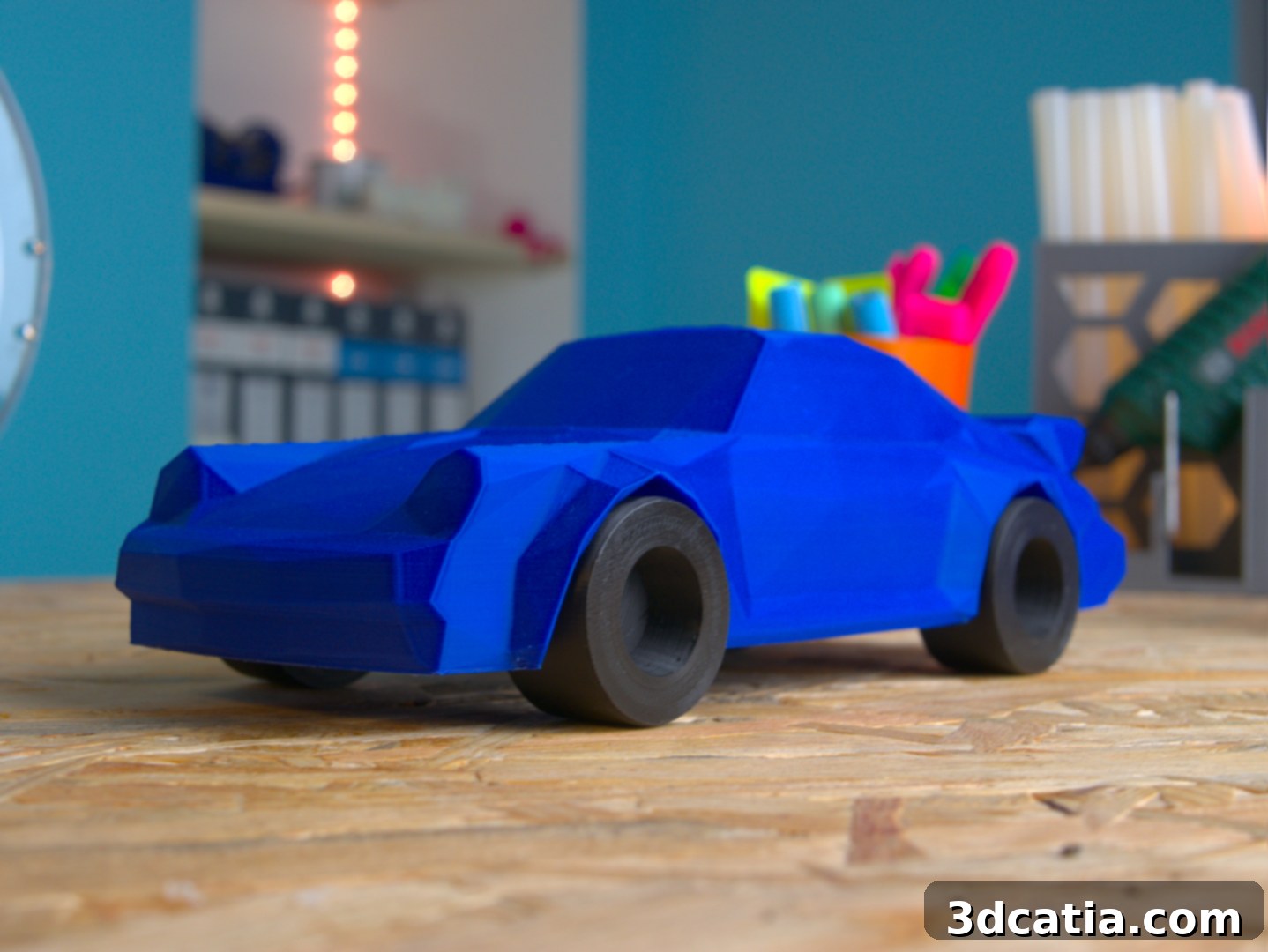
A low-poly Porsche 911 printed by the Sigma D25
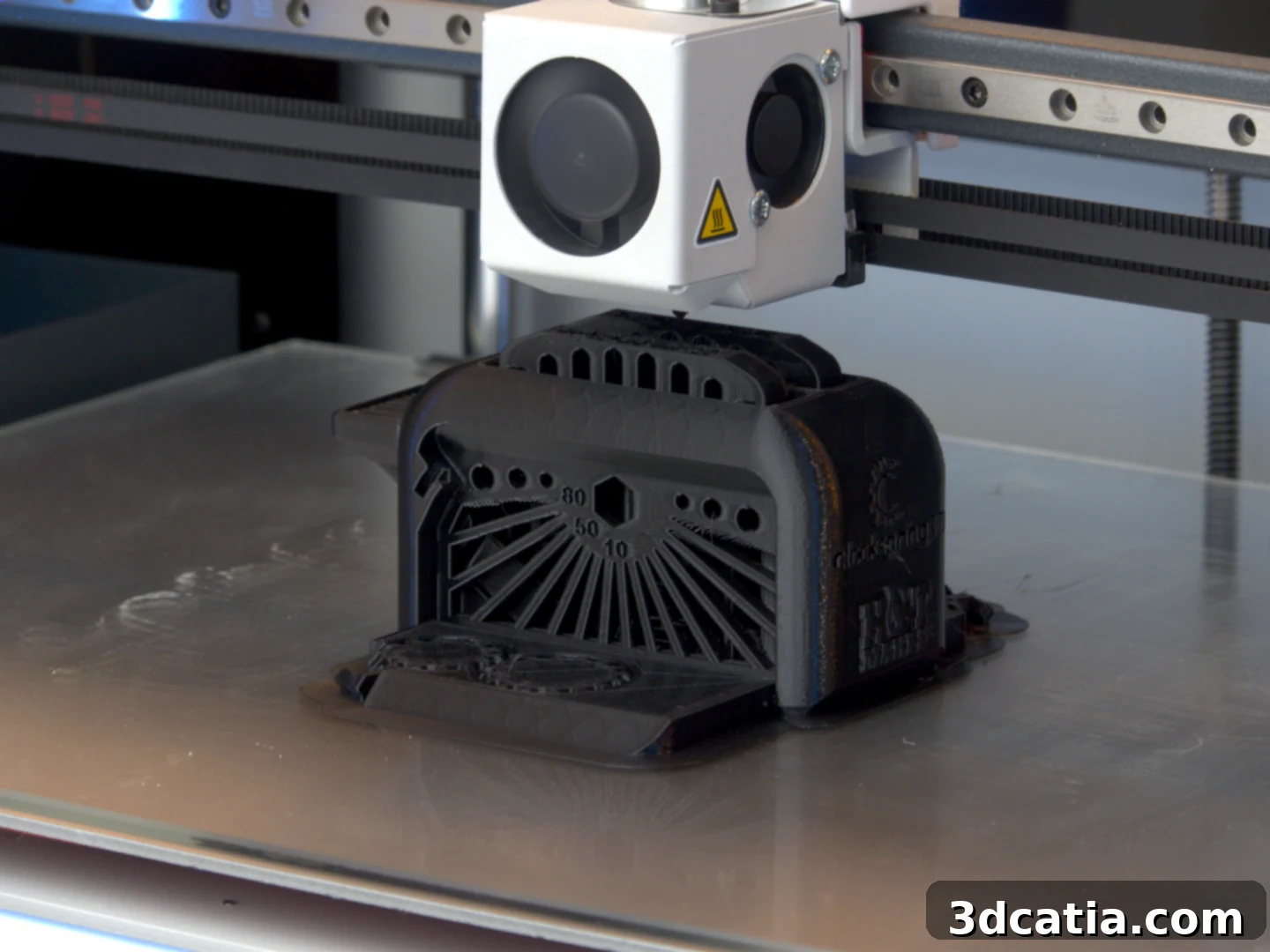
This torture test allowed us to judge the PETG printing performance of the D25