
The Glass Helmet Project: Revolutionizing American Football with Transparent 3D Printed Technology for Enhanced Athlete Visibility
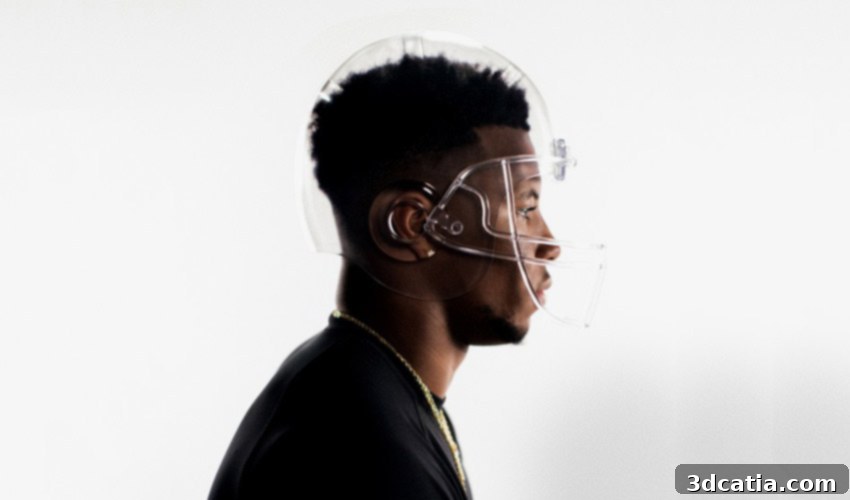
“They will be seen” – this powerful promise lies at the heart of the innovative Glass Helmet Project. This groundbreaking initiative introduces a transparent, 3D printed American football helmet designed for professional athletes, aiming to fundamentally change how players are perceived on the field. Born from a visionary collaboration between renowned designer Victor Salomon and Uninterrupted, a media company co-founded by basketball icon LeBron James, the project seeks to illuminate the individuals behind the gear. Instead of confining players to an anonymous position, the transparent headpiece allows their faces and expressions to be visible, connecting them more intimately with fans and humanizing the game. The helmet itself is a marvel of modern manufacturing, utilizing the advanced stereolithography (SLA) 3D printing process, a technique celebrated for its ability to craft intricate, high-resolution structures from photopolymerizable resins, yielding objects with exceptional clarity and strength.
In the high-impact world of American football, players are often obscured by their substantial protective equipment, typically recognizable only by their jersey numbers. This anonymity is precisely the cliché LeBron James and Uninterrupted sought to shatter. James articulates his motivation, stating, “There has always been this cliché of the player in his helmet, of the player who has no voice, no one really knows who he is because of this helmet. And no one really knows there’s a person inside. We created the Glass Helmet so that all these great athletes could be heard and seen, because at the end of the day, they are also people.” This sentiment underscores a deeper mission: to bring the personal stories and personalities of athletes to the forefront. The Glass Helmet is not merely a piece of equipment; it’s a statement, symbolizing a movement to empower athletes and foster a deeper connection between players and their audience. This ambitious project beautifully illustrates how 3D printing and sports are increasingly becoming a perfect synergy, driving innovation that extends beyond performance to encompass identity and engagement.
The Vision Behind Transparency: Humanizing the Game
For decades, the traditional football helmet has been a symbol of both protection and anonymity. While essential for safety, it creates an impenetrable barrier, obscuring the athlete’s face, emotions, and ultimately, their individuality. Fans cheer for numbers and team colors, but rarely get a glimpse of the raw human emotion – the fierce determination, the joyous celebration, the momentary frustration – that drives the game. LeBron James, a vocal advocate for athlete empowerment, recognized this disconnect. His vision for the Glass Helmet extends beyond mere aesthetics; it’s about reclaiming the human element in a sport often dominated by physical prowess and strategic plays.
The initiative by Uninterrupted, a platform dedicated to giving athletes a voice, perfectly aligns with this objective. By making players visible, the Glass Helmet aims to strip away the mask, allowing fans to see the person, the competitor, and the individual story behind every tackle and touchdown. This transparency can foster a stronger emotional bond between athletes and their supporters, cultivating a more profound appreciation for the dedication and personality that each player brings to the field. It’s an acknowledgment that professional athletes are more than just performers; they are individuals with unique journeys, families, and aspirations, and the Glass Helmet offers a window into that humanity.
Stereolithography (SLA) 3D Printing: The Technology Enabling Visibility
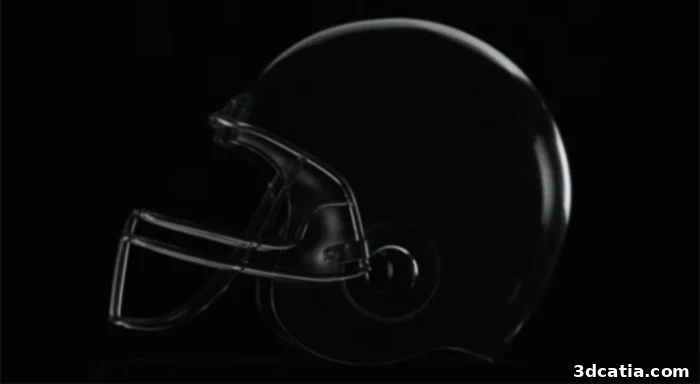
The selection of stereolithography (SLA) 3D printing for the Glass Helmet was a deliberate choice, driven by the technology’s unique capabilities. SLA is an additive manufacturing process that uses a UV laser to cure layers of liquid photopolymer resin, gradually building a three-dimensional object from the bottom up. This method is renowned for its exceptional precision, smooth surface finish, and the ability to produce highly detailed parts. Crucially for the Glass Helmet, SLA excels at creating optically clear components, which is paramount for achieving the desired transparency.
The inherent advantages of SLA made it ideal for this ambitious project. Unlike other 3D printing technologies that might leave visible layer lines or opaque finishes, SLA parts, with proper post-processing, can achieve a remarkable level of translucency, nearing that of injection-molded clear plastics. This capability was essential to fulfill the project’s core promise of player visibility. Furthermore, SLA materials can be engineered to possess specific mechanical properties, allowing for a balance between clarity, rigidity, and the crucial impact resistance required for a football helmet. While the specifics of the photopolymer resin used remain proprietary, it’s clear that the choice of material and process was meticulously made to meet both the aesthetic and functional demands of a high-performance transparent helmet.
From Concept to Custom Fit: The Manufacturing Journey
The journey to creating a personalized Glass Helmet begins with meticulous measurements of individual football players’ heads. This critical step ensures an optimal, custom fit, which is paramount not only for comfort but, more importantly, for maximum safety and protection on the field. These precise measurements are then digitally converted into a sophisticated 3D model. This bespoke digital blueprint serves as the instruction set for the stereolithography 3D printer, dictating every intricate detail of the helmet’s form.
Once printed, the raw helmet shell undergoes a rigorous post-processing regimen. This typically involves cleaning to remove uncured resin, followed by a curing process to fully solidify the material, and then extensive polishing. The polishing step is particularly vital to transform the initial translucent part into a crystal-clear headpiece, eliminating any surface imperfections that could obscure visibility. While the project leaders have maintained a degree of discretion regarding the exact printing processes, the time investment, or the specific machinery employed, it is known that the protective face grid, an essential safety component, was printed separately. This modular approach likely allows for optimized material properties for the grid, perhaps focusing more on impact absorption, before it is meticulously attached to the transparent main structure. This intricate design and manufacturing process highlights the synergy of advanced technology and custom craftsmanship in developing next-generation sports equipment.
Empowering Athletes: More Than Just a Helmet
Maverick Carter, the CEO of Uninterrupted, eloquently summarizes the profound impact of the Glass Helmet Project in the promotional video: “They are brothers, fathers, artists, creators, leaders, entrepreneurs. When they put their helmets on and put on their clothes for 3 hours of games a week, 17 weeks a year, they are footballers. But there is always a human being behind all this, and I think that’s what the transparent helmet represents.” This powerful statement encapsulates the core philosophy driving the project – to celebrate the multifaceted identities of athletes beyond their professional roles.
The Glass Helmet serves as a metaphorical and literal window into the individual. By making players’ faces visible, it challenges the perception of athletes as mere gladiators or cogs in a machine. It reminds fans that these individuals have rich lives, passions, and responsibilities off the field. This visibility can foster a greater sense of empathy and appreciation, allowing the personalities, emotions, and struggles of athletes to resonate more deeply with the public. It’s about empowering players to be seen as whole people, not just their athletic performance, potentially influencing endorsement opportunities, fan engagement, and even their mental well-being by reducing the dehumanizing aspects of extreme anonymity.
3D Printing’s Growing Role in Sports Innovation
The Glass Helmet Project is a prime example of the accelerating integration of 3D printing, or additive manufacturing, into the sports industry. This technology offers unparalleled advantages, including the ability to create highly customized, lightweight, and durable components. Beyond helmets, 3D printing is revolutionizing numerous aspects of sports equipment and athlete performance. Custom-fitted athletic footwear, for instance, can be designed with latticed midsoles precisely tuned to an athlete’s biomechanics, enhancing comfort and reducing injury risk. Protective gear, such as shin guards or body armor for extreme sports, can be tailored to an individual’s contours, offering superior protection without hindering mobility.
The rapid prototyping capabilities of 3D printing also allow for quick iterations and testing of new designs, drastically reducing development cycles for sports manufacturers. This means innovations can reach athletes faster, providing a competitive edge. From custom grips for tennis rackets to lightweight components for racing bicycles and even advanced prosthetic limbs for para-athletes, 3D printing is enabling performance enhancements and personalization on an unprecedented scale. The Glass Helmet, in this context, stands as a beacon for how additive manufacturing can not only improve physical performance and safety but also address the crucial human element of sport, pushing boundaries that traditional manufacturing methods simply cannot.
Challenges and the Road Ahead: Durability Meets Transparency
While the aesthetic and psychological benefits of the Glass Helmet are clear, the rigorous demands of American football present significant engineering challenges, primarily concerning safety and durability. A football helmet must withstand tremendous impacts, protecting athletes from concussions and other serious head injuries. The transparent material, while optically impressive, must also possess comparable, if not superior, impact resistance to traditional helmet materials. This balance between clarity and robust protection is perhaps the most critical hurdle for the project’s widespread adoption.
Rigorous testing will be essential to validate the Glass Helmet’s performance. It will need to meet and potentially exceed stringent safety standards set by organizations like the National Operating Committee on Standards for Athletic Equipment (NOCSAE). This likely involves a battery of tests simulating various impact scenarios, ensuring the helmet can absorb and dissipate energy effectively without cracking or shattering. Furthermore, considerations such as scratch resistance, UV degradation, and maintaining clarity over time will also be vital for its practical long-term use. The current prototypes have been received with enthusiasm by some players, but their true test will come on the field, under the unforgiving conditions of professional play. The journey from innovative prototype to standard equipment is long and arduous, requiring continuous refinement, material advancements, and extensive field trials to ensure absolute player safety.
The Future of Sports Equipment and Player Engagement
The Glass Helmet Project represents a significant leap forward in sports equipment design, demonstrating a commitment not just to physical protection but also to athlete identity and fan connection. Its success could herald a new era for sports, inspiring similar innovations across various disciplines. Imagine transparent helmets in hockey or lacrosse, allowing expressions to be seen, or custom-fitted gear in other sports that not only enhances performance but also celebrates the individual. This project underscores a growing trend where technology, design, and human storytelling converge to create a richer, more engaging sports experience.
As materials science advances and 3D printing technologies become even more sophisticated, the possibilities for customization, lightweighting, and enhanced safety will only expand. The Glass Helmet could become a symbol of a more transparent, human-centered approach to professional sports, where the athletes are not just perceived as commodities but as individuals whose passion, effort, and unique personalities drive the entertainment and inspiration that defines sports fandom. It challenges the status quo and invites us to reimagine what sports equipment can be, both functionally and culturally.
Some players have already received their Glass Helmet and appear very satisfied with the initial results. Now, the ultimate test awaits: their resistance and protective capabilities will have to be rigorously proven on the demanding battleground of the football field. The outcome of these trials will undoubtedly shape the future trajectory of this ambitious and potentially transformative project.
What do you think of this pioneering project? We invite you to share your thoughts in a comment below or join the conversation on our Facebook and Twitter pages! Don’t miss out on the latest advancements in additive manufacturing – remember to sign up for our free weekly Newsletter to get all the cutting-edge news in 3D printing delivered straight to your inbox!