
The Cabin of Curiosities: Emerging Objects Redefines 3D Printed Sustainable Architecture
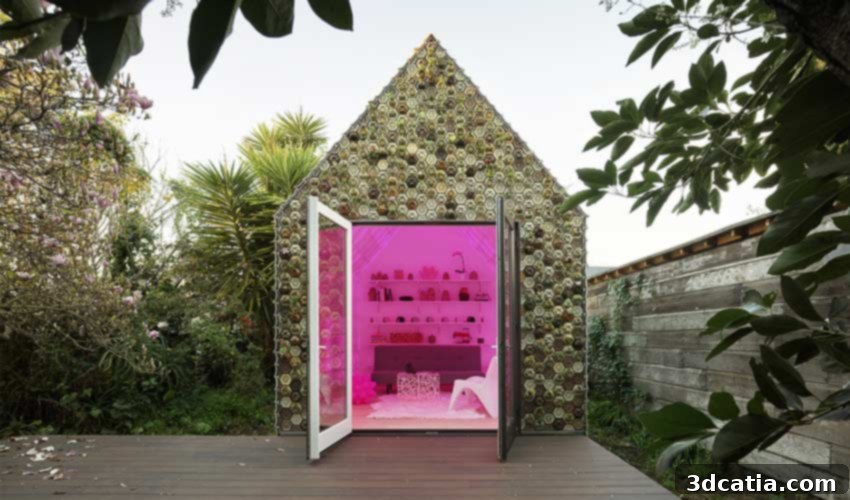
In a remarkable testament to the burgeoning potential of additive manufacturing within the construction sector, the American innovator Emerging Objects has unveiled its latest groundbreaking project: The Cabin of Curiosities. This visionary 3D printed cabin stands as a unique architectural endeavor, challenging conventional notions with an exterior design that remarkably resembles a lush garden. At a pivotal time when 3D printed architecture is rapidly gaining traction and demonstrating its versatility, Emerging Objects continues to push the boundaries, offering an innovative approach to building that directly addresses critical contemporary issues, particularly the persistent housing shortage prevalent in densely populated regions like the San Francisco Bay Area.
Emerging Objects has long been a trailblazer in the field of architectural innovation, having previously garnered widespread recognition for its pioneering 3D printed structures designed with exceptional resilience against seismic activity. The company distinguishes itself through its specialized focus on 3D printing functional living and working spaces, with a profound commitment to utilizing materials that are not only effective but also environmentally responsible and sustainable. This dedication is exemplified by their memorable and inventive use of recycled tires as a primary printing material in earlier projects, showcasing their proactive stance on ecological preservation and material reuse.
Emerging Objects: Pioneering Sustainable 3D Printed Architecture
The philosophy underpinning Emerging Objects’ work is deeply rooted in an exploration of both form and function, driven by a desire to create structures that are not only aesthetically captivating but also inherently sustainable and resilient. Their journey in 3D printed architecture began with a vision to revolutionize how we build, focusing on innovative techniques that minimize waste, utilize unconventional materials, and allow for unparalleled design freedom. This commitment extends beyond mere structural integrity to encompass the entire lifecycle of a building, from its raw materials to its eventual impact on the environment.
Their prior achievements, such as the development of earthquake-resistant structures, highlighted the mechanical strengths achievable through advanced 3D printing techniques. These projects demonstrated that additive manufacturing could deliver not just novel designs, but also buildings capable of withstanding extreme conditions, thereby offering safer and more durable housing solutions in vulnerable areas. The expertise gained from these ventures has been meticulously channeled into their latest creation, ensuring that The Cabin of Curiosities is not merely a visual spectacle but also a structurally sound and functional dwelling.
The company’s material science approach is particularly noteworthy. By experimenting with a diverse palette of substances, from conventional cements to recycled industrial waste and even organic by-products, Emerging Objects exemplifies a future where buildings can be constructed from resources that are abundant, affordable, and ecologically benign. This forward-thinking strategy not only reduces the carbon footprint associated with traditional construction but also opens up new avenues for material innovation, promoting a circular economy within the building industry.
The Cabin of Curiosities: A Fusion of Art and Engineering
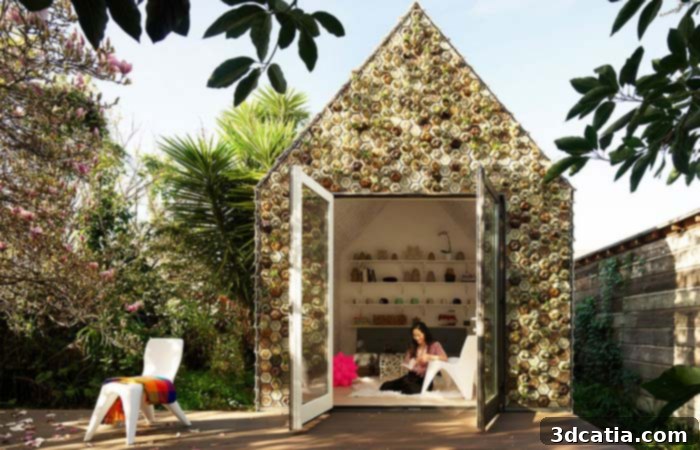
Emerging Objects’ latest marvel, The Cabin of Curiosities, is an extraordinary project composed of an astounding 4,500 individually ceramic-printed 3D tiles. This meticulous construction method results in a dwelling that is robust, entirely waterproof, and fully habitable, all while offering an exceptionally pleasing aesthetic experience. The innovative design ensures that the cabin is not just a place to reside but also a piece of art that invites admiration and exploration.
Innovative Materials for a Greener Future
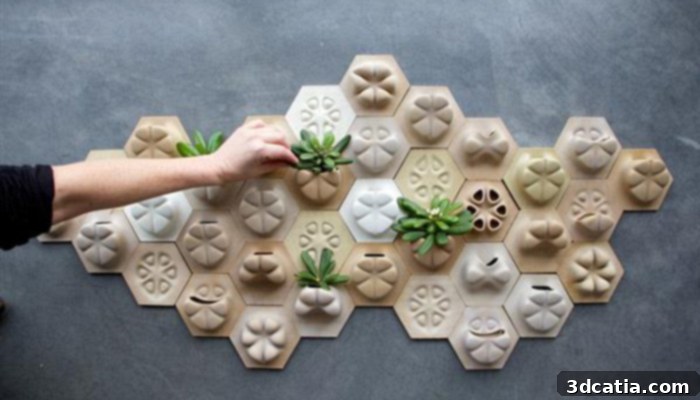
The selection of materials for the cabin’s facade tiles is a testament to Emerging Objects’ commitment to sustainable innovation. These unique tiles have been 3D printed from an ingenious mixture that includes cement, sawdust, salt, and even repurposed grape skins. This unconventional blend serves multiple purposes. The sawdust and grape skins act as bio-aggregates, reducing the overall cement content and thereby lowering the carbon emissions associated with cement production. Salt, meanwhile, can contribute to unique aesthetic effects and potentially enhance certain material properties. This thoughtful material composition not only champions environmental responsibility but also imparts distinct textural and visual qualities to the cabin, setting it apart from conventionally built structures.
Exterior Design: A Living Facade and Artisanal Touch
One of the most captivating features of The Cabin of Curiosities is its front exterior, which has been artfully crafted to mimic a vibrant garden. Specific tiles, particularly those forming the triangular section of the wall, have been ingeniously designed with integrated pockets and crevices to house small plants, allowing the structure to organically blend with its natural surroundings. This biophilic design approach not only enhances the aesthetic appeal but also contributes to localized ecological benefits, such as supporting pollinators and potentially improving air quality. On the roof and sides of the cabin, the tiles exhibit a different design, resembling intricate stitches, further adding to the structure’s distinctive character.
Emerging Objects deliberately pursued an uneven and highly textural aesthetic, intending to imbue the cabin with a profound sense of artisanal craftsmanship. This design philosophy celebrates the unique imperfections and variations inherent in handmade objects, a stark contrast to the uniformity often associated with industrial manufacturing. The company proudly emphasizes that no two tiles are identical, a remarkable feat made possible by the precision and flexibility of 3D printing technology, which allows for mass customization on an unprecedented scale. This approach results in a building that feels deeply personal and connected to the human touch, despite being produced by advanced machinery.
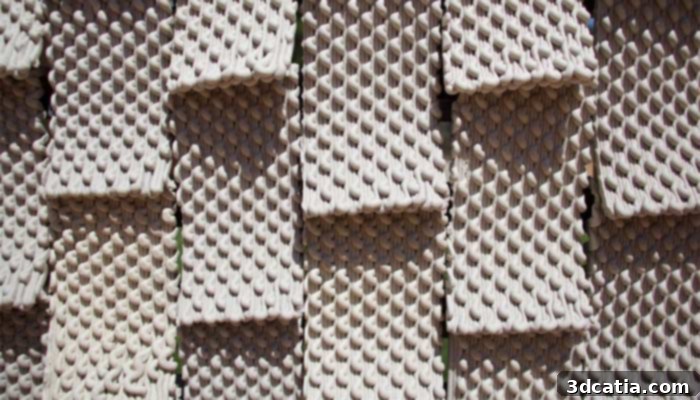
Some tiles are reminiscent of sewing stitches, highlighting the artisanal aesthetic.
Interior Ambiance: Light, Texture, and Technology
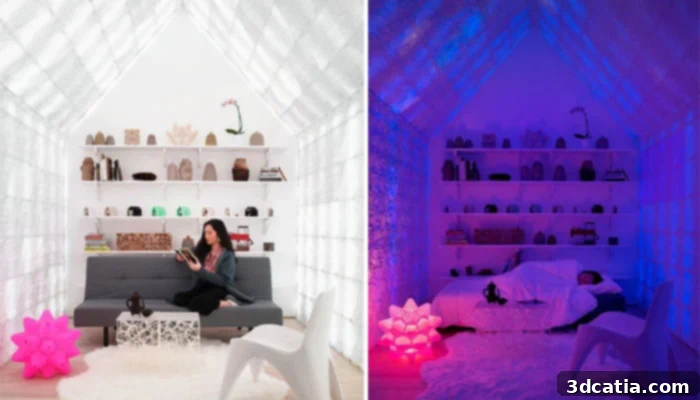
The innovation continues inside the cabin, where the walls are also 3D printed, but from translucent bioplastics. These bioplastic walls are not merely functional; they are intricately designed with custom relief textures and integrated color-changing LED lights. The translucency of the material ensures that the interior is flooded with natural light, creating an airy and open atmosphere that belies the cabin’s footprint. This thoughtful illumination strategy, combined with the dynamic LED lighting, allows the occupants to transform the ambiance of the space to suit various moods and occasions, from vibrant and energetic to serene and calming.
The interplay of light, texture, and color-changing technology significantly enhances the feeling of spaciousness and comfort within the cabin. Beyond the walls, the interior is further adorned with a variety of other 3D printed decorative elements, all meticulously crafted by Emerging Objects. These bespoke furnishings and decor pieces seamlessly integrate with the overall design language of the cabin, creating a cohesive and immersive experience that celebrates the possibilities of additive manufacturing in every detail. From functional shelving to unique art installations, each element contributes to an environment that is both aesthetically rich and deeply personal.
Visionary Perspectives: Aesthetic, Longevity, and Societal Impact
Ronald Rael, a co-founder of Emerging Objects and one of the principal designers behind The Cabin of Curiosities, eloquently articulates the project’s broader significance: “It’s not just a study of longevity or the structure of materials, it’s also a study of aesthetic. We see the future as elegant, optimistic and beautiful.” This powerful statement encapsulates the holistic vision behind the cabin, emphasizing that true innovation in architecture must harmonize structural integrity and material science with profound aesthetic appeal and a hopeful outlook for the future of building.
Indeed, The Cabin of Curiosities masterfully brings together these diverse elements, largely thanks to the inherent capabilities of 3D printing. The additive manufacturing method offers unparalleled possibilities for customization, enabling designers to realize complex geometries and unique textures that would be prohibitively expensive or simply impossible with traditional construction techniques. This high degree of customization means that a structure like this cabin could be scaled and adapted for various applications – from a charming, unique retreat nestled at the end of a garden to a larger, more expansive dwelling designed to help alleviate the pressing global housing crisis.
The potential of 3D printing to provide rapid and cost-effective housing solutions is a topic of increasing importance, drawing parallels with other pioneering initiatives. For instance, the efforts of New Story and ICON demonstrate the viability of constructing homes of approximately 200 square meters in as little as 24 hours, at an astonishingly low cost of around $4000. While Emerging Objects’ approach with The Cabin of Curiosities emphasizes aesthetic complexity and novel material compositions, the underlying principle remains the same: leveraging advanced manufacturing to address fundamental human needs with greater efficiency and innovation.
The flexibility offered by 3D printing allows for a diverse range of responses to the housing crisis. Whether it’s rapid deployment of basic, affordable homes for vulnerable communities, or the creation of highly customized, sustainable, and aesthetically rich living spaces, additive manufacturing stands ready to redefine the landscape of architectural possibilities. Emerging Objects’ work demonstrates that “affordable” doesn’t have to mean “generic,” and “sustainable” can also be “beautiful.”
Looking Ahead: The Future of 3D Printed Living
The Cabin of Curiosities by Emerging Objects is more than just a building; it is a profound statement about the future of architecture. It embodies the convergence of art, technology, and environmental consciousness, pushing the boundaries of what is possible in construction. By embracing unconventional materials, intricate designs, and sustainable practices, Emerging Objects offers a compelling vision for how we can build more intelligently, beautifully, and responsibly in the years to come.
This project serves as an inspiring example for architects, designers, and manufacturers globally, encouraging further exploration into the vast, untapped potential of 3D printing in creating living spaces that are both innovative and deeply connected to their environment. As the technology continues to evolve, we can anticipate even more creative solutions that address pressing global challenges, from climate change to housing scarcity, with unprecedented efficiency and elegance.
For a deeper insight into the making of this remarkable cabin and other innovative projects by Emerging Objects, you can watch the video below:
Discover more about their groundbreaking work and ongoing initiatives by visiting the official Emerging Objects website. We invite you to share your thoughts and reactions to this incredible project in the comments section below, or engage with us on our social media channels: find us on Facebook and Twitter. Don’t miss out on the latest advancements and news in the world of 3D printing; sign up for our free weekly Newsletter to receive all the essential updates directly in your inbox!