
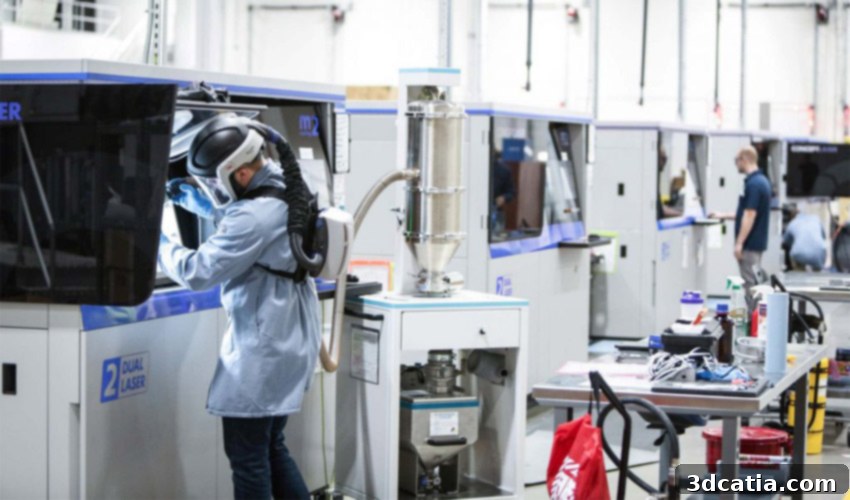
Comprehensive Guide: NIOSH Guidelines for Safe FDM and Metal Additive Manufacturing
The rapid adoption of additive manufacturing across diverse industries has ushered in unprecedented innovation, but also new considerations for workplace safety. Recognizing this evolving landscape, the National Institute for Occupational Safety and Health (NIOSH) in the United States has recently published vital guidelines concerning safety practices for both Fused Deposition Modeling (FDM) and metal additive manufacturing processes. These comprehensive recommendations are designed with a singular, crucial objective: to safeguard users who operate and interact with these advanced technologies. The guidelines meticulously outline a range of potential hazards inherent to both processes, from the emission of volatile organic compounds (VOCs) and ultrafine particles (UFPs) during FDM, to the handling of highly reactive metal powders and exposure to high-temperature surfaces in metal AM. Beyond identifying risks, NIOSH’s publication also details essential protective equipment – including respirators, gloves, and protective clothing – that should be utilized during preparation, operation, and post-processing stages. In essence, these are practical, evidence-based strategies aimed at significantly mitigating the dangers associated with industrial and even prosumer-level additive manufacturing.
Understanding NIOSH’s Crucial Role in 3D Printing Safety
NIOSH stands as a cornerstone American organization dedicated to generating scientific research and providing actionable recommendations to prevent work-related injuries, illnesses, and fatalities. As additive manufacturing transitions from niche prototyping to mainstream production in companies and factories of all scales, the imperative to protect employees and users of this technology becomes paramount. Regardless of the specific machine or process employed, ensuring a safe working environment is a responsibility shared by employers and individuals alike. Previously, organizations like the INRS had highlighted the specific dangers associated with handling metal powders in 3D printing. With these new, expanded guidelines, NIOSH broadens its focus to encompass the risks associated with FDM, in addition to the complex challenges presented by metal powder bed processes and other metal AM techniques. The guidelines are structured around five critical points, offering a holistic approach to safety: characterization of potential hazards, safe handling procedures around the machine, implementation of robust technical controls, establishment of clear administrative controls, and the appropriate use of personal protective equipment (PPE).
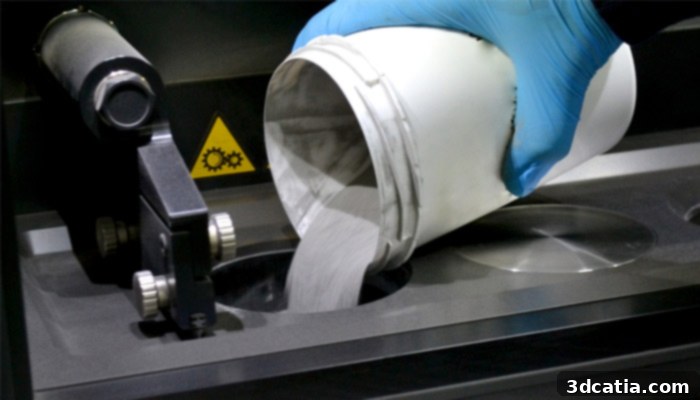
Handling 3D printing materials and operating machines can sometimes pose health and safety risks. Adherence to NIOSH guidelines is crucial.
Navigating Safety: Tips and Precautions for FDM 3D Printing
Fused Deposition Modeling (FDM) has become a ubiquitous 3D printing method, renowned for its accessibility and versatility. However, the extrusion process, while seemingly straightforward, releases various airborne contaminants, including volatile organic compounds (VOCs) and ultrafine particles (UFPs). These emissions, particularly from certain filament types, can be detrimental to human health, potentially causing respiratory irritation, headaches, and other adverse effects, especially with prolonged exposure in poorly ventilated spaces. While many modern FDM printers incorporate advanced filtration solutions like HEPA and activated carbon filters, NIOSH strongly advises additional precautions. Key recommendations include strategically locating printers far from other regular work activities and minimizing the amount of time personnel spend in close proximity to operating machines. This reduces ambient exposure levels. Furthermore, NIOSH encourages the judicious selection of materials, recommending the use of PLA (Polylactic Acid) as a generally safer alternative to ABS (Acrylonitrile Butadiene Styrene) due to PLA’s lower emission profile. The guidelines also highlight the importance of understanding the specific safety data sheets (SDS) for composite materials, as their additives can introduce new or amplified hazards.
Operational Safety and User Interaction in FDM
Beyond airborne emissions, direct user interaction with FDM machines presents its own set of risks. Tasks such as loading filament, removing prints from the build plate, cleaning the extruder, or changing the nozzle necessarily increase the risk of exposure to heat, sharp tools, and residual materials. NIOSH recommends a stringent approach to these operational aspects: limit the number of individuals authorized to perform these actions to a minimum, ensuring that only trained and competent personnel handle the machine. Crucially, clear, concise, and visible instructions – often in the form of Standard Operating Procedures (SOPs) – should be prominently displayed within the work area. These instructions should explicitly prohibit activities like eating, drinking, or smoking around the machine, as these can facilitate the ingestion or inhalation of contaminants. Furthermore, the use of appropriate personal protective equipment (PPE) is non-negotiable when interacting with an FDM printer. This typically includes heat-resistant gloves for handling hot components, safety glasses to protect against flying debris or splashes, and potentially a P95 or N95 respirator if specific materials or ventilation conditions warrant it. Regular cleaning and maintenance of the printer, following manufacturer guidelines, also contribute significantly to reducing long-term exposure risks.
Critical Safety Measures for Metal Additive Manufacturing
Metal additive manufacturing, encompassing processes like Direct Metal Laser Sintering (DMLS), Selective Laser Melting (SLM), and Electron Beam Melting (EBM), offers incredible capabilities but introduces a far more complex array of safety challenges, primarily due to the nature of fine metal powders and high-energy processes. As is widely recognized, the handling of metal powders poses significant health risks. These powders are often extremely fine, making them easily airborne and capable of being inhaled, leading to respiratory issues or systemic toxicity depending on the metal type (e.g., nickel, cobalt, titanium). Moreover, many metal powders are highly flammable or explosive when dispersed as a dust cloud in air, demanding rigorous control over ignition sources and atmospheric conditions. Beyond the powders themselves, the inherent presence of powerful lasers or electron beams introduces additional hazards. These include managing extreme temperatures (both within the build chamber and on finished parts), exposure to laser radiation (which can cause severe eye and skin damage if proper shielding and eyewear are not used), and the generation of hazardous fumes and byproducts. To mitigate these multifaceted risks, NIOSH emphasizes several crucial engineering controls: positioning the metal AM machine as far as practically possible from other unrelated work activities to create a dedicated hazard zone, implementing advanced, multi-stage filtration solutions (e.g., HEPA filters for particulates, activated carbon for fumes), and installing robust, integrated fire extinguishing systems designed specifically for metal powder fires (e.g., inert gas flooding systems or Class D extinguishers).
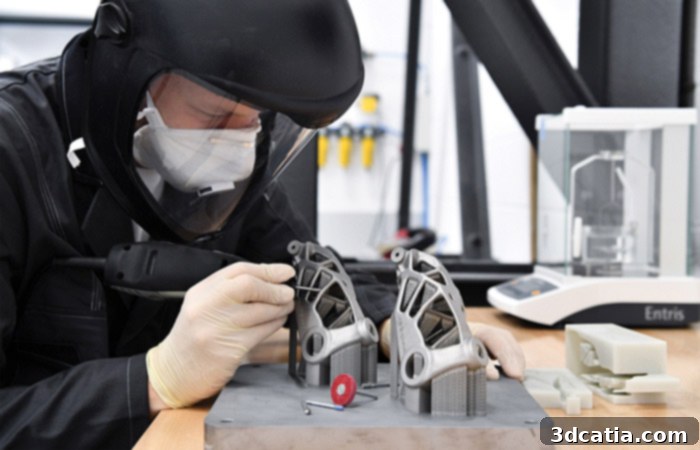
Appropriate Personal Protective Equipment (PPE) is essential for handling metal powders and operating additive manufacturing systems safely | Credits: voestalpine
Safe Powder Management and Post-Processing
The lifecycle of metal powders in additive manufacturing requires meticulous handling at every stage. Loading fresh powder into the machine and sieving reclaimed powder must always occur within strictly controlled, closed environments, often under an inert atmosphere, to prevent dust dispersion and minimize exposure. Similarly, post-processing steps, such as depowdering and part removal, are critical junctures for potential exposure, as unbound powder is exceedingly fine and can easily become airborne and spread throughout the workspace. To counter this, NIOSH recommends placing sticky mats around the entire work area dedicated to powder handling. These mats effectively capture any accidental powder spillage on footwear, preventing its inadvertent spread into other zones. Adherence to strict good housekeeping practices, including specialized vacuum cleaners for metal dust, is also paramount. Consistent with FDM/FFF processes, it is imperative to limit access to and operation of metal AM machines to only a select few individuals. These individuals must not only be thoroughly trained in the intricate safety protocols surrounding metal powders and high-power lasers but also be intimately familiar with the specific operating procedures for each piece of equipment. Comprehensive training should cover emergency response, spill containment, and proper waste disposal methods for hazardous metal waste. Regular health monitoring for employees working with metal powders is also a recommended administrative control.
Implementing a Culture of Safety in Additive Manufacturing
The NIOSH guidelines underscore the paramount importance of a multi-layered approach to safety in additive manufacturing. This hierarchy of controls prioritizes engineering controls (like ventilation and enclosed systems) as the most effective, followed by administrative controls (such as training and SOPs), and finally, personal protective equipment (PPE) as the last line of defense. By systematically addressing each of these layers, organizations can create a robust safety framework that protects their workforce and ensures compliance with occupational health standards. These guidelines are not merely a set of rules, but a call to foster a proactive safety culture where awareness, training, and continuous improvement are central. All users, from researchers to industrial operators, are encouraged to consult the full NIOSH publication to gain a deeper understanding of these recommendations and assess their current practices and equipment against the highest safety standards. The detailed documentation provided by NIOSH will empower you to verify your existing safety measures, identify any gaps, and implement necessary enhancements to reduce potential hazards to an absolute minimum. Understanding and mitigating the hazards associated with 3D printing is a collective effort that benefits everyone in the additive manufacturing community.
For more in-depth advice and detailed technical specifications, we strongly encourage you to visit the official NIOSH site. You can access the full report and supplementary materials HERE. This invaluable resource will enable you to meticulously review your current safety protocols, evaluate your existing equipment, and ensure that all potential hazards are minimized to the greatest extent possible. Were you aware of the comprehensive range of hazards associated with modern 3D printing technologies, both FDM and metal AM? We invite you to share your insights, experiences, and any questions you may have in the comments section below, or engage with us on our Facebook and Twitter pages! Don’t miss out on the latest advancements and safety updates in the world of additive manufacturing; make sure to sign up for our free weekly Newsletter, delivering all the essential news straight to your inbox.
*Cover Image Credits: GE Additive – Showcasing advanced metal additive manufacturing processes.