
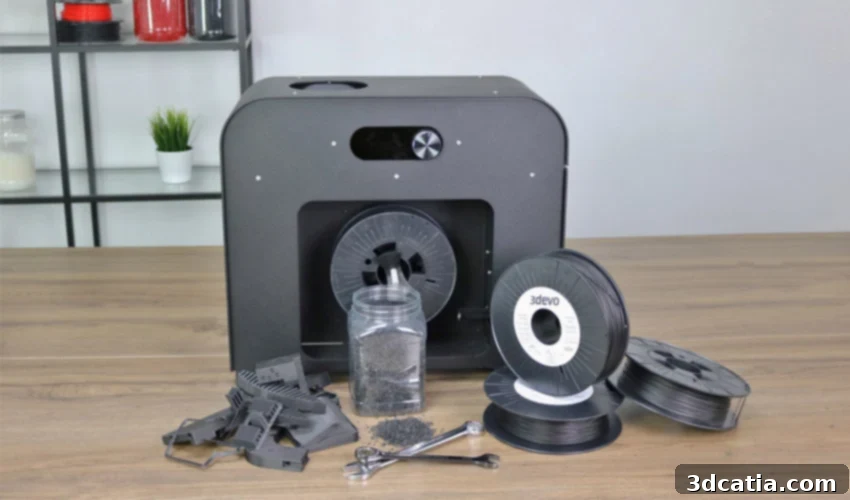
Innovating 3D Printing: How 3devo’s Desktop Solutions Drive Plastic Recycling and Custom Filament Creation
The landscape of additive manufacturing, or 3D printing, is continuously expanding, offering unprecedented opportunities for innovation across various industries. However, the accessibility of diverse materials and the environmental impact of plastic waste present ongoing challenges. Addressing these critical issues, 3devo, a pioneering Dutch startup established in 2016, has developed a revolutionary suite of three desktop machines. These machines are engineered to transform plastic waste into high-quality 3D printing filament, effectively providing a complete, office-ready solution rooted in the principles of a circular economy. This innovative system not only enhances the value of discarded plastics but also unleashes remarkable creative possibilities for designers, researchers, and engineers alike.
3devo’s integrated ecosystem comprises three distinct yet interconnected devices. First, the Shr3d It, a powerful desktop shredder, efficiently converts plastic waste into usable granules or flakes. These granules then serve as feedstock for the Filament Maker, the core of 3devo’s offering, which expertly extrudes and winds customized filament reels. To ensure optimal material quality and flawless printing performance, the newly created filaments are subsequently processed by the Airid, a sophisticated drying system that meticulously removes moisture. This comprehensive, closed-loop solution truly redefines how materials are sourced and utilized in 3D printing. To gain a deeper understanding of 3devo’s groundbreaking technologies and their ambitious future endeavors, we engaged in an insightful discussion with Louis Rinaldo, the startup’s dedicated Materials Specialist.
3DN: Could you introduce yourself and 3devo?

Louis Rinaldo
My name is Louis Rinaldo, and I serve as the Materials Specialist at 3devo. Our company was founded in June 2016 by our visionary CEO, Tim Wesselink, with the invaluable support of a team of passionate young engineers. 3devo operates as a dynamic and forward-thinking tech company, distinguished by its collaborative spirit. We work closely with researchers, inventors, and innovators across various fields, providing them with cutting-edge equipment, specialized expertise, and a unique, friendly Dutch approach to problem-solving. Our core mission is to offer a complete, compact desktop solution that empowers users to manufacture virtually all types of 3D printing filaments – including novel materials and formulations that may not even exist on the commercial market yet. This capability is crucial for advancing material science in additive manufacturing and fostering rapid prototyping and research.
3DN: Can you tell us more about the machines you manufacture?
Currently, 3devo proudly manufactures three innovative machines that form the backbone of our circular economy approach for 3D printing. Our flagship product, the Filament Maker, stands as a testament to our commitment to bringing industrial-grade capabilities to a desktop environment. This machine represents a complete filament production line, meticulously designed to be barely larger than a standard desktop 3D printer. The Filament Maker grants users the unprecedented ability to create spools of their own custom 3D printing filament, starting from a wide array of raw materials, including thermoplastic pellets, powders, or even shredded plastic waste. Its compact size and versatility make it an ideal tool for academic institutions, R&D departments, and independent creators who wish to experiment with new materials, incorporate various fillers, or integrate performance-enhancing additives. We’ve dedicated significant effort to ensure it is as user-friendly as possible, without compromising on the high quality and precision required for optimal filament production.
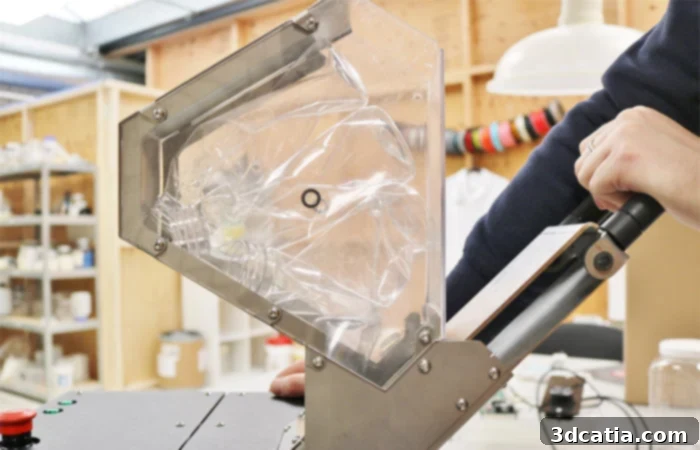
The second essential machine in our ecosystem is the Shr3d It, our powerful desktop shredder. Despite its compact footprint, the Shr3d It is remarkably robust and capable of efficiently shredding nearly any type of plastic into small, consistent flakes. This regrind material can then be directly fed into the Filament Maker to produce new, recycled filament. The primary purpose of the Shr3d It was to “close the loop” in plastic consumption, enabling users to transform their plastic waste into valuable raw material for 3D printing. However, it’s important to note that the Filament Maker can also operate independently, processing virgin thermoplastic pellets if recycling isn’t the immediate objective.
Our latest innovation, and a crucial component for ensuring optimal material performance, is the Airid Dryer. Many polymers, when exposed to ambient moisture, absorb water, which can significantly compromise their integrity during processing. This moisture can lead to print failures, poor surface finish, reduced mechanical properties, and even damage to extrusion equipment. Unlike conventional ovens, 3devo’s Airid Dryer is specifically engineered to remove all moisture from plastic pellets, powders, or regrinds in a highly homogeneous manner. This meticulous drying process ensures that the material batch is optimally prepared and can be safely and effectively fed into the Filament Maker, guaranteeing consistent quality and superior print results.
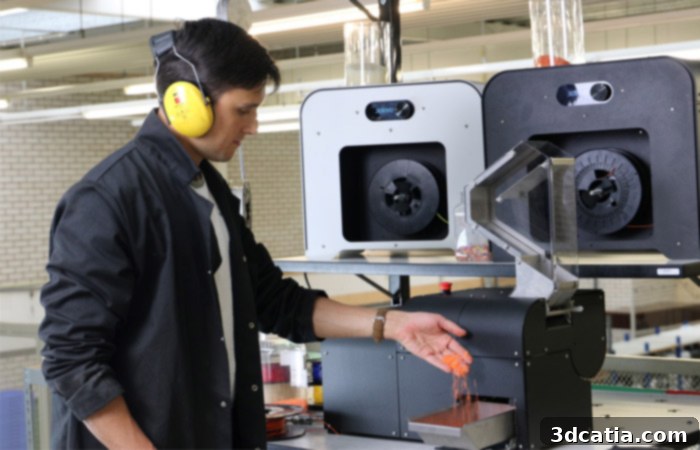
The Shr3d It shredder developed by 3devo with the Filament Maker in the background | Credits: 3devo
3DN: Is it possible to recycle any plastic using your machines?
While our machines offer remarkable versatility, the answer to whether any plastic can be recycled is no, and the underlying reason is quite fascinating and fundamental to polymer chemistry. Plastics are broadly categorized into two main types: thermosets and thermoplastics. Thermosets are polymers that, once cured or solidified into a specific shape, cannot be re-melted or reformed. They undergo an irreversible chemical change during their initial processing, effectively trapping them in their solid form permanently. A good analogy for a thermoset is a hard-boiled egg: once cooked, it cannot return to its liquid state or be easily reshaped.
Thermoplastics, on the other hand, are polymers that can be repeatedly melted by heating and solidified by cooling without undergoing significant chemical degradation. This unique characteristic is precisely what extrusion, injection molding, and 3D printing processes leverage: they involve melting the polymer with heat, shaping it into a new form, and then cooling it down to solidify. In theory, this heating and cooling cycle can be repeated numerous times, making thermoplastics inherently recyclable. Furthermore, their ability to be melted and extruded repeatedly is also why they are the primary type of plastic used in most 3D printing applications. Therefore, our machines are designed to efficiently process and recycle a vast array of thermoplastics, transforming them into new filament suitable for additive manufacturing.
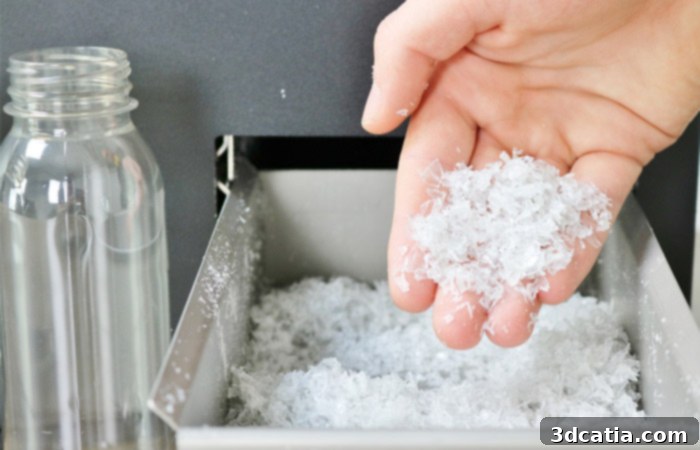
The machine transforms plastic waste into small flakes ready for filament extrusion | Credits: 3devo
3DN: What challenges did you face to develop your products?
Developing our desktop filament production ecosystem presented several significant engineering and material science challenges, especially given our ambition to democratize filament creation. Extrusion itself is a well-established and sophisticated process within the plastics industry, typically involving large, industrial-scale machinery. Our primary challenge was to successfully scale down an entire extrusion line into a compact, desktop solution without sacrificing performance or material versatility. The goal was to create a small Filament Maker that could surprisingly process an extensive range of plastics, from common and accessible polymers like PLA (Polylactic Acid) to high-performance, engineering-grade materials such as PEEK (Polyether Ether Ketone). Achieving this required innovative designs for heating elements, screw geometries, and cooling systems, all contained within a compact form factor.
The second, and arguably most crucial, challenge was guaranteeing the same high level of filament quality and dimensional tolerance that is expected from large-scale industrial extruders. In additive manufacturing, particularly Fused Deposition Modeling (FDM), precision is paramount. A filament with inconsistent diameter or poor quality can have a profoundly negative impact on the final printed part’s properties, leading to issues such as clogged nozzles, weak layer adhesion, poor surface finish, and overall visual defects. Our solution to this critical problem involved integrating a smart, high-precision quality sensor directly into the Filament Maker. This sensor continuously measures the thickness of the filament as it is being extruded and spooled. More impressively, it provides real-time feedback to the extrusion system, allowing for automatic corrections to be made. This ensures that the filament diameter is consistently maintained within tight tolerances, producing reliable and high-quality material for optimal 3D printing results.
The final challenge is an ongoing, evolving endeavor for 3devo: our overarching goal is to make filament making truly accessible to everyone, not just through our machines but also by widely disseminating our accumulated knowledge and expertise. We are constantly striving to become the foremost experts in the extrusion of all thermoplastics and in the field of plastic recycling. To this end, we have built up an extensive and invaluable materials database, meticulously compiled through a hands-on, experimental approach involving countless hours of research and testing. Beyond our products, we are committed to education, offering specialized extrusion training programs and freely sharing a wealth of resources including articles, technical sheets, detailed reports, and more. This dedication to knowledge transfer underscores our belief that empowerment through understanding is key to unlocking the full potential of custom filament production and sustainable 3D printing.

A closer look at the 3devo filament making process | Credits: 3devo
3DN: Who are your customers today?
Our customer base is predominantly composed of forward-thinking innovators, creative professionals, and dedicated researchers. These individuals and organizations are typically driven by a desire to manufacture specialized, custom filaments that are either not readily available on the commercial market or to integrate plastic recycling into their operations. This includes educational institutions looking to teach sustainable practices, businesses aiming to reduce waste and create bespoke materials, and research facilities pushing the boundaries of material science.
The landscape of Fused Deposition Modeling (FDM) 3D printing is rapidly evolving beyond its traditional role as merely a prototyping method. Today, with advancements in materials science, high-performance parts can be printed from an ever-growing variety of polymers and composite materials, enabling their use in even demanding structural applications. The inherent advantages of FDM over many other additive manufacturing techniques lie in its relative accessibility and its unparalleled ability to process nearly all thermoplastics. However, a key challenge arises from the fact that most plastics were originally formulated and optimized for injection molding, not for filament extrusion or 3D printing. To truly unlock new 3D printing applications, especially those requiring specific mechanical or thermal properties, the plastic formulations must be meticulously optimized for the unique demands of filament extrusion and subsequent 3D printing. This is precisely where many of our customers excel. They utilize 3devo’s desktop solutions to conduct laboratory-scale experiments, refining material formulations and processing parameters before scaling up their innovations to industrial production levels.
It is undeniably more efficient and cost-effective to conduct iterative experiments with a small machine and a kilogram of material in a controlled lab setting, rather than incurring significant waste and expense by conducting trial runs on a full-scale production plant, potentially wasting half a ton of material with every single attempt. Our machines enable this agile, material-efficient research and development, accelerating the pace of innovation in customized and sustainable 3D printing materials.
3DN: Do you think 3D printing will play a part in environmental preservation?
Absolutely, 3D printing is poised to play a crucial and increasingly significant role in environmental preservation, particularly through its inherent efficiencies and its synergy with plastic recycling. To illustrate this point, consider the compelling example of the International Space Station (ISS). The ISS represents a microcosm of Earth – a confined environment with strictly limited resources. Astronauts cannot simply order new parts from an external supply chain; they must rely entirely on the materials already present within their habitat. The only viable strategy to prevent resource depletion and maintain operational capability is to implement a robust closed-loop system where materials are continuously recycled and repurposed.
This “closed-loop” mentality is directly applicable to our planet. One of the key advantages of thermoplastics, the primary material used in FDM 3D printing, is their excellent recyclability. Unlike metals, which often require immense amounts of energy for recycling, thermoplastics can be recycled multiple times with comparatively low energy expenditure. Furthermore, 3D printing inherently creates significantly less waste than conventional subtractive manufacturing techniques, which typically involve cutting away material from a larger block. With 3D printing, you add material layer by layer, only where it’s needed, minimizing material consumption and scrap.
By combining the waste-reducing nature of 3D printing with the recyclability of plastics, this cycle could evolve into one of the most sustainable methods for creating modern items. Imagine the efficiency on the ISS: an astronaut could print a specialized tool, like a hammer, on Monday. Once its purpose is served, that same hammer could then be shredded and converted into a completely different object, such as a custom storage box, on Tuesday. This adaptive manufacturing capability, driven by on-demand production, stands in stark contrast to mass manufacturing where vast quantities of identical parts are produced, with often only a fraction ever being utilized. 3D printing empowers us to manufacture precisely what we need, when we need it, dramatically reducing waste and moving us closer to a truly circular economy on Earth, much like the imperative for survival on the ISS.
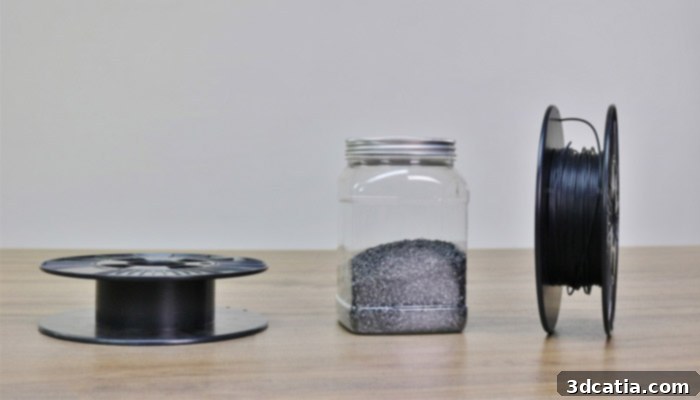
3devo’s machines offer versatile material handling for 3D printing | Credits: 3devo
3DN: A last word for our readers?
Do you have a specific, unique requirement that demands a custom-designed part? 3D printing unequivocally provides the solution for creating virtually any shape or geometry imaginable. However, the critical complement to achieving truly innovative and functional parts lies in the material itself. Filament extrusion is the key to unlocking the second half of this equation: the ability to precisely control and customize the material properties. The power of desktop filament extrusion, as offered by 3devo, will ultimately elevate 3D printing to its final, transformative level, empowering creators to not only design unique forms but also imbue them with bespoke material characteristics.
You can find more information about 3devo’s innovative process and solutions HERE.
What are your thoughts on 3devo, our featured startup of the month, and their contributions to sustainable 3D printing? We encourage you to share your comments below or engage with us on our Facebook and Twitter pages! Don’t miss out on the latest advancements and news in the world of 3D printing – sign up for our free weekly Newsletter to receive all the updates directly in your inbox!