
The Wohlers Report: Charting the Future and Unlocking the Potential of Additive Manufacturing
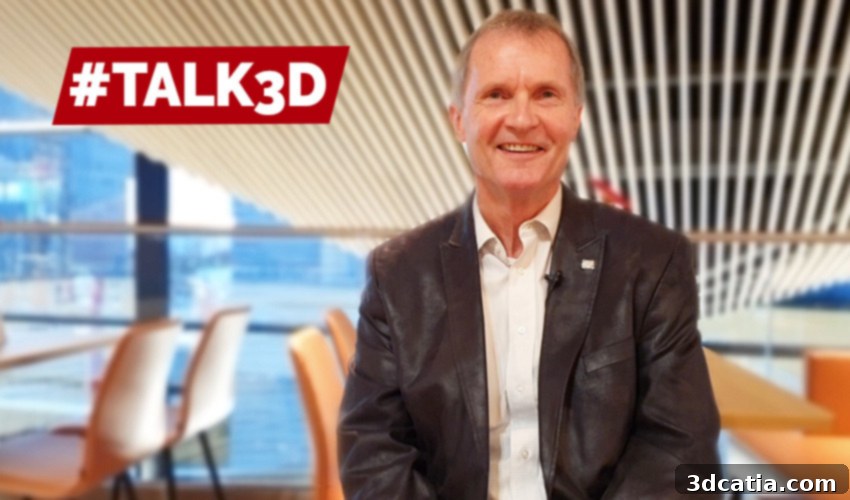
For anyone closely following the dynamic world of additive manufacturing, the name “Wohlers Report” resonates as an indispensable benchmark. This annual study, meticulously compiled by Wohlers Associates – now an integral part of ASTM International since November 2021 – offers an unparalleled snapshot of the additive manufacturing market. It illuminates prevailing trends, identifies key applications, and forecasts future trajectories within the sector. We recently had the distinct privilege of engaging with Terry Wohlers, the visionary Head of Market Intelligence in Additive Manufacturing at Wohlers Associates and the primary author of this seminal report. During our discussion, he generously shared his profound insights into the current market landscape and offered his compelling predictions for what lies ahead. In celebration of International Printing Day, we encourage you to delve deeper into these perspectives by watching our latest TALK3D video.
The Enduring Legacy of the Wohlers Report and Wohlers Associates
Wohlers Associates, founded by Terry Wohlers in 1986, has dedicated decades to meticulously charting the evolution of the additive manufacturing market. Through its comprehensive annual analyses, the organization has consistently provided industry stakeholders with a panoramic and in-depth view of the 3D printing industry. This crucial intelligence encompasses a vast array of aspects, including but not limited to, the most prevalent manufacturing processes, the materials gaining traction, the persistent challenges hindering widespread adoption, and emerging opportunities. The report is renowned for sharing concrete application cases across virtually all vertical markets, serving as an indispensable resource for countless professionals seeking reliable numerical data and strategic guidance.
The 2021 edition marked the 26th installment of the Wohlers Report, which notably highlighted a period of weakened growth for 3D technologies, largely attributed to the global health crisis. Despite this temporary slowdown, the underlying optimism for the sector’s long-term potential remained robust. Our recent conversation with Terry Wohlers, the emblematic figure behind this foundational study, aimed to uncover deeper insights into the market’s resilience and future prospects. A particularly memorable sentiment from our interview was Terry’s profound observation: “What we know about 3D printing is exciting, but what we don’t know is even more exciting.” This powerful statement serves as clear evidence that the additive manufacturing industry, far from reaching its zenith, still harbors a remarkably bright and expansive future, full of uncharted possibilities and groundbreaking innovations.
Terry Wohlers’ Vision: A Future Shaped by Additive Manufacturing
Terry Wohlers remains an unbridled optimist when discussing the future trajectory of additive manufacturing technology. He firmly believes that the upcoming generations, unburdened by conventional manufacturing paradigms, will approach problem-solving and product development with unprecedented creativity. Their natural inclination towards digital fabrication will lead them to leverage additive manufacturing tools and techniques even more extensively in the ideation and development phases. So profound is his conviction in this promising evolution that he wistfully expressed a desire to live another 100 years just to witness the full unfolding of its potential. His insights offer a compelling glimpse into a world where 3D printing is not just a tool, but an inherent part of how we conceive, design, and produce.
Transformative Impact Across Key Sectors
According to Terry Wohlers, the healthcare, aerospace, and consumer goods sectors are poised to experience the most profound impact from additive manufacturing in the years to come. This projected influence is intrinsically linked to the technology’s unparalleled customization capabilities and its ability to produce highly complex geometries with minimal waste. In healthcare, this translates to patient-specific implants, prosthetics, and surgical guides, vastly improving patient outcomes and accelerating recovery times. The precision and personalization offered by 3D printing are revolutionizing medical devices, enabling breakthroughs in bioprinting and pharmaceutical development that were once considered science fiction.
In aerospace, the demand for lightweight, high-performance components with intricate internal structures makes additive manufacturing an ideal solution. From fuel nozzles to turbine blades and structural brackets, 3D printing enables engineers to consolidate multiple parts into single, optimized components, leading to significant reductions in weight, assembly time, and material consumption. This not only enhances fuel efficiency but also allows for designs that are impossible to achieve with traditional subtractive manufacturing methods, pushing the boundaries of flight and space exploration.
The consumer goods sector is equally ripe for disruption. Additive manufacturing facilitates mass customization, allowing brands to offer personalized products tailored to individual consumer preferences without the prohibitive costs associated with traditional bespoke manufacturing. From footwear and eyewear to custom electronics casings and artistic creations, 3D printing empowers rapid prototyping, on-demand production, and innovative product iterations, radically shortening design cycles and bringing novel products to market faster. This shift towards personalized production promises a new era of consumer choice and sustainable manufacturing.
Wohlers’ most striking prediction is that in the not-so-distant future, it will become increasingly difficult to purchase a product that has not, at some stage of its development, incorporated 3D printing technology. This vision suggests a world where additive manufacturing transcends its current niche applications to become a fundamental, pervasive component of the global manufacturing ecosystem. Whether it’s for prototyping, tooling, end-use parts, or even just design validation, 3D printing’s influence will be felt across the entire product lifecycle, signaling a truly transformative era for industry and consumers alike.
Navigating the Path Forward: Current Challenges in AM Adoption
Despite the overwhelmingly positive outlook, Terry Wohlers acknowledges that several critical challenges still need to be addressed to fully unlock additive manufacturing’s potential. One significant hurdle remains the initial investment in machines and the ongoing cost of materials. While prices have gradually decreased over time, the entry barrier for high-volume industrial applications can still be substantial, and the variety and affordability of specialized materials continue to be areas for improvement. Researchers and manufacturers are actively working on developing more cost-effective systems and expanding the material palette to include more accessible and performance-optimized options.
Another key area demanding attention is the automation of post-processing solutions. Many additive manufacturing processes still require significant manual intervention for support removal, surface finishing, and curing. This labor-intensive step often adds considerable time and cost to the overall production workflow, diminishing the efficiency gains of 3D printing. The industry is seeing concerted efforts towards developing advanced robotic systems, integrated post-processing stations, and intelligent software solutions that can streamline these crucial steps, moving closer to a fully automated end-to-end production line.
Finally, the ability to “design for additive manufacturing” (DfAM) is paramount. Unlike traditional manufacturing methods, AM offers unprecedented design freedom, allowing for complex geometries, internal lattices, and part consolidation. However, realizing these benefits requires a specialized skillset and a fundamental shift in design thinking. Engineers and designers need training to fully leverage AM’s capabilities, understanding how material properties, build orientations, and process limitations impact the final part. In an interview Terry Wohlers gave us in 2019, he explained that while some industry players are already dedicating substantial resources to solving these multifaceted challenges, it will undoubtedly require continued patience, investment, and collaborative innovation before these hurdles are comprehensively overcome.
Join the Conversation and Stay Informed
What are your thoughts on this illuminating discussion with Terry Wohlers and the insights shared in our latest TALK3D video? We invite you to share your perspectives and engage with us by leaving a comment below or by connecting with us on our various social media platforms, including LinkedIn, Facebook, and Twitter. To ensure you never miss out on the cutting-edge developments in the 3D printing world, don’t forget to sign up for our complimentary weekly Newsletter here, delivering the freshest news straight to your inbox. You can also explore our entire collection of insightful videos and interviews on our dedicated YouTube channel. Stay connected and be a part of the future of manufacturing!