
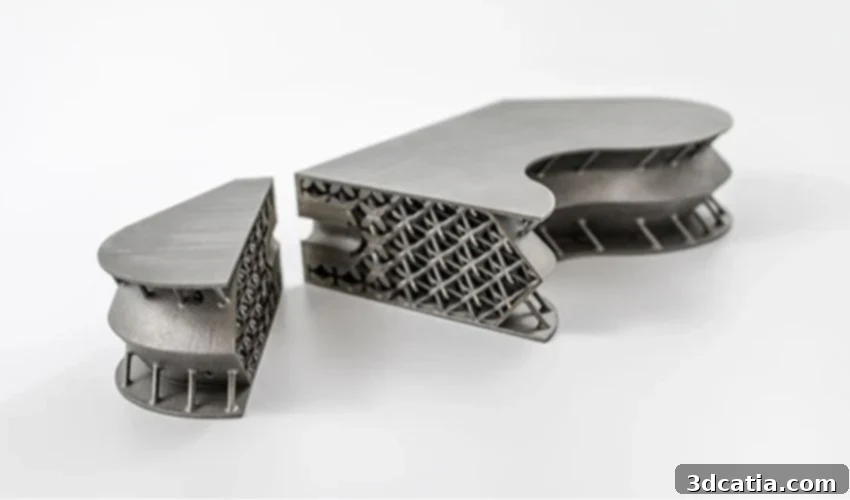
The Ultimate Guide to Titanium 3D Printing: Properties, Technologies, and Transformative Applications
In the realm of advanced manufacturing, the selection of materials is paramount to achieving superior performance and innovation. While we have previously explored materials such as copper, sand, and alumide in additive manufacturing, today’s focus is on a truly remarkable metal: titanium. This transition metal, never found in its pure elemental form in nature, is meticulously extracted from minerals like rutile (TiO2) and ilmenite (FeTiO3) through sophisticated and energy-intensive processing. The result is typically a high-purity metal, often reaching 99.9%, which is then frequently alloyed with other elements to forge materials with even greater performance capabilities. Thanks to its extraordinary characteristics, titanium and its alloys have become indispensable for additive manufacturing across critical sectors such as medicine, aerospace, and automotive. This comprehensive guide will delve into the inherent advantages and unique characteristics of titanium, explore the diverse range of alloys utilized, and shed light on the various 3D printing technologies employed to harness this exceptional material.
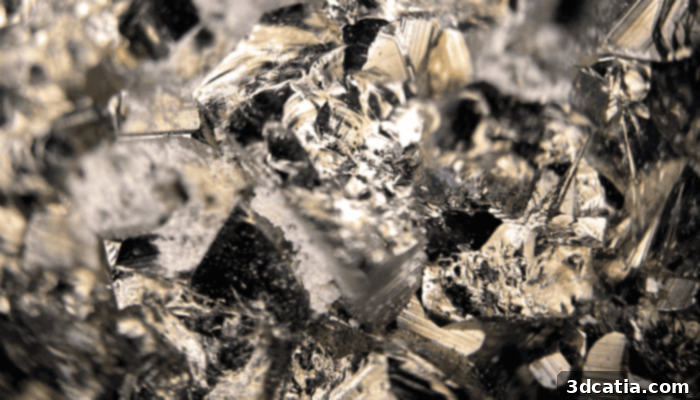
Photo credit: Freepik
Unpacking the Unique Characteristics of Titanium for Additive Manufacturing
Titanium, denoted by the symbol Ti and possessing atomic number 22, is celebrated for its remarkable combination of practical and versatile characteristics. Its outstanding properties make it a material of choice for a wide array of demanding applications. Foremost among these are its exceptional lightness and high strength. While boasting a strength comparable to that of steel, titanium offers a significant weight reduction of approximately 40%. This advantageous strength-to-weight ratio is crucial for manufacturing components that require both durability and minimal mass, enabling enhanced performance and efficiency in various engineering contexts. Beyond its mechanical prowess, titanium exhibits inherently low toxicity, making it highly biocompatible – a critical attribute for medical implants and devices that interact directly with the human body.
Furthermore, titanium’s superior corrosion resistance is a standout feature. It remains virtually unaffected by saltwater, various chemicals, and general wear, positioning it as an ideal material for applications in harsh and extreme environments, including marine, chemical processing, and even surgical settings. Its passive oxide layer provides a robust protective barrier against corrosive agents. In addition to its impressive mechanical and chemical properties, titanium demonstrates excellent thermal qualities. It can comfortably withstand high operating temperatures of up to 600°C without significant degradation, while simultaneously maintaining its structural integrity and stability even in cryogenic conditions. This broad thermal tolerance further expands its utility in high-performance applications where temperature fluctuations are common.
Despite its many advantages, titanium presents significant challenges in traditional machining processes, primarily due to its low thermal conductivity. When machined using conventional methods like CNC machines, the majority of the heat generated during cutting is retained by the cutting tool and the workpiece itself, rather than dissipating efficiently. This localized heat buildup can lead to rapid tool wear, reduced tool life, and potential thermal damage to the part, making precise machining both difficult and costly. Moreover, subtractive manufacturing techniques inherently produce a substantial amount of material waste, which is particularly problematic given titanium’s high material cost. Confronted with these inefficiencies and economic drawbacks, many companies are increasingly exploring more effective and sustainable methods for producing titanium components. Metal 3D printing, or additive manufacturing, has emerged as a groundbreaking and highly promising solution, offering advantages such as reduced material waste, the ability to create complex geometries, and often a more cost-effective approach for intricate parts.
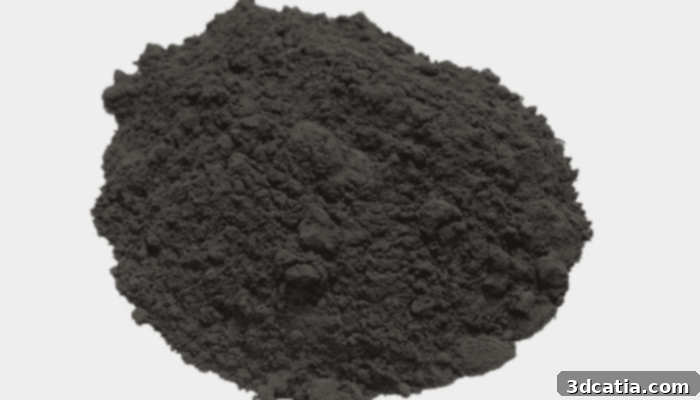
Photo credit: AM Material
Exploring the Diverse Titanium Alloys for 3D Printing
While pure titanium (Cp-Ti) can be utilized in 3D printing for specific applications, particularly in the medical sector due to its excellent biocompatibility with the human body, titanium is most frequently employed in alloy form for additive manufacturing. Titanium alloys offer enhanced mechanical properties and greater adaptability to complex engineering challenges, making them preferred over pure titanium in many scenarios. Pure titanium, despite its lightness, outstanding corrosion resistance, and biocompatibility, possesses certain limitations such as relatively lower toughness, hardness, and fatigue resistance. These characteristics can be insufficient for applications demanding materials capable of withstanding high loads, repeated stress cycles, or requiring superior wear resistance.
Several titanium alloys have been specifically developed and optimized for 3D printing processes, each offering a unique balance of properties:
- Ti6Al-4V Grade 5 (Ti64): This is arguably the most common and widely used titanium alloy in 3D printing. It is a robust mixture of titanium, 6% aluminum, and 4% vanadium. Ti6Al-4V Grade 5 is highly valued for its exceptional combination of high strength, relatively low weight, excellent heat resistance, and superior corrosion resistance. These properties make it indispensable for critical applications in aerospace, defense, and high-performance automotive sectors.
- Ti6Al-4V Grade 23 (Ti64 ELI): An “Extra Low Interstitial” version of Grade 5, Ti6Al-4V Grade 23 features reduced oxygen and iron content. This modification significantly improves its ductility and fracture toughness, which are crucial for medical prostheses and implants. Its enhanced biocompatibility and mechanical fatigue resistance make it an ideal choice for long-term medical devices that require reliability and patient safety.
- Titanium Beta 21S: This alloy stands out for its superior strength, high oxidation resistance, and excellent creep resistance at elevated temperatures. These advanced properties lead to its application in highly demanding environments, such as orthopedic implants where long-term stability and strength are vital, and in advanced aerospace engines where components are subjected to extreme thermal and mechanical stresses.
- Cp-Ti (Commercially Pure Titanium): As mentioned, Cp-Ti is used in its pure form, primarily in the medical field. Its excellent compatibility with human tissues, combined with good corrosion resistance, makes it suitable for non-load-bearing implants, dental applications, and surgical instruments where biocompatibility is prioritized over maximum strength.
- TA15 Alloy: Comprising titanium, aluminum, and zirconium, the TA15 alloy is specifically engineered for high-temperature applications. It exhibits good strength and stability at elevated temperatures, making it a valuable material for manufacturing heat-resistant parts in aeronautics, such as engine components and structural elements exposed to thermal extremes.
The strategic selection of the appropriate titanium alloy is crucial for optimizing the performance and longevity of 3D printed parts, ensuring they meet the stringent requirements of their intended applications across various industries.
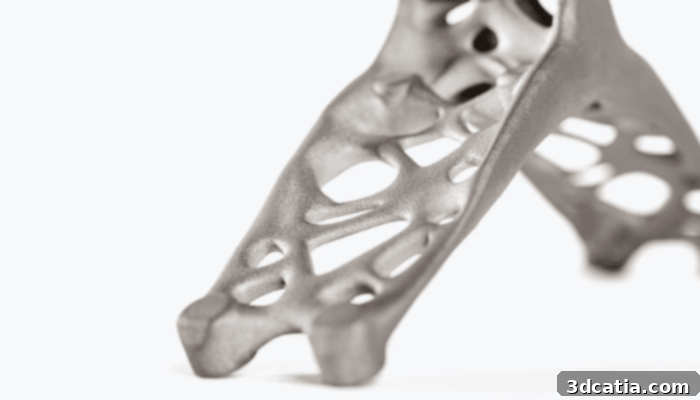
Photo credit: Materialise
Key 3D Printing Technologies for Titanium and Associated Challenges
In additive manufacturing, titanium is typically processed in either powdered or wire form, depending on the specific 3D printing technology employed. Several advanced techniques are capable of producing high-quality titanium parts, each offering distinct advantages and suited for different applications.
One of the prominent technologies is Directed Energy Deposition (DED). In DED, titanium powder or wire is precisely fed into a melt pool created by a focused energy source, such as a high-power laser or electron beam. The material melts upon contact and solidifies, building layers of the part. DED is particularly well-suited for repairing existing titanium components, adding features to larger structures, or producing large, complex parts, offering greater material flexibility and relatively high deposition rates.
Another widely adopted and highly precise method is Laser Powder Bed Fusion (L-PBF), also known as Direct Metal Laser Sintering (DMLS) or Selective Laser Melting (SLM). This technique involves a high-powered laser selectively melting thin layers of titanium powder, such as Ti6Al4V alloy, within a heated build chamber. The process iterates layer by layer, fusing the powder into a solid object. L-PBF excels at producing highly intricate geometries with excellent surface finish and mechanical properties, making it ideal for components requiring high precision and complex internal structures.
Electron Beam Melting (EBM) offers an alternative approach to powder bed fusion for titanium. Unlike laser-based methods, EBM uses a powerful electron beam as the energy source, operating in a high-vacuum environment. The electron beam melts and fuses titanium powder particles layer by layer. A significant advantage of EBM is its ability to pre-heat the powder bed to very high temperatures, which reduces residual stresses in the printed parts, often resulting in components with superior ductility and fewer defects. This makes EBM particularly suitable for demanding aerospace and medical applications where material integrity is paramount.
Finally, Binder Jetting is another additive manufacturing process that can be used with titanium. In this method, a liquid binding agent is selectively jetted onto a powder bed of titanium particles, essentially gluing them together layer by layer. Once the ‘green part’ is formed, it undergoes a subsequent sintering process in a high-temperature furnace. During sintering, the binder burns out, and the titanium particles fuse, creating a dense, solid metal part. Binder jetting is known for its ability to produce parts quickly and at a lower cost per part, especially for larger production volumes, though it typically requires post-sintering to achieve desired mechanical properties and often results in some shrinkage.
Despite the immense potential, 3D printing with titanium presents several notable challenges that require careful consideration. Firstly, the production costs associated with titanium additive manufacturing are significantly higher compared to many other materials. This is primarily due to the premium price of titanium alloys, particularly in the fine powder or wire forms required for these processes. Furthermore, the inherent complexity of the 3D printing process itself, which often involves specialized inert gas environments (like argon for L-PBF) or vacuum chambers (for EBM), contributes to higher operational expenses. The subsequent necessity for extensive post-processing further escalates these costs and extends lead times.
Another hurdle is the relatively limited availability of titanium alloys specifically developed and qualified for 3D printing, compared to more common metals. This can complicate material sourcing, restrict design flexibility, and potentially increase costs as supply chains are less diversified. Moreover, post-printing operations are almost always critical for titanium parts. These can include support structure removal, often a manual and delicate task for complex geometries, followed by meticulous heat treatments (such as stress relief or hot isostatic pressing – HIP) to enhance mechanical properties, reduce porosity, and alleviate internal stresses. Surface finishing techniques, including polishing or machining, are also frequently required to achieve the desired aesthetic and functional surface quality. Each of these additional steps not only adds to the overall production time but also significantly contributes to the total cost of manufacturing a titanium component via additive processes.
Transformative Applications for Titanium 3D Printing Across Industries
Titanium 3D printing has revolutionized manufacturing across a multitude of industries, leveraging the material’s unparalleled properties to create components that were once impossible or prohibitively expensive to produce. Its ability to enable complex geometries, lightweight designs, and superior performance has driven innovation in critical sectors.
In the **aerospace industry**, titanium additive manufacturing has become an indispensable tool for fabricating key components. This includes high-performance turbine blades, intricate structural brackets, fuselage components, and various specialized parts for aircraft and spacecraft. Titanium’s unique combination of high strength-to-weight ratio, exceptional resistance to extreme temperatures, and superior corrosion resistance is critical for reducing overall aircraft weight, which directly translates to improved fuel efficiency and extended operational range. The ability to consolidate multiple parts into a single, complex 3D-printed component also reduces assembly time and potential points of failure, enhancing overall system reliability.
The **medical field** has profoundly benefited from titanium 3D printing, primarily due to the material’s renowned biocompatibility and excellent corrosion resistance within the human body. This technology has fundamentally transformed the creation of patient-specific prosthetics, custom orthopedic implants (such as hip and knee replacements), dental implants, and cranial plates. The ability to tailor implants precisely to an individual’s anatomy significantly improves surgical outcomes, reduces recovery times, and enhances long-term patient comfort and mobility. Examples like the implants produced by Amnovis showcase how this technology delivers personalized solutions with superior functional integration and longevity.
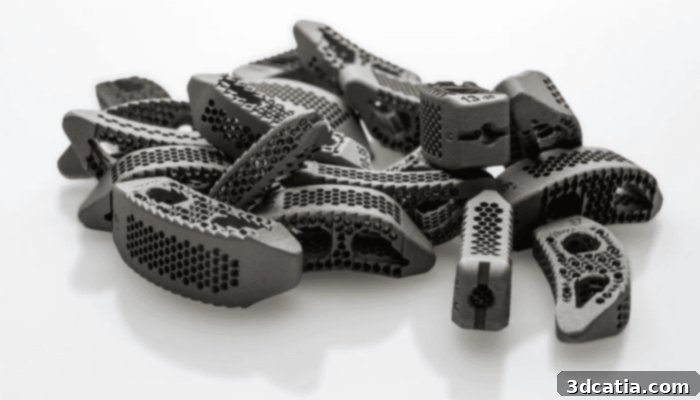
Titanium implants produced by Amnovis (Photo credit: Amnovis)
The **automotive industry** is also rapidly adopting titanium 3D printing, particularly in high-performance and luxury vehicle segments. The primary driver here is the desire to reduce vehicle weight, which directly improves fuel efficiency, enhances acceleration, and optimizes handling. This technology is being utilized for manufacturing lightweight yet robust engine components, advanced exhaust systems with optimized flow dynamics, high-strength suspension parts, and even intricate chassis elements. In motorsports, the ability to rapidly iterate on custom titanium parts offers a significant competitive advantage, allowing for the creation of lighter, stronger, and more aerodynamically efficient vehicles.
Furthermore, titanium 3D printing is expanding into other **diverse industrial sectors**. It finds applications in creating custom tooling, jigs, and fixtures that are lighter, more durable, and perfectly tailored to specific manufacturing processes, thereby increasing efficiency and precision. Its unique properties are also leveraged for fasteners requiring high strength and corrosion resistance in challenging environments. Beyond these, titanium’s versatility extends to consumer goods, luxury items, and defense applications where bespoke, high-performance components are essential. The ability to produce complex tools and structures, customized to precise functional requirements, underscores the broad and growing impact of titanium additive manufacturing across the modern industrial landscape.
What are your thoughts on titanium as a material for 3D printing and its widespread applications? We invite you to share your insights in a comment below or join the conversation on our LinkedIn or Facebook pages! Don’t forget to subscribe to our free weekly Newsletter to receive the latest 3D printing news directly in your inbox. You can also discover all our videos and interviews on our YouTube channel.
*Cover Photo Credit: Materialise