
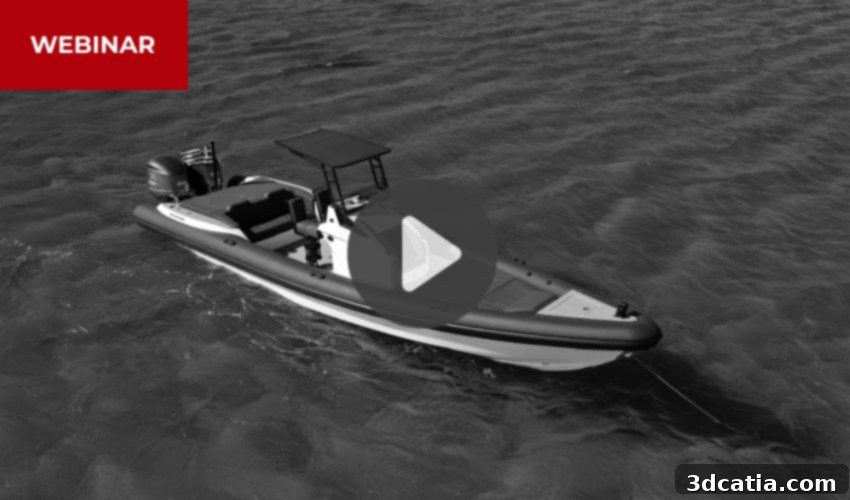
Revolutionizing the Seas: Advanced Additive Manufacturing and Elastomers in the Maritime Industry
The profound benefits of additive manufacturing (AM) are increasingly recognized across a myriad of sectors, driving innovation and efficiency. While often highlighted in aerospace or medical fields, one industry rapidly integrating AM, thanks to its unique advantages and diverse applications, is the maritime sector. This integration isn’t merely incremental; it’s a transformative shift for everything from commercial shipping to naval defense. For instance, the United States Navy has boldly adopted 3D printing for critical uses, ranging from the creation of specialized components for submarines to the on-demand production of spare parts while at sea, significantly enhancing operational readiness and supply chain resilience. Beyond military applications, others are leveraging AM for advanced undersea research, developing more efficient and sustainable marine vessels, and even making cargo ships more eco-friendly through optimized designs and lightweight components. Additive manufacturing has firmly established itself as a rising technology in this dynamic sector, particularly when it comes to designing and fabricating optimized parts for boats and marine infrastructure. But what specific technologies and materials are driving this revolution, and how are they truly being utilized?
The marine environment presents unparalleled challenges: corrosive saltwater, extreme temperatures, high pressures, and constant motion demand components that are not only durable but also highly specialized. Traditional manufacturing often struggles to meet these demands efficiently, leading to lengthy lead times for spare parts, heavy inventories, and designs constrained by conventional processes. This is where additive manufacturing steps in, offering unprecedented flexibility in design, material choice, and production location. It enables the creation of complex geometries previously impossible, allowing engineers to develop parts that are lighter, stronger, and more efficient. From intricate internal structures that improve fluid dynamics to custom-fit components that extend equipment lifespan, 3D printing is fundamentally changing how marine vessels are built, maintained, and operated.
Among the various materials being explored and implemented, **elastomer additive manufacturing** stands out as a particularly impactful innovation for the maritime industry. These flexible plastics, including widely recognized materials like Thermoplastic Polyurethane (TPU), are gaining significant prominence in modern shipyards and marine engineering due to their exceptional properties when combined with the precision and customization capabilities of 3D printing. Elastomers offer a unique blend of flexibility, resilience, and resistance to harsh environmental conditions, making them ideal for a multitude of marine applications. Their ability to absorb shock, dampen vibrations, and maintain integrity in the face of chemical exposure and extreme temperatures addresses critical needs in naval and commercial fleets alike. This technology promises to unlock new levels of performance and reliability for crucial marine components.
The potential applications for elastomer 3D printing in the maritime sector are vast and continually expanding. Imagine customized gaskets and seals that perfectly fit irregular surfaces, preventing leaks and extending the life of vital machinery. Picture anti-vibration mounts specifically engineered to reduce noise and wear on onboard equipment, improving comfort for crew and protecting sensitive electronics. Hoses and tubing can be rapidly produced with optimized internal structures for better flow and durability. Furthermore, specialized tooling, grips for submersible equipment, and even protective coverings for delicate sensors can be manufactured on-demand, tailored to exact specifications. Elastomers are also being explored for components that interact directly with water, such as propellers or hydrofoils with biomimetic designs, leveraging their flexibility to enhance propulsion efficiency or reduce drag. The ability to fabricate these parts quickly and locally minimizes downtime for repairs, reduces reliance on complex global supply chains, and significantly lowers inventory costs, directly impacting the operational efficiency and economic viability of marine operations.
The transformative power of additive manufacturing in the naval industry, with a particular emphasis on elastomer applications, was the central theme of our insightful webinar, “Revitalizing the Naval Industry with Elastomer Additive Manufacturing.” Held on March 24th, this event brought together leading experts to explore how 3D printing is fundamentally changing marine engineering. Attendees gained a comprehensive understanding of how AM is revolutionizing this sector, delving into a wide array of applications, including advanced boat parts, specialized tooling, and innovative repair solutions. The webinar provided valuable insights into the practical implementation of AM technologies, showcasing real-world examples and discussing the future trajectory of this rapidly evolving field. Our esteemed panelists from Lino 3D and Hull Works offered deep dives into the specific importance of elastomer additive manufacturing, detailing how these flexible materials are printed, their unique mechanical properties, and their groundbreaking uses within the maritime industry. They highlighted how materials like TPU are becoming indispensable in modern shipyards, offering solutions for challenges that traditional manufacturing methods often struggle to overcome, ultimately leading to more robust, efficient, and cost-effective marine vessels.
Meet Our Expert Panelists
Our webinar was privileged to host a panel of distinguished experts, each bringing invaluable experience and insights into the integration of additive manufacturing in the naval and marine industries. Their collective expertise provided attendees with a holistic view of the current capabilities and future potential of these advanced technologies.

Vagelis Mavropoulis is the Manager of the 3D Department at Lino SA, a company at the forefront of additive manufacturing solutions. Certified with an MSc in Electronic & Mechatronic Design, Vagelis brings an impressive 24 years of experience from the medical and printing industries. His extensive background includes roles as a Consultant Engineer for DeLaRue, where he focused on developing banknote security features using advanced imaging techniques, and as the Vice President of Sales at the Smelter Group of Companies. His deep understanding of 3D printing technologies and their practical applications makes him a pivotal voice in the adoption of AM within diverse industrial landscapes, particularly in areas requiring high precision and innovative material usage.

Kimon Karydis boasts more than 15 years of rich experience in RIB (Rigid Inflatable Boat) design, construction, and rebuilding. As an accomplished seafarer with over 20,000 cruising hours, his constant presence and deep involvement in the marine market have established him as a respected opinion leader. In 2005, Kimon pioneered the first RIB Chartering company in Greece, successfully introducing the concept of bareboat RIB chartering to the Greek market. After selling his shares in 2009, he co-founded OpenSea RIB Charter with long-time friends and fellow students, Christos and Eftyhis Kyriakopoulos. Leveraging his extensive technical expertise, OpenSea developed a dedicated “Design & Build” department, a strategic move that led to exclusive contracts for the assembly of ONDA TENDERS and RAFNAR boats. Kimon holds an M.Sc. in Naval Architecture and Marine Engineering from the prestigious National Technical University of Athens, reinforcing his practical experience with a strong academic foundation in marine engineering.

Lambros Liaskovitis embarked on a successful career in banking, serving as a Private Banker for renowned financial institutions in Greece and Luxembourg, and later as an Investment Associate for a prominent Venture Capital fund. In 2015, driven by lifelong hobbies and a passion for marine activities, Lambros transitioned into the marine industry. His first significant role was as the head of the Marine Division of Motodynamics S.A., the exclusive distributor of Yamaha Motor for Greece, Bulgaria, and Romania for over five decades. This move allowed him to combine his business acumen with his deep-rooted interest in the marine sector. Academically, Lambros is a graduate of Athens College, where he studied Business Economics at the University of Sunderland, and further honed his strategic and managerial skills by earning an MBA from the University of Strathclyde in Glasgow. His diverse professional background and profound connection to the marine world provide a unique perspective on the industry’s evolution and the integration of new technologies.
The insights shared during our webinar underscore the critical role that additive manufacturing, especially with advanced elastomer materials, plays in propelling the maritime industry forward. As the demand for more efficient, durable, and sustainable marine solutions grows, 3D printing offers a flexible and powerful toolkit for innovators. We encourage you to engage with this topic further and explore how these technologies can benefit your own operations or research. Will you join the conversation and embrace the future of marine engineering? We’d love to hear your thoughts! Let us know in a comment below or connect with us on our Linkedin, Facebook, and Twitter pages. Don’t forget to sign up for our free weekly Newsletter here to receive the latest 3D printing news straight to your inbox! You can also find all our videos, including the webinar replay and many other informative sessions, on our YouTube channel.