
Vagabund Moto V13: Crafting the Future of Custom Motorcycles with 3D Printing Innovation
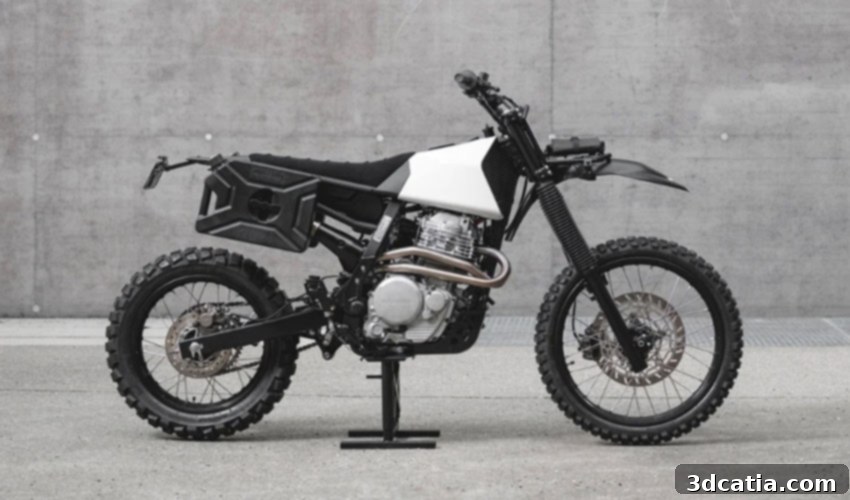
Vagabund Moto, an innovative company based in Austria, has solidified its reputation by transforming existing motorcycle models into breathtaking, high-performance machines with a singular aesthetic vision. Known for their meticulous attention to detail and ability to blend traditional craftsmanship with cutting-edge technology, Vagabund consistently pushes the boundaries of custom motorcycle design. Their latest masterpiece, the V13, built upon the foundation of the venerable 1991 Honda NX 650 Dominator, stands as a powerful testament to this philosophy. The Dominator, originally a versatile dual-sport motorcycle, provides a robust and well-regarded platform, making it an ideal canvas for Vagabund’s creative reimagining and engineering prowess.
What truly sets the V13 apart and elevates its design and functionality to unprecedented levels is the strategic integration of advanced 3D printing technologies. This innovative approach has allowed Vagabund to achieve unparalleled design freedom, enabling the creation of completely unique, custom-made parts that would be difficult, if not impossible, to produce through conventional manufacturing methods. This not only maintains reasonable costs but also significantly enhances the motorcycle’s overall performance and aesthetic appeal. The V13 is not merely a custom bike; it’s a profound statement about the future of bespoke vehicle manufacturing, showcasing how additive manufacturing is revolutionizing the industry by pushing the limits of design, material science, and personalized engineering.
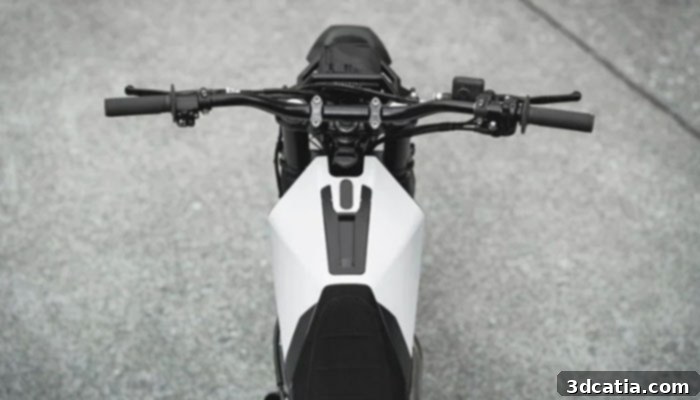
Image via Vagabund
The Precision of Additive Manufacturing in the V13
The Vagabund V13 is a prime example of how specific, critical components can be optimized and tailor-made through additive manufacturing. For this bespoke motorbike, Vagabund Moto meticulously designed and 3D printed several key parts: the distinctive fuel tank, the sleek and minimalist rear end, the custom air filter cover, the precise indicator light bracket, and the ergonomic handlebar switch housings. Each of these components plays a crucial role not only in the V13’s striking visual appeal but also in its enhanced functionality and overall weight reduction. The ability to create complex geometries with absolute precision, tailor-fit to the specific design requirements, highlights the invaluable benefits of 3D printing in custom vehicle fabrication.
Nylon (PA12): The Material of Choice for Performance
The choice of material for the fuel tank and other vital components was particularly important for Vagabund, leading them to opt for Nylon (PA12). Nylon, or Polyamide 12, is a high-performance thermoplastic widely acclaimed within the additive manufacturing sector, particularly for processes like Selective Laser Sintering (SLS). Its popularity stems from an impressive array of material properties that make it an ideal candidate for demanding automotive and motorcycle applications where strength, durability, and a clean finish are paramount.
PA12 boasts exceptional mechanical strength, offering significant rigidity and high tensile strength while remaining surprisingly lightweight, which is crucial for reducing the overall mass of a performance motorcycle. This strength is coupled with remarkable flexibility and impact resistance, allowing parts to withstand dynamic stresses, vibrations, and accidental impacts without fracturing. Its excellent resistance to abrasion and various chemical agents, including fuels, oils, and cleaning solvents, makes it a robust choice for a fuel tank and other exposed motorcycle parts, ensuring long-term reliability and structural integrity. Furthermore, Nylon PA12 exhibits good fatigue resistance, meaning it can endure repeated stress cycles without material degradation, a critical factor for ensuring the longevity of vehicle components.
The ability of 3D printing to produce complex geometries with high precision and smooth surface finishes further solidified PA12 as the material of choice. This allowed Vagabund to achieve their desired minimalist aesthetic while ensuring optimal performance and safety standards were met. The use of 3D printing with PA12 not only facilitated rapid prototyping and iteration during the two-year development period but also ensured that the final production parts perfectly matched the intricate designs envisioned by the Vagabund team, demonstrating a seamless integration of advanced technology and artistic vision.
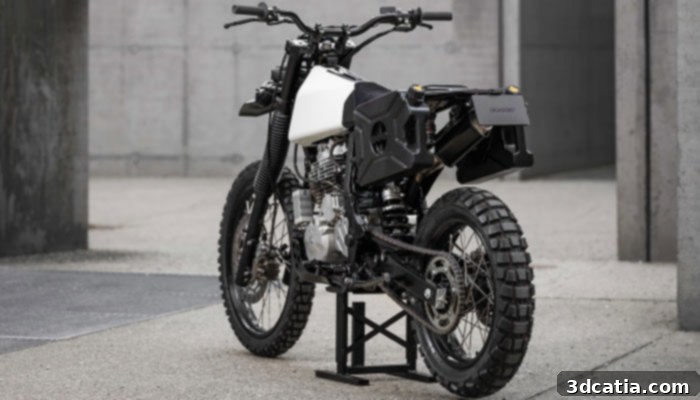
Image via Vagabund
The V13’s Design Philosophy: Minimalism Meets Functionality
After two years of intensive development and meticulous craftsmanship, the V13 emerges as a harmonious blend of minimalism and uncompromising functionality. Every element of its design has been carefully considered, engineered, and executed to create a cohesive and visually striking machine that performs as exceptionally as it looks. The project exemplifies how Vagabund integrates contemporary technological advancements with classic motorcycle design principles, resulting in a timeless yet futuristic aesthetic.
Beyond the innovative 3D printed components, the V13 incorporates a suite of custom-engineered parts that significantly elevate its performance capabilities and aesthetic appeal. At the heart of its enhanced engine performance is a custom-fabricated exhaust system. This bespoke setup features a beautifully crafted stainless-steel manifold, precision-engineered to optimize exhaust gas flow, leading into a custom-made two-into-one collector. The system culminates in a modified Akrapovic muffler, renowned for its quality and performance. This not only optimizes exhaust flow for improved engine response and power delivery but also contributes to the bike’s aggressive, yet refined, sound profile and distinctive rear aesthetic, providing both auditory and visual cues of its performance-oriented nature.
The front end of the V13 is equally thoughtfully designed for both form and function. It ingeniously borrows a Husqvarna TC85 front fender, specifically chosen for its sporty lines, lightweight construction, and robust durability, which integrates seamlessly with the bike’s overall aggressive stance. Above this, a clever magnetic front rack provides practical utility without compromising the clean, minimalist design. This versatile addition offers a convenient solution for carrying small items on short rides or quick errands, showcasing a blend of practicality and refined style.
Ergonomics and rider comfort have also been significantly upgraded to match the bike’s high-performance characteristics. A new, custom-built rear frame provides the structural foundation for an exquisite Alcantara custom-made seat. The choice of Alcantara, a premium synthetic suede, adds a touch of luxury, superior grip, and exceptional durability, ensuring both rider comfort during extended journeys and optimal control during dynamic maneuvers. This bespoke seat not only perfectly contours to the bike’s streamlined lines but also embodies the V13’s fusion of luxury, functionality, and performance-driven design.
Completing the transformation are the wheels, which receive a durable powder-coated finish for enhanced longevity, improved resistance to environmental elements, and a sleek, modern look. These robust wheels are then meticulously fitted with high-quality stainless spokes, offering superior strength, reduced maintenance, and a classic, timeless aesthetic that perfectly complements the V13’s unique blend of vintage inspiration and modern technological innovation. The meticulous attention to detail in every component, from the core structural frame to the smallest aesthetic accent, vividly underscores Vagabund Moto’s unwavering commitment to creating truly unique, high-performing, and visually stunning custom motorcycles.
3D Printing’s Transformative Impact on Vehicle Fabrication
The Vagabund V13 is a brilliant illustration, but it’s far from an isolated case in demonstrating how 3D printing is fundamentally transforming vehicle manufacturing across various sectors. The automotive and motorcycle industries, in particular, are increasingly leveraging additive manufacturing for its unparalleled ability to produce complex geometries, customize parts with precision, significantly reduce component weight, and accelerate development cycles. This technology is proving to be a true game-changer, enabling the creation of designs and functionalities that were once confined to designers’ wildest imaginations, pushing the boundaries of what is aesthetically possible and functionally efficient.
In the specialized sector of motorcycles, especially for electric motorbikes, 3D printing has been a powerful catalyst for innovation. Many pioneering projects have utilized additive manufacturing to overcome traditional design constraints, leading to groundbreaking results and reimagining the very structure and capabilities of two-wheeled vehicles:
- Curtiss Motorcycles’ Zeus 8: This avant-garde electric cruiser famously incorporates intricately 3D printed components to achieve its distinctive, art-deco inspired design and to optimize the integration of its powerful electric drivetrain. The ability to create complex, lightweight structural elements and bespoke housing parts allows Curtiss to push both aesthetic and performance boundaries simultaneously, resulting in a truly unique machine.
- The Falectra: An innovative electric concept bike, the Falectra showcases how 3D printing can be used to integrate electronic components directly into structural parts, significantly reducing wiring complexity and simplifying the overall assembly process. Its unique frame and bodywork, made possible by additive manufacturing, challenge conventional motorcycle architecture, pointing towards a future of highly integrated and streamlined designs.
- NERA by BigRep: Perhaps one of the most iconic examples, the NERA electric motorcycle is almost entirely 3D printed, including its frame, fork, rims, and even its revolutionary airless tires. This ambitious project boldly demonstrated the immense potential of large-format 3D printing for creating functional, full-scale vehicle prototypes, highlighting radical design freedom and the possibilities for integrated functionalities within a single manufacturing process.
- Tarform Motorcycles: Tarform bikes embody a sustainable approach to electric motorcycle design, extensively utilizing 3D printing for various components. This enables them to create unique, organic forms while integrating recycled and bio-based materials, proving that additive manufacturing can effectively support both aesthetic innovation and environmental responsibility in vehicle production.
- Fuller Moto’s 2029 Model: This futuristic concept bike, inspired by the iconic 1929 Majestic, represents a daring fusion of vintage aesthetics and cutting-edge technology. Fuller Moto utilized 3D printing to fabricate numerous components, including sections of the monocoque chassis and various custom-fitted parts, allowing for an incredibly sleek, integrated design and optimal weight distribution that would be unattainable with traditional manufacturing methods.
In each of these transformative cases, the deployment of additive manufacturing enables the creation of a completely unique vehicle, pushing the envelope of what is aesthetically possible and functionally efficient. Traditional manufacturing techniques, with their reliance on molds, tooling, and standardized processes, simply cannot match the bespoke complexity, intricate detailing, and rapid iteration capabilities offered by 3D printing. Designers can freely experiment with organic shapes, intricate lattice structures for superior weight reduction, and multi-functional integration, leading to significant performance increases through reduced part weight, improved aerodynamics, and enhanced structural integrity.
The inherent flexibility of 3D printing allows for rapid adjustments and optimizations throughout the development process, drastically cutting down on lead times and fostering an environment of continuous innovation in vehicle design and production. This paradigm shift means that custom, high-performance, and truly individualized vehicles are becoming more accessible and tailored than ever before, promising an exciting future for the automotive and motorcycle industries.
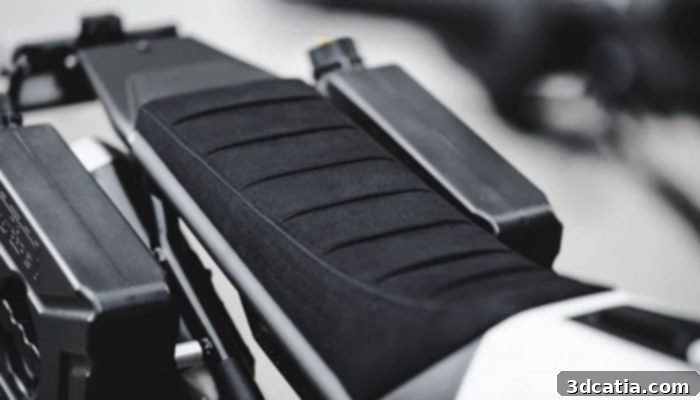
Image via Vagabund
Conclusion: The Future of Customization is 3D Printed
The Vagabund V13 stands as a beacon of innovation in the custom motorcycle world, impressively demonstrating the transformative power of blending visionary design with cutting-edge manufacturing techniques. It’s always inspiring to witness the realization of such unique aesthetics and advanced engineering on these motorbikes, pushing the boundaries of what is conventionally thought possible in vehicle design. The V13 not only serves as a stunning example of bespoke craftsmanship but also highlights the pivotal role that 3D printing now plays in enabling unprecedented levels of customization, performance optimization, and design freedom across the entire vehicle industry.
As additive manufacturing technologies continue to evolve and become more accessible, we can anticipate an even greater proliferation of 3D printing in creating personalized, high-performance machines that challenge existing paradigms and inspire future generations of designers and engineers. Vagabund Moto, through groundbreaking projects like the V13, is not just building motorcycles; they are meticulously sculpting the future of custom vehicle creation, piece by intricate, 3D printed piece. This innovative approach ensures that the passion for unique, high-quality, and performance-driven vehicles will continue to thrive and evolve.
What do you think of the V13 from Vagabund? We’d love to hear your thoughts on this remarkable fusion of art and technology, and how you see 3D printing shaping the future of custom vehicles. Let us know in a comment below or join the conversation on our Facebook and Twitter pages! Don’t forget to sign up for our free weekly Newsletter, with all the latest news in 3D printing delivered straight to your inbox, ensuring you stay at the forefront of this rapidly evolving and exciting industry!