
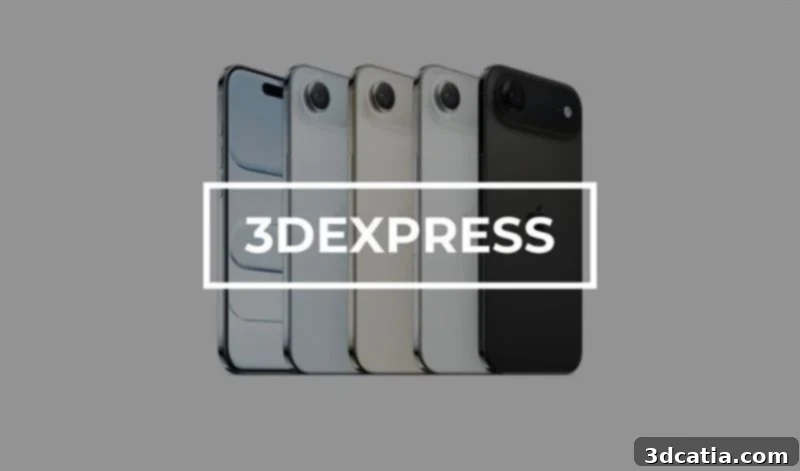
The Additive Manufacturing Revolution: Pioneering Innovations Across Industries
The landscape of manufacturing is undergoing a profound transformation, with 3D printing – or additive manufacturing – emerging as a cornerstone of innovation. This week, we delve into a series of groundbreaking stories that not only highlight the expanding adoption of this technology but also its diverse applications, from consumer electronics to industrial energy solutions and advanced dental care. We’ll explore how industry giants like Apple are leveraging 3D printing for sustainability, how Siemens Energy is revolutionizing turbine maintenance, and how companies such as Caracol, SprintRay, and Raise3D are pushing the boundaries of what’s possible in their respective fields. Join us as we uncover the latest advancements shaping the future of fabrication.
Apple’s iPhone Air Features Groundbreaking 3D Printed USB-C Port, Championing Sustainability
Apple, a global leader in consumer electronics, is forging an ambitious path towards environmental responsibility, aiming for carbon neutrality across its entire operations by 2030. This monumental goal necessitates a strategic focus on its primary emission sources: materials, electricity, and transportation. Crucially, it also involves a deep embrace of cutting-edge manufacturing technologies, with 3D printing at the forefront. In a significant announcement, Apple revealed that its latest marvel, the new iPhone Air – heralded as the thinnest iPhone ever at an astonishing 5.6 mm – incorporates a revolutionary titanium USB-C port produced using advanced additive manufacturing techniques. This innovative approach yields a port that is not only thinner and remarkably stronger than its conventionally manufactured counterparts but also dramatically more sustainable, reducing material use by an impressive 33 percent compared to traditional forging methods.
The commitment to sustainability extends throughout the new iPhone Air, which boasts an overall composition of 35 percent recycled content. This includes 80 percent recycled titanium in its structure and a remarkable 100 percent recycled cobalt in its battery – a testament to Apple’s dedication to circular economy principles. Furthermore, Apple’s investment in additive manufacturing isn’t confined to its flagship smartphone. The highly anticipated Apple Watch 11 will also feature a sophisticated 3D printed titanium case, signaling the company’s escalating confidence in the technology’s potential across its product ecosystem. These strategic implementations underscore Apple’s unwavering commitment to its climate goals and demonstrate a strong belief in 3D printing as a key enabler of greener, more resource-efficient production methods for high-volume consumer electronics. The move signifies a pivotal moment, showcasing 3D printing’s capability to deliver both performance enhancements and significant environmental benefits at a global scale, fundamentally reshaping how high-tech devices are conceived, designed, and manufactured.
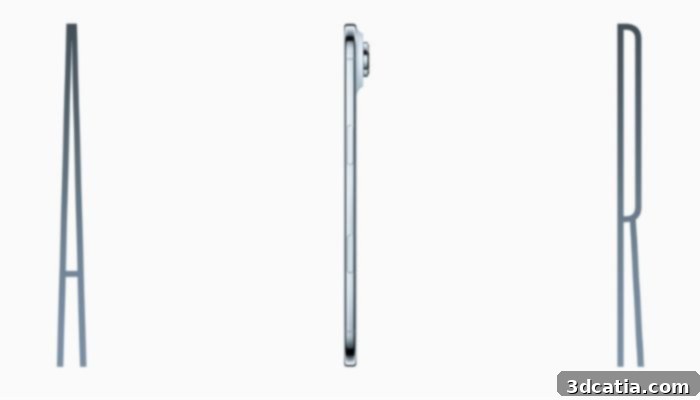
Apple’s new iPhone Air is the thinnest iPhone ever, at 5.6mm thick.
Siemens Energy Enhances Gas Turbine Maintenance with Specialized EOS 3D Printers
Siemens Energy is making significant strides in optimizing the maintenance and repair of critical industrial components through the strategic deployment of advanced 3D printing technologies. Faced with the challenge of ensuring the longevity and efficiency of its gas turbines, the Swedish energy solutions provider has turned to additive manufacturing to streamline operations and reduce costs. Central to this initiative is the integration of a highly modified EOSINT M 280 metal 3D printer from the renowned German manufacturer EOS, tailored specifically for the demanding requirements of gas turbine parts.
The primary focus of this innovative application is on heavily stressed components such as burner tips. These parts operate under extreme conditions, exposed to temperatures exceeding 1000°C within the hot gas flow path of the turbines, leading to regular wear and degradation. Traditionally, repairing damaged burner tips was a labor-intensive and costly endeavor, involving painstaking cutting and subsequent welding processes, which resulted in extended downtime and significant expenses. With the adoption of the EOS 3D printer, Siemens Energy can now perform direct repairs using additive manufacturing, dramatically transforming the maintenance workflow. This specialized system has been engineered to accommodate larger components, up to 800 mm in length, and is equipped with sophisticated optical measuring systems, high-resolution cameras, and advanced software for precise real-time monitoring of the printing process, ensuring unparalleled accuracy and quality.
The benefits derived from this integration are substantial and far-reaching. Repair times have been drastically cut by up to 90 percent, leading to a profound reduction in turbine downtime and a significant boost in operational efficiency. Beyond mere repair, this advanced 3D printing capability allows Siemens Energy not only to restore older components to their original specifications but also to implement specific improvements, bringing them up to the latest state-of-the-art designs. This ability to enhance and modernize parts during the repair cycle extends asset lifecycles, improves performance, and ultimately contributes to a more sustainable and economically viable energy infrastructure. Siemens Energy’s adoption of EOS 3D printing sets a new benchmark for industrial maintenance, demonstrating the immense value of additive manufacturing in critical sectors.
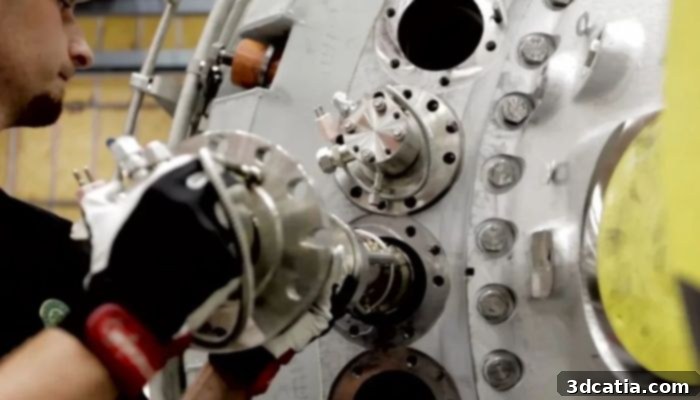
Photo credit: EOS
Caracol Bolsters North American Presence with New Texas Headquarters for Large-Format 3D Printing
Italian additive manufacturing specialist Caracol is strategically expanding its global footprint, with a particular emphasis on solidifying its presence within the dynamic North American market. This strategic intensification is highlighted by the recent establishment of its new US headquarters in Texas, a move that significantly enhances Caracol’s operational capabilities across the Atlantic. This state-of-the-art production center, inaugurated just weeks ago, is set to become a pivotal hub for the company’s ambitious plans to substantially expand the development and manufacturing of its renowned large-format 3D printing systems.
Spanning approximately 930 square meters (roughly 10,000 square feet), the facility is designed to meet the burgeoning demand for advanced additive manufacturing solutions across various sectors in the US, including but not limited to aerospace, defense, automotive, and marine industries. By localizing production and R&D efforts, Caracol aims to significantly shorten delivery times for its innovative Heron AM and Vipra AM platforms, fostering closer collaborations with local partners and customers. This proximity is crucial for developing tailored solutions that address the unique challenges faced by American enterprises, thereby enhancing responsiveness and efficiency in product development and deployment. The new center is a comprehensive ecosystem, integrating cutting-edge research and development, application-specific solution development, and the direct production of Caracol’s proprietary large-format additive manufacturing platforms. This integrated approach ensures that from concept to creation, the entire process is streamlined and optimized for the US market.
Francesco De Stefano, CEO of Caracol, articulated the strategic vision behind this expansion, stating, “When we opened our first Austin office in 2023, it was about establishing a presence; now it’s about building capability. This expansion means faster progress, closer collaboration with our customers and solutions designed for their unique challenges — not to mention supporting domestic production in the U.S.” This statement underscores Caracol’s evolution from market entry to significant capacity building, emphasizing its commitment to fostering innovation, supporting local economies, and delivering high-impact additive manufacturing solutions designed specifically for the unique demands of the North American industrial landscape.
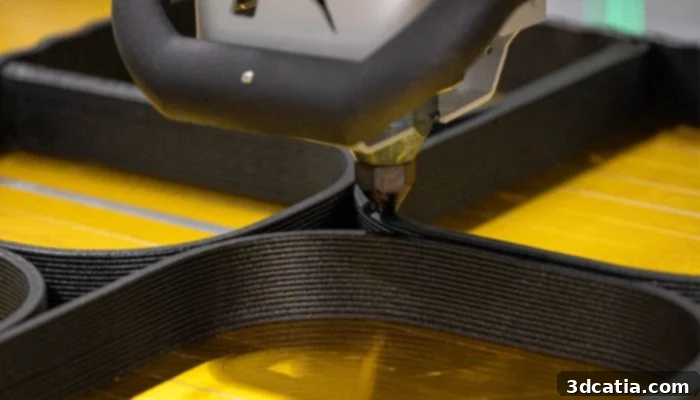
Photo Credit: Caracol
SprintRay Bolsters Its Dominance in Dental 3D Printing with EnvisionTec Acquisition
In a pivotal development for the dental additive manufacturing sector, SprintRay, a leading manufacturer of resin 3D printers renowned for its innovative dental solutions, announced a significant acquisition this week. The company has successfully acquired the entire dental solutions division of EnvisionTec, formerly operating under the Desktop Health brand. This strategic move encompasses the full spectrum of intellectual property and assets, including trademarks, a vast portfolio of patents, existing inventory, and all other relevant intellectual property that EnvisionTec had cultivated over two decades of pioneering work in the field.
To contextualize the magnitude of this acquisition, EnvisionTec has accumulated an impressive arsenal of over 200 patents throughout its 20-year history, alongside an extensive and highly regarded portfolio of materials and a substantial global user base. This deep well of innovation and market penetration positions SprintRay for unprecedented growth and influence within the dental 3D printing market. The acquisition is poised to empower SprintRay to further solidify its leadership, expanding its offerings and enhancing its technological capabilities to serve dental professionals worldwide more comprehensively.
Amir Mansouri, PhD, co-founder and CEO of SprintRay, articulated the strategic vision behind this transformative acquisition. He stated, “SprintRay’s acquisition of EnvisionTEC’s dental portfolio ensures existing customers continue to have the tools and support they rely on, while also strengthening our position in dental labs. Our mission to transform dentistry through accessible, reliable 3D printing technology hasn’t wavered. This strategic move reinforces that commitment.” This statement highlights a dual benefit: safeguarding continuity and support for EnvisionTec’s existing customer base, thereby ensuring a seamless transition, while simultaneously bolstering SprintRay’s market presence, particularly within dental laboratories. The integration of EnvisionTec’s robust patent portfolio and material science expertise with SprintRay’s accessible and user-friendly 3D printing ecosystem is set to accelerate the digital transformation of dentistry, making high-quality, customized dental solutions more attainable and reliable for clinics and labs alike. This synergistic combination promises to drive significant advancements in patient care, efficiency, and material innovation across the entire dental industry.
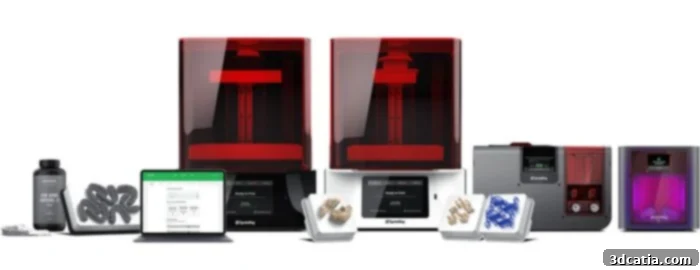
SprintRay offers a complete range of products for dental 3D printing. (Photo Credits: SprintRay)
Raise3D Unveils the E3: A High-Performance, Accessible IDEX 3D Printer
At the recent Fabtech trade show held in Chicago, American additive manufacturing innovator Raise3D captivated attendees with the unveiling of its latest professional-grade 3D printer: the E3. This new machine represents a significant leap forward in accessible, high-performance fused deposition modeling (FDM) technology, particularly for users requiring versatility and speed. The E3 is an IDEX (Independent Dual Extruder) solution, which allows for simultaneous printing with two different materials or colors, or for printing a part and its support structure concurrently, dramatically enhancing productivity and design complexity.
Designed for a wide array of industrial and professional applications, the E3 boasts compatibility with an extensive range of advanced materials. Its enhanced printing speed, coupled with an impressive extrusion temperature capability reaching up to 330°C, unlocks new possibilities for engineers, designers, and manufacturers. This high-temperature capability means the E3 can efficiently process demanding engineering-grade filaments and composites that require elevated printing conditions. Notably, the E3 is capable of quickly printing flexible materials such as Thermoplastic Polyurethane (TPU) at speeds up to 150 mm/s, and composites at an even faster rate of 200 mm/s. Such speeds are typically found in much more expensive industrial systems, making the E3 a standout in its category.
What truly sets the Raise3D E3 apart is its aggressive price point of less than $2,500. This makes it a remarkably affordable solution for the market, positioning it as an ideal choice for small and medium-sized businesses, educational institutions, and prosumers who require industrial-grade performance without the prohibitive cost. The E3’s combination of advanced features, material versatility, high-speed capabilities, and accessible pricing reinforces Raise3D’s commitment to making sophisticated additive manufacturing technology widely available, thereby empowering a broader spectrum of users to innovate and produce high-quality parts with efficiency and precision. This latest offering from Raise3D is poised to significantly impact the desktop and professional 3D printer segments, fostering greater adoption and application of FDM technology.
The rapid advancements and diverse applications highlighted this week underscore the pervasive and transformative power of 3D printing across numerous industries. From Apple’s commitment to sustainable consumer electronics to Siemens Energy’s precision in industrial maintenance, Caracol’s strategic market expansion, SprintRay’s strengthening of dental innovation, and Raise3D’s pursuit of accessible high-performance machines, additive manufacturing is clearly accelerating global progress. What are your thoughts on Apple’s integration of 3D printing into its latest products and the broader implications for green manufacturing? We invite you to share your insights in a comment below or join the conversation on our LinkedIn or Facebook pages. Additionally, don’t miss out on the latest additive manufacturing news by signing up for our free weekly Newsletter, delivered directly to your inbox. For more visual content, explore all our videos on our YouTube channel.
*Cover Photo Credits: Apple