
Revolutionizing Ocean Monitoring: Seawater Battery-Powered Smart Buoys and 3D Printing for a Healthier Marine Environment
Today, as we observe World Water Day, it’s a fitting moment to highlight groundbreaking advancements in marine conservation and monitoring. The health of our global waters is paramount, and innovative technologies are emerging to safeguard these vital ecosystems. Leading this charge is a remarkable project focused on additively manufactured, smart buoys, powered by cutting-edge seawater batteries. These intelligent devices are specifically designed to meticulously monitor and collect critical data from the marine environment. This ambitious initiative is a core component of the 2020 Regional Vitality Project, spearheaded by the Ulsan National Institute of Science and Technology (UNIST) in a strategic partnership with the Korea Institute of Maritime Science and Technology (KIOST) and KLabs Inc. These prominent South Korean institutions have achieved significant milestones over the past year, recently unveiling a compelling prototype of their advanced smart buoy system. This collaboration exemplifies a commitment to harnessing sustainable energy and advanced manufacturing to address some of the most pressing challenges facing our oceans.
The profound importance of healthy marine ecosystems to human survival and prosperity cannot be overstated. Beyond the fact that a significant two-fifths of the global population relies on fish as their primary source of animal protein, directly impacting food security and livelihoods, oceans provide a myriad of essential services. These include crucial flood control mechanisms, protecting coastal communities from devastating storm surges and rising sea levels. Marine environments also serve as vital hubs for recreation and tourism, supporting vast economies and offering invaluable cultural and aesthetic experiences. They play an indispensable role in erosion control, stabilizing coastlines and preventing land loss. Furthermore, oceans facilitate global transportation, serving as major arteries for trade and commerce. They are instrumental in pollution control, acting as vast sinks for various pollutants, though this capacity is not limitless. Critically, oceans are major regulators of global climate, providing storm protection and, most significantly, performing carbon sequestration on an immense scale, absorbing vast amounts of atmospheric carbon dioxide. Therefore, effective and continuous monitoring of marine ecosystems is not merely beneficial but absolutely critical for preserving the delicate balance of marine wildlife and ensuring the long-term well-being of a substantial portion of the world’s population. Without robust data, informed decisions for conservation and sustainable management are simply not possible.
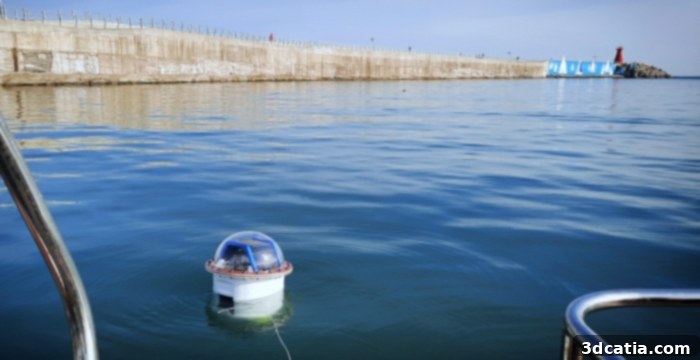
The seawater battery-based smart buoy. Image Credit: Seawater Resources Technology Research Center of Ulsan National Institute of Science and Technology
The innovative smart buoys represent a significant leap forward in oceanic data collection. Equipped with an array of sophisticated sensors, these devices are capable of monitoring and collecting over 15 distinct types of marine data. Key parameters include salinity, which is crucial for understanding ocean currents, water density, and marine life habitats; pH levels, indicating ocean acidification trends that threaten coral reefs and shellfish; and water temperature, a fundamental indicator of climate change impacts and marine species distribution. Beyond these basic environmental metrics, the buoys also track the precise location and range of fishing grounds, offering invaluable insights for sustainable fisheries management and preventing overfishing. This comprehensive data suite provides a holistic view of the marine environment, allowing scientists and policymakers to identify trends, detect anomalies, and respond proactively to environmental changes. The ability to collect such diverse data points from remote locations makes these buoys indispensable tools for modern marine research and conservation efforts.
A representative from the project emphasized the transformative potential, stating: “Seawater battery-based smart buoys can monitor and collect over 15 different marine data, such as salinity, pH, and water temperature, as well as the location and range of fishing grounds. As it is a promising alternative for safe and scalable energy storage, we expect its further applications in the ocean sector!” This statement underscores not only the data collection prowess but also the strategic importance of the seawater battery technology that powers these devices.
At the heart of these advanced smart buoys lies the revolutionary seawater battery technology. Unlike conventional lithium-ion batteries that rely on finite and often environmentally impactful raw materials, seawater batteries harness the abundant resources of the ocean itself. They operate by utilizing naturally abundant sodium ions present in seawater as a primary source, effectively transforming the surrounding environment into a sustainable energy reservoir. The electrochemical process typically involves an anode, a cathode, and an electrolyte, where sodium ions from the seawater flow between the electrodes, generating an electric current that charges the device. This inherent design offers several compelling advantages. Firstly, it ensures an almost limitless and readily available energy source, drastically reducing operational costs and logistics in remote marine locations. Secondly, seawater batteries are inherently safer, mitigating the risks of thermal runaway or explosion associated with some traditional battery chemistries. Their scalability means they can be adapted for a wide range of applications, from small buoys to much larger marine installations. Furthermore, their eco-friendly nature, avoiding reliance on rare earth minerals and hazardous chemicals, positions them as a cornerstone of sustainable energy storage solutions for the burgeoning ocean sector.
The integration of 3D printing, or additive manufacturing, is a critical enabler for the widespread adoption and customization of these marine ecosystem monitoring devices. Thanks to this versatile manufacturing technology, these devices can be highly customized on a mass scale without incurring prohibitive costs or lengthy production times. 3D printing allows for the rapid prototyping and iteration of complex designs, enabling engineers to optimize the buoy’s hydrodynamic performance, sensor placement, and structural integrity for diverse marine conditions. This means specific buoy designs can be tailored for different oceanographic regions, specific sensor packages, or unique deployment scenarios, all while maintaining cost-effectiveness. The ability to produce intricate geometries that would be challenging or impossible with traditional manufacturing methods also plays a significant role in creating efficient, lightweight housings for the seawater batteries and specialized mounts for sensitive sensors. Moreover, 3D printing reduces material waste and enables on-demand production, further contributing to the sustainability and economic viability of the project. This flexibility is paramount for expanding the reach of marine monitoring, allowing for bespoke solutions that were once confined to high-cost, low-volume projects.
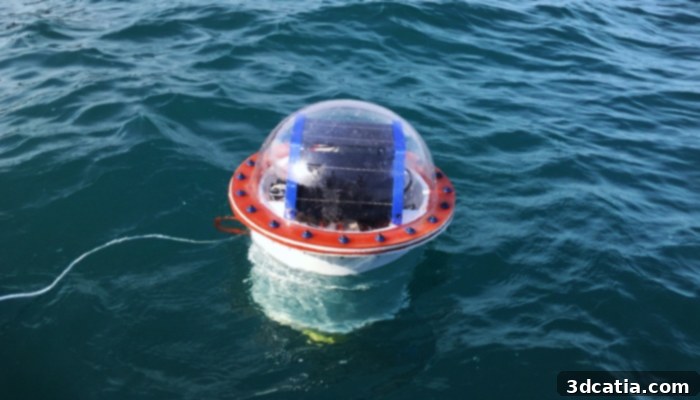
Image Credit: Seawater Resources Technology Research Center of Ulsan National Institute of Science and Technology
The development of these smart buoys is a testament to the powerful synergy forged between academic research, governmental institutions, and private industry. UNIST and KIOST have been working in close conjunction with several other companies in the Ulsan region, South Korea, as part of a broader effort to demonstrate and produce a wider range of seawater battery-based products. The 2020 Regional Vitality Project, under which this initiative falls, aims to foster innovation and economic growth within the region by leveraging its scientific expertise and industrial capabilities. UNIST brings its advanced research in materials science and energy systems, particularly in seawater battery technology, to the forefront. KIOST contributes its extensive knowledge of marine science, oceanography, and practical experience in maritime technology and field deployment. KLabs Inc., as the industrial partner, plays a crucial role in transforming research prototypes into manufacturable products, focusing on engineering design, production scalability, and commercialization strategies. This collaborative ecosystem ensures that theoretical breakthroughs are rapidly translated into practical, deployable solutions that can have a real-world impact. The successful showcasing of a prototype of the seawater battery-based smart buoy by KLabs Inc., as highlighted by the accompanying images, marks a significant milestone in this endeavor, validating the feasibility and effectiveness of their combined efforts.
The successful development and prototyping of these seawater battery-powered smart buoys pave the way for a transformative future in marine environment monitoring. As these technologies mature and are deployed more widely, we can anticipate a significant enhancement in our ability to understand, protect, and manage our oceans. The real-time, comprehensive data collected by these buoys will empower scientists to track climate change impacts more precisely, forecast oceanic phenomena, and develop more effective conservation strategies for endangered species and vulnerable habitats. Furthermore, the sustainability and cost-effectiveness of seawater batteries, coupled with the customization capabilities of 3D printing, mean that these monitoring networks can be expanded globally, even to the most remote and challenging marine environments. Beyond environmental monitoring, the technology holds promise for a multitude of other ocean-related applications, including supporting aquaculture farms, improving maritime safety, and aiding in resource exploration. This project is not just about building smarter buoys; it’s about building a smarter, more sustainable relationship with our planet’s most vital resource – the ocean. It represents a significant step towards a future where technology empowers us to be better stewards of our marine world, ensuring its health for generations to come.
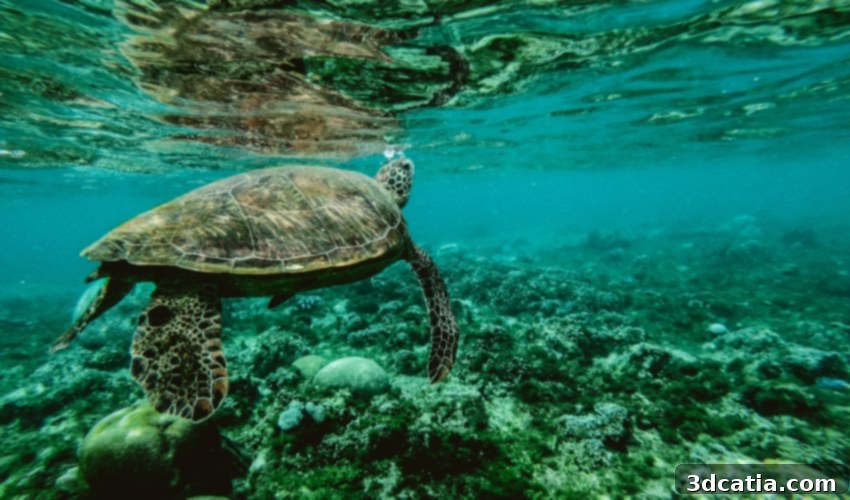
*Cover image credit: Belle Co from Pexels
If you would like to find out more about this groundbreaking project, you can read the full press release HERE. We invite you to share your thoughts on these innovative seawater battery-based smart buoys. Let us know what you think in a comment below or connect with us on our Facebook, Twitter and LinkedIn pages! For the latest 3D printing news delivered straight to your inbox, sign up for our free weekly Newsletter here.