

The Transformative Role of 3D Technology in Modern Forensic Science and Crime Scene Investigation
The dramatic depiction of crime-solving on screens, where sophisticated techniques lead to swift arrests, often mirrors the aspirations of real-world law enforcement. While fictional narratives may simplify the complexities, the core reality is that nearly half a million lives are lost globally each year due to deliberate homicide. In 2023, the United States saw a homicide clearance rate of approximately 50%, a figure that fluctuates significantly across different nations. In the persistent pursuit of justice, 3D technologies have emerged as a powerful and increasingly indispensable tool in investigative work and forensic science, contributing substantially to its success. Indeed, it is becoming rare to find homicide investigations that do not incorporate some form of 3D reconstruction or advanced 3D scanning techniques.
At its heart, 3D forensics is an essential and rapidly evolving component of modern forensic science. This specialized discipline involves the intricate reconstruction, meticulous analysis, and precise processing of criminal acts and their aftermath, leveraging advanced 3D tools alongside expert human decision-making. As an autonomous yet integrated field, 3D forensics is experiencing widespread adoption in criminal law proceedings and is proving crucial in solving complex crimes. To gain a deeper understanding of how 3D technology is reshaping investigative work and the analysis of forensic evidence, we engaged with leading experts in the field.
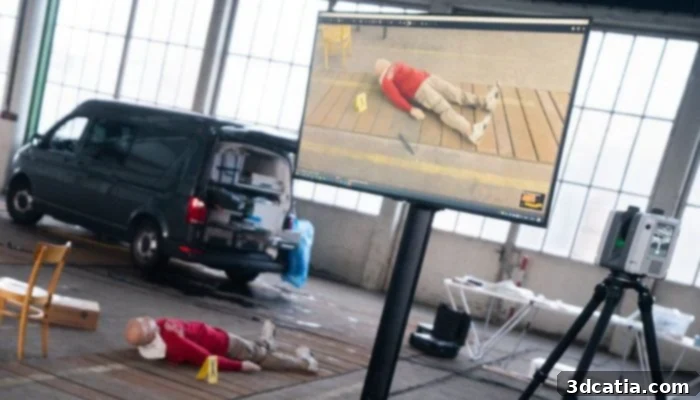
3D technologies are increasingly used directly at crime scenes (photo credits: APA/Georg Hochmuth).
Key 3D Technologies in Forensic Application
3D technology offers unprecedented capabilities for collecting and analyzing not only digital media but also critical physical evidence, such as intricate printed objects or delicate impressions. This is primarily achieved through two groundbreaking methodologies: 3D scanning, which digitally captures the physical world, and additive manufacturing (3D printing), which brings digital models back into the physical realm.
The Indispensable Role of 3D Scanners
The application of photogrammetric measuring systems in investigations dates back to the 1930s. However, it was the late 1990s that marked a significant turning point, with short-range photogrammetric systems becoming widely integrated into forensic science practices. These systems revolutionized crime scene documentation, offering new avenues for precise measurements and even aiding in the determination of criminal stature. Today, the capabilities of 3D laser scanning are embraced by law enforcement agencies in virtually every country. The Hamburg State Police, for instance, affirms its reliance on these tools, stating: “3D scanners are regularly used in police work to assess or compare event locations and/or physical objects, including in digital form.” This digital preservation allows for meticulous analysis long after the physical scene has been cleared.
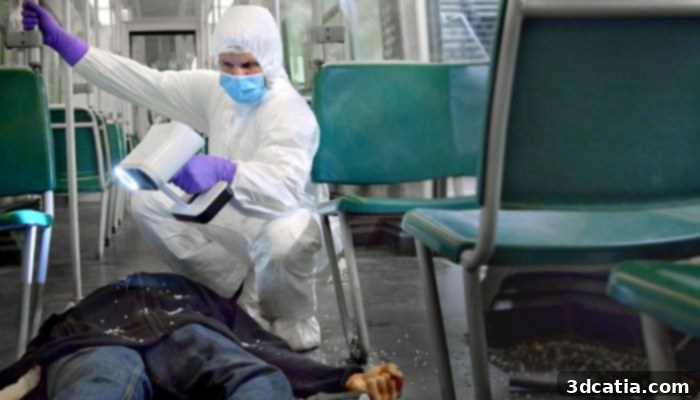
Various scanners are used in crime scene documentation, including stand-mounted and mobile scanners. Here, an Artec portable scanner is in use (photo credits: Artec 3D).
Eugene Liscio, a distinguished 3D forensic analyst with extensive experience solving cases across Canada, the USA, and Europe, and an educator at the University of Toronto, provides further insight into the diverse landscape of scanning technologies. He highlights, “The four main scanning technologies are photogrammetry, laser scanning, structured light scanners, and application-based scanning.” Each offers unique advantages tailored to specific forensic needs, from wide-area crime scene capture to detailed evidence analysis.
Photogrammetry excels at creating highly realistic texture networks. When this visual data is combined with surface images, CT scans, and MRIs, it yields a comprehensive and detailed 3D view of human remains or specific body parts. This synergistic approach allows forensic experts to magnify and analyze wounds with incredible precision, facilitating direct comparison with potential crime scene instruments or even determining the precise direction of a projectile.
3D scans generally fall into two categories: volumetric and surface scans. Volumetric scanning captures high-resolution internal and external data, creating incredibly detailed images that can reveal hidden structures. However, generating 3D models from this rich dataset typically requires specialized software and advanced expertise. In contrast, surface scanning focuses on external details, making it more user-friendly due to its integrated software and simpler data acquisition. Both methods are invaluable, with surface scanning proving particularly reliable for post-mortem injury analysis and for implementing the Landmarking Method, which relies on visible surface features.
The Landmarking Method is a critical forensic technique that utilizes distinct marker points within images or datasets to establish precise reference systems. This allows for highly accurate measurements, comparisons, and spatial relationships between pieces of evidence. Beyond static scenes, photogrammetric data can be efficiently collected using modern tools like drones or high-resolution DSLR cameras, enabling the creation of expansive and detailed 3D models of entire crime scenes. The power of these reconstructions is further amplified through visualization technologies such as virtual reality (VR). By donning VR goggles or stepping into a dedicated VR space, investigators can virtually revisit and explore the reconstructed crime scene, experiencing it with an immersive and interactive perspective.
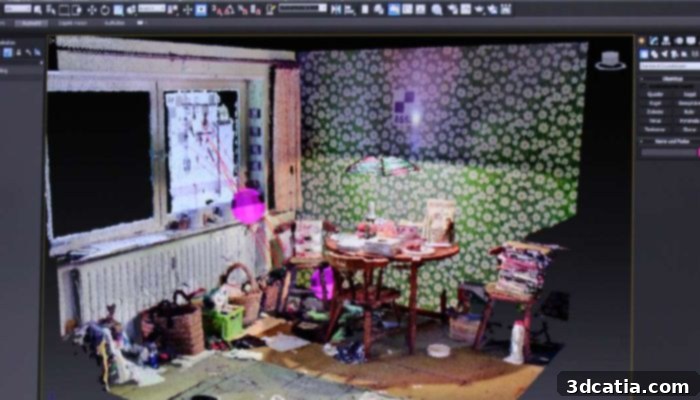
3D reconstruction of a crime scene. The blood spatters depicted make it possible to calculate the location of the attack (photo credits: Sophia Lavcanski).
Area 54.2 of the Landeskriminalamt Nordrhein-Westfalen (LKA NRW), a crucial department responsible for the measurement, reconstruction, and visualization of crime scenes, underscores the comprehensive utility of 3D laser scanners: “The use of 3D laser scanners enables three-dimensional digital preservation of crime scenes, as well as retrospective analysis and reconstruction of the course of events. This includes precise calculations of volumes, determination of fields of view, identification of fire directions in shooting incidents, and accurate determination of the size of individuals involved in crimes.” This capability transforms a fleeting crime scene into a permanent, revisitable digital record.
Precision in Evidence Collection: How 3D Digitizing Conducts Surveys
When it comes to delicate evidence such as footprints or tire tracks, 3D scanners offer a non-destructive and highly precise method of collection. Investigators can meticulously position a 3D scanner directly over the impression and initiate the digital recording process. Simultaneously, a camera integrated into the scanner captures a high-resolution photographic image of the area. Within seconds, a preview appears on the scanner’s built-in screen, allowing the user to verify focus and ensure optimal data capture. The collected 3D data is then transported to a specialized laboratory for exhaustive analysis. Here, trassologists – experts in trace evidence – can meticulously examine minute details such as the length and depth of tread profiles, comparing them against databases and other crime scenes for potential matches or linkages. This digital approach safeguards the integrity of the original evidence while providing unparalleled analytical depth.
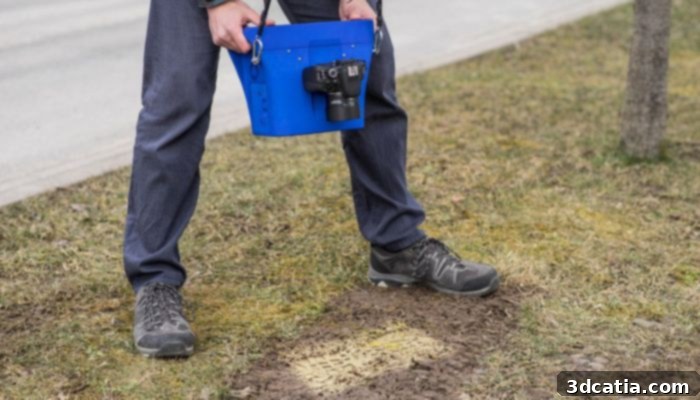
The 3D scan of the forensic evidence using the portable 3DF scanner (photo credits: Fraunhofer IOF).
Reconstructing Reality: The Power of 3D Printing in Forensics
Since the early 2010s, 3D printing has been increasingly deployed in the forensic field, primarily for the reconstruction and replication of crucial evidence. The selection of the appropriate 3D printing technology is critical and directly depends on the specific requirements of the intended use. For highly detailed and intricate models, such as reconstructed bone fragments or delicate facial features, resin printers are often the preferred choice due to their exceptional resolution. Conversely, for creating robust and functional parts, technologies like powder bed fusion can be employed. However, the most commonly utilized method in forensics is Fused Deposition Modeling (FDM) 3D printing. Its popularity stems from its cost-effectiveness, versatility in material choices, and relative ease of use, making it an accessible solution for a wide range of forensic applications.
The LKA of North Rhine-Westphalia highlights a specific application, stating: “3D printing technology is used exclusively as a technical tool for creating so-called trackable targets, which are used for digitizing the movements of people or objects.” These physical markers, once printed, can be strategically placed within a scene or on individuals to facilitate the precise capture of movement data, crucial for understanding incident dynamics. The Hamburg LKA, while not yet possessing an in-house 3D printer, also recognizes the immense potential of this technology, noting that 3D printing can be instrumental for the physical examination of digital objects. This allows investigators to create tactile replicas of digitally scanned evidence, enabling a more comprehensive and hands-on analysis that might not be possible with purely digital models.
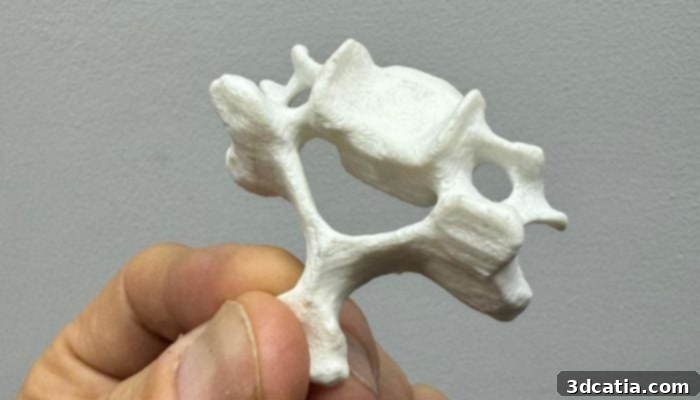
3D replica of a spine from a murder case in which a woman was killed. The bone would have been difficult to produce using traditional manufacturing methods. The print was made on the Creality CR10-V3 3D printer (photo: Eugene Liscio).
Unleashing Potential: Transformative Impacts of 3D Technologies
The integration of 3D technology profoundly enhances the analytical capabilities available to forensic science and investigative units, thereby significantly improving the probability of accurately identifying and apprehending culprits. The LKA of North Rhine-Westphalia confirms the lasting and widespread impact of 3D scanning technology on investigative work throughout the country, particularly within homicide commissions, where its precision and comprehensive data capture are invaluable.
Joe Mullins, a renowned forensic artist associated with the National Center for Missing and Exploited Children, emphasizes the transformative nature of these modern techniques. He states: “With today’s methods, we can process a skull scan with the authority retaining the remains and print the skull on site. Recently, I had a skull scanned from Barbados, which was then 3D printed in Virginia and had a facial adjustment made in New York. This would not have been possible 20 years ago.” This example strikingly illustrates the geographical flexibility and collaborative potential enabled by 3D technology, allowing specialized expertise to be applied across vast distances without compromising the original evidence.
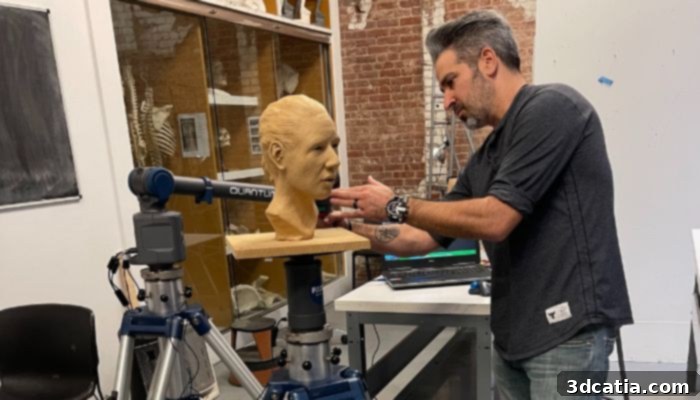
The making of a skull (photo credits: Joe Mullins).
The rapid advancements in technical and digital capabilities, including sophisticated visualization techniques utilizing VR goggles or dedicated VR environments, empower investigators to conduct immersive, three-dimensional tours of reconstructed crime scenes. As highlighted by the LKA NRW, this virtual access provides investigators with an unprecedented ability to examine events from multiple perspectives and angles that were previously unattainable. This goes far beyond merely viewing photographs or traditional diagrams, offering a dynamic and interactive exploration.
Elaborating on this immersive experience, the LKA NRW explains: “The observer is thus no longer in the role of the outside observer, but is instead able to virtually enter the crime scene and immerse themselves in the digital representation and reconstruction of the course of the crime. The integration of the most diverse 3D data enables interactive visualization of case files, and the knowledge thus acquired can have a decisive influence on the evaluation of traces, testimony, and links between facts, which would be impossible without adopting this angle of view.” This deep immersion fosters a more profound understanding of the incident, enabling investigators to identify subtle correlations and gather critical insights that might otherwise be overlooked.
Furthermore, laser 3D scanners enable investigators to meticulously visualize and analyze a crime scene on a computer long after the physical scene has been released and processed. This digital preservation facilitates critical discussions and collaborative investigations among team members, irrespective of their physical location. The Office of the Criminal Police confirms: “This opens up the possibility of apprehending the crime scene realistically, getting to and moving around the crime scene without first having been to the actual scene of the event.” This capability is invaluable for re-evaluating evidence, brainstorming theories, and preparing for court presentations, all within a precise digital replica.
The ability to simultaneously visualize a virtual crime scene and discuss it collectively benefits not only investigators but also other involved parties, such as the court. This shared, interactive experience significantly enhances comprehension of complex events. The technology proves particularly effective in scenarios like gun crimes or chaotic car accidents, allowing experts to maintain a clear overview of the incident, precisely identify bullet impact angles, blood spatter patterns, and vehicle trajectories, which are crucial for accurate reconstruction and analysis.
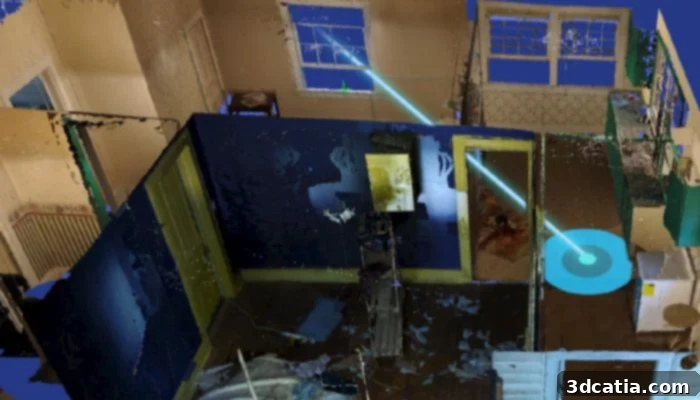
3D reconstructions of the crime scene make it possible to visit it even after leaving it (photo credits: Jeremiah Crowell).
Crucially, 3D technology significantly minimizes the risk of damage to delicate evidence that might otherwise occur during transport or repeated handling. This non-destructive approach is particularly beneficial for complex procedures like facial reconstructions. Traditional methods often involve repeatedly superimposing clay and plaster onto a skull, a process that can cause irreversible damage over time. With 3D technology, the skull remains untouched. Instead, a precise computer model is created from a scan, within which specialized software programs can simulate the clay reconstruction process. This allows for virtual reconstructions, which can then be used to produce accurate 3D printed replicas, preserving the original artifact while enabling detailed analysis and reconstruction.
Even in fields where conventional methods are time-consuming and potentially destructive, such as casting shoe or tire impressions in plaster, 3D scanning offers a superior alternative. This innovative approach helps overcome the inherent challenges of traditional methods, providing a digital, non-contact way to capture and preserve fragile traces without degradation, thereby retaining their evidentiary value.
For Joe Mullins, the paramount advantage of 3D technology is the invaluable preservation of original evidence: “Whether it’s a skull or an important piece of evidence, we can avoid problems. In the field of forensic art, it has already happened that a skull has been lost. Setting up a procedure in which all skulls are scanned, printed, and photographed serves as a safeguard in case something happens to the original.” This digital archiving creates an invaluable backup, ensuring that even if physical evidence is compromised, a precise and verifiable replica remains.
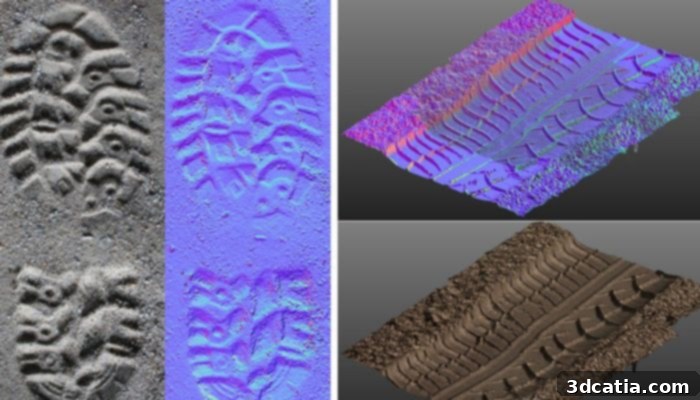
Results of a 3D scan using the 3DF scanner (photo credits: Fraunhofer IOF).
Current Applications and Educational Significance
3D technology boasts a broad spectrum of applications within contemporary investigative work. Eugene Liscio succinctly categorizes forensic work into three primary components: documentation, analysis, and visualization. In this multifaceted context, 3D printing serves as both an advanced documentation product and a powerful visual aid, enhancing clarity and comprehension at every stage of an investigation.
One of the main uses of 3D printing is the accurate reproduction of evidence, which in turn helps preserve the integrity of the real, original evidence. For instance, in modern investigations, a victim’s finger can be meticulously reconstructed in 3D to facilitate the unlocking of technical devices, like smartphones or tablets, without altering or damaging the original remains. In judicial settings, 3D-printed reproductions—such as accurate replicas of skulls depicting injury patterns or models of weapons—are incredibly useful. They provide clear, tangible illustrations of injuries and the sequence of events, enabling judges, jurors, and other investigators to grasp complex details far more effectively than with photographs or verbal descriptions alone.
Liscio further elaborates on the pedagogical value of these replicas: “Normally, we don’t bring bones to trial, but we could bring a replica. For example, a weapon can be printed to explain to judges, jurors, and other investigators that this is the weapon used. Currently, 3D technology is being used to demonstrate the crime and help people understand it. Everyone learns in different ways. Seeing an image on a photograph is fine, but having something in your hands and being able to look at it helps. 3D printing is also used as an educational tool in the field of forensic medicine, to provide anatomical representations to medical staff.” This tactile engagement fosters a deeper, more intuitive understanding, making it an invaluable asset in both courtroom presentations and professional training.
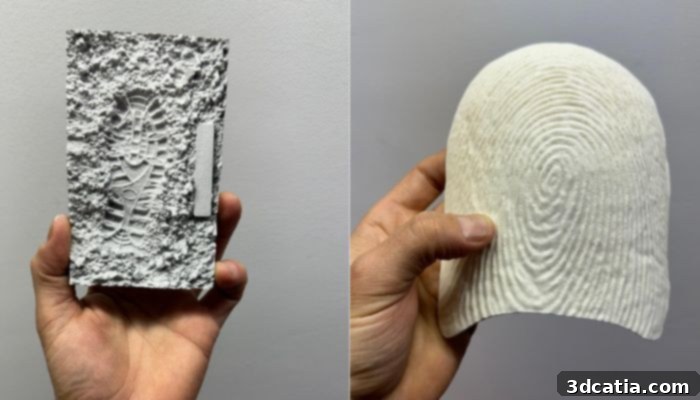
3D-printed replicas of a shoe print and an enlarged fingerprint (photo credits: Eugene Liscio).
Beyond individual pieces of evidence, 3D scanning technologies also enable the comprehensive reconstruction of entire crime scenes. This capability allows investigators to gain a profound understanding of spatial relationships, the precise positioning of objects, and the overall context of the event, illustrating them visually with unmatched clarity. As the LKA NRW emphasizes: “In the context of crime scene documentation, the recording of crime scenes using 3D laser scanners is a complementary and sometimes firmly integrated means of police work at crime scenes.” This integration underscores the transition from traditional, two-dimensional methods to a more dynamic and information-rich three-dimensional approach.
Similarly, the Department of Criminal Science and Technology at Hamburg’s LKA routinely employs measurements acquired through 3D scanners to create detailed digital representations and reconstructions of a diverse range of crime scenes. This consistent application across different jurisdictions signifies the growing recognition of 3D technology’s reliability and effectiveness.
The utility of 3D technology is also gradually extending into the field of forensic archaeology. This particular application holds immense potential, as it enables specialists to virtually reconstruct and represent objects or skeletal remains as they might have appeared before degradation or damage. For instance, pioneering research is currently underway exploring the use of 3D printing to reconstruct burnt bones, a challenging task that traditional methods often find difficult, thus opening new avenues for understanding ancient or badly preserved evidence.
The impactful integration of 3D technology into investigations has demonstrably led to significant breakthroughs in numerous cases worldwide. A notable example occurred in Ohio, USA, where the intricate face of a recovered skull was meticulously reconstructed using the “Clay Tools” program and subsequently brought into physical form through 3D printing. This innovation proved instrumental in verifying the identity of the deceased and allowed investigators to significantly advance the cold case. Another landmark event was the notorious “suitcase murder” in 2015, where a combination of 3D scanning and 3D printing was deployed for the very first time in such a high-profile criminal investigation. West Midlands Police collaborated closely with the University of Warwick’s Manufacturing Group to leverage these advanced 3D technologies for the precise analysis of charred bone fragments, ultimately confirming their connection to the suitcase under examination. Such forensic breakthroughs play a crucial role in victim identification and the overall resolution of complex criminal cases.
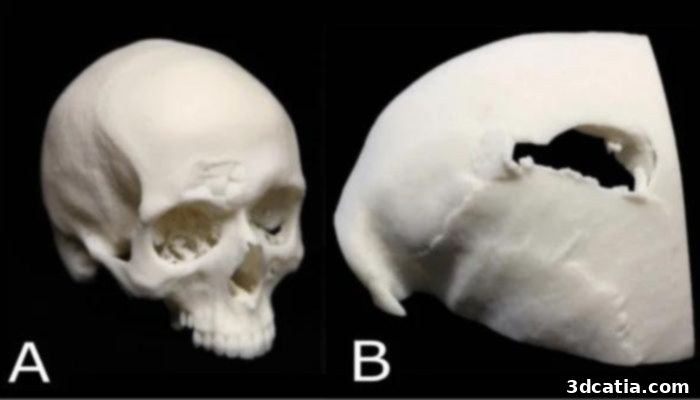
Examples of 3D-printed skull parts in fatal head injuries (photo credits: Errickson, D., Carew, RM, Collings, AJ et al.).
Navigating the Legal Landscape: 3D Replicas in Court
While the technical advantages of 3D technology in forensics are undeniable, its legal standing in courtroom settings presents a nuanced picture. A study conducted by the Cranfield Forensic Institute yielded compelling results, revealing that the comprehension rate of technical information presented in court improved dramatically to 94% when utilizing 3D printed models, a significant increase compared to 79% for traditional photographic images. This demonstrates the immense potential of 3D replicas to clarify complex evidence for judges and juries. However, despite these benefits, the specific use of 3D technology for documenting crime scenes and presenting evidence is not yet universally regulated by law in many jurisdictions.
Jens Ferner, an IT lawyer specializing in 3D copyright and the broader legal implications of 3D technology, confirms this regulatory gap. He states: “There are no clear legal guidelines for public or private investigators, in the sense that the way in which documentation must be carried out is regulated. On a procedural level, this issue is addressed at the level of the exploitation and evaluation of evidence: poor documentation can lead to it being denied probative value, or even prohibited from being exploited. In this context, certain documentation standards have developed among government investigators, but they are not prescribed by law.” This lack of statutory guidance means that while police forces may adopt internal best practices, the admissibility and weight given to 3D evidence can vary, underscoring the critical need for formal legal frameworks and standardized procedures to ensure consistent and unchallenged evidentiary value in court.
Overcoming Hurdles: Challenges in Adopting 3D Forensics
Despite the clear advantages, the widespread adoption and optimal implementation of 3D technology in investigative work face several significant challenges, notably the time and cost factors. Eugene Liscio explains: “You have to choose the right tool for the job. Sometimes this means investing in different tools or renting scanners because you don’t have the right tools. It’s not easy to go from scanning to 3D printing. There’s a lot of work in between, and it’s often a challenge, because we’re dealing with very complicated and delicate parts that require a lot of assistance.” This highlights not only the initial capital investment in equipment but also the ongoing operational costs, which can be substantial. Furthermore, the transition from raw scan data to a polished 3D model or print demands specialized software skills, meticulous data processing, and often a high degree of technical expertise, effectively requiring an investigator to also become a proficient 3D technologist, learning entirely new working procedures and toolsets.
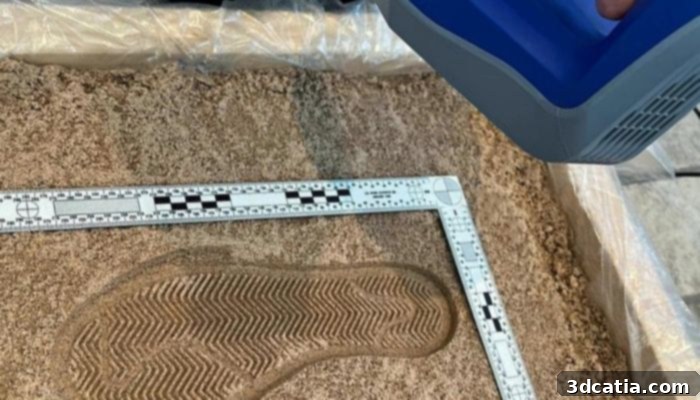
3D scan of a shoe print (photo credits: Artec).
The LKA NRW echoes these concerns, confirming: “Documenting a crime scene using a 3D laser scanner is a time-consuming process, requiring close coordination with those working on the scene at the same time. What’s more, the use of this technology generates large quantities of data that can only be processed and visualized by high-performance computers and software.” This emphasizes the logistical challenges of integrating 3D scanning into an active crime scene, where speed and precision are paramount, as well as the formidable computational resources required for subsequent data management and analysis. The sheer volume and complexity of 3D data necessitate robust hardware and sophisticated software solutions, which adds to the overall cost and technical burden.
However, these agencies also underscore that the significant time and resources invested in processing 3D data for evaluations, crime scene reconstructions, and visualizations are ultimately justified by the profound benefits the technology brings to investigative work. The specialist department at Hamburg’s LKA further identifies additional challenges, including the lack of uniformity in data and printer formats available across the market, which can hinder interoperability and seamless workflow integration. Moreover, the immense data generated by 3D scanning demands correspondingly large storage capacities, presenting another logistical and financial hurdle that must be continuously addressed.
The Road Ahead: Future Prospects for 3D Technology in Forensics
As 3D technology continues its rapid advancement, becoming both more sophisticated and precise, its integration into investigative processes is expected to expand dramatically. Eugene Liscio observes that while 3D printing is recognized within the forensic community, its widespread application is not yet fully realized. However, this landscape is poised for change, particularly as the demand for enhanced accuracy and detail in evidence analysis escalates. The continuous refinement of scanning and printing capabilities will naturally lead to broader adoption.
Joe Mullins shares this optimistic outlook, firmly convinced that 3D printing will become an increasingly common tool in the foreseeable future. He asserts: “The technology is advancing so rapidly that 3D printing will become the norm to support investigations. It will continue to help solve cases, but at a faster pace.” This anticipation highlights not only the potential for more accurate and comprehensive investigations but also for a significant acceleration in the speed at which cases can be resolved, thereby bringing justice more swiftly to victims and their families. Faster resolution frees up resources and enhances the overall efficiency of criminal justice systems.
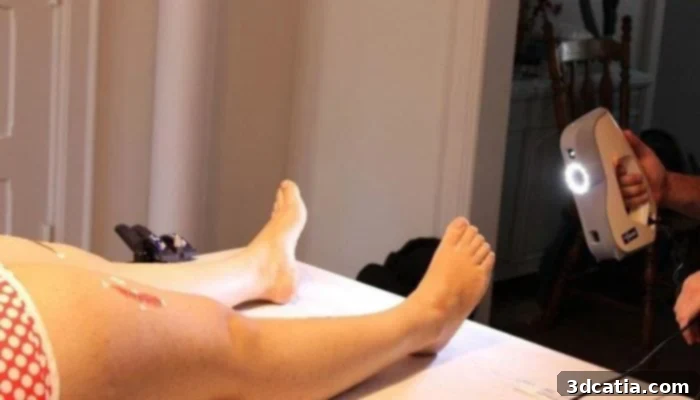
3D scanning with the Artec Eva (photo credits: Artec 3D).
Despite the exciting possibilities and continuous technological advances, there remains a considerable journey ahead before 3D technology can fully realize its transformative potential in supporting investigative work. A crucial and immediate step forward involves comprehensive training for investigators through specialized programs. Equipping law enforcement professionals with the necessary skills to operate and interpret 3D data effectively is paramount. Additionally, sustained research and development are essential to continually adapt these technologies to the unique and evolving requirements of criminal investigations. Furthermore, fostering robust collaboration between technical experts, legal professionals, and seasoned investigators will be key to developing standardized practices and ensuring the seamless integration of 3D forensics into the criminal justice system.
In the long term, advanced 3D technologies hold immense promise to fundamentally streamline investigative processes, enhance the accuracy of crime-solving, and ultimately contribute to holding criminals accountable. However, achieving this vision necessitates a continued commitment to building a solid foundation through ongoing education, dedicated research, and collaborative efforts across all relevant disciplines.
What are your thoughts on the role of 3D technologies in forensics? Do you see them as a game-changer for our experts? Let us know in a comment below or on our LinkedIn, Facebook, and Twitter pages! Don’t forget to sign up for our free weekly newsletter here for the latest 3D printing news straight to your inbox! You can also find all our videos on our YouTube channel.
*Cover Photo Credits: APA/Georg Hochmuth