
Carbon’s FP3D Resin: Revolutionizing Flexible Removable Partial Dentures in Digital Dentistry
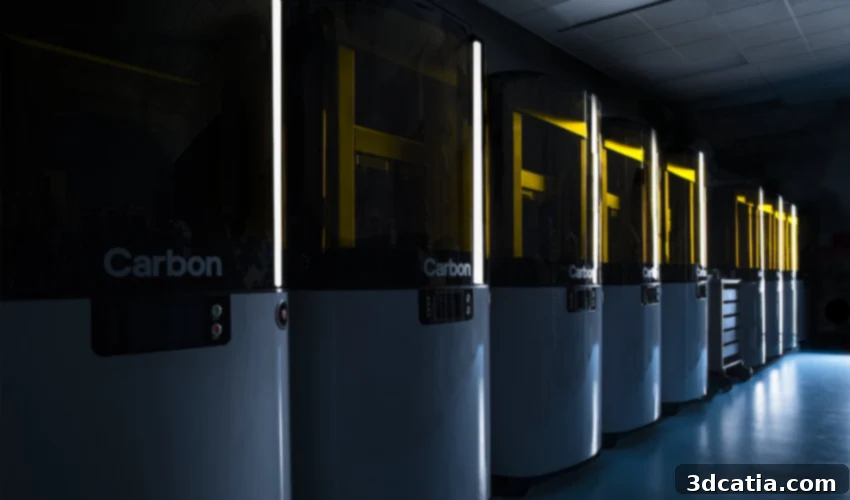
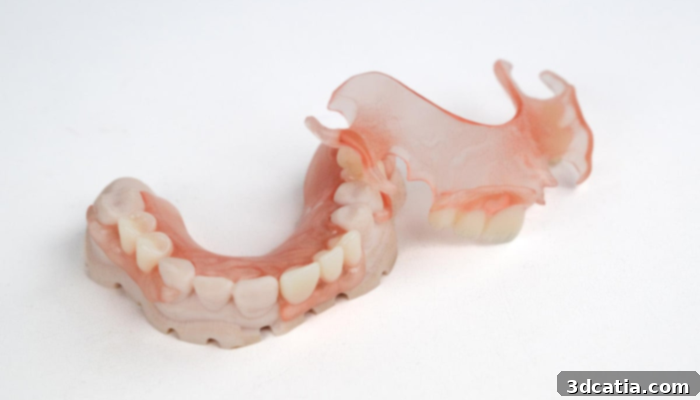
The landscape of digital dentistry is continually evolving, driven by innovations in materials science and additive manufacturing. A significant leap forward was showcased at LMT Lab Day Chicago 2025, where Carbon, a leader in 3D printing technology, unveiled its groundbreaking FP3D resin. This new material is specifically engineered for the production of flexible, removable partial dentures, promising a transformative impact on how dental professionals approach restorative solutions. FP3D represents a pivotal moment, being the first material in the dental sector to leverage Carbon’s advanced dual-cure chemistry – a technology that has already proven its mettle and revolutionized demanding industries such as footwear, cycling, and sports equipment.
The Power of Dual-Cure Chemistry: Unlocking Unprecedented Durability and Accuracy
The introduction of FP3D addresses a long-standing challenge in dental additive manufacturing: balancing precise print accuracy with robust, long-term durability. Traditional single-cure dental resins typically achieve their final properties through a single UV light exposure step. While this process is effective for many applications, it can sometimes limit the material’s ultimate mechanical strength and resistance to wear and tear, especially under the rigorous demands of daily oral use.
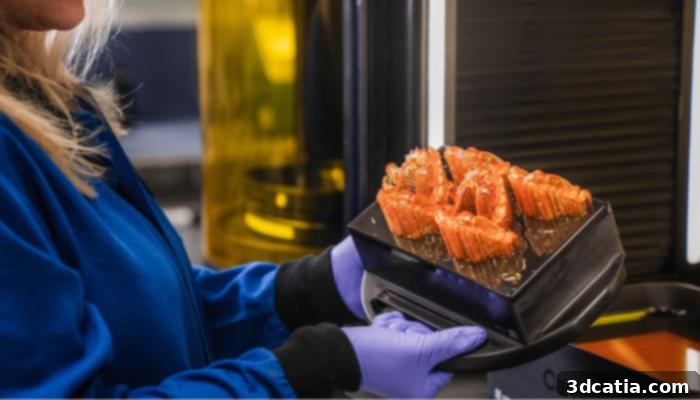
Carbon’s FP3D resin fundamentally changes this paradigm. It incorporates a unique dual-cure chemistry, meaning the material undergoes a secondary heat-activated step after the initial UV printing process. This post-curing stage is critical; it initiates additional cross-linking within the polymer matrix, significantly strengthening the printed parts. The result is a material that not only boasts exceptional print accuracy, enabling intricate designs and perfect fit for patient-specific partials, but also offers unparalleled long-term durability. This innovative approach allows dental professionals to deliver removable partial dentures that can better withstand the stresses of chewing, cleaning, and daily handling, leading to a superior patient experience and reduced need for replacements.
As Carbon proudly explains, this process elevates the performance of a 3D printed dental device to “engineering-grade” levels. This means the material exhibits properties typically found in high-performance industrial components, offering enhanced fracture resistance, flexibility, and dimensional stability over time. For patients, this translates to more comfortable, reliable, and longer-lasting dental restorations, minimizing disruptions to their daily lives.
Proven Innovation: From Athletic Gear to Dental Appliances
Carbon’s track record of validating its materials in demanding environments provides strong confidence in FP3D’s capabilities. The very same dual-cure technology that underpins FP3D has been instrumental in creating a range of high-performance products across various industries. For instance, it helped develop Riddell’s advanced 3D printed football helmet liners, which offer superior impact absorption and customized fit, significantly enhancing player safety. Similarly, top athletic brands have utilized Carbon’s technology for running shoe midsoles, delivering optimal cushioning, energy return, and personalized comfort for athletes.
Furthermore, the technology has been applied to engineer bike saddles that strike an ideal balance between rider comfort and mechanical performance, optimizing pressure distribution and support. These applications demonstrate the versatility and robustness of Carbon’s dual-cure chemistry, proving its ability to meet stringent performance requirements in challenging conditions.
Applying this proven science to dental appliances, particularly flexible removable partial dentures, is a natural and logical progression. The requirements are similar: materials must be biocompatible, durable enough for repeated use, flexible for patient comfort, and precisely manufactured for accurate fit. As dental labs increasingly adopt digital workflows to enhance efficiency and precision, the availability of advanced materials like FP3D becomes crucial. It empowers labs to fully leverage their digital infrastructure, producing high-quality, patient-specific restorations faster and more reliably than ever before.
Enhancing Efficiency: Carbon’s Automation Suite for Digital Dental Labs
Beyond the groundbreaking FP3D resin, Carbon also announced significant updates to its comprehensive automation suite, reinforcing its commitment to streamlining the digital dentistry workflow. These enhancements include the introduction of no-code print preparation software and an expanded polishing system, both designed to seamlessly integrate with its advanced M3 printers. These tools are meticulously crafted to address key operational challenges in dental labs, from design to post-processing.
The no-code print preparation software is a game-changer for dental technicians. By eliminating the need for complex coding or extensive programming knowledge, it democratizes access to advanced manufacturing capabilities. This intuitive interface allows labs to quickly and efficiently prepare dental designs for 3D printing, reducing the learning curve, minimizing human error, and significantly accelerating the pre-production phase. It empowers more team members to participate in the digital workflow, boosting overall lab productivity.
Furthermore, the expanded polishing system is a vital component for ensuring the final quality and patient comfort of 3D printed dental appliances. Post-processing, including polishing, is often a labor-intensive and time-consuming step in traditional manufacturing. Carbon’s automated system streamlines this critical phase, achieving consistent, high-quality surface finishes across all parts. This automation not only reduces manual labor, freeing up technicians for more specialized tasks, but also guarantees improved part consistency and aesthetic appeal, directly contributing to better patient satisfaction. Together, these automation tools empower dental labs to operate with greater efficiency, precision, and scalability, making digital dentistry an even more attractive alternative to conventional methods.
The Future of Dental Manufacturing: Innovation, Reliability, and Patient-Centric Solutions
While FP3D is currently undergoing FDA review and is not yet available for use in the United States, its highly anticipated debut at LMT Lab Day Chicago powerfully underscores a critical trend: the convergence of 3D printing and advanced chemistry is profoundly reshaping the future of dental manufacturing. This synergy is paving the way for unprecedented levels of innovation, allowing for the creation of dental devices that were previously impossible or impractical to produce.
By synergistically combining cutting-edge automation with breakthrough materials like FP3D, Carbon is strategically positioning digital dentistry as a superior alternative to conventional methods. This paradigm shift offers numerous advantages: faster production times, enabling dental labs to meet patient needs more quickly; enhanced reliability through consistently high-quality, durable devices; and unparalleled innovation in design and material properties. Digital workflows facilitate the creation of patient-specific solutions that are precisely tailored to individual anatomies, leading to superior fit, comfort, and clinical outcomes. This forward-thinking approach not only improves the efficiency of dental practices and labs but also significantly enhances the quality of care provided to patients, marking a new era of possibilities in restorative dentistry.
What are your thoughts on these exciting new developments for removable partial dentures? We invite you to share your insights in a comment below or join the conversation on our LinkedIn or Facebook pages! Plus, don’t forget to sign up for our free weekly Newsletter to get the latest 3D printing news straight to your inbox. You can also find all our videos on our YouTube channel. Interested in more medical and dental 3D printing news? Visit our dedicated page HERE.
*All Image Credit: Carbon