
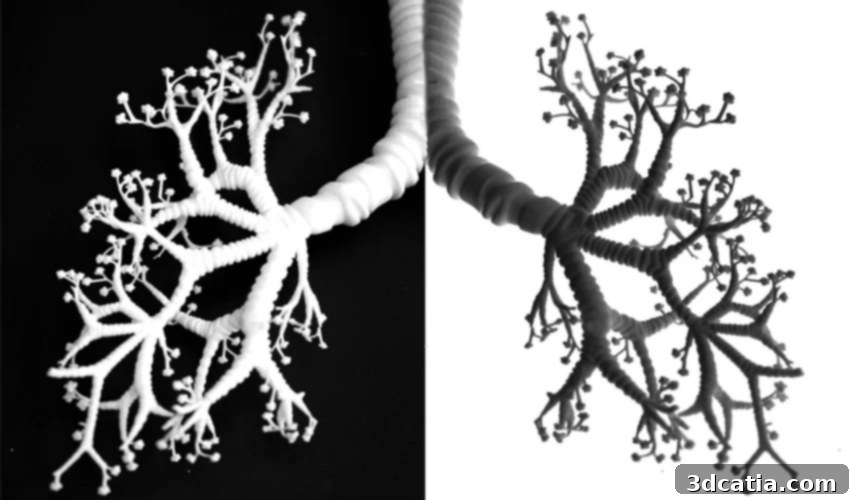
Frontier Bio: Revolutionizing Regenerative Medicine with Advanced 3D Bioprinting and Human Tissue Engineering
The medical field stands on the cusp of a profound transformation, largely driven by the remarkable advancements in 3D printing technology. This innovative approach is not merely optimizing existing medical practices but fundamentally redefining the landscape of healthcare, offering unprecedented opportunities for personalized and effective treatments. At the forefront of this revolution is Frontier Bio, a pioneering company dedicated to harnessing the power of 3D printing and tissue engineering to cultivate human tissue in a laboratory environment. This groundbreaking endeavor promises to usher in a new era of regenerative medicine, providing bespoke solutions for tissue regeneration, the development of sophisticated medical devices, and highly individualized therapeutic interventions.
While the potential for medical breakthroughs soars, an escalating concern surrounds the pervasive use of animal experiments in research. With over 190 million animals utilized globally each year, the ethical implications are significant, compounded by the scientific limitations of such models, which often yield results that are not entirely conclusive or directly translatable to human physiology. Frontier Bio addresses this critical issue head-on. Their core mission is to engineer artificial human tissues that can effectively replace animal testing, thereby safeguarding animal welfare while simultaneously advancing the preservation of human life. Beyond this ethical imperative, these sophisticated engineered tissues aim to tackle another pressing global challenge: the severe and growing shortage of organs available for transplantation, offering a beacon of hope for countless patients awaiting life-saving procedures. To delve deeper into Frontier Bio’s ambitious objectives and future plans, we recently had the privilege of interviewing Eric Bennett, the visionary CEO of the company.
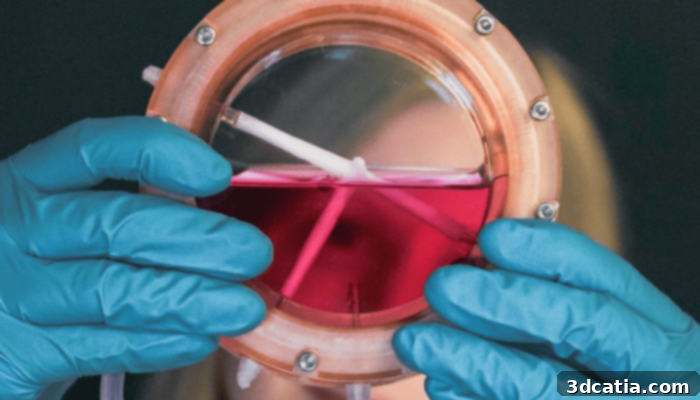
Frontier Bio is leveraging advanced 3D technologies to engineer complex human tissues, paving the way for revolutionary medical applications.
3DN: Could you introduce Frontier Bio and discuss its profound connection with additive manufacturing?
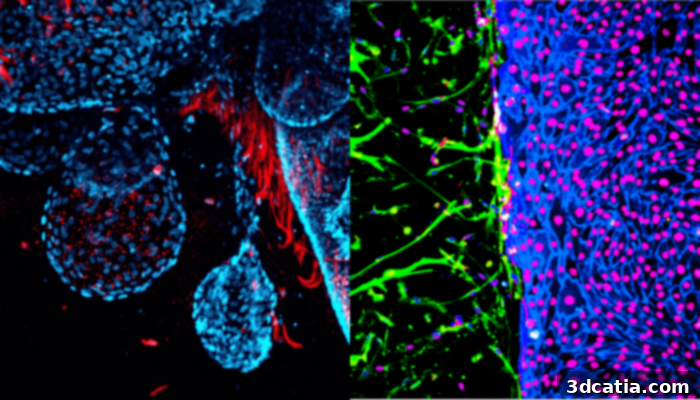
Frontier Bio stands as a vanguard in the field of laboratory-grown human tissue engineering, driven by an unwavering ambition to fundamentally revolutionize regenerative medicine. Our overarching mission is to meticulously develop innovative alternative solutions for organs and tissues that are compromised by aging, disease, or injury. This pursuit represents a sustainable and ethical answer to the severe global shortage of organs for transplantation, a challenge that affects millions worldwide. Additive manufacturing, commonly known as 3D printing, is not merely a tool but a foundational pillar central to every facet of our research and product development endeavors. We employ state-of-the-art 3D bioprinting technologies, integrated with sophisticated self-assembly techniques, to meticulously design and fabricate complex biological structures such as lung microtissues, brain microtissues, and intricate blood vessels. These advanced models are critical for disease modeling, drug discovery, and therapeutic testing. Furthermore, beyond direct bioprinting, 3D printing plays a vital role in creating highly precise molds for biomaterials and facilitates the rapid prototyping of specialized laboratory devices. This multi-faceted application vividly illustrates our innovative and comprehensive approach to advanced tissue engineering, pushing the boundaries of what is medically possible.
3DN: What was the genesis of Frontier Bio, and how did your journey lead to its establishment?
The origins of Frontier Bio are deeply rooted in my previous professional tenure as the CTO at Aether. During my time there, our primary objective was to democratize bioprinting technology by developing and making accessible affordable, yet remarkably powerful, 3D bioprinters. This foundational experience provided invaluable insights into the hardware aspect of additive manufacturing in a biological context. However, after my departure from Aether, my commitment to pushing the boundaries of bioprinting evolved. My focus shifted from the exclusive development of printing hardware to the vast and impactful applications that bioprinting could unlock in medicine. Frontier Bio was consequently born from this refined vision, a vision that was powerfully catalyzed by a truly revolutionary method I innovated for the manufacturing of complex blood vessels. This breakthrough represented a significant leap forward in the field, moving beyond mere theoretical concepts to practical, repeatable solutions. A pivotal moment in our journey was the establishment of a transformative partnership with the prestigious Mayo Clinic, centered on the collaborative development of laboratory-grown blood vessels. This seminal project not only validated our innovative approach but also firmly paved the way for the continuous, cutting-edge work and ground-breaking research that we proudly continue to pursue at Frontier Bio today, aiming to redefine the future of regenerative medicine.
3DN: What specific 3D printing technologies are currently employed at Frontier Bio, and what are the strategic reasons behind these choices?
At Frontier Bio, our technological infrastructure is designed for maximum versatility and precision, allowing us to address a wide spectrum of tissue engineering challenges. We extensively utilize both Fused Deposition Modeling (FDM) technology and advanced resin 3D printing. These robust technologies are crucial for designing and fabricating highly complex parts for our specialized laboratory equipment, creating intricate molds essential for ‘organs-on-a-chip’ research platforms, and manufacturing tailored scaffolding structures that guide tissue growth in engineered constructs, among many other critical applications. FDM is favored for its cost-effectiveness and ability to print with a wide range of thermoplastic materials, ideal for durable lab tools and prototyping. Resin 3D printing, conversely, offers exceptional resolution and surface finish, making it indispensable for precision molds and delicate scaffolding that require fine detail. In addition to these, our comprehensive repertoire includes a variety of sophisticated 3D bioprinting techniques specifically optimized for the delicate and precise manufacturing of living tissues. Our strategic choice of these diverse technologies is not merely based on the printing methods themselves but is fundamentally dictated by their inherent versatility and their remarkable adaptability to our unique and proprietary compositions of culture media, advanced biomaterials, and our continuous pursuit of biotechnological innovations. This adaptability ensures that we can achieve the specific biological and mechanical properties required for each distinct tissue engineering project, pushing the frontiers of what’s achievable in regenerative medicine.
3DN: How is Frontier Bio leveraging 3D printing to significantly reduce and ultimately replace animal studies in medical research?
At Frontier Bio, the application of additive manufacturing is absolutely fundamental to our mission of creating sophisticated laboratory-grown human tissues. These engineered tissues are meticulously designed to faithfully reproduce the intricate characteristics and physiological responses of natural human tissues, far surpassing the capabilities of traditional animal models. This core competence is of paramount importance, not only for the iterative improvement and precise testing of novel medical devices but also for accurately simulating human diseases and accelerating the discovery of new treatments. By providing highly predictive human-specific models, we are actively and significantly reducing the historical and often problematic dependence on animal experimentation, marking a pivotal shift in preclinical research methodologies.
The scientific community has long acknowledged the inherent limitations and often observed discrepancies between the results obtained from animal models and those subsequently found in human clinical trials. These differences frequently lead to costly failures and delays in drug development. Our meticulously engineered tissues, particularly our advanced lung and neural models, offer a far more predictive and human-relevant alternative to traditional preclinical data. These models capture the complex cellular interactions, genetic expressions, and physiological responses unique to human biology, providing insights that animal models often cannot. Furthermore, our development of highly realistic engineered blood vessels is driving a transformative transition towards human-centered trials for novel vascular devices. This represents a significant and ethical advance in reducing the reliance on animals for medical device testing, ensuring safer and more effective products for human patients. This visionary approach motivates our crucial collaboration with the Mayo Clinic, a partnership robustly supported by the National Science Foundation’s prestigious SBIR grant, enabling us to set new, higher standards in ethical and effective medical research and testing. Through these innovations, Frontier Bio is not just replacing animal models but is actively enhancing the quality and relevance of preclinical research.
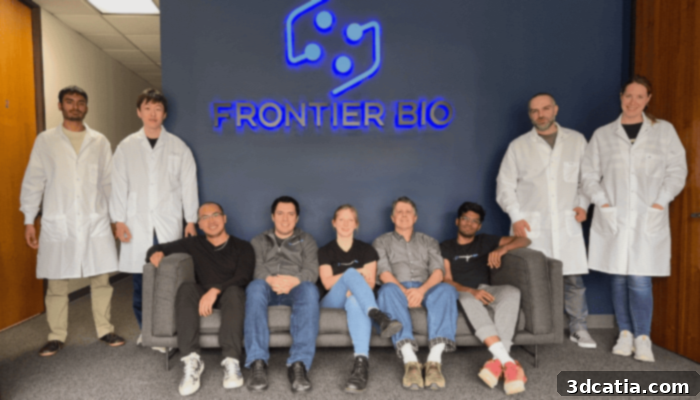
The dedicated research team at Frontier Bio is at the forefront of innovation in tissue engineering and regenerative medicine.
3DN: From your perspective, how do you envision the future development and impact of 3D printing within the healthcare sector?
The future trajectory of 3D printing in healthcare is poised to usher in a radical transformation, particularly in the realm of personalized medicine. We envision a future where it will be possible to create tailor-made tissues and even entire organs for each individual patient, precisely on demand. This paradigm shift will dramatically simplify and enhance the precise evaluation of drug efficacy, allowing for highly individualized treatment protocols that are optimized for each patient’s unique genetic makeup and physiological responses. This level of customization promises to significantly reduce adverse drug reactions and improve therapeutic outcomes. Beyond drug testing, this innovation is expected to enable the introduction of truly revolutionary therapies specifically designed for age-related conditions, offering new hope in combating diseases like Alzheimer’s, Parkinson’s, and various degenerative disorders. Critically, 3D printing will play an indispensable role in extending human longevity and actively promoting a healthier, more vibrant lifestyle well into advanced old age. The unprecedented ability to replace or repair damaged organs and tissues exactly as required, essentially replacing ‘parts’ of the human body, heralds a completely new era in medical science. This future promises not only to prolong life but to fundamentally improve its quality, offering a lifespan marked by vitality and freedom from the limitations currently imposed by organ failure and tissue degeneration.
3DN: Do you have any final remarks or insights you’d like to share with our readers?
At Frontier Bio, our entire team is profoundly committed to relentlessly advancing medical research and introducing groundbreaking technologies that are squarely aimed at extending the human lifespan and significantly enhancing its quality. We are driven by an unyielding search for innovative solutions that have the power to redefine conventional healthcare standards and spark a true revolution in longevity and overall wellness. We are incredibly enthusiastic about the prospect of sharing our continuous advancements and breakthroughs with your engaged readers! We encourage everyone interested in the future of medicine to learn more about our pioneering work by visiting our official website HERE.
What are your thoughts on Frontier Bio’s innovative approach to tissue engineering and the future of healthcare? We invite you to share your opinions in a comment below or join the conversation on our LinkedIn, Facebook, and Twitter pages! For the latest updates and breaking news in 3D printing, don’t forget to sign up for our free weekly newsletter here, delivered directly to your inbox. You can also explore all our insightful videos and content on our YouTube channel.
*All Photo Credits: Eric Bennett, CEO Frontier Bio