

Relativity Space and mu Space Pioneer the Future with World’s First 3D Printed Rocket, Revolutionizing Space Access
The landscape of space exploration is undergoing a radical transformation, fueled by audacious visions and groundbreaking technological advancements. At the forefront of this revolution are Relativity Space, an innovative autonomous rocket factory and launch services platform, and mu Space, a dynamic Thai satellite and space technology company. These two pioneering entities have announced a landmark partnership set to propel a satellite into orbit aboard Relativity’s Terran 1 rocket—distinguished as the world’s first entirely 3D printed rocket. This monumental collaboration is a testament to both companies’ shared belief that humanity’s ultimate destiny lies beyond Earth, signaling a bold step towards establishing a multi-planetary future.
Relativity Space, known for its ambitious goals, isn’t just launching satellites; it’s redefining manufacturing paradigms. The company harbors the visionary aim of 3D printing the very first rocket directly on Mars, illustrating a commitment to sustainable off-world colonization. Concurrently, mu Space is relentlessly pursuing the development of advanced space technologies crucial for ensuring safer lunar missions and paving the way for human settlement on the Moon within the ambitious timeframe of the next decade. Together, their combined efforts are not merely about launching payloads but about accelerating humanity’s expansion into the cosmos.
A New Era of Speed and Efficiency: The Terran 1 Rocket
Relativity’s Terran 1 rocket represents a paradigm shift in aerospace manufacturing. The company boasts an astonishing capability to build the Terran 1 in less than 60 days, a timeframe previously unimaginable in the highly complex and meticulously engineered world of rocketry. This unprecedented speed is made possible by Relativity’s integrated aerospace platform, a sophisticated ecosystem that seamlessly blends machine learning, advanced software, precision robotics, and cutting-edge metal 3D printing technologies. This holistic approach dramatically disrupts the traditional timelines for space missions, transforming what once took years into a matter of mere days or weeks.
Tim Ellis, CEO and co-founder of Relativity Space, articulated his enthusiasm for the partnership, stating, “We’re excited to partner with mu Space, a disruptive innovator in the Asia-Pacific region, to launch their satellite and space technologies with our 3D printed Terran 1 rocket. We look forward to collaborating to strengthen the U.S. and Asia-Pacific space economy, and to advancing the future of humanity in space together with James and the entire mu Space team.” His comments underscore the strategic importance of this alliance, not only for technological advancement but also for fostering international cooperation in the burgeoning space economy.
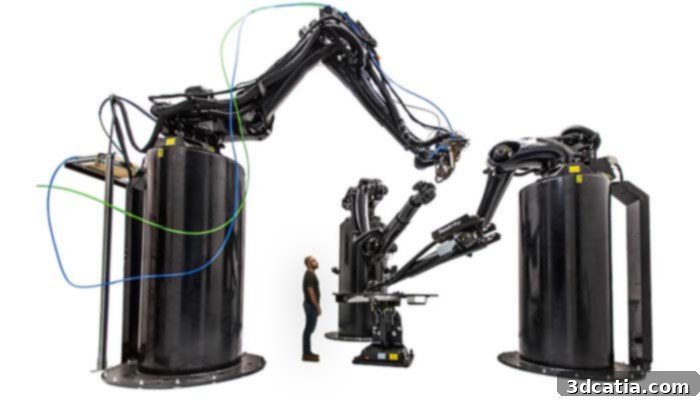
The Stargate metal 3D printer, the core of Relativity’s autonomous factory, creating components for Terran 1 rockets | Photo credits: Relativity
mu Space’s Ambitious Vision: Connecting Earth and Beyond
mu Space’s contributions to this partnership extend far beyond a single satellite launch. The company is actively developing both Low Earth Orbit (LEO) and Geosynchronous Earth Orbit (GEO) satellite and space technologies. These advancements are designed to catalyze the widespread adoption of Internet of Things (IoT) devices within smart cities, thereby enhancing urban infrastructure and connectivity. Furthermore, mu Space aims to stimulate new space investments across the vibrant Asia-Pacific region, positioning itself as a crucial player in the area’s burgeoning space economy. The LEO satellite slated for launch on Relativity’s Terran 1 rocket will serve as a primary, dedicated payload, with the mission targeting a launch window in 2022. This launch is a critical step in mu Space’s long-term strategy to expand global connectivity and facilitate humanity’s ventures into deep space.
James Yenbamroong, CEO and founder of mu Space, articulated the company’s forward-thinking philosophy: “mu Space is accelerating space technology development in Asia, and we consider the moon as the next explorable body in space beyond Earth. Relativity has the vision, team, and technology to deliver exceptional advantages in launching mu Space’s payloads, and supporting our goal of creating an interplanetary society in the future.” His statement highlights the shared, audacious goal of both companies: to make an interplanetary society a tangible reality, with the Moon serving as a crucial stepping stone.
The Backbone of Innovation: Relativity’s Stargate 3D Printer
At the heart of Relativity’s groundbreaking capabilities is the Stargate 3D printer, reputedly the largest metal 3D printer in the world. This colossal additive manufacturing system is the foundational technology behind Relativity’s vertically integrated, autonomous factory. It is through Stargate that the Terran 1 rocket is brought to life, fundamentally disrupting over 60 years of traditional aerospace manufacturing. By integrating intelligent robotics with sophisticated 3D autonomous manufacturing technology, Relativity is not just building rockets; it’s reimagining the entire production lifecycle.
The Terran 1 rocket exemplifies the immense advantages of this additive manufacturing approach. It boasts a staggering 100x lower part count compared to conventional rockets, significantly simplifying the assembly process and reducing potential points of failure. This radical simplification also leads to an incredibly simple supply chain, dramatically cutting down lead times and logistical complexities. The entire process, from raw material feedstock to a flight-ready vehicle, is completed in less than 60 days, showcasing an unparalleled level of efficiency and agility in the aerospace sector. This capability allows for rapid iteration and responsiveness to market demands, a critical advantage in the fast-evolving space industry.
3D Printing: A Catalyst for Space Exploration
The integration of 3D printing, or additive manufacturing, into rocket production offers a multitude of benefits that are profoundly impacting the future of space exploration. Beyond the reduced part count and accelerated production times, this technology enables the creation of highly complex geometries that are impossible or prohibitively expensive to produce with traditional methods. This design freedom allows engineers to optimize components for strength, weight, and performance, leading to more efficient and capable rockets.
Furthermore, 3D printing drastically reduces material waste, making the manufacturing process more sustainable. It also opens doors for “on-demand” manufacturing, where parts can be printed as needed, minimizing inventory and logistical hurdles. Looking further into the future, the ability to 3D print structures and components directly on other celestial bodies, such as Mars or the Moon, using local resources (in-situ resource utilization or ISRU), could be the key to establishing sustainable human outposts beyond Earth. This vision, championed by Relativity and mu Space, promises to lower the cost of deep-space missions and accelerate humanity’s journey to becoming a multi-planetary species.
Charting Humanity’s Future Among the Stars
The partnership between Relativity Space and mu Space is more than just a commercial agreement; it’s a synergistic alignment of two entities deeply committed to pushing the boundaries of what’s possible in space. Their shared vision for an interplanetary society resonates with a fundamental human drive to explore and expand. By combining Relativity’s pioneering 3D printed rocket technology with mu Space’s innovative satellite and lunar mission development, they are jointly laying the groundwork for future generations to live, work, and thrive beyond Earth. This collaboration symbolizes a new era where advanced manufacturing techniques and visionary entrepreneurial spirit converge to unlock unprecedented opportunities in space, fostering global innovation and economic growth while deepening our understanding of the universe.
Conclusion: A Leap Towards an Interplanetary Future
In summary, the alliance between Relativity Space and mu Space represents a monumental stride forward for the global space industry. The launch of the world’s first 3D printed rocket, Terran 1, carrying mu Space’s satellite, is not merely a technical achievement but a powerful symbol of what collaborative innovation can accomplish. It underscores the transformative potential of additive manufacturing in making space more accessible, sustainable, and economically viable. As both companies continue to advance their respective technologies and pursue their ambitious goals, they are collectively accelerating humanity’s journey towards an exciting future among the stars, making the dream of an interplanetary society an increasingly tangible reality.
For more comprehensive details about the groundbreaking partnership between Relativity Space and mu Space, you can find further information HERE.
We invite you to share your thoughts on the revolutionary applications of 3D printing in the aerospace industry. What are your expectations for this technology? Let us know your insights in a comment below, or engage with us on our Facebook and Twitter pages! Don’t miss out on the latest advancements in additive manufacturing—sign up for our free weekly Newsletter here and get the freshest 3D printing news delivered straight to your inbox!