
Polymaker’s PolyTerra PLA: Leading the Charge Towards Sustainable 3D Printing Materials
The discourse surrounding additive manufacturing (AM) often positions it as a promising solution to mitigate the detrimental environmental impacts stemming from conventional manufacturing processes. Its potential for localized production, reduced material waste, and efficient part design is frequently highlighted. However, a deeper examination reveals that even AM, despite its inherent advantages, still has significant strides to make in achieving true ecological sustainability. Experts in the field consistently point out that one of the most critical areas for improvement lies in the materials used. With plastic being a ubiquitous choice across various AM technologies, the imperative to develop more sustainable alternatives becomes undeniable. Fortunately, a leading innovator in 3D printing materials, Polymaker, has stepped forward with a potential game-changer: PolyTerra PLA. This newly introduced filament is poised to set a new benchmark for environmentally friendly 3D printing materials, aiming to usher in a new era of responsible manufacturing.
Polymaker’s innovative approach to PolyTerra PLA involved a groundbreaking combination of organic minerals with traditional Polylactic Acid (PLA). This unique formulation significantly reduces the overall plastic content in the filament, marking a crucial step towards minimizing reliance on purely synthetic polymers. This material innovation is particularly good news for the vast community of PLA enthusiasts and professional users, as Polymaker asserts that PolyTerra prints with the same ease and reliability as conventional PLA. This means users will not need to recalibrate their print settings or adjust their workflows, allowing for a seamless transition to a more sustainable option without compromising print quality or efficiency. Moreover, Polymaker highlights that PolyTerra’s performance capabilities can even surpass those of standard PLA, particularly in challenging geometries such as overhangs and bridging, offering enhanced structural integrity and aesthetic results for complex designs.
Beyond its eco-conscious composition, PolyTerra PLA distinguishes itself through its robust mechanical properties, which expand its potential application range significantly. Polymaker’s internal comparisons demonstrate that PolyTerra offers superior toughness compared to regular PLA, without sacrificing stiffness. This balance of properties makes it suitable for a wider array of projects, from durable functional prototypes to aesthetically pleasing end-use parts. The filament boasts an impressive printing temperature range of 190-230°C, ensuring broad compatibility with virtually any extrusion-based 3D printer on the market, truly embodying a “plug and play” philosophy. This ease of use encourages wider adoption, making sustainable printing accessible to a broader audience. A distinctive aesthetic feature of PolyTerra is the uniquely matte finish it imparts to 3D printed parts. This matte surface effectively conceals layer lines, even when printing with larger layer heights, resulting in professional-looking prints that often require less post-processing. Furthermore, PolyTerra is available in a thoughtfully curated palette of four pastel colors and ten standard colors, all carefully selected to reflect natural hues and inspire creativity while maintaining an earthy, understated elegance.

Figures designed using PolyTerra (photo credits: Polymaker)
PolyTerra’s Comprehensive Environmental Impact and Carbon Offset Initiatives
Polymaker has meticulously engineered PolyTerra™ PLA to embody the highest possible standards of eco-friendliness achievable for a plastic filament in today’s market. The commitment to sustainability extends far beyond just the material’s composition. Every aspect of PolyTerra’s lifecycle has been considered to minimize its ecological footprint. Firstly, the core innovation lies in the significant reduction of plastic content through the integration of organic minerals, directly addressing the global concern of plastic overproduction and waste. This proactive step reduces the demand for virgin fossil fuel-derived plastics, thereby lessening resource depletion and environmental pollution from extraction and processing.
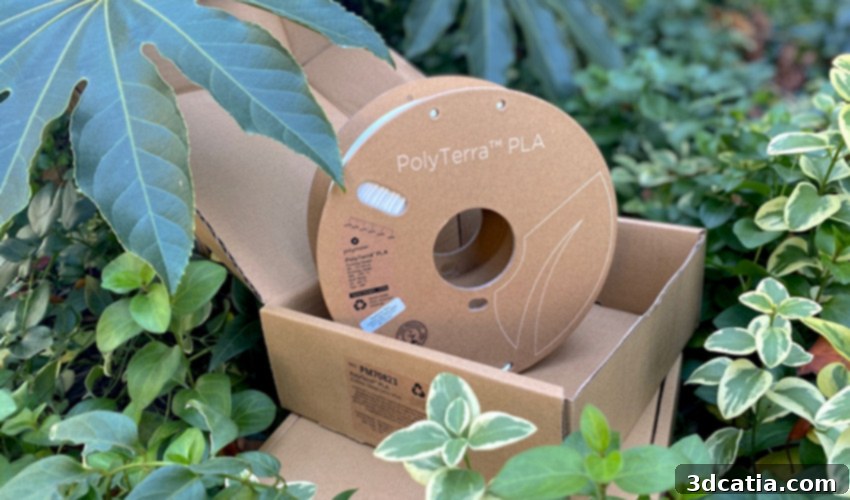
The sustainable ethos of PolyTerra is further exemplified by its packaging. Each spool of PolyTerra is wound on a spool crafted from 100% recycled cardboard, a conscious choice to divert waste from landfills and reduce the demand for new pulp. This commitment to recycling is consistently applied to the accompanying labels and outer packaging, all of which are made from recycled materials. Such decisions are crucial in minimizing the material’s overall environmental impact, promoting a circular economy where resources are reused and repurposed. Additionally, Polymaker has taken a minimalist approach to packaging design by systematically removing all unnecessary paper and plastic elements, thereby drastically cutting down on waste generated throughout the supply chain and consumer use. This holistic approach ensures that from filament to packaging, PolyTerra maintains a low environmental burden.
Perhaps one of the most impactful and commendable initiatives associated with PolyTerra is Polymaker’s ambitious carbon offsetting program. Recognizing that even a significantly reduced plastic content and recycled packaging still involve some carbon emissions during manufacturing and shipping, the company has pledged to plant one tree for every spool of PolyTerra sold. This commitment goes beyond simple reduction; it actively seeks to create a net positive environmental contribution. To achieve this, Polymaker has partnered with One Tree Planted, a renowned environmental charity dedicated to global reforestation efforts, planting trees in countries worldwide with a mission to restore forests, create habitat for biodiversity, and make a positive social impact. This partnership ensures that the trees are planted locally to the point of purchase whenever possible, fostering community involvement and localized ecological benefits.
The impact of this tree-planting initiative is profound and measurable. A single mature tree has the capacity to sequester approximately 22 kg (or 48.5 lbs) of carbon dioxide from the atmosphere each year. Polymaker estimates that the production and shipment of one spool of PolyTerra require about 4 kg (or 8.8 lbs) of carbon emissions. By planting a tree for every spool sold, Polymaker is not only offsetting the initial carbon footprint but significantly overcompensating for it once the tree reaches maturity. This means that over its lifetime, each planted tree will remove substantially more carbon than was emitted in the creation of a PolyTerra spool, demonstrating a commitment to long-term environmental stewardship and actively combating climate change. This model sets a powerful precedent for other manufacturers in the additive manufacturing industry, showcasing how corporate responsibility can translate into tangible environmental benefits. The global reach of One Tree Planted further amplifies this impact, contributing to vital reforestation projects across diverse ecosystems and communities.
The Future of Sustainable Additive Manufacturing
While PolyTerra PLA represents a monumental leap forward in sustainable 3D printing materials and offers a compelling model for eco-conscious manufacturing, it is crucial to acknowledge that the journey towards comprehensive environmental sustainability in additive manufacturing is ongoing. The challenges of reducing overall plastic consumption and addressing the multifaceted ecological crisis demand continuous innovation and collective effort across all industries. However, materials like PolyTerra unequivocally mark a significant step in the right direction, proving that high-performance 3D printing does not have to come at the expense of the planet.
We anticipate an exciting future where the field of AM materials will witness even greater innovations in the coming years. This will likely include the development of more advanced bioplastics that are fully compostable or biodegradable, filaments derived from entirely recycled waste streams, and novel materials that integrate natural fibers or other sustainable composites. As research and development intensify, 3D printing will increasingly leverage sustainable alternatives that offer comparable or superior properties to traditional materials while minimizing environmental impact. With these continuous advancements, additive manufacturing will be genuinely able to solidify its claim as the truly eco-friendly and responsible alternative to conventional manufacturing methods, driving a paradigm shift towards a more sustainable industrial future. For those interested in exploring this groundbreaking material further and learning about its specifications and availability, additional information can be found on Polymaker’s official website HERE.
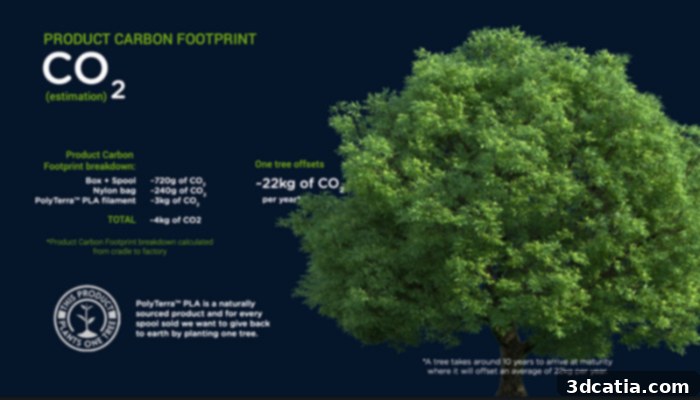
PolyTerra’s Carbon Footprint (photo credits: Polymaker)
What are your thoughts on this innovative, environmentally friendly plastic filament and Polymaker’s commitment to sustainability? We invite you to share your perspective and insights by leaving a comment below or engaging with us on our Facebook, Twitter, and LinkedIn pages! Stay informed about the latest advancements and news in the dynamic world of 3D printing by signing up for our free weekly Newsletter here, delivered straight to your inbox.
*Thumbnail photo credits: Polymaker