
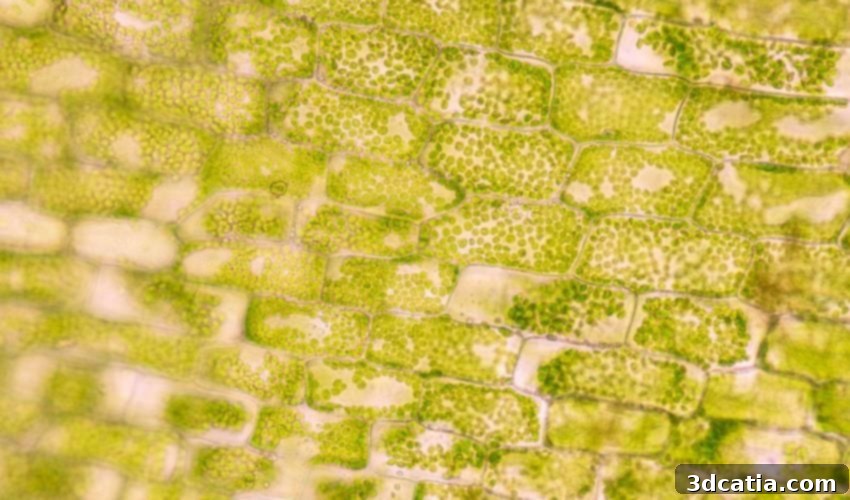
Revolutionizing Living Materials: 3D Bioprinting Genetically Modified Plant Cells for Sustainable Innovations
3D printing has consistently demonstrated its remarkable versatility, expanding its transformative applications across an incredibly diverse range of fields, from advanced manufacturing and rapid prototyping to personalized medicine and intricate art. This innovative technology has rapidly evolved into an indispensable tool across numerous sectors, primarily due to its unparalleled ability to facilitate the customization of products and enable the creation of highly complex, unique structures from an ever-growing array of sophisticated materials. Researchers across the globe have astutely leveraged these inherent benefits to pioneer groundbreaking methodologies, such as the emerging field of bioprinting, which is fundamentally reshaping and advancing their respective disciplines. A significant stride in this exciting area was recently announced when a dedicated team of researchers published an impactful paper in the American Chemical Society, revealing a novel bioprinting method. This pioneering technique utilizes specialized inks containing genetically modified plant cells to successfully produce innovative living materials, heralding a new era for bio-integrated technologies.
The development of functional living materials derived from plant cells presented considerable challenges until very recently. A primary limitation stemmed from the inherent structural simplicity of plant cells compared to animal cells or microorganisms, which historically restricted their potential functionality and adaptability in engineered systems. While scientists had already made notable progress in creating living materials using bacterial and fungal cells, their ambitious vision extended beyond these limitations, seeking to harness the unique biological properties and sustainability advantages offered by plant life. The groundbreaking study we are delving into today represents a pivotal moment, marking a significant breakthrough in overcoming these long-standing obstacles. Spearheaded by the visionary scientists Ziyi Yu and Zhengao Di, the research team successfully engineered Plant Living Materials (EPLMs). These innovative materials incorporate modified plant cells imbued with customizable behaviors and capabilities, opening up unprecedented possibilities. This monumental advancement has been intricately facilitated and made possible through the precise control and versatility afforded by advanced 3D printing technology, illustrating the power of interdisciplinary research.
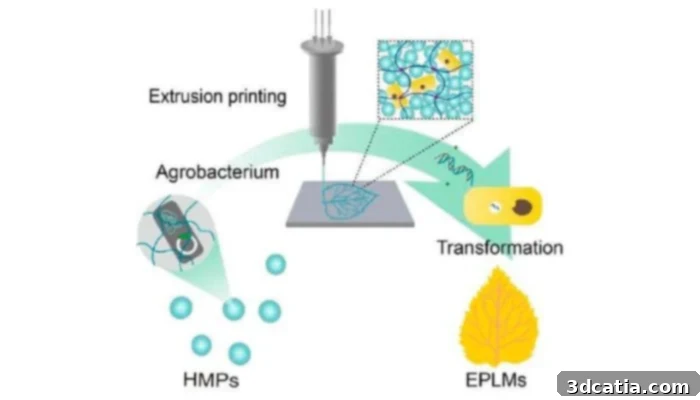
To achieve this remarkable feat, the researchers meticulously developed a specialized bioink, carefully formulated to contain a synergistic combination of plant cells and beneficial bacteria. More specifically, the sophisticated ink was precisely composed of tobacco plant cells – specifically the highly proliferative BY-2 cell line known for its rapid growth and cellular uniformity – expertly suspended within a matrix of gelatin and hydrogel microparticles. Crucially, these hydrogel microparticles harbored *Agrobacterium tumefaciens*, a naturally occurring bacterium renowned for its unique ability to facilitate the efficient transfer of DNA segments into plant genomes. This highly innovative bioink was then strategically employed using a three-axis 3D bioprinter, leveraging extrusion technology to precisely print a diverse range of intricate shapes. These included meticulously crafted grids, delicate snowflakes, anatomically accurate leaves, and elegant spirals, all designed for subsequent comprehensive analysis and study. Following the printing process, the delicate structures were carefully cured with blue light, a critical step that significantly strengthened their structural integrity and ensured their stability. A mere 48 hours after printing, remarkable biological activity was observed: the *Agrobacterium tumefaciens* within the engineered living materials had successfully transferred the desired DNA to the actively growing tobacco cells. As a compelling demonstration, a leaf-shaped print, for instance, visibly exhibited vibrant colors produced by the newly modified plant cells in less than 24 hours, indicative of successful gene expression. The researchers further noted with great interest that the plant cells continued to not only grow but also robustly replicate within the intricate framework of the living materials over a span of several weeks, consistently producing specific proteins precisely as directed by the newly transferred genetic code. This sustained viability and functional activity highlight the profound potential of this novel bioprinting approach for creating truly dynamic and adaptable bio-hybrid structures.
The extensive and rigorous study definitively confirms the underlying theory: the successfully transferred DNA enabled the tobacco plant cells to not only produce vivid green fluorescent proteins, useful as biological markers, but also to synthesize valuable plant pigments. These pigments are highly regarded in various industries, finding significant utility as natural dyes in textiles and cosmetics, and as beneficial dietary supplements in the health sector. By expertly employing 3D printing technology to fabricate this engineered living material, the researchers provided compelling evidence of their technique’s extraordinary capability. This includes the precision required to create architecturally complex structures with intricate details, the unprecedented control over the precise measurements and subsequent biological growth of the printed forms, and the sophisticated management of their diverse biological functions. According to the dedicated research team, this innovative combination – integrating the dynamic characteristics of living organisms with the inherent stability and robust durability provided by non-living substances like the hydrogel matrix – unlocks immense potential. This synergy opens exciting avenues for developing novel methods for producing high-value pharmaceutical proteins in a sustainable and scalable manner, as well as pioneering the application of this engineered living material in cutting-edge, sustainable construction practices. Imagine self-repairing buildings or structures that can adapt to their environment, offering a glimpse into a truly bio-integrated future.
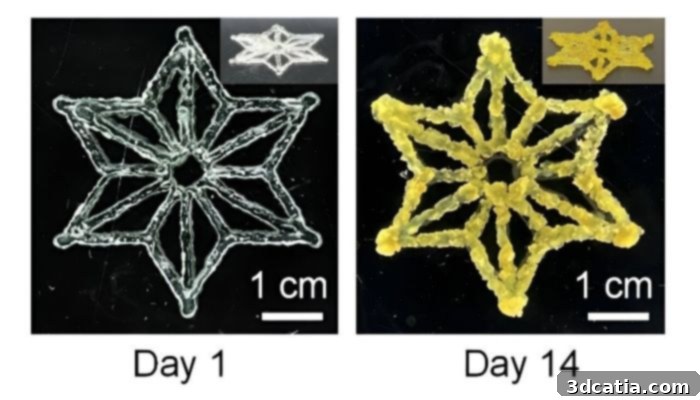
This groundbreaking new method, which seamlessly integrates sophisticated techniques from both advanced biology and cutting-edge engineering disciplines, is unequivocally pushing the established boundaries of materials science to unprecedented levels. The interdisciplinary nature of this research is crucial, marrying the precision of additive manufacturing with the dynamic complexity of living biological systems. In their insightful conclusion, the researchers articulated the profound impact of their work, stating, “By utilizing tobacco BY-2 cells in combination with biocompatible HMPs, this study demonstrates the remarkable potential of 3D bioprinting technologies in creating biocompatible, structurally diverse, and functionally dynamic EPLMs. These Engineered Plant Living Materials represent a paradigm shift in how we conceive and produce materials. The ability to precisely control the genetic programming of plant cells and integrate them into architecturally defined 3D structures opens up a vast landscape of possibilities for intelligent and responsive materials. These advancements signify a major step forward in the development of truly self-sustaining, environmentally responsive, and highly customizable living materials. The implications are wide-ranging and transformative, from groundbreaking applications in sustainable construction, where structures could potentially grow and self-repair, to revolutionary processes in advanced biomanufacturing, allowing for on-demand synthesis of complex biomolecules and materials. This innovative approach is not just an incremental improvement; it is opening up entirely new possibilities for future technological and environmental solutions, offering a greener, more sustainable, and biologically integrated path forward for material development.” This profound statement underscores the transformative potential of this research, envisioning a future where materials are not just inert substances but active, adaptive, and living entities. To delve deeper into the intricate details of this pioneering project and explore the full scope of its findings, interested readers can access the full paper by clicking here.
We are eager to hear your thoughts on this exciting and forward-thinking research released by the American Chemical Society! What implications do you foresee for this innovative approach to living materials? Please share your insights and opinions in a comment below, or engage with our vibrant community on our LinkedIn, Facebook, and Twitter pages. Don’t miss out on the latest advancements and breaking news in the additive manufacturing world – remember to sign up for our completely free weekly newsletter here to get all the essential 3D printing news delivered straight to your inbox! Additionally, you can find a comprehensive collection of all our informative videos and engaging content on our dedicated YouTube channel, offering visual insights into the future of 3D printing.
*All Photo Credits: American Chemical Society