
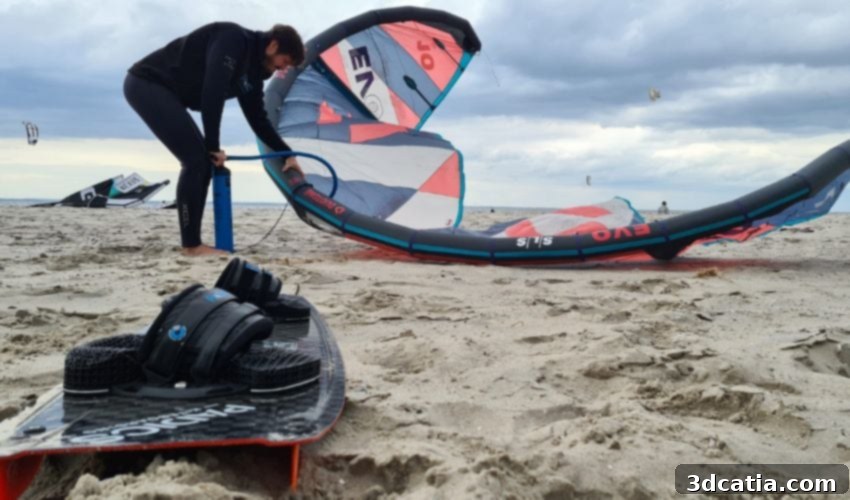
Revolutionizing Kiteboarding: PADICS’ 3D Printed Custom Bindings Set New Standards for Performance and Comfort
In the world of high-performance sports, tailored equipment is often the key to unlocking peak potential and ensuring ultimate comfort. Runners meticulously select shoes for their foot strike and arch type; skiers precisely adjust bindings to match their boots and skill level. Yet, for many years, the exhilarating sport of kitesurfing has largely been an anomaly, forcing riders to contend with a frustrating status quo of “unisex” and “one-size-fits-all” bindings. This conventional approach frequently compromises not only comfort and performance but also the sheer enjoyment of the sport. However, this era of compromise is drawing to a close, thanks to the passionate innovators at PADICS Kiteboarding. Driven by a deep understanding of rider needs, PADICS has pioneered a groundbreaking solution: kite bindings that are individually adapted to each rider. To transform this vision into reality, the forward-thinking startup has embraced the power of additive manufacturing, collaborating strategically with industry leaders like Forward AM to redefine the kiteboarding experience.
The genesis of PADICS’ revolutionary customized and personalized bindings emerged from a common yet debilitating problem experienced by many kitesurfers. Following a particularly strenuous training session, the PADICS team themselves experienced severe cramps in their knees and feet. This firsthand discomfort served as a stark revelation, highlighting a fundamental flaw in the existing standard bindings. They quickly recognized that the human body is unique; therefore, a generic binding, designed to fit “everyone,” effectively fits “no one” optimally. Such universal designs simply cannot cater to the diverse biomechanics and individual preferences of every rider, leaving many feeling unsatisfied and poorly supported. Committed to bringing more fun, enhanced performance, and a superior riding experience to the sport, the founders of PADICS embarked on a mission to engineer a truly individualized solution.
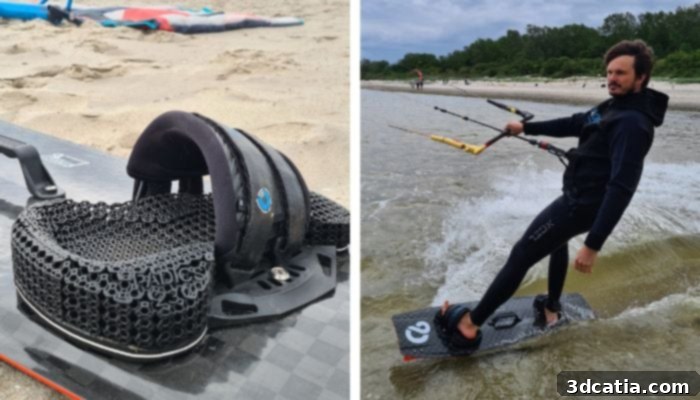
PADICS Kiteboarding develops the 3D-printed customized bindings for more comfort and fun.
From Concept to Customization: The Engineering Journey
The journey from a painful realization to a tangible, personalized product involved a unique blend of expertise. PADICS combined its internal mechanical engineering prowess with the invaluable external knowledge of a master orthopedic technician. This interdisciplinary approach was crucial for developing the initial prototypes, which meticulously considered both the intricate anatomy of an individual’s feet and the critical technical requirements for optimal kiteboarding performance. However, to truly realize their ambitious vision of the perfect, individually tailored binding, advanced manufacturing technologies were essential. This is where 3D printing, coupled with cutting-edge materials, became the game-changer. Forward AM, a leader in additive manufacturing solutions, brought its profound expertise in both 3D printing processes and advanced material science to the project, propelling PADICS’ innovative concept into a production-ready reality.
The Power of Collaboration: PADICS, Forward AM, and Hyperganic
The strategic collaboration forged between PADICS, Forward AM, and Hyperganic represents a paradigm shift in the production of sports equipment. This powerful alliance has successfully enabled the creation of kiteboard bindings that are not only customized to each rider but are also viable for mass production, offering unprecedented levels of comfort and performance. The process begins with detailed scans of a rider’s foot, meticulously capturing every nuance of its shape and structure. These precise anatomical specifications, combined with individual requirements such as rider weight, preferred riding style, and specific foot contours, are then used to determine the exact design parameters for their unique binding. Crucially, the material properties and innovative design, including intricate lattice structures, are engineered to provide optimum damping characteristics. This personalized damping is dynamically adjusted based on the kiter’s individual profile, leading to a significantly superior and more responsive riding experience on the water.
Achieving these sophisticated and highly customized damping properties was made possible through Hyperganic’s cutting-edge, cloud-based 3D design solution, Hydesign. This innovative platform revolutionized the design workflow, allowing for the rapid creation of perfectly suited grid designs for individual footpads in a matter of minutes. Hydesign seamlessly integrates advanced algorithmic engineering with Forward AM’s extensively validated Ultrasim® 3D Lattice Library. This comprehensive library is a treasure trove, containing millions of distinct lattice options, each rigorously tested and optimized for specific applications and performance requirements. The ability to precisely select and generate complex lattice structures ensures that each PADICS binding delivers tailor-made support and cushioning.
“When it comes to achieving precise damping properties, nothing compares to 3D printing technology. That’s why we chose to work together with Forward AM & Hyperganic as experts in 3D printed materials and lattice applications. The Ultrasim® 3D Lattice Library made it super easy to select lattices with the exact damping we needed, and using Hydesign to create complex, custom lattice designs was a breeze!” – Carlo Neumann, co-founder of PADICS
Advanced Design and Material Science: The Core of Customization
The intricate grid structures at the heart of PADICS’ custom bindings are composed of precisely arranged cells, beams, and nodes that form repeatable, yet highly adaptable, patterns. These designs are meticulously engineered to mirror and adapt to the specific anatomical requirements and performance desires of each individual kiter. Through careful design manipulation, these grids can be further customized by designers to achieve superior rebound characteristics, enhanced ventilation for breathability, and unparalleled comfort – all without the need for multiple materials or complex assemblies. A significant advantage of PADICS’ approach is that the bindings are printed using a single, high-performance material: Forward AM’s Ultrasint® TPU01. This robust thermoplastic polyurethane is celebrated for its excellent mechanical properties, including high elasticity, tear resistance, and exceptional durability, making it ideal for the demanding conditions of kitesurfing.
The manufacturing process itself leverages advanced additive manufacturing techniques. The Ultrasint® TPU01 material is precisely shaped using the Multi Jet Fusion (MJF) 3D printing process. MJF technology is renowned for its speed, efficiency, and ability to produce highly intricate and functional parts with excellent surface finish and isotropic properties. Following the printing process, the bindings undergo a critical post-processing step: Vapor Smoothing. This finishing technique further enhances the surface quality, sealing the material and making the binding even more durable, exceptionally comfortable against the skin, and highly resistant to the corrosive effects of seawater and UV exposure. This combination of advanced material, precise printing, and sophisticated finishing ensures that PADICS bindings are not only customized for performance but also built to last.
Setting New Standards: The Impact of Personalized Kiteboard Bindings
The seamless integration of cutting-edge 3D printing technology, innovative material science, and sophisticated design options has empowered PADICS to transcend the limitations of traditional manufacturing. They have successfully moved beyond the niche production of bespoke items to achieve the mass production of truly customized kiteboard bindings. This breakthrough addresses a profound need within the kitesurfing community, extending far beyond mere performance enhancements. It encompasses a holistic improvement in comfort, safety, and ultimately, the sheer enjoyment derived from the sport. By delivering personalized solutions that adapt to the unique biomechanics of each rider, PADICS Kiteboarding is not merely creating a product; it is setting revolutionary new standards in the design and production of personalized sporting goods. Their innovative bindings ensure a connection between rider and board that is unprecedented, leading to better control, reduced fatigue, and a significantly elevated experience on the water.

The 3D-printed grid structures enable individual damping
This commitment to customization ensures that every kiter, regardless of their foot shape or riding style, can experience optimal power transfer, superior cushioning, and a secure fit that prevents discomfort and enhances board feel. It’s an investment in a safer, more comfortable, and ultimately more enjoyable kitesurfing journey. PADICS’ vision extends beyond just bindings; it hints at a future where personalized equipment becomes the norm across all sports, unlocking individual potential and transforming how athletes interact with their gear. To learn more about these pioneering customized bindings and how they are changing the game, you can explore further details HERE or visit the official PADICS Kiteboarding website.
What are your thoughts on PADICS Kiteboarding and their innovative 3D-printed bindings? Do you believe customized sports equipment is the future? Share your opinions in a comment below or join the conversation on our LinkedIn, Facebook, and Twitter pages! Don’t forget to sign up for our free weekly newsletter here for the latest 3D printing news straight to your inbox! You can also find all our videos on our YouTube channel.
*All Photo Credits: Forward AM/PADICS