
Revolutionizing Industries: Top 5 Must-Watch 3D Printing Innovations This Week
Welcome to our latest deep dive into the most captivating advancements in additive manufacturing. This week, we bring you an exclusive collection of the top five 3D printing videos that highlight incredible innovations across diverse sectors. From vital environmental conservation efforts to groundbreaking construction techniques, the future of food, ambitious extraterrestrial housing projects, and even transforming art, these videos showcase the boundless potential of 3D printing technology. Prepare to be inspired as we explore how this transformative technology is not just changing industries, but also shaping our world in remarkable ways. Let’s embark on this exciting journey through the cutting edge of 3D printing, discovering how these innovations are addressing global challenges and opening new frontiers.
1. Pioneering Marine Conservation: 3D Printed Coral Reefs
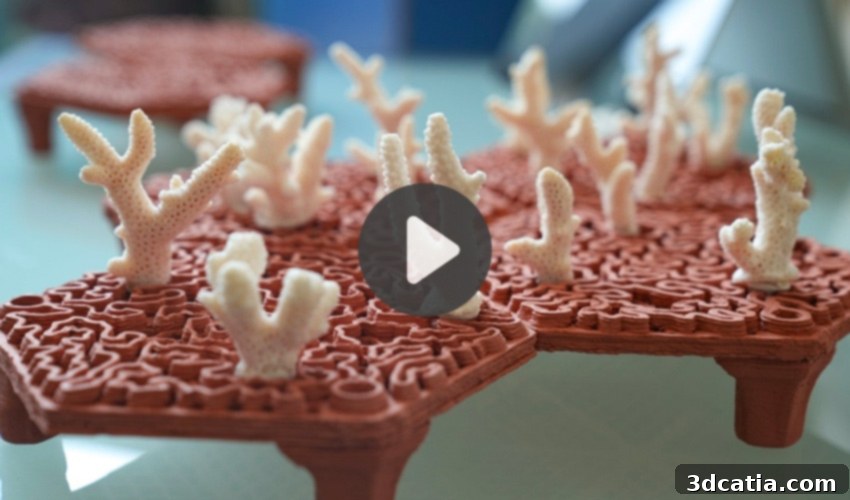
Our first spotlight illuminates a critical environmental challenge and a remarkable solution: the use of 3D printing to save our planet’s endangered coral reefs. These vibrant underwater ecosystems are not only some of the most ancient and biodiverse habitats on Earth but also crucial for marine life, providing food and shelter for a quarter of all ocean species, and acting as natural barriers against coastal erosion. Unfortunately, they face unprecedented threats from climate change, ocean acidification, pollution, and unsustainable human activities, leading to widespread degradation, coral bleaching, and potential extinction. This video showcases vital initiatives that leverage additive manufacturing to combat these devastating effects, offering a beacon of hope for marine biodiversity.
We delve into innovative projects, such as archiREEF’s deployment of 3D printed terracotta reefs in Hong Kong. These structures are meticulously designed to mimic natural coral formations, providing stable substrates for coral polyps to attach and grow. The customizability offered by 3D printing allows for complex geometries that enhance biodiversity and improve water flow, essential for healthy reef development. The use of sustainable materials like terracotta further amplifies the ecological benefits. Another inspiring collaboration highlighted is between Ørsted and the WWF, who have successfully deployed 50 large-scale 3D printed reef structures in the North Sea. These artificial reefs are part of a broader strategy to restore marine ecosystems, offering new habitats for various species like mussels and crabs, and contributing to the overall health and resilience of our oceans. The precision, scalability, and adaptability of 3D printing are proving to be game-changers in ecological restoration, providing hope for the future of these invaluable natural wonders. This application profoundly underscores the power of technology in addressing some of our planet’s most urgent environmental crises and fostering a more sustainable future.
2. Transforming Infrastructure: 3D Printing in Construction and Transportation
Our second featured video explores the profound impact of 3D printing technology on the construction industry, with a particular focus on the innovative production of concrete culverts and its broader implications for transportation infrastructure. Traditional construction methods for complex concrete structures can be time-consuming, labor-intensive, generate significant waste, and often limit design possibilities due to formwork constraints. Additive manufacturing offers a revolutionary alternative, promising increased efficiency, reduced material usage, enhanced structural performance, and greater design flexibility, fundamentally reshaping how we build.
In this insightful presentation, Alireza Hasani from the University of North Dakota meticulously discusses the evolving landscape of concrete 3D printing. He addresses the significant challenges and specific requirements involved in integrating this cutting-edge technology into mainstream construction practices, covering aspects such as material science, robotic control, and regulatory compliance. Hasani shares invaluable insights derived from his recent work, detailing the precise specifications and performance characteristics of 3D printed concrete pipes. These pipes, often used as culverts for drainage, utility conduits, or pedestrian underpasses, benefit immensely from the ability of 3D printing to create intricate internal structures that optimize strength, durability, and hydraulic flow. Beyond culverts, he emphasizes the vast potential practical applications of 3D printing technology in enhancing transportation infrastructure, from rapidly constructing pedestrian bridges and modular tunnel segments to creating customized road elements and even entire small structures. The ability to rapidly produce complex, durable, and cost-effective concrete components, either on-site with mobile printers or in prefabrication facilities, marks a significant leap forward, paving the way for more sustainable, resilient, and efficient urban development and connectivity across the globe.
3. The Future of Food: Real vs. 3D Printed Beef Taste-Test Challenge
Prepare for a truly unique culinary adventure as our third video brings a fascinating taste test involving members of the renowned Crystal Palace football team. This challenge puts their palates to the ultimate test: can they distinguish between traditional, real beef and innovative 3D printed plant-based beef? As the world increasingly seeks sustainable, ethical, and healthier food alternatives, 3D printing is emerging as a powerful tool in the food industry. This technology is capable of creating intricate food structures, particularly meat analogues, with remarkably similar textures, appearances, and even nutritional profiles to conventional meat, pushing the boundaries of what’s possible in gastronomy and sustainable eating.
The video takes us into the sophisticated setting of the 2010 Lounge at the stadium, where an experienced chef introduces an intriguing array of dishes. Alongside classic beef preparations, players are presented with a 3D printed flank steak – a testament to how far food technology has advanced. This plant-based creation is meticulously engineered to replicate the fibrous texture, juicy mouthfeel, and rich flavor profile of real meat, challenging perceptions and expectations about what future meals could entail. This experiment is not just a fun taste test; it highlights the growing trend of personalized nutrition, the potential for 3D printing to address global food security issues, and the critical need to reduce the environmental impact of traditional livestock farming. As players sample, deliberate, and offer their candid opinions, viewers get a firsthand look at the sensory experience of next-generation food. This engaging challenge underscores the innovative strides being made in creating delicious, sustainable, and ethical alternatives for our plates, showcasing how additive manufacturing is not only for industrial applications but also for the most intimate human experiences – our meals. Watch to see if these seasoned athletes, known for their discerning tastes, can truly tell the difference!
4. Building the Future: ICON’s Vision for 3D Printed Housing on Earth and the Moon
Our fourth video offers an inspiring and comprehensive look into the ambitious world of ICON, the Austin-based 3D printing construction company that is rapidly reshaping the future of housing. Featured in an insightful video by Real Ezy, ICON’s journey since its inception in 2017 has been nothing short of extraordinary, having successfully raised over $260 million to fuel its groundbreaking projects. This substantial investment underscores the confidence investors have in ICON’s revolutionary approach to home building, which directly addresses critical challenges like housing affordability, speed of construction, and the urgent need for sustainable living solutions.
ICON’s aspirations extend far beyond conventional limits. The company not only aims to construct the world’s largest 3D-printed homes right here on Earth, demonstrating the unparalleled scalability, structural integrity, and architectural versatility of their proprietary Vulcan construction system, but also harbors visionary plans to establish human habitats on the Moon. This audacious goal, pursued in partnership with NASA and various other space agencies, highlights the robustness, reliability, and adaptability required for off-world construction, positioning 3D printing as an indispensable technology for future space exploration and colonization. The video provides an in-depth exploration of ICON’s ambitious long-term objectives, revealing how they intend to achieve their vision of making dignified, resilient, and energy-efficient housing accessible to everyone, everywhere – from rapidly deployable solutions for underserved communities on Earth to creating permanent, self-sustaining structures on lunar landscapes. By combining advanced robotics, proprietary high-performance materials like Lavacrete, and innovative architectural design, ICON is pioneering a new era of architecture and construction, proving that the sky is not the limit when it comes to the transformative power of additive manufacturing.
5. Bringing Art to Life: From Drawings to 3D Printed Sculptures
Concluding our top five list is a truly heartwarming and artistically inspiring video by Morphiz, which beautifully illustrates the transformative power of 3D printing in the realm of art. This captivating showcase demonstrates a magical process: converting simple two-dimensional drawings and paintings – particularly those cherished, often whimsical, creations from children – into tangible, three-dimensional sculptures. It effortlessly bridges the gap between imagination and physical reality, allowing artists of all ages and skill levels to see their unique visions take on new, captivating forms, fostering creativity and a deeper connection to their artwork.
The video details the straightforward yet profoundly powerful workflow involved: beginning with the careful 3D scanning of an original drawing or painting. This step accurately digitizes the artwork, capturing its unique lines, contours, and even subtle textures. This digital file is then meticulously prepared for 3D printing using specialized software, which translates the 2D image into a printable 3D model, adding depth and volume. Finally, a 3D printer builds the sculpture layer by layer, patiently transforming digital data into a captivating physical object. This innovative application not only offers a fantastic and engaging way for young artists to interact more deeply with their creations, turning their doodles and drawings into treasured keepsakes that can be held and admired, but also provides a powerful tool for adult artists to experiment with new mediums and realize complex designs that would be challenging or impossible to achieve with traditional sculpting methods. It highlights how 3D scanning and 3D printing technologies democratize artistic creation, making advanced fabrication accessible to a broader audience and opening up endless possibilities for breathing new life into artwork. This process truly makes art pop off the page, inviting a new level of tangible interaction and appreciation for creative expression.
As we conclude this week’s showcase of groundbreaking 3D printing news, it’s clearer than ever that additive manufacturing continues to push the boundaries of innovation across a multitude of sectors. From safeguarding our delicate marine ecosystems with artificial coral reefs to building the homes of tomorrow both on Earth and beyond, and even redefining culinary experiences and artistic expression, the versatility, sustainability, and profound impact of 3D printing are undeniable. Each video presented here serves as a powerful testament to human ingenuity and the transformative potential of advanced manufacturing technologies to solve complex problems and envision entirely new possibilities for our world.
Which of these incredible applications resonated with you the most this week? Were you particularly inspired by the ecological efforts of archiREEF in preserving marine life, or perhaps captivated by the futuristic vision of ICON’s lunar housing and its implications for human expansion? Maybe the innovative approach to sustainable food or the artistic freedom offered by 3D printed sculptures caught your attention. We’d love to hear your thoughts and insights! Share your comments below or engage with us on our social media platforms: LinkedIn, Facebook, and Twitter. Don’t miss out on the latest updates and breakthroughs from the dynamic world of additive manufacturing – sign up for our free weekly Newsletter here to receive top 3D printing news directly in your inbox. You can also explore all our featured videos and many more inspiring examples of innovation on our dedicated YouTube channel. Stay tuned for more innovations shaping our future!