
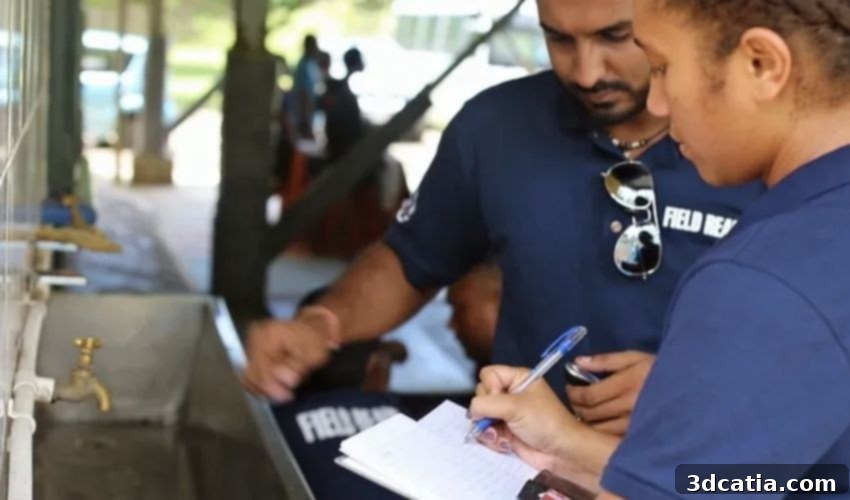
Empowering Humanitarian Action: How 3D Printing is Revolutionizing Nonprofit Operations Globally
Across the globe, approximately 10 million nonprofit organizations tirelessly work towards altruistic and humanitarian causes. In the United States alone, over 1.5 million registered 501(c)(3) organizations range from small, community-focused grassroots groups to vast, multinational programs with operations spanning continents. These organizations assume diverse forms and roles, adapting to the specific needs of their environments. Their sectors are incredibly varied, encompassing everything from advocacy, food security, and medical assistance, to legal aid. Even within the rapidly evolving world of additive manufacturing, nonprofits are making significant inroads, such as in the construction sector, where 3D printing is utilized to create homes and schools, often facilitated by innovative nonprofit organizations.
Nonprofit organizations are indispensable pillars in countless communities worldwide, playing pivotal roles where governmental and for-profit entities have often fallen short. However, by their very nature and name, nonprofits frequently operate under stringent budget constraints, relying on small teams of dedicated individuals and volunteers. A 2022 report by Fitch Ratings starkly revealed that nonprofit healthcare organizations managed an operating margin of a mere 0.2%. This razor-thin financial balance means these organizations are constantly challenged to secure the necessary resources to fulfill their critical missions. This is where 3D printing, or additive manufacturing, emerges as a game-changer. This versatile technology brings a wide array of benefits, including significantly lower production costs, reduced demand for specialized staff and extensive training, and the invaluable ability to create items on-demand. This capability effectively mitigates the constant struggle between shortage and excess inventory, while simultaneously eliminating numerous logistics and supply chain barriers, and dramatically lowering operating costs in terms of both materials and energy consumption.
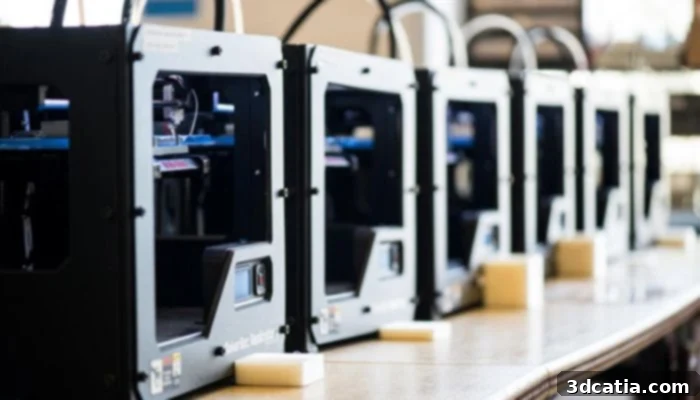
3D printing has been providing innovative solutions that increase productivity and decrease costs.
The Transformative Potential of Additive Manufacturing for Nonprofits
The potential for 3D printing technology to revolutionize the nonprofit sector is immense, offering solutions that are both cost-effective and of high quality. This innovation promises to dramatically increase the effectiveness and capacity of nonprofits globally. We are already witnessing the emergence of numerous 3D printing-based nonprofits across various industries. It is from these pioneering professionals that we can gain profound insights into the real-world impact of 3D printing in humanitarian efforts, understanding its tangible benefits, identifying areas for further improvement, and comprehending their expert visions for the future trajectory of this technology within the nonprofit landscape. Throughout this comprehensive article, we will delve into the diverse applications of 3D printing in nonprofits, drawing upon the experiences and perspectives of those who actively utilize these technologies. Our goal is to foster a deeper understanding of 3D printing’s significant potential as a powerful means to enhance and expand humanitarian aid efforts around the world.
Providing Accessible 3D Printed Prosthetics
One of the earliest and most impactful applications of additive manufacturing (AM) within the nonprofit sphere has been in the provision of accessible prosthetics. This area highlights a significant success story for 3D printing. A 2022 market report indicated that conventionally manufactured prosthetics can impose an out-of-pocket cost ranging from $1,500 to $8,000. In stark contrast, a 3D printed prosthetic fulfilling the same functional role can cost as little as $50. This staggering cost reduction, combined with continuous advancements in 3D printing materials, particularly with high-performance polymers, means that 3D printed prosthetics can now be more durable and long-lasting, all while remaining a mere fraction of the traditional cost. This accessibility is a game-changer for individuals who would otherwise be unable to afford such vital devices.
The success story began with pioneering initiatives like the Robohand project, one of the foundational programs where the future founders of e-NABLE collaborated with 3D printer manufacturer MakerBot. Their partnership focused on developing and freely sharing 3D printed prosthetic models, effectively opening numerous doors and revealing the profound potential of 3D printing to make a tangible difference. A key advantage here is accessibility. The inherent capabilities of 3D printing for local, decentralized production have proven particularly transformative in regions with limited access to consistent medical supplies, such as active war zones or remote communities. This technology allows for the rapid production of crucial medical aids, bypassing complex supply chains and logistical hurdles.
Today, nonprofit organizations specializing in 3D-printed prosthetics constitute a substantial segment of nonprofits leveraging additive manufacturing. Their work extends from conflict zones like Ukraine, where nonprofits utilize 3D printing to assist soldiers and civilian victims of conflict, to providing vital community assistance across the United States and beyond. The combination of significantly reduced costs, unparalleled design freedom, extensive customization options, and a broad range of material choices quickly propelled prosthetics into the spotlight as a prime application for additive manufacturing in nonprofit work. This capability to tailor devices precisely to individual needs at an affordable price point is revolutionizing care.
Dr. Albert Manero, Executive Director of the Orlando-based nonprofit Limbitless Solutions, encapsulates this sentiment, explaining, “3D printing is a valuable tool for prototyping design ideas quickly which accelerates project development. […] 3D printed parts when optimized have been able to perform at a high level.” His statement underscores that 3D printing can not only match but often surpass the performance of traditionally manufactured counterparts. It also illustrates how the broader trends within the AM market directly influence production methodologies even within nonprofit organizations. Dr. Manero further elaborates on Limbitless Solutions’ long-standing commitment to the technology: “Limbitless Solutions has been using 3D printing as a tool in our design process since day 1. We are using this for not only final parts, but also for molding prototyping and as a positive die for thermo-vacuum forming.” This demonstrates the versatility of 3D printing throughout the entire product development lifecycle, from initial concept to final production.
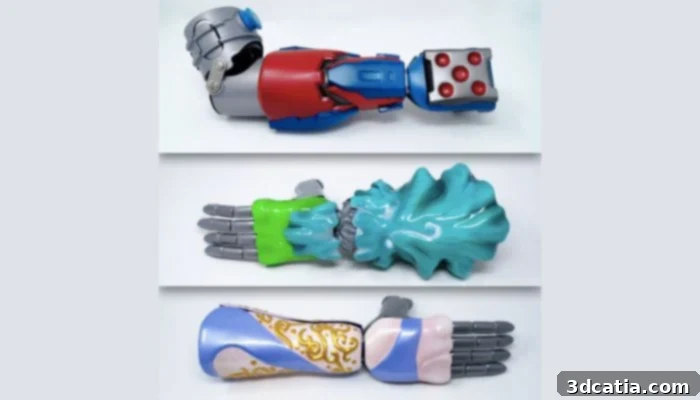
3D printed prosthetics can help provide children with more accessibility at a fraction of the cost. (Photo credits: Limbitless Solutions)
Streamlining Operations and Fostering Local Innovation
Simplifying and Streamlining Medical Device Production
While prosthetics represent a significant application, they are, of course, just one piece of the expansive puzzle that defines the intersection of 3D printing and nonprofits. As 3D printing technology continues its relentless evolution, the opportunities for its expansion have dramatically increased globally. Organizations are increasingly capitalizing on its capabilities for rapid prototyping and breakthrough design solutions. These solutions find applications across incredibly diverse areas. This ranges from meeting the urgent demand for prosthetics and 3D printed medical equipment in critical environments like warzones, to broader process streamlining and simplification efforts. The ultimate goal, as evidenced by pioneering research conducted at Loughborough University, is to enable the complete 3D printing of complex medical devices, such as prosthetic sockets, from the comfort of one’s home. Beyond prosthetics, 3D printing nonprofit organizations have actively utilized the technology to manufacture a variety of essential medical items, including pediatric hearing aids (as seen with 3DP4ME), first aid equipment, and for critical prototyping purposes in educational and medical research. This broad utility underscores the technology’s versatile impact on healthcare access.
Leveraging Open-Source Designs and Local Production
The benefits of 3D printing extend far beyond a single product. The predominantly online, and often free or open-source nature of many 3D printing and ‘maker’ designs means that digital files can be accessed and printed on-demand virtually anywhere in the world. This decentralized model is powerfully exemplified by organizations like Glia, which harnesses open-source designs. These designs can be freely accessed, modified, and continuously improved upon by a global community of innovators, all without incurring prohibitive extra costs or restrictive access barriers. While Glia technically operates as a social enterprise rather than a traditional nonprofit, its operational philosophy and objectives are remarkably similar, and it directly addresses the same humanitarian needs. Therefore, their valuable insights are essential to understanding the full scope of 3D printing’s impact in this field.
The team from Glia shared their perspective, noting that “The accessibility and affordability of desktop 3D printers and filament make them portable and energy efficient. […] 3D printing provides the unique ability to swiftly pivot between different products, or multiple items can be printed simultaneously, addressing specific or urgent needs. The concept of printing on demand eliminates the need for mass production and inventory storage (and associated costs), streamlining the production process and facilitating a rapid response with shorter turnaround times.” This highlights not only the efficiency gained on the production side of 3D printing but also the significant improvements in human resource management and operational agility. The ease of deploying and using these systems in diverse environments empowers teams to respond more effectively to crises.
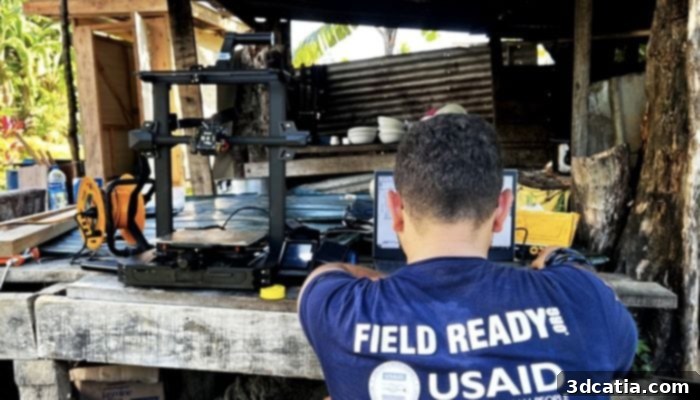
Field Ready has made use of 3D printing in areas around the world, such as in the South Pacific. (Photo credits: Field Ready)
Expanding on the human element, Glia’s team explains, “Operating a 3D printer requires minimal training, making it an ideal technology for incorporation in various environments. This ease of use enhances the adaptability of 3D printing technology within nonprofit organizations, enabling them to leverage its benefits without extensive training requirements.” This low barrier to entry for operation means that local communities and volunteers can be quickly trained to produce essential items, decentralizing production and increasing resilience.
While achieving the colossal production volumes characteristic of industrial additive manufacturing might still be a future aspiration for many nonprofit field operations, 3D printing has unequivocally demonstrated its effectiveness and convenience for on-site deployment. Dr. Eric James of Field Ready further corroborates this, stating, “3D printing is an incredibly versatile and flexible tool that works well where there is complexity and only a small number of items are needed. The relatively low cost and ease of use has made [it] a transformational tool.” This adaptability makes it perfect for dynamic and often unpredictable humanitarian contexts, where tailored solutions for specific, urgent needs are paramount.
3D Printing Helps Nonprofits Help Others
Field Ready stands as another exemplary nonprofit organization harnessing 3D printing technology to create prototypes and produce small-batch items directly in disaster-stricken areas. Their extensive repertoire of 3D printed solutions is tailored to meet the diverse needs of the communities they serve, encompassing everything from essential medical supplies and sanitation stations to educational toys and supporting new 3D printing business ventures. Similar to 3D printed prosthetics, items produced via additive manufacturing offer significant advantages over traditional materials and production methods in terms of cost-effectiveness, local availability, and operational simplicity, all while maintaining high standards of quality and durability. This ability to rapidly deploy and customize solutions on the ground is invaluable.
Glia, too, provides innovative solutions through its 3D printed tourniquets and stethoscope components. They have observed fascinating results with their approach: “[We have] purposefully adopted a self-assembly model for our stethoscope. Over time, we’ve observed that individuals who actively participate in the assembly process, such as putting together their very own stethoscope, develop a more intimate connection with their device. While there may be initial skepticism by many, thinking that a kit of 3D printed plastic parts would yield an inferior product, users frequently [realize] that plastic components and affordable prices do not necessitate a compromise in quality.” This unique self-assembly model fosters ownership and demonstrates that affordable, 3D printed components can deliver exceptional performance, challenging preconceived notions about material quality.
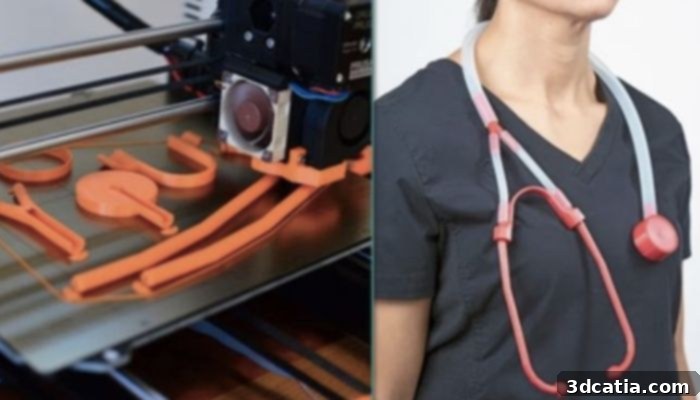
Components for a 3D printed stethoscope (Photo credits: Glia)
The role of 3D printing in nonprofits extends beyond mere production; it also encompasses a profound aspect that truly reflects the humanitarian ethos of the organizations employing it. In a previous interview with 3Dnatives, Dr. Eric James, Executive Director of Field Ready, articulated his organization’s commitment to “humanitarian making.” This concept involves actively cultivating an environment where individuals and organizations are empowered to improve local manufacturing capabilities, enhance disaster response mechanisms, build community resilience, promote inclusiveness, and ultimately strengthen the community fabric. It’s about more than just making things; it’s about making communities more self-sufficient and capable.
The ambitious task of developing a robust cadre of professionals and organizations well-versed in 3D printing and adept at meeting the nuanced needs of nonprofit work can be challenging. However, expanding awareness of this transformative technology is absolutely critical for its sustained and growing impact. As Dr. James lucidly explains, “There remains relatively little knowledge about 3D printing. Most people who are not involved in making/fabrication do not know about the capabilities and utility of this technology. We try to educate people and communicate that this is a useful tool in the contexts in which we provide aid.” This highlights a significant educational gap that needs to be addressed for broader adoption.
The aspect of cooperation and collaboration stands as one of the most potent advantages that nonprofits possess. Organizations that unite to share valuable information, resources, and expertise often benefit from an amplified reach, a deeper pool of collective experience, and a more profound expert understanding of the technology, the people they serve, and the environmental contexts in which they operate. While numerous examples of non-3D printing-related nonprofit networks exist, it is truly exciting to witness the same possibilities beginning to materialize and flourish within the 3D printing sphere. The Glia team emphasizes this synergy: “Openness fosters international collaboration,” they explain. “sharing knowledge and fostering collaboration represents a noteworthy achievement in the dynamic intersection of 3D printing, open-source initiatives, and nonprofit endeavors.” This collaborative spirit is essential for accelerating innovation and impact.
Navigating Challenges and Building a Resilient Future
Addressing Hurdles to Widespread Adoption
While the future undoubtedly holds many exciting advancements for additive manufacturing and its applications within the nonprofit field, several significant barriers still need to be addressed. Once these hurdles are cleared, they could substantially accelerate the adoption and global advancement of this technology. The most critical point to bear in mind is that the integration of 3D printing into nonprofit operations is still a relatively nascent field, requiring more time, increased awareness, and focused effort to fully develop its immense potential.
As Dr. James astutely points out, “While there is a technical issue with 3D printing simply not being ubiquitous or as easy to use as some had predicted, there are also institutional barriers. There is a bias toward centralized supply chains which presents a significant challenge to localization.” This ingrained bias towards centralized supply chains poses the greatest challenge, particularly for remote deployments where access to further resources and specialized support can be exceedingly difficult to obtain. Enhanced training programs and a broader proliferation of accurate information can certainly help mitigate this issue, but it will undeniably require more time and concerted effort to achieve the level of acceptance and mainstream integration currently enjoyed by traditional methods of production.
The Glia team faces a similar challenge, as they actively strive to overcome the prevailing stigma associated with plastic components, especially in discussions surrounding environmental sustainability. They elaborate, “One of the most significant challenges that we encounter – the prevailing stigma surrounding plastics – as it’s often perceived as cheap and disposable. Overcoming this misconception is crucial, as it hinders the acceptance of 3D-printed medical devices. While acknowledging the environmental concerns related to single-use plastics, we emphasize that plastics, when used responsibly, can contribute to positive outcomes. Clinical testing demonstrates the performance of 3D-printed products, while physical testing underscores their quality and durability. Through these efforts, we actively engage in public education promoting a “good vs. evil” use of plastics model, aiming to shift perceptions and garner acceptance within the community, ultimately dispelling the notion of plastics as inherently negative and disposable.” This highlights a critical need for education, particularly in demonstrating that within the 3D printing industry, there is a growing body of knowledge about the environmental impact and responsible use of various polymers, filaments, and other 3D printing materials. It’s about informed choices, not outright rejection.
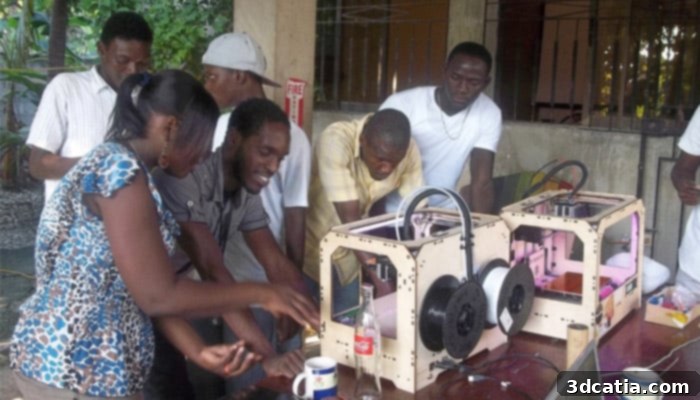
Awareness, training, and education are important steps toward building networks of 3D printing in communities around the world. (Photo credits: Field Ready)
Ultimately, the concerted efforts in education and raising awareness will prove most beneficial in championing the widespread adoption of 3D printing within the nonprofit industry and in forging international consensus around its utility. Even within Field Ready’s pioneering ‘humanitarian making’ initiatives, Dr. James candidly describes the magnitude of the task: “Field Ready is a pioneer in this area and has worked hard to bring groups and interests together. A number of our initiatives have contributed to wider efforts while we strive to be a good partner to others. One of the challenges is that humanitarian making represents a real hybrid area which has not reached is full potential. Each partnership is part of a wider effort move this transformational approach toward mainstream use.” Despite these persistent challenges, he maintains a remarkably optimistic outlook, concluding, “Improvements are showing the potential coming through as the years have progressed.” This forward momentum is encouraging for the entire sector.
The Glia team also shares a profoundly positive outlook concerning the future trajectory of the industry: “we’ve witnessed a growing interest from others exploring our business model and seeking to replicate it in different locations around the world. […] a grassroots movement is spreading the word about our vision, mission, and the quality and potential of well-designed and implemented 3D printed products. This evolving perspective is leading to increased acceptance of this production method over traditional approaches.” This organic spread of interest and knowledge signifies a powerful shift towards embracing innovative manufacturing methods.
The Future Landscape of 3D Printing in Humanitarian Aid
Vision for Growth and Enhanced Global Impact
The future of additive manufacturing is already brimming with promises of groundbreaking breakthroughs across numerous industries, including advanced medical bioprinting, innovative materials science, and even microscopic construction. This industry-wide innovation is distinctly mirrored within the nonprofit sector that strategically employs these 3D printing technologies. One of the most frequently recurring observations we received from experts is about the substantial growth and maturation of the 3D printing nonprofit field as a whole. New developments are continually expanding the operational capacities of existing organizations while simultaneously empowering professionals in the field to further refine and advance their technical skills. “Quality and consistency are two factors of priority,” remarks Dr. Manero, emphasizing the ongoing drive for excellence.
The team from Glia, meanwhile, outlines their ambitious goals for future growth and impact: “We are committed to leveraging our expertise to broaden our humanitarian impact, particularly by advancing internally from basic to more advanced medical devices. This progression represents a significant milestone, as it facilitates the accessibility of complex diagnostic and treatment equipment in low- to middle-income regions globally.” This vision underscores a strategic shift towards addressing more complex healthcare needs, ensuring that even the most advanced tools become available where they are most desperately needed.
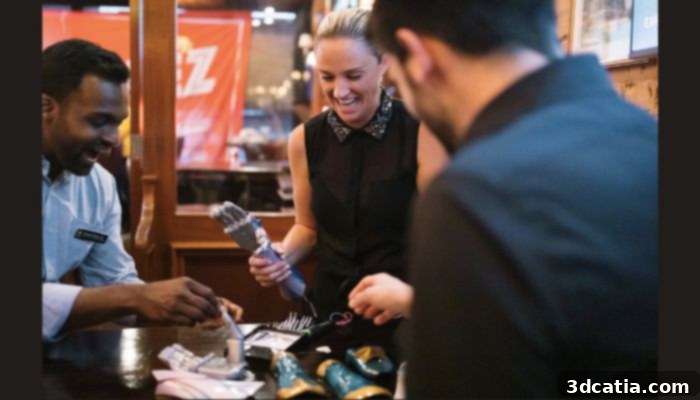
Quality and consistency will remain drivers that push the services that 3D printing nonprofits provide. (Photo credits: Limbitless Solutions)
An additional and particularly interesting factor to consider when utilizing 3D printing technology within nonprofit organizations is the inherent ability to service and make repairs privately, often without the need to call upon expensive company technicians or rely exclusively on licensed, proprietary products. This concept is widely known as the ‘Right to Repair’. It’s a hotly debated topic between manufacturers and consumers across the entire spectrum of technology, and 3D printing is no exception. While this proposal is currently up for debate in governments worldwide, it is undeniable that such a right would prove invaluable to nonprofits operating on already slim budgets, offering them greater autonomy and cost savings.
Glia articulates their keen interest in this crucial issue: “This [Right to Repair] movement prioritizes repair over replacement, aiming to enhance the affordability of repairs, leading to a more sustainable economy and waste reduction. Glia is actively participating in a project aligned with this movement, focusing on restoring inoperable and obsolete medical equipment for which replacement components are simply unavailable. […] Locally designed and manufactured replacement components, often utilizing 3D design software and 3D printers, breathe new life into crucial equipment in regions where easy access to such resources is a luxury. This trend extends beyond healthcare, showcasing the potential for 3D printing to play a vital role in various sectors within lower-income regions worldwide serviced by nonprofit organizations.” This demonstrates how 3D printing can directly contribute to a circular economy model within humanitarian aid.
Considering the overall trajectory of the additive manufacturing industry, there is a palpable sense of optimism surrounding the use of 3D printing as a powerful force for good. It holds the potential to address some of the most pressing needs and challenges that people face in their daily lives across the globe. We can already observe the tangible efficacy that comes with purposeful 3D printing, especially when driven by a humanitarian mission. Thanks to the pioneering efforts of innovative organizations, we can confidently envision a future where 3D printing empowers individuals and communities worldwide to access the critical help and resources they need, precisely when they need them most, transforming the landscape of global aid and self-sufficiency.
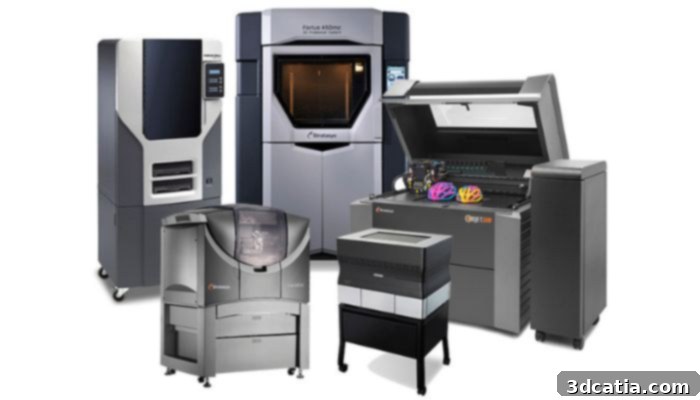
As additive manufacturing technology advances, so do the potential uses for 3D printing in nonprofits.
For more in-depth information about the various organizations highlighted in this article, we encourage you to visit their respective websites. There you can learn more about their vital operations, discover ways to contribute through donations, and explore the specific technologies they employ to make a difference. What are your thoughts on the evolving role of 3D printing in humanitarian work? How do you foresee the industry continuing to change and adapt in the coming years? We invite you to share your insights in a comment below or connect with us on our LinkedIn, Facebook, and Twitter pages! Don’t miss out on the latest 3D printing news; sign up for our free weekly Newsletter here, delivered directly to your inbox! You can also find all our engaging videos on our YouTube channel.
*Cover photo credits: Field Ready