
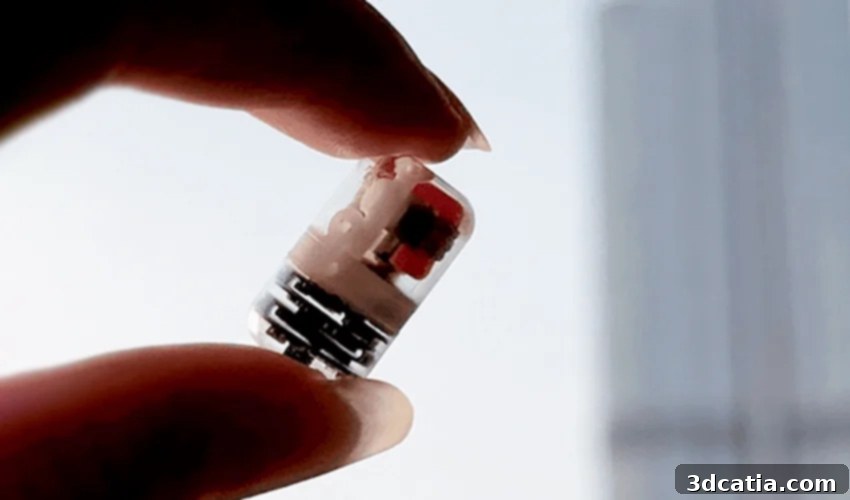
PillBot and Beyond: How Endiatx is Revolutionizing Gastrointestinal Diagnostics with Medical 3D Printing
The rapid evolution of medical 3D printing continues to reshape the landscape of healthcare, enabling groundbreaking innovations across numerous applications. This advanced manufacturing method, celebrated for its unparalleled customization capabilities and remarkable production speed, offers a myriad of advantages within the healthcare sector. Specifically, additive manufacturing presents transformative potential for the diagnosis and treatment of gastrointestinal and stomach diseases. A pioneering startup at the forefront of this revolution is Endiatx, which has developed the PillBot – an ingenious 3D-printed motorized robotic pill designed to autonomously diagnose gastrointestinal conditions. We recently engaged with the Endiatx team to delve deeper into this innovative solution and uncover how additive manufacturing has been instrumental in bringing this vision to life.
Meet Thomas Silva: Driving Innovation with Additive Manufacturing at Endiatx
Thomas Silva, the Manufacturing Manager at Endiatx, shares his journey and profound connection with 3D printing. “3D printing technologies have always held a deep fascination for me,” he explains. “However, it wasn’t until my university years that I truly had the opportunity to explore them in a practical, hands-on manner.” During his academic pursuits, Silva gained access to a diverse array of additive manufacturing machines, ranging from accessible FDM (Fused Deposition Modeling) 3D printers to high-precision SLA (Stereolithography) 3D printers. This invaluable exposure allowed him to develop a comprehensive understanding of both the immense advantages and the inherent limitations across various additive manufacturing technologies.
As he transitioned from academia into the industrial sector, the role of 3D printing took on an entirely new significance. “Initially, it was primarily seen as a simple rapid prototyping tool,” Silva notes. “But in an industrial context, it rapidly evolved into an indispensable process for manufacturing critical components for our end products.” Today, 3D printing isn’t just a supplementary tool; it’s a fundamental pillar of Endiatx’s operations, continually driving innovation, enhancing efficiency, and enabling the creation of devices previously considered impossible. Silva’s expertise in leveraging these advanced manufacturing techniques is crucial to Endiatx’s mission of miniaturizing medical diagnostics.

Thomas Silva with the PillBot
Endiatx: Pioneering Microrobotics for Human Health
Endiatx, a dynamic startup nestled in the heart of Silicon Valley, is dedicated to bringing the revolutionary potential of microrobotics directly into the human body. The company was born from the collective vision of a group of highly creative individuals and accomplished inventors who shared a common goal: to combine their diverse skills and expertise to forge innovative technology that would create a tangible, positive impact on the lives of people globally. The inspiration for their audacious venture stemmed partly from classic science fiction films, such as the iconic 1987 movie “Innerspace,” which vividly depicted tiny robots operating within the intricate confines of the human body. This vision ignited a spark, representing an exciting yet profoundly challenging technological frontier that Endiatx was determined to explore.
“We set out with a clear mission,” states Silva, “to transform this science-fiction vision into a medical reality and fundamentally revolutionize the way gastrointestinal diseases are diagnosed and subsequently treated.” Traditional diagnostic methods for the gastrointestinal tract often involve invasive procedures that can be uncomfortable, costly, and require specialized medical facilities. Endiatx recognized a significant unmet need for a less invasive, more accessible, and patient-friendly diagnostic solution. Their audacious goal was to develop a miniature robotic device capable of navigating the complex internal environment of the human body, providing unprecedented diagnostic capabilities without the need for traditional endoscopy. This ambitious pursuit has driven Endiatx to push the boundaries of microrobotics and additive manufacturing.
PillBot: A Revolutionary Approach to Gastrointestinal Diagnostics
How the PillBot Works: A “Mobile Eyeball” for the Stomach
At the core of Endiatx’s innovation is the PillBot, an extraordinary virtual endoscopy device aptly described as a “mobile eyeball in the stomach.” This sophisticated pill-shaped camera is designed to be easily swallowed by patients, offering a non-invasive and highly convenient method for obtaining critical diagnoses. The PillBot allows patients to receive comprehensive assessments from world-renowned gastrointestinal specialists without ever needing to leave the comfort of their own homes. Once ingested, the PillBot navigates the gastrointestinal tract, capturing high-resolution video and images of the internal organs. This data is then transmitted wirelessly to medical professionals, who can review the findings and provide accurate diagnoses remotely. This drastically reduces the need for traditional, often uncomfortable, endoscopic procedures, making diagnostic care more accessible and less stressful for patients.
The Role of SLA 3D Printing and Biocompatible Materials
The manufacturing process behind the PillBot is as innovative as the device itself. To produce the vast majority of the PillBot’s intricate components, Endiatx relies heavily on SLA (Stereolithography) 3D printing technology. SLA is a resin-based additive manufacturing process known for its exceptional precision, smooth surface finish, and ability to create highly detailed parts – all crucial factors for a miniature medical device that must operate within the human body. Endiatx specifically leverages Formlabs printers, which provide access to a wide spectrum of advanced materials. Among these are specialized biocompatible resins, which are absolutely essential for medical devices intended for internal use. Biocompatibility ensures that the materials do not provoke an adverse reaction from the body, preventing toxicity or rejection, and meeting stringent regulatory requirements for patient safety.
The precision offered by SLA allowed Endiatx to miniaturize the device effectively, incorporating tiny motors, cameras, and communication modules into a compact, swallowable form factor. Furthermore, the ability to rapidly iterate on designs with SLA was critical during the development phase, enabling quick testing and refinement of the PillBot’s various components. The smooth finish inherent to SLA parts also helps to minimize potential irritation during transit through the digestive system, contributing to patient comfort and safety. This combination of precision, material versatility, and rapid iteration capabilities made SLA 3D printing the ideal choice for bringing the PillBot from concept to a tangible, life-changing device.

The PillBot can be swallowed to diagnose gastric diseases.
Unlocking Unprecedented Advantages: 3D Printing in the Medical Sector
The utilization of 3D printing extends numerous advantages across various industries, including its well-documented benefits in rapid prototyping and the convenience offered by compact, accessible printers. This technology proved invaluable for Endiatx, allowing them to swiftly develop initial prototypes, even enabling engineers to conduct significant development work from their homes during the early stages.
However, in the highly specialized medical sector, the principal advantage of 3D printing lies profoundly in its unique ability to create incredibly complex geometries – designs that are often impossible to achieve through conventional manufacturing methods. The human body itself is an exceptionally intricate and dynamic system, demanding medical devices that can precisely conform to its unique architecture. While the stomach cavity is relatively large compared to other internal spaces, the PillBot still had to be meticulously designed to be remarkably small, ensuring it could be swallowed safely and navigate the digestive tract without obstruction or discomfort. Thanks to the unparalleled design freedom afforded by 3D printing, Endiatx was able to translate their sophisticated three-dimensional designs and digital models into physical reality. This capability was critical in ensuring that their devices not only functioned as intended but also met the exceptionally stringent requirements necessary for safe, effective, and compliant medical applications.
Beyond rapid prototyping and complex geometries, 3D printing offers several other transformative benefits for medical applications. It facilitates patient-specific customization, allowing devices, implants, and surgical guides to be tailored precisely to an individual’s unique anatomy, leading to improved outcomes and reduced complications. The ability to produce small batches or even single custom units cost-effectively is also a game-changer, moving away from mass production models that struggle with personalized medicine. Furthermore, the selection of advanced materials, including those with specific mechanical, biological, and thermal properties, is continually expanding, opening new avenues for innovative medical device development. This versatility in design, material choice, and production scale positions 3D printing as an indispensable tool for the future of healthcare.
The Road Ahead: Endiatx’s Vision for Future Medical Microrobots
The future appears exceptionally bright for Endiatx, brimming with ambitious projects and groundbreaking developments. “We are currently deep into the development of the PillBot 2,” Thomas Silva reveals, “which is engineered to be even more powerful, more precise, and significantly more accessible than our current groundbreaking model.” This next generation of the PillBot promises enhanced diagnostic capabilities, potentially faster navigation, and improved user experience. But Endiatx’s vision extends far beyond incremental improvements. They envisage a transformative future where their PillBots evolve from merely passive observers within the human body to active microsurgeons, capable of performing therapeutic interventions.
This monumental leap from diagnosis to active treatment represents a paradigm shift in medical microrobotics. Imagine tiny robotic devices capable of delivering targeted therapies, performing biopsies with unparalleled precision, or even excising diseased tissue without the need for traditional invasive surgery. To achieve this, Endiatx is actively exploring the possibility of creating even smaller, more sophisticated devices. This includes leveraging cutting-edge MEMS (Microelectromechanical Systems) technology, which involves manufacturing microscopic devices by merging silicon-based microelectronics with micro-machining technology. MEMS can create incredibly small mechanical parts, sensors, and actuators on a silicon chip, making truly miniature, highly functional robots a tangible possibility. This miniaturization and enhanced functionality could enable microrobots to combat extremely challenging diseases, such as hard-to-reach brain tumors, where traditional surgical approaches are often too risky or impossible. “The only limit is our imagination,” Silva emphasizes, “and with the cutting-edge tools and technologies at our disposal, we are not just dreaming; we are ready to turn these revolutionary applications into reality, pushing the boundaries of what is medically possible.”
The Future of Healthcare: Accessible, Effective, and Innovative
Endiatx’s Commitment to Advancing Patient Care
Looking to the horizon, it is unequivocally clear that the profound integration of 3D printing into the medical field is just beginning to unveil its full, transformative potential. At Endiatx, the team has already witnessed firsthand how this extraordinary technology can revolutionize the development and functionality of critical devices like their PillBot. It has empowered them to create complex, essential diagnostic tools that were once confined to the realm of science fiction, enabling unprecedented capabilities in a miniature form factor. However, beyond the sheer technical advancements and engineering marvels, what truly ignites their passion and excitement is the profound and lasting impact these innovations are poised to have on the lives of countless patients globally. These advancements promise safer, significantly more effective, and notably less invasive diagnostic and therapeutic options, drastically improving patient comfort and outcomes.
Endiatx remains steadfastly committed to relentlessly pushing the boundaries of what is considered possible in medical microrobotics and additive manufacturing. They eagerly anticipate continuing this thrilling adventure of innovation, driven by a desire to reshape healthcare for the better. Their ultimate goal is to make advanced healthcare solutions more accessible, more efficient, and ultimately more effective for everyone, regardless of geographical location or socioeconomic status. The dedication to this mission is palpable, and the potential for positive change is immense. “We sincerely thank you for your keen interest in our groundbreaking work,” Silva concludes, “and we eagerly look forward to sharing more exciting developments and milestones with you in the very near future as we continue our journey to revolutionize medical diagnostics and treatment.”
What are your thoughts on the groundbreaking technology being developed by Endiatx? We invite you to share your insights in a comment below or join the conversation on our LinkedIn, Facebook, and Twitter pages! Don’t miss out on the latest advancements and news in the world of 3D printing – be sure to sign up for our free weekly newsletter here to receive updates directly in your inbox. You can also explore all our informative and engaging videos on our dedicated YouTube channel.
*All Photo Credits: Endiatx