
Craft Your Own Sound: The Open-Source 3D Printed LEET Synthesizer Revolutionizes DIY Music
In an era where technology continues to democratize access to creative tools, the intersection of 3D printing and electronic music is yielding truly innovative projects. One such remarkable endeavor is the LEET Synthesizer, a groundbreaking open-source musical instrument designed by Swedish engineer Johan Von Konow. With a diverse background spanning mechanics, electronics, software, and industrial design, Von Konow channels his passion into developing accessible and engaging projects during his spare time. The LEET Synthesizer stands out as a testament to this philosophy: a fully modular and customizable electronic musical instrument that can be created directly at home using a 3D printer. What makes this project truly exceptional is its incredibly low cost – it can be built for as little as $6 – requiring only basic skills in soldering and programming embedded electronics. If you own an FDM 3D printer and have a passion for DIY electronics or music, this project offers an exciting opportunity to craft your very own sound machine.
The pervasive influence of 3D printing, or additive manufacturing, is undeniably reshaping industries across the spectrum, from aeronautics and automotive to product design and, increasingly, music. This transformative production method empowers enthusiasts and professionals alike to bring complex designs to life with unprecedented ease and cost-efficiency. In the realm of music, 3D printing technologies enable innovators to imagine more efficient instruments, design custom ergonomic solutions, or finely optimize acoustic properties and sounds as needed. It’s a versatile production method that can be seamlessly integrated into large-scale company production processes, yet it also thrives in recreational and educational settings right in our homes. Johan Von Konow exemplifies this versatility, leveraging a plastic material extrusion 3D printer to prototype and realize his numerous electronic projects, including the innovative LEET Synthesizer.
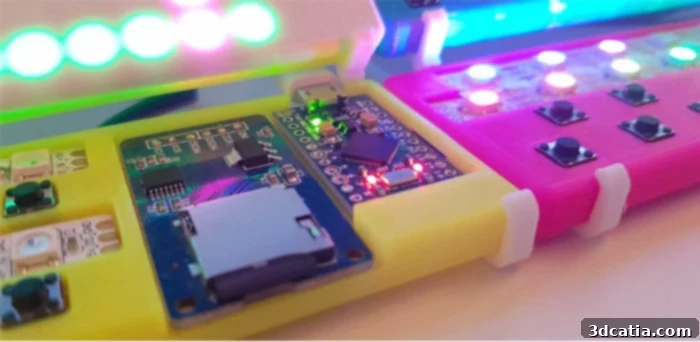
The synthesizer integrates several components to be placed in the 3D printed shell
Unveiling the LEET Synthesizer’s Ingenious Design and Construction
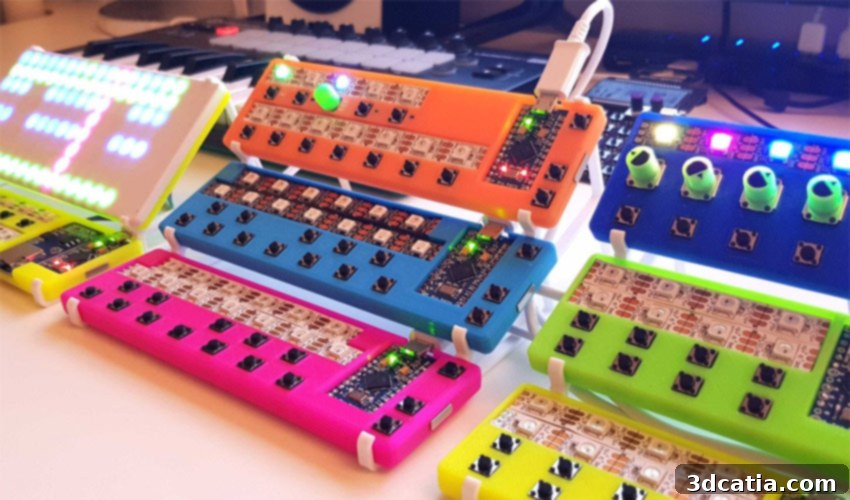
At its core, the LEET Synthesizer is ingeniously structured around a custom 3D printed shell. This shell serves as the robust housing for the printed circuit board (PCB) and all the individual electronic components, acting as the device’s central nervous system that holds everything securely in place. More than just a simple enclosure, the design incorporates carefully crafted channels and guides within its structure. These channels are crucial for neatly routing all the connecting wires, ensuring both the safety and reliability of the internal connections, preventing tangles, and minimizing the risk of short circuits. According to Johan Von Konow, this design ensures that the device is not only easily reproducible by anyone with a 3D printer but also remarkably inexpensive to manufacture. A significant advantage of this approach is that the 3D printed components, forming the physical backbone of the synthesizer, can be produced even before the electronic parts, such as the PCB, are received, streamlining the assembly process. Adding a vibrant visual dimension, each key on the synthesizer is equipped with its own RGB LED. These multi-color LEDs serve a dual purpose: they provide dynamic visual feedback during playback, enhancing the user experience, and more importantly, they can greatly facilitate music training by visually indicating notes, scales, or patterns, making learning both intuitive and engaging.
Technical Specifications and Essential Components for Your DIY Synth
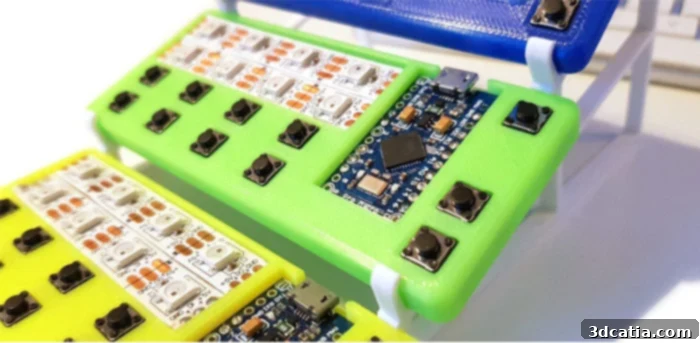
The LEET Synthesizer boasts compact dimensions, measuring a mere 154 x 45 x 8 mm, making it highly portable and ideal for on-the-go music creation. To embark on this exciting DIY project, you will require a specific set of components, readily available from electronics suppliers. These include an Arduino Pro Micro, which serves as the microcontroller brain of the device, 13 RGB LEDs to provide the visual feedback, and 15 tactile 6×6 switches for the musical keys. For the physical structure, a minimal 34 grams of PLA filament is needed – a common and user-friendly material for FDM 3D printers. Of course, the foundational tools for this project are a functional 3D printer (Johan used a reliable Prusa i3 for development) and a soldering iron to connect the electronic components. Von Konow describes his design philosophy, stating: “I designed the devices to be simplistic, solid and fun. The design could be described as retrofuturistic since they are inspired by computers from the 70s with lots of flashing lights like the PDP-10, but the addition of color LEDs and this 3D printed shell makes them futuristic at the same time.” This “retrofuturistic” aesthetic perfectly blends vintage computing charm with modern manufacturing capabilities and vibrant visual elements, creating an instrument that is both nostalgic and forward-thinking. The entire manufacturing process is surprisingly swift; the 3D printing phase takes a maximum of 4 hours, and the soldering work can be completed within approximately 2 hours, meaning you could have a functional synthesizer ready in a single afternoon.
Unleashing Creative Potential: MIDI Connectivity and Customization
Beyond its accessible construction, the LEET Synthesizer truly shines in its functionality, primarily leveraging MIDI (Musical Instrument Digital Interface) connections. This industry-standard protocol allows the LEET Synthesizer to function seamlessly as both an input and output device, integrating effortlessly into any modern music production setup. Users can connect it to virtually any computer equipped with a DAW (Digital Audio Workstation) – the software backbone of contemporary music creation. Its broad compatibility extends across major operating systems, including Windows, Mac, and Linux, and impressively, even mobile platforms like Android and iOS devices. This makes the LEET Synthesizer an ideal companion for portable music development and on-the-go creativity, enabling musicians to produce and experiment with sounds wherever inspiration strikes.
Johan Von Konow aptly compares the LEET Synthesizer project to a LEGO construction, emphasizing its inherent modularity and the immense creative freedom it offers. Just as with LEGO bricks, users are encouraged to combine and experiment with various components – microprocessors, LEDs, switches, and more – to tailor the instrument precisely to their needs and creative visions. This open-source philosophy isn’t just about building the basic model; it’s about empowering makers to innovate. For instance, advanced users might integrate light sensors for expressive control, add additional speakers for a more robust sound, or even design entirely new control interfaces. The possibilities for customization are vast, allowing individuals to truly create a unique instrument that reflects their personal musical style and technical aspirations. This flexibility transforms the LEET Synthesizer from a mere musical gadget into a powerful platform for learning, experimentation, and artistic expression within the ever-expanding maker community.
The Impact of Open-Source Hardware on Music and Maker Culture
The LEET Synthesizer is more than just a clever electronic project; it embodies the spirit and potential of open-source hardware. By making the design files, code, and instructions freely available, Johan Von Konow fosters a global community of makers, musicians, and educators. This open-source model encourages collaboration, allowing users to modify, improve, and share their versions of the synthesizer. Such an approach accelerates innovation, reduces entry barriers, and provides invaluable educational opportunities. Aspiring engineers can learn about embedded systems and circuit design, while musicians can gain a deeper understanding of how their instruments work, leading to more informed and creative use. This project serves as an excellent entry point into the world of DIY electronics and music technology, demonstrating that sophisticated tools don’t always come with a high price tag or a steep learning curve. It champions the idea that anyone, regardless of their budget or professional background, can be a creator and an innovator.
Furthermore, the accessibility of the LEET Synthesizer reinforces the growing “maker culture,” where individuals are empowered to build, modify, and repair their own products rather than relying solely on commercial offerings. This shift fosters a greater sense of ownership and understanding of the technology we use every day. In the context of music, this means a personalized instrument that is not just a tool but a reflection of the creator’s ingenuity. Imagine a music classroom where students not only learn to play a synthesizer but also understand the principles of its construction, from 3D printing the chassis to programming its functions. This integrated learning experience offers a holistic approach to music technology, bridging the gap between artistic expression and engineering principles. The LEET Synthesizer provides a tangible, affordable pathway to explore these exciting intersections.
Join the Movement: Build Your Own LEET Synthesizer Today!
The LEET Synthesizer stands as a shining example of how combining existing technologies like 3D printing with innovative design can lead to profoundly accessible and engaging creative tools. It’s an invitation to explore the fascinating world of DIY electronics and music production, offering a low-cost, high-reward project for hobbyists, educators, and musicians alike. The joy of creating your own instrument, coupled with the endless possibilities for customization and sound exploration, makes the LEET Synthesizer a must-try for anyone interested in the maker movement or electronic music.
Ready to dive into this exciting project? You can find comprehensive information about the LEET Synthesizer, including all the necessary manufacturing steps, files, and detailed instructions, by visiting Johan Von Konow’s official project page HERE. We encourage you to explore the resources and embark on your own journey of building a personalized musical instrument.
What are your thoughts on this incredible 3D printed Synthesizer project? Have you embarked on similar DIY electronic music endeavors? We’d love to hear from you! Share your insights and experiences in a comment below or join the conversation on our Facebook and Twitter pages. For the latest updates in the dynamic world of 3D printing and additive manufacturing, don’t forget to sign up for our free weekly Newsletter, delivered straight to your inbox!