
Revolutionizing Guitar Craft: Nik Huber Guitars Pioneers 3D Printed Amorphous Metal Bridges for Enhanced Tone
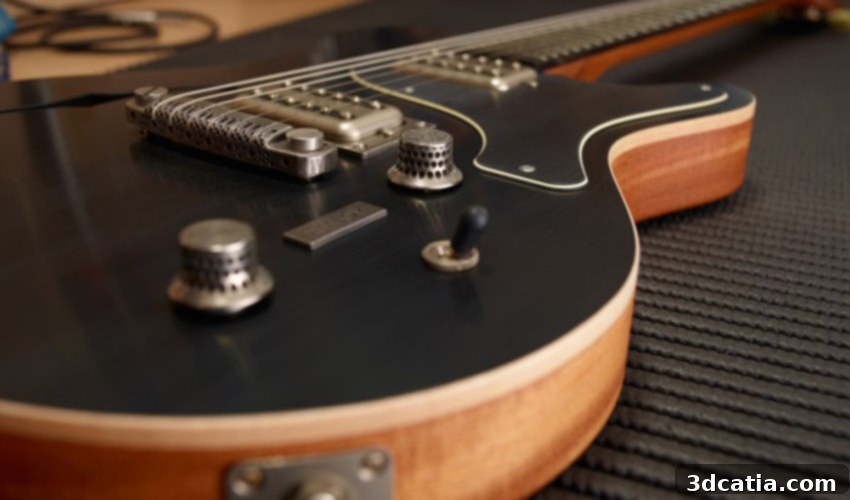
In a groundbreaking collaboration poised to redefine the landscape of electric guitar manufacturing, Nik Huber Guitars (NHG) has embraced additive manufacturing. This innovative move, made possible through a partnership with Heraeus, a distinguished German company renowned for its expertise in precious metals, has led to the creation of a truly unique component: a 3D printed guitar bridge. This critical piece, vital for adjusting string height and transmitting vibrations, stands apart from traditional counterparts. Engineered from an amorphous metal, the bridge boasts an intricate bionic structure designed to significantly optimize vibration transmission, offering a sonic advantage previously unattainable with conventional manufacturing methods. We had the distinct pleasure of engaging with Nik Huber, the visionary founder of NHG, to delve deeper into the genesis of this extraordinary component and to explore the transformative potential of additive manufacturing within the traditionally conservative music industry. His insights reveal a future where cutting-edge technology and time-honored craftsmanship converge to push the boundaries of guitar design and performance.
Understanding the Vision: Nik Huber Guitars and the Journey into 3D Printing
My name is Nik Huber, and I am the founder of Nik Huber Guitars, a company I established in 1996. My journey in guitar crafting began even earlier, in 1993, driven by a passion for creating exceptional instruments. Over the years, NHG has flourished, growing into a dedicated team of 12 skilled individuals. Together, we meticulously handcraft approximately 300 guitars annually, with an unwavering commitment to unparalleled quality and intricate detail. Our philosophy has always been to balance respect for tradition with an eagerness for innovation. The opportunity to explore 3D printing arose unexpectedly when Michael Klosch-Trageser from Heraeus reached out to us. He presented a concept involving a bridge material entirely new to us – amorphous metals. Heraeus had been extensively researching this advanced material, and Michael ingeniously identified its potential applications within the world of high-performance guitars. This initial conversation sparked our curiosity and set the stage for an exciting partnership.
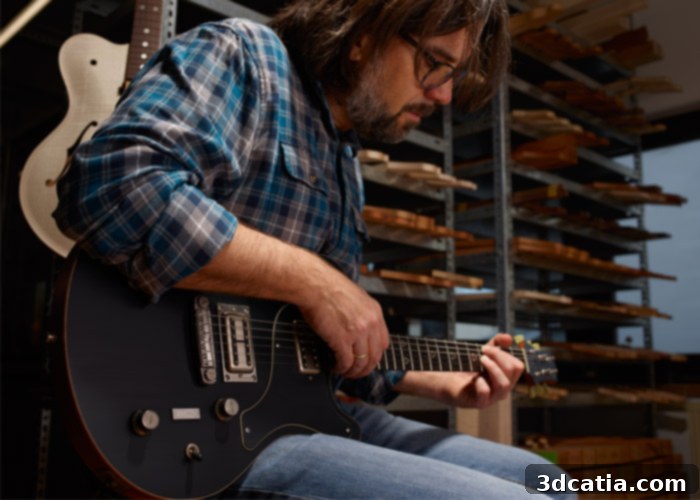
Nik Huber and the guitar with the 3D printed easel (photo credits: Heraeus/Amloy)
At Nik Huber Guitars, our core ethos revolves around continuous innovation. We are constantly seeking fresh ideas and pioneering approaches within an industry that, despite its rich history, can often be quite conservative. While our extensive line of guitar models is deeply rooted in a 70-year tradition of electric guitar design and craftsmanship, we believe that true mastery lies in evolving without abandoning our heritage. Therefore, whenever we encounter opportunities to broaden our horizons and challenge conventional wisdom, we greet them with immense enthusiasm. This very spirit is why we eagerly embraced the collaboration with Heraeus/Amloy. We are incredibly excited about the possibilities this partnership unlocks and the potential it holds for pushing the boundaries of what a guitar can be, both sonically and aesthetically. This venture represents not just a step forward for our company, but a potential paradigm shift for the entire electric guitar community, demonstrating how modern technology can enhance traditional artistry.
The Unsung Hero: Why the Guitar Bridge is Crucial for Superior Tone
While I firmly believe that the choice of wood, with its inherent resonance and unique sound qualities, plays an absolutely essential role in crafting an exceptional guitar, the bridge is, without a doubt, an equally vital piece of the intricate tonal puzzle. Many overlook its significance, but the bridge acts as the primary conduit, meticulously transmitting the energy and vibrations from the strings directly to the guitar’s body. This transmission is critical; our objective is for this component to absorb as little of that precious string energy as possible, ensuring maximum resonance and sustain, while simultaneously maintaining a broad and rich spectrum of frequencies. The efficiency of this energy transfer directly impacts the guitar’s overall tone, sustain, and dynamic response.
For decades, materials like aluminum have served as a reliable and effective choice for us and for the guitar industry as a whole, offering a commendable balance of lightness and tonal properties. However, the emergence of amorphous metal technology is now opening up new frontiers. This advanced material appears to possess qualities that we, as guitar builders and players, have likely never experienced before, promising an unprecedented level of sonic performance. Beyond its acoustical properties, an ideal bridge also needs to be comfortable and ergonomic, seamlessly integrating with the player’s hand and playing style. The tactile experience and the physical interaction with the instrument are just as important as its sonic output, influencing playability and overall musical expression. The pursuit of perfection means considering every single element, from the resonant properties of the wood to the precise mechanics and feel of the bridge.
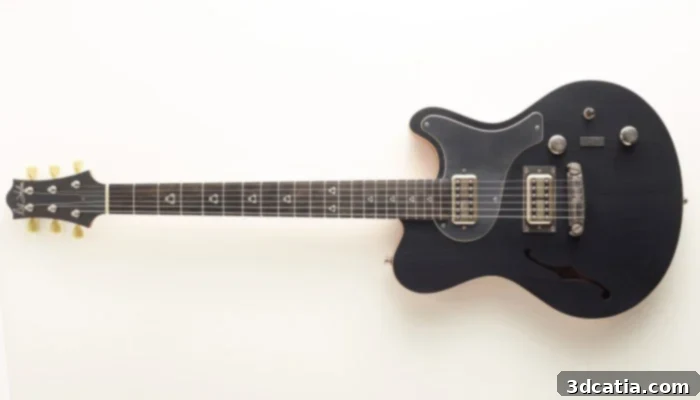
Image credits: Heraeus/Amloy
The Power of Possibility: Why Additive Manufacturing is a Game Changer for Guitar Design
Turning to additive manufacturing, more commonly known as 3D printing, has literally opened up an entirely new universe of possibilities for us at Nik Huber Guitars. Just observe the bridge and its revolutionary design – it’s both visually stunning and incredibly innovative. This level of intricate complexity and organic, bionic structuring simply hasn’t been seen in the guitar industry before, and it’s a design feat that is unequivocally impossible to achieve with traditional manufacturing processes like molding, casting, or machining. The unparalleled design freedom offered by 3D printing allows us to create geometries that precisely optimize material distribution, leading to enhanced functionality and superior aesthetic appeal.
Beyond the immediate, striking aesthetic of the bridge and its control knobs, 3D printing empowers us to explore design advancements that were previously unimaginable. Imagine, for instance, the ability to strategically incorporate more or less hollow areas directly underneath specific strings. This precise structural manipulation could allow us to fine-tune the resonance characteristics of individual strings or specific frequency ranges, directing their sonic output in entirely new and desirable ways. The potential for bespoke tonal shaping and nuanced soundscapes is immense. I am absolutely confident that as we continue to experiment and innovate with this transformative technology, we will uncover countless other compelling ideas and robust reasons to integrate additive manufacturing deeper into our design and production processes, continually pushing the boundaries of guitar craftsmanship.
Embracing the Future of Materials: The Advantages of Amorphous Metal in Guitar Bridges
As I’ve previously highlighted, a fundamental objective for any high-quality guitar bridge is to efficiently transmit string vibrations to the instrument’s body, achieving the highest possible levels of resonance and sustain. Our decision to embrace amorphous metal for this critical component was heavily influenced by a truly convincing demonstration from Heraeus. Their test, where steel balls striking the amorphous material exhibited remarkably sustained bounce and minimal energy loss, was an absolute eye-opener for our team. I could immediately draw a direct parallel between this observed property and the dynamic behavior of vibrating guitar strings; the material’s ability to resist internal damping and transfer energy efficiently is paramount. This translates directly into superior sustain and a richer harmonic content for the guitar.
Another paramount advantage of amorphous metal is its exceptional durability and wear resistance. An amorphous bridge is poised to significantly outperform traditional materials such as steel, brass, aluminum, or other conventional alloys in any endurance test. We have frequently observed significant fatigue and performance degradation in components made from nickel-plated aluminum or chrome-plated brass, particularly once their surfaces began to show tell-tale signs of wear marks and scratches. These imperfections can not only compromise aesthetics but also subtly alter vibrational characteristics. With amorphous metal, we anticipate entirely circumventing these types of problems due to its inherent resistance to wear and corrosion. Furthermore, the material’s natural color is a key aesthetic benefit in itself – it possesses a truly beautiful and distinctive appearance that adds to the overall premium feel of the instrument, enhancing both its sonic integrity and visual appeal for discerning musicians.
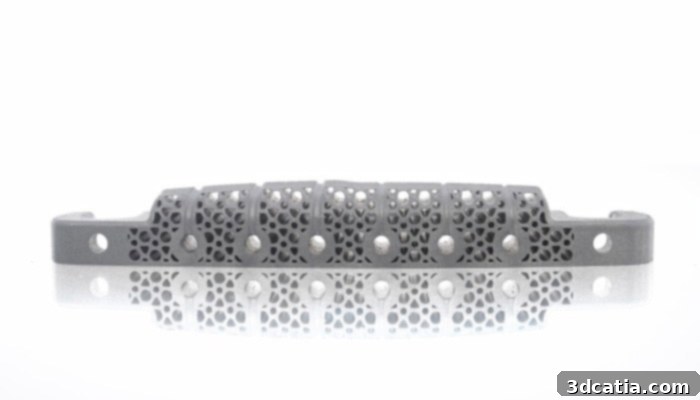
The 3D printed easel (image credits: Heraeus/Amloy)
Beyond the Bridge: The Expansive Future of 3D Printing in the Music Industry
At Nik Huber Guitars, our enduring love for wood, with all its inherent resonance, organic beauty, and nuanced tonal qualities, remains unwavering. It forms the very soul of our instruments. I am aware that there are ongoing projects exploring the 3D printing of entire guitar bodies and even necks. While I don’t have direct insights into the specific results and long-term implications of these particular endeavors, I am absolutely convinced that there is an immense and undeniable added value to be unlocked through the strategic application of 3D technologies across various aspects of instrument manufacturing. The ability to create complex internal structures, optimize material usage, and achieve unparalleled precision offers unprecedented opportunities for innovation.
Currently, our primary focus at Nik Huber Guitars is firmly set on enhancing hardware and metal parts, where the benefits of additive manufacturing for precision, custom geometry, and material performance are immediately apparent and highly impactful. However, our curiosity and enthusiasm for where these new and innovative possibilities might lead us are boundless. We are constantly observing developments across the industry, eager to explore future applications. This could extend to bespoke tuning mechanisms, custom tremolo systems, unique pickup covers, or even intricate internal bracing for acoustic instruments. 3D printing not only facilitates rapid prototyping and iterative design but also opens doors for mass customization and specialized, small-batch production that would be economically unfeasible with traditional methods. The potential for personalized instruments tailored to individual player preferences, both sonically and ergonomically, is a truly exciting prospect that we are keen to explore as the technology continues to mature and integrate further into the craft of instrument making.
A Concluding Note: Pushing Boundaries for Guitar Enthusiasts Worldwide
We are absolutely thrilled and deeply honored to be working alongside Heraeus / Amloy on this pioneering project. The future holds immense promise, and we are eagerly anticipating it with great enthusiasm, brimming with exciting new projects and innovative ideas ready to be explored. It fills us with immense pride to be recognized as the first in the guitar world to successfully implement 3D printing with amorphous metal, marking a significant milestone in our industry. We believe this technological leap not only showcases our commitment to innovation but also paves the way for a new era of guitar design and performance, offering unprecedented sonic qualities and durability.
For those who wish to discover the full range of our meticulously crafted instruments and learn more about our philosophy, we invite you to visit our comprehensive official website. There, you can explore our various models, delve into the details of our craftsmanship, and see how tradition harmonizes with cutting-edge advancements.
What are your thoughts on the integration of 3D printing technology within the dynamic landscape of the music industry? Do you envision custom instruments, enhanced components, or entirely new musical possibilities? We would love to hear your perspectives! Please share your insights and comments below, or engage with us and the wider community on our Facebook and Twitter pages. And for those keen to stay at the forefront of additive manufacturing news, don’t forget to sign up for our free weekly Newsletter, delivering all the latest developments in 3D printing directly to your inbox!