
DLA Pioneers Advanced 3D Printed Robotic Hand for Safer Hazardous Glove Testing
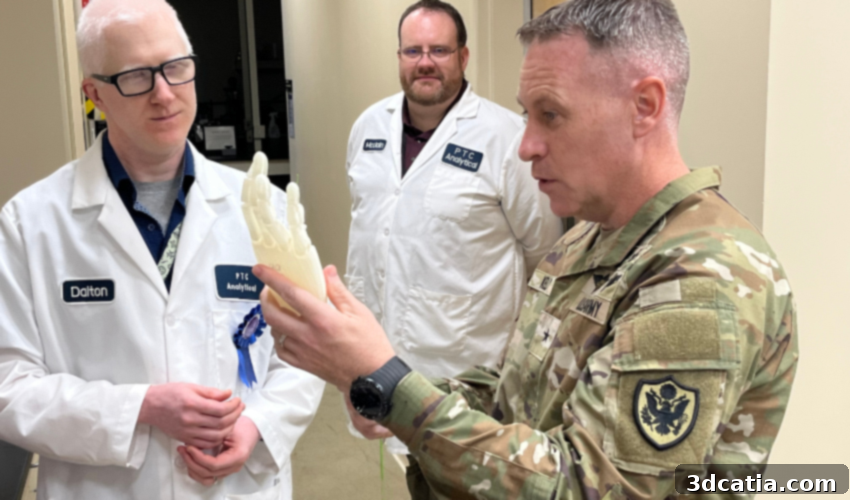
The United States Defense Logistics Agency (DLA) is at the forefront of innovation, recently unveiling a groundbreaking 3D printed solution designed to drastically enhance safety protocols during hazardous glove testing. Engineers at the DLA Analytical Product Test Center in Philadelphia have successfully developed an advanced artificial hand. This robotic device boasts the capability to precisely flex and retract its fingers, a critical feature that enables researchers to rigorously test various types of protective gloves against highly corrosive substances like jet fuel exposure without ever risking human safety.
Historically, the process of testing protective gloves against hazardous materials was fraught with significant risks. The standard procedure involved a human tester placing their gloved hand directly inside a container filled with jet fuel. Should the glove fail, the individual would be immediately exposed to the potent fuel, leading to a range of severe health issues including skin irritation, painful cracking, and persistent rashes. Recognizing this inherent and unacceptable danger, Edward Dalton, a general engineer at the DLA testing center, spearheaded an initiative to find a safer alternative. His visionary proposal centered on designing a sophisticated 3D printed surrogate hand, engineered to replicate natural human hand movements. This innovative approach promised to allow the team to perform all necessary tests with the highest fidelity, completely eliminating the need for human subjects in hazardous environments.
Transforming Testing Protocols: The Genesis of a Safer Solution
The development and implementation of this revolutionary 3D printed hand project spanned several months of dedicated research, design, and iterative refinement. Despite the demanding timeline, the investment has already begun to yield profound positive results for the laboratory and its operational efficiency. The DLA team has enthusiastically reported a significant reduction in risk and a marked improvement in overall testing efficiency since the introduction of this cutting-edge device. One of the most compelling advantages of the artificial hand is its remarkable versatility: it can be precisely printed in a multitude of sizes and even meticulously customized to perfectly match specific glove designs. This adaptability entirely negates the previous challenge of locating human testers with unique hand proportions required for specialized glove assessments. According to Edward Dalton, this newfound flexibility has unlocked unprecedented opportunities to adapt 3D printing technologies for a myriad of future testing processes, underscoring the transformative potential of additive manufacturing.
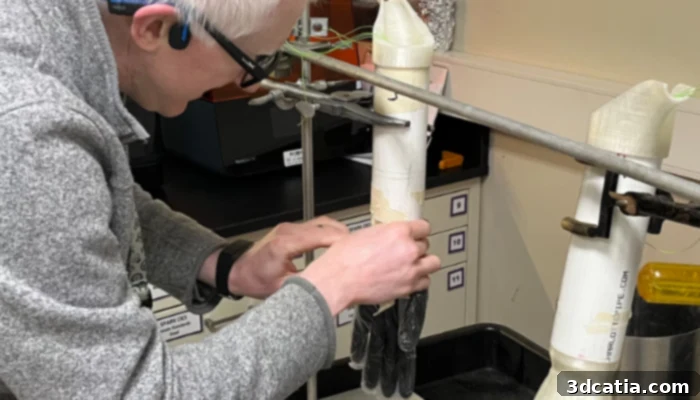
Mike McClain, a supervisory chemist at the DLA lab, also highlighted the inherent limitations and inefficiencies of the older safety precautions. Prior to this innovation, researchers would typically don additional plastic coverings over their gloves in an attempt to mitigate exposure to the hazardous fuel. However, despite these layers, leaks remained a prevalent issue, frequently leaving telltale traces of fuel and its pungent odor on the human test subject. The advent of the new 3D printed hand not only completely eliminates this critical exposure risk but also ensures significantly more stable, consistent, and reproducible testing conditions. This consistency is vital for gathering accurate and reliable data, which is paramount in defense and safety-critical applications.
The design process for this sophisticated robotic hand involved extensive research into anthropomorphic design principles, material science, and mechatronics. Engineers carefully selected advanced polymer materials that could withstand the harsh chemical environment of jet fuel, while also possessing the necessary flexibility and durability for repetitive testing. The iterative design cycle involved rapid prototyping, allowing the team to quickly test and refine various iterations of the hand’s structure and articulation mechanisms. This agile development approach, made possible by additive manufacturing, was crucial in perfecting a device that could mimic human hand movements with sufficient realism to provide accurate test results.
Additive Manufacturing: A Catalyst for Safety and Efficiency in Defense
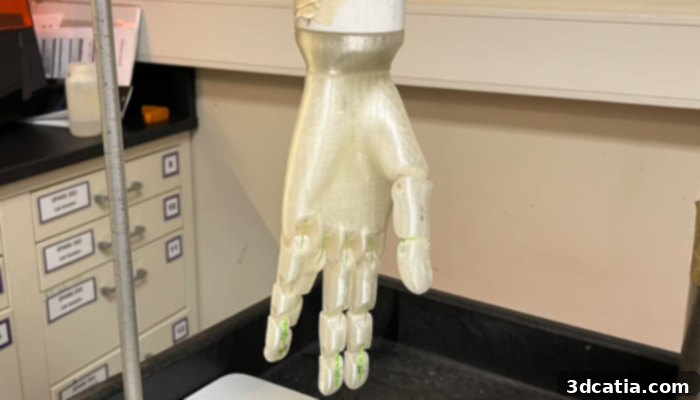
For the dedicated research team at the DLA, this significant breakthrough powerfully underscores how additive manufacturing can simultaneously enhance both workplace safety and operational practicality. This innovative artificial hand masterfully combines exceptional durability with the intricate ability to replicate complex human motion, effectively serving as a highly functional tool. Its success vividly showcases the rapidly expanding and increasingly vital role of 3D printing technologies within critical defense research and development. Edward Dalton proudly noted that witnessing the design perform precisely as intended, after months of meticulous development and dedicated effort, was an incredibly rewarding and validating experience for the entire team.
The artificial hands have already undergone successful trials in initial experiments, with extensive further testing rigorously planned for the near future. For the DLA, this groundbreaking project symbolizes another pivotal shift towards the widespread adoption and integration of additive manufacturing. This isn’t merely for rapid prototyping anymore, but critically, as an indispensable method to safeguard personnel while rigorously maintaining the strictest and most demanding testing standards. The ability to create custom, robust, and functional parts on demand offers unparalleled advantages in military logistics and operational readiness.
This initiative aligns with the broader trend within the defense sector to leverage advanced manufacturing techniques for enhancing supply chain resilience, reducing lead times for critical components, and improving the safety of personnel. The DLA’s success with the 3D printed hand is a testament to the potential of investing in cutting-edge technologies that not only optimize processes but also protect human lives in high-risk environments. It serves as a blueprint for how other agencies and industries facing similar hazardous testing requirements can adopt additive manufacturing for innovative, safe, and efficient solutions.
How do you feel about this significant shift towards additive manufacturing in defense applications? What are your thoughts on the DLA’s proactive incorporation of 3D printing for personnel safety and enhanced testing? We invite you to share your insights in a comment below or engage with us on our LinkedIn or Facebook pages! Furthermore, don’t forget to sign up for our free weekly Newsletter to receive the very latest 3D printing news directly to your inbox. You can also explore all our insightful videos on our YouTube channel. For more comprehensive 3D printing news specifically within the aerospace and defense sectors, be sure to check out our dedicated page HERE.
*All Photo Credit: United States Department of Defense / DLA