
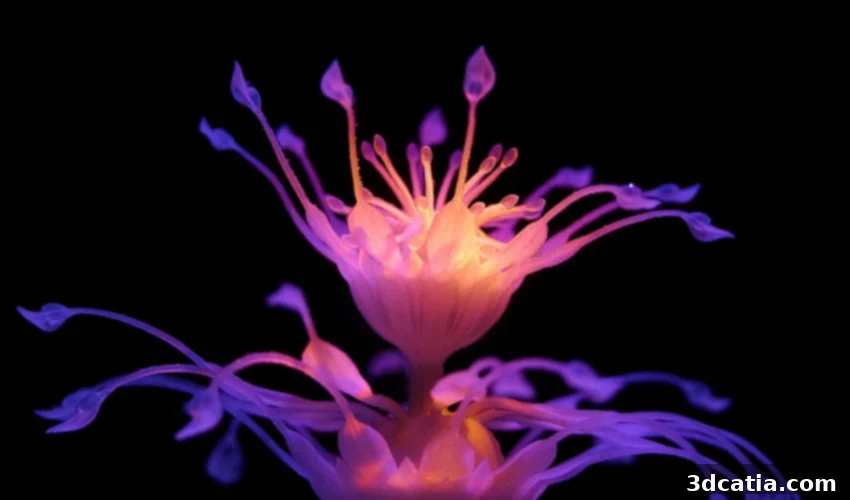
Unveiling Hydrophytes: How 4D Printing is Bringing Futuristic Aquatic Plants to Life with Nicole Hone
The future of design and manufacturing is rapidly evolving, pushing the boundaries of what physical objects can achieve. At the forefront of this innovation is the captivating project known as Hydrophytes, a visionary endeavor that offers a glimpse into what the botanical world of tomorrow might look like. Developed by New Zealand industrial designer Nicole Hone, Hydrophytes leverages the groundbreaking capabilities of 4D printing to create intelligent manufacturing materials that mimic the graceful, fluid movements of real aquatic plants. This project is not merely an artistic expression; it’s a testament to the power of advanced additive manufacturing in creating responsive, dynamic objects that interact with their environment in novel ways. Nicole Hone introduced Hydrophytes as a fresh, creative paradigm realized through the precision and versatility of 3D and 4D printing. We had the distinct pleasure of speaking with her to delve deeper into the origins of this fascinating project and to understand the profound significance of 4D printing in both creative and industrial applications.
Meet the Innovator: Nicole Hone’s Journey into 3D Printing and Beyond

Nicole Hone, Creator of Hydrophytes
As an industrial designer based in the vibrant city of Wellington, New Zealand, my professional journey has been deeply intertwined with the transformative potential of advanced manufacturing technologies. The Hydrophytes project itself originated as a pivotal component of my Master’s thesis in Innovation in Design, which I successfully completed at Victoria University of Wellington in July 2018. My initial encounter with 3D printing technologies dates back to 2014, during my undergraduate studies in industrial design. From that moment, I was captivated by the unparalleled freedom of creation that 3D printing offered, particularly its ability to manifest complex and organic forms that would be challenging, if not impossible, to achieve with traditional manufacturing methods. The ease with which design iterations and variations could be translated from a digital drawing into a tangible, physical object was incredibly liberating for a designer.
Among the various additive manufacturing techniques, PolyJet Technology particularly piqued my interest. This advanced method distinguishes itself by allowing the simultaneous printing of multiple materials with varying properties, crucially including different degrees of flexibility within a single object. This capability was essential for Hydrophytes, as it enabled me to design internal structures and intricate details with exceptionally high resolution, imparting lifelike characteristics to the plants. The precision and versatility of PolyJet presented a delightful challenge, pushing the boundaries of what I could conceive and create. What truly mesmerized me, however, was witnessing how these digital materials, once printed, began to behave in ways reminiscent of living organisms, reacting to their environment with an almost organic fluidity. This observation laid the groundwork for the biomimetic approach that defines Hydrophytes.
The Genesis of “Hydrophytes”: A Biomimetic Vision Takes Root
My design philosophy has always been profoundly inspired by nature, finding endless aesthetic and functional cues in the natural world. For the Hydrophytes project, this deep-seated fascination narrowed its focus to the intricate beauty of botany and the mesmerizing diversity of marine life. I was particularly struck by the elegant and dynamic movements of marine creatures and corals—how they sway, pulse, and interact with the underwater currents. My ambition was to imbue my creations with these very same qualities, transcending static forms to create objects that exhibit a genuine sense of vitality and motion.
During the initial experimental prints, a crucial discovery emerged: the printed materials exhibited significantly more fluid and organic movements when submerged in water. The buoyant properties of water provided an unexpected advantage, reinforcing the delicate parts of the structures and allowing for a level of movement that was less pronounced in air. This insight was a turning point. Coincidentally, around the commencement of my thesis project, I learned about plans to redesign the New Zealand National Aquarium. This presented a unique opportunity—a perfect synergy of my research and a real-world application. I envisioned an exhibition that was forward-looking and immersive, featuring interactive, moving models that visitors, especially children, could engage with directly. The idea was to create an experience that wasn’t just visually stunning but also educational, inspiring curiosity about both natural aquatic ecosystems and advanced technological possibilities. This convergence of natural inspiration, material discovery, and a compelling exhibition opportunity solidified the concept for Hydrophytes.
The Intricate Process: Developing a Futuristic Plant with 4D Printing
The development of each individual “hydrophyte” is a meticulous process, deeply rooted in biomimicry and advanced digital fabrication. The initial inspiration is drawn from extensive research into nature, including studying biological texts, watching videos of aquatic flora and fauna, and analyzing plant photography. This foundational study helps identify specific organic forms and movement mechanisms that are then translated into design concepts. Each hydrophyte begins its journey as a pencil sketch, capturing its envisioned shape, texture, and the unique way it is intended to move and interact. This traditional sketching phase allows for rapid ideation and exploration of diverse botanical forms.
Once a concept is refined, it transitions into the digital realm, where it is modeled in 3D using a combination of sophisticated software. This digital sculpting involves not only creating the intricate outer shape but also defining the surface textures and, crucially, the complex internal structures that will dictate its movement. The designs are composed of multiple distinct parts, and for each part, the precise degree of hardness or flexibility is meticulously specified within the computer-aided design (CAD) software. This level of granular control is paramount for achieving the desired biomimetic motion. The actual printing is carried out on a Connex 3D machine, which operates using PolyJet technology. This machine prints each pattern as a single, homogeneous object, even though it’s composed of different mixtures of acrylic-based and rubber-like resins. These specialized resins are precisely polymerized layer by layer using UV light, allowing for seamless integration of varying material properties across the object, from rigid supports to highly flexible membranes.
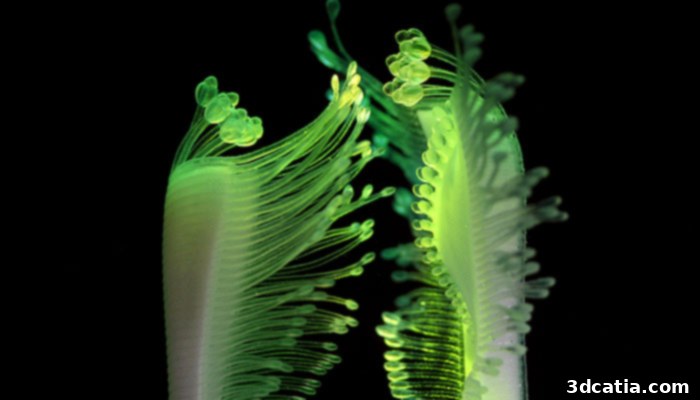
The Feather Nurse Hydrophyte
Upon completion of printing, the models are encased in a gelatinous support material, which is critical for holding the intricate structures in place during the additive process. Removing this support material is a crucial and often time-consuming step. It involves carefully dipping the object into water and meticulously wiping away the gel, a process that can take up to four hours for a single print, depending on its complexity. Once thoroughly cleaned, the hydrophytes undergo a preparatory stage where water is first gently pumped into their internal cavities. This initial pumping serves two purposes: it helps to fully separate the two primary membranes of the material, allowing them to expand freely, and it aids in the complete removal of any residual support material from the internal channels. Finally, the designs are immersed in water and then strategically inflated, creating the mesmerizing, choreographed movements that are subsequently filmed. The entire collection of Hydrophytes represents the culmination of approximately 50 individual experiments, each one rigorously tested, refined, and documented. To further enhance their lifelike quality and imbue them with character, colored light is projected onto the plants using an LED floodlight, accentuating their forms and movements in a vibrant, almost ethereal display.
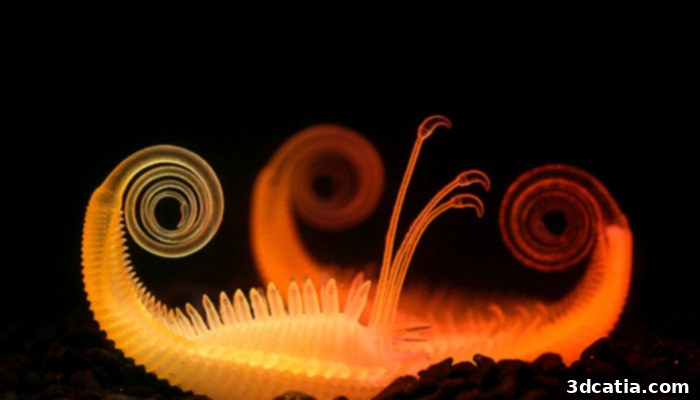
The Imp Root Hydrophyte
The Transformative Importance of 4D Printing Technology
The advent of 4D printing marks a significant leap beyond traditional 3D printing by introducing the element of time and responsiveness. Essentially, 4D printing allows us to create objects that possess the remarkable ability to move, change shape, or alter their appearance in response to environmental stimuli—be it water, heat, light, or other energy inputs. This adds an entirely new dimension of functionality to designed objects, enabling them to be controlled and digitally tested for dynamic behaviors before physical manifestation. When combined with the capacity to print with multiple materials, particularly “smart” materials that possess inherent reactive properties, the potential applications of 4D printing become truly immense and transformative.
In the industrial sector, the implications are far-reaching. Consider robotics, where 4D printing can facilitate the creation of soft robots with compliant bodies that can navigate complex environments more effectively and safely interact with humans. In architecture, 4D printed materials could lead to responsive building facades that adapt to changing weather conditions, optimizing energy efficiency and internal comfort. The medical field stands to gain immensely from 4D printing, with possibilities such as personalized implants that change shape over time to conform to healing tissues, or soft prosthetics that dynamically adjust to the wearer’s movements. These examples merely scratch the surface of a technology poised to redefine engineering and design.
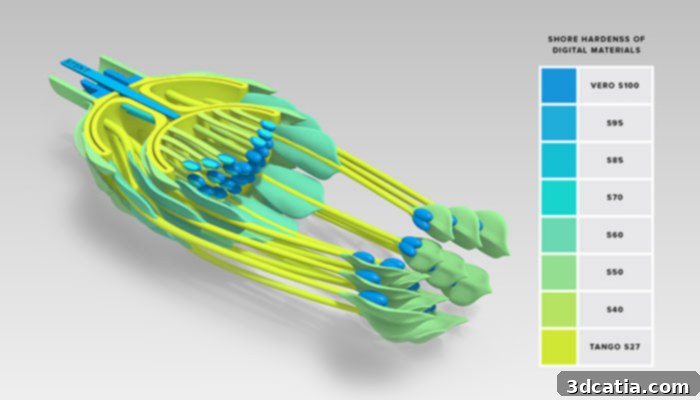
3D Development of a Hydrophyte
The multi-material 4D printing application showcased by Hydrophytes vividly illustrates the concept of Computer-Generated Objects (CGOs), drawing a parallel to the sophisticated digital special effects seen in modern cinema. In both instances, the subject is meticulously created and manipulated numerically. However, the critical distinction with CGOs is that they are physical, tangible objects designed to interact naturally and seamlessly with their real-world environment. This unique capability of 4D printing offers substantial advantages for the film and exhibition sectors. Imagine film props and accessories designed with 4D multi-material printing: they could exhibit authentic, responsive behaviors, eliciting more genuine reactions from actors and creating truly compelling interactions between the object and its surroundings, far surpassing the capabilities of static props. These dynamic accessories could even be leveraged at promotional events or theme parks, offering visitors an interactive piece of their favorite film worlds. Beyond entertainment, there’s a burgeoning trend towards creating deeply immersive experiences in contemporary museums and cultural institutions. For instance, natural history museums or aquariums could display 4D printed animals, not just as static representations, but as moving, interactive encounters that educate and captivate audiences, bringing scientific concepts to life in an unprecedented manner.
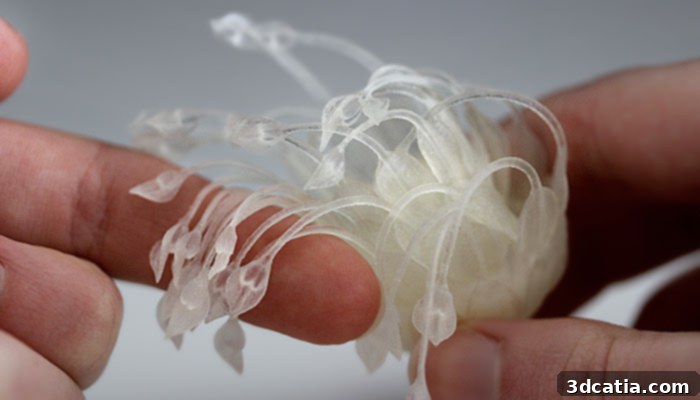
A 3D Printed Hydrophyte Model
Nicole Hone’s Vision: Future Projects and the Evolution of Dynamic Design
The landscape of 3D and 4D printing technologies is in a state of continuous and rapid evolution. Breakthroughs such as the ability to print in full color, the ongoing development of innovative new materials specifically for PolyJet printing, and the advancement of voxel technology are opening up unprecedented opportunities. These advancements promise the creation of even more complex, realistic, and significantly larger 4D printed objects. Looking ahead, my aspiration is to continue designing compelling content for diverse exhibition spaces and film productions, focusing on creating immersive experiences that genuinely surprise, intrigue, and connect with people on a deeper level. I am confident that this future work will involve extensive experimentation with these cutting-edge technologies.
My ultimate goal remains consistent: to breathe life into inanimate objects, whether they are fantastical creatures, fictional characters from beloved stories, or even magnificent dinosaurs. The ability to transform static representations into dynamic, responsive entities holds immense potential for storytelling, education, and entertainment. I envision a future where these dynamic objects seamlessly integrate into our environments, from interactive museum exhibits that tell stories through motion to responsive architectural elements that enhance our daily lives, and captivating film sets that blur the line between reality and imagination.
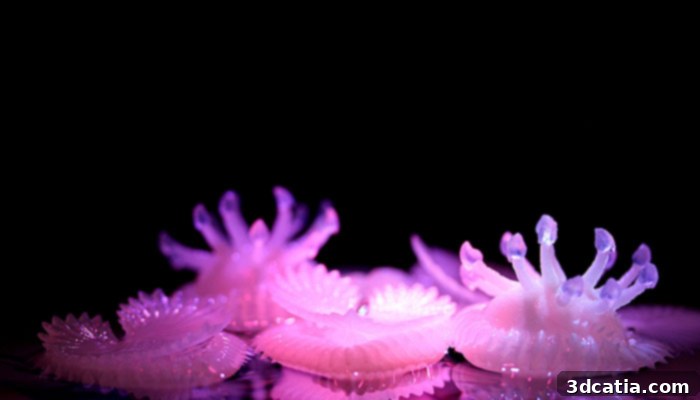
The Arrow Pod Hydrophyte
A Final Word on Innovation and Design in New Zealand
I am immensely grateful to Victoria University of Wellington for providing me with the invaluable opportunity to engage hands-on with multi-material 3D and 4D printing technology. This access was fundamental to the success of the Hydrophytes project and my continued exploration in this field. I eagerly anticipate witnessing the further evolution of the university’s research and advancements in this innovative domain, which I believe will significantly contribute to promoting and elevating the standard of design and technological innovation across New Zealand.
For more in-depth information about Nicole Hone’s pioneering work, please visit her official website here. You can also experience the mesmerizing movements of Hydrophytes in the video below:
What are your thoughts on the groundbreaking Hydrophytes project and the potential of 4D printing? We invite you to share your insights in a comment below or join the conversation on our Facebook and Twitter pages! Don’t forget to sign up for our free weekly Newsletter to stay updated with all the latest news and developments in the exciting world of 3D printing, delivered directly to your inbox!