
Revolutionizing 3D Printing: Seamlessly Integrating Electronics with MIT’s MorphSensor
The landscape of personal manufacturing has been dramatically transformed by the advent of 3D printing. Today, desktop 3D printers empower individuals to fabricate an astonishing array of objects right from their homes, ranging from functional prototypes like a robot dog to innovative protective gear such as an anti-Covid necklace. This accessibility has democratized creation, allowing virtually anyone to bring their digital designs into the physical world. However, a significant hurdle often arises when these 3D printed objects require advanced functionality: integrating electronic components. Traditionally, adding elements like sensors, microchips, or identification tags to a 3D printed piece has been a complex, multi-step process, often demanding specialized expertise and separate design workflows. This separation makes it challenging to achieve truly cohesive designs where the electronic functions are seamlessly interwoven with the physical form. Recognizing this critical gap, researchers from MIT’s Computer Science and Artificial Intelligence Laboratory (CSAIL) have introduced a groundbreaking solution: MorphSensor. This innovative 3D design environment is engineered to bridge this divide, enabling users to digitally model not only the physical shape and structure of an object but also its intricate electronic functionality, all within a unified platform. MorphSensor promises to redefine how we conceive, design, and produce smart, interactive 3D printed creations.
The traditional approach to embedding electronics within physical objects typically involves designing the electronic circuit and the physical enclosure as distinct entities. This often means producing the 3D printed part first, then manually integrating pre-fabricated electronic components, which can involve tedious wiring, soldering, and precise alignment. Such a disconnected workflow complicates the design process, increases prototyping time, and often limits the possibilities for truly integrated, compact, and aesthetically pleasing products. For non-expert users, this barrier can be insurmountable, preventing them from incorporating advanced functionalities into their custom 3D prints. The question then becomes: can MorphSensor fundamentally alter this paradigm? Junyi Zhu, a PhD student at MIT and lead author on a paper detailing the project, articulates a compelling vision for the future of product design. He states, “MorphSensor fits into my long-term vision of something called ‘rapid function prototyping’, with the objective to create interactive objects where the functions are directly integrated with the form and fabricated in one go, even for non-expert users.” This ambitious goal suggests a future where the constraints of separate design phases are eliminated, opening up new avenues for innovation. Zhu further elaborates, “This offers the promise that, when prototyping, the object form could follow its designated function, and the function could adapt to its physical form.” This principle of co-design, where form and function evolve symbiotically, is at the heart of MorphSensor’s disruptive potential, promising to make advanced, interactive 3D printed objects accessible to a much broader audience.
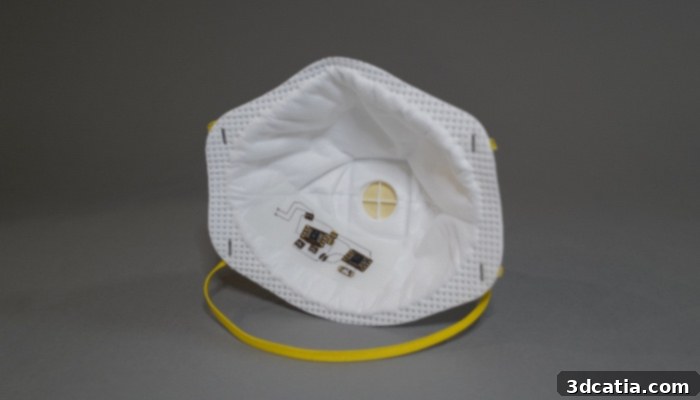
An N95 mask embedded with an electronic circuit designed in MorphSensor. (Image credits: MIT)
How Does MorphSensor Revolutionize Integrated Design?
The MorphSensor workflow is meticulously designed to be intuitive and efficient, making the integration of electronics accessible even to those without extensive engineering backgrounds. The process begins with the user either designing a new 3D model from scratch within the MorphSensor environment or importing an existing model. Crucially, users also select and import sensor modules from MorphSensor’s comprehensive database, which can include a wide range of components such as temperature sensors, light detectors, accelerometers, or custom-designed chips. Additionally, the system supports the integration of components from online open-source files, ensuring maximum flexibility and a rich library of options. This initial step establishes both the physical structure and the potential electronic capabilities of the desired object.
Once the basic model and sensor modules are selected, the MorphSensor system automatically processes this information. It intelligently generates a preliminary 3D model that not only represents the physical form but also integrates representations of the individual electronic components. A key feature at this stage is the use of color-coding, which visually highlights the active components and their potential interaction points within the design. This visual feedback helps designers understand the placement and function of each electronic element at a glance, making complex circuit layouts more comprehensible and preventing potential errors early in the design phase. The system acts as a smart assistant, guiding the user towards an optimal layout.
The next phase empowers designers with unparalleled flexibility through a simple, drag-and-drop interface. Users can effortlessly select electronic components from a palette and position them directly onto the 3D object model. This intuitive interaction allows for precise placement and easy adjustment. Components can be rotated, scaled, and finely tuned based on specific design needs and functional requirements. For instance, a sensor might need to be positioned on a specific surface to ensure optimal readings, or a chip might need to be recessed for aesthetic or protective reasons. This direct manipulation on the 3D model eliminates the need for abstract circuit diagrams, translating physical intuition directly into electronic design.
Connecting the electronic components is often the most daunting part of circuit design, especially for non-experts. MorphSensor addresses this by providing a guided wiring process. Users simply draw virtual physical wires onto the design, indicating where they want connections to appear. The system then intelligently analyzes these desired connections, providing real-time guidance to ensure circuit integrity and functionality. It helps users identify potential short circuits, open circuits, or incorrect connections, making the process virtually foolproof. This guided approach ensures that even complex circuits can be correctly laid out, transforming what was once a highly technical task into an accessible design step. The focus shifts from intricate electrical engineering knowledge to intuitive spatial planning.
Finally, once the design is complete and the electronic functions are integrated, the model is ready for fabrication. MorphSensor leverages readily available and cost-effective manufacturing techniques. The designed model can be easily produced using an inkjet printer, which is capable of depositing conductive inks to create the necessary electronic traces directly onto or within the 3D printed object. These conductive traces, once printed, can then be further reinforced or connected to components using conductive tape, ensuring robust and reliable electrical connections. This method significantly reduces the complexity and cost associated with traditional circuit board manufacturing, making embedded electronics truly viable for home-based 3D printing and rapid prototyping. The ability to fabricate in “one go” is a hallmark of MorphSensor’s efficiency, reducing both time and material waste.
Practical Applications and Transformative Potential
To thoroughly validate the capabilities and practical utility of MorphSensor, the MIT researchers developed and tested several innovative prototypes. These real-world applications underscore the system’s versatility and its potential to create truly smart, interactive objects across various domains. One compelling example is a temperature-sensing ring. This wearable device, designed and fabricated using MorphSensor, could continuously monitor the wearer’s body temperature, potentially offering early alerts for fever or providing data for fitness tracking. The seamless integration of the sensor within the ring’s aesthetic form demonstrates how electronics can enhance functionality without compromising design.
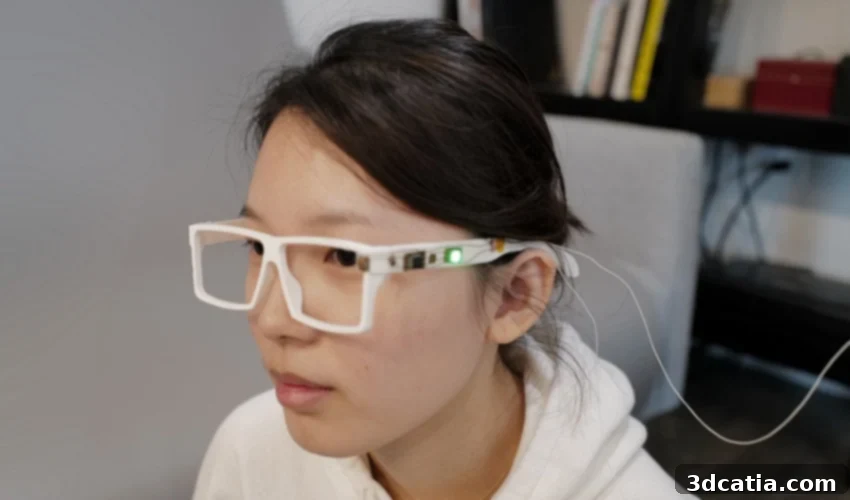
Another critical application involved the development of glasses designed to monitor light absorption, aiming to protect eye health. By embedding photosensors and associated electronics directly into the spectacle frame, MorphSensor enabled the creation of smart eyewear that could detect harmful UV levels or excessive blue light exposure. Such glasses could then provide real-time feedback to the user or even automatically adjust lens tinting, offering a proactive approach to eye care. This showcases MorphSensor’s ability to facilitate preventive health technologies directly integrated into everyday items.
Perhaps one of the most timely and impactful applications demonstrated was an N95 mask capable of monitoring its substrate contamination. In the context of the ongoing global pandemic, ensuring the efficacy and timely replacement of protective masks is paramount. By manipulating an N95 mask with MorphSensor, researchers were able to embed a circuit that detects when the mask’s filtering material becomes compromised or overly contaminated. This smart mask could then alert its user, signaling that the mask needs to be replaced, thereby significantly enhancing personal safety and public health efforts. This particular example highlights the system’s immense potential for rapid development of customized, intelligent solutions to urgent societal challenges.
Beyond these specific prototypes, MorphSensor opens doors to countless other possibilities. Imagine personalized medical devices, smart home appliances with integrated sensors for environmental monitoring, interactive toys that respond to touch and movement, or custom tools with embedded feedback systems. The ease of design and fabrication afforded by MorphSensor means that innovative ideas can move from concept to functional prototype much faster and more cost-effectively than ever before, empowering a new generation of creators and inventors.
Enhancing User Experience and Future Development
A core strength of MorphSensor lies in its ability to support designers throughout the integration process. It actively helps users maintain the connectivity of the circuit by intuitively highlighting which components are essential for the actual sensing function. This visual guidance is invaluable, preventing common errors and ensuring that the final product functions as intended. It simplifies the often-complex task of debugging electrical connections, allowing designers to focus more on the functional aspects and less on troubleshooting technical intricacies. This intelligent assistance significantly lowers the barrier to entry for creating sophisticated electronic prototypes.
While the current version of MorphSensor already offers impressive capabilities, the MIT team is continuously looking to expand its set of support tools and functionalities. Future iterations of the system are envisioned to be even more powerful and automated. One key area of development includes the potential to “merge electrical logic of multiple sensor modules together to eliminate redundant components and circuits and save space.” This advanced capability would allow the system to intelligently optimize the electronic layout, consolidating functions and reducing the physical footprint of the integrated electronics. Such optimization is crucial for creating ever smaller, more efficient, and more aesthetically pleasing smart objects.
Another exciting future prospect is the ability to “preserve the object’s form” more intelligently. This means that as electronics are integrated, the system could automatically adjust the internal layout or even suggest minor external modifications to ensure that the object’s original shape and aesthetic appeal are maintained, or even enhanced. This would move beyond merely fitting electronics into a form to genuinely co-designing the form and function, allowing one to influence the other seamlessly. These future enhancements underscore MIT CSAIL’s commitment to making integrated electronics design not just possible, but truly intuitive, efficient, and creatively liberating for designers of all skill levels.
MorphSensor represents a significant leap forward in the convergence of 3D printing and embedded electronics. By simplifying the design and fabrication of interactive objects, it empowers a new generation of innovators to create smart, functional prototypes and end-use products with unprecedented ease. This innovation from MIT CSAIL is poised to democratize the creation of intelligent physical objects, moving us closer to a future where bespoke, smart devices are not just a luxury, but a common reality for everyone with a desktop 3D printer. The implications for personalized healthcare, smart living, education, and consumer electronics are profound, promising to unlock a new wave of creativity and utility in the digital manufacturing space.
What are your thoughts on MorphSensor and its potential impact on 3D printing and electronics integration? We’d love to hear your insights! Let us know in a comment below or join the conversation on our Facebook and Twitter pages! Don’t miss out on the latest advancements in additive manufacturing – sign up for our free weekly Newsletter and get all the cutting-edge news in 3D printing delivered straight to your inbox!