
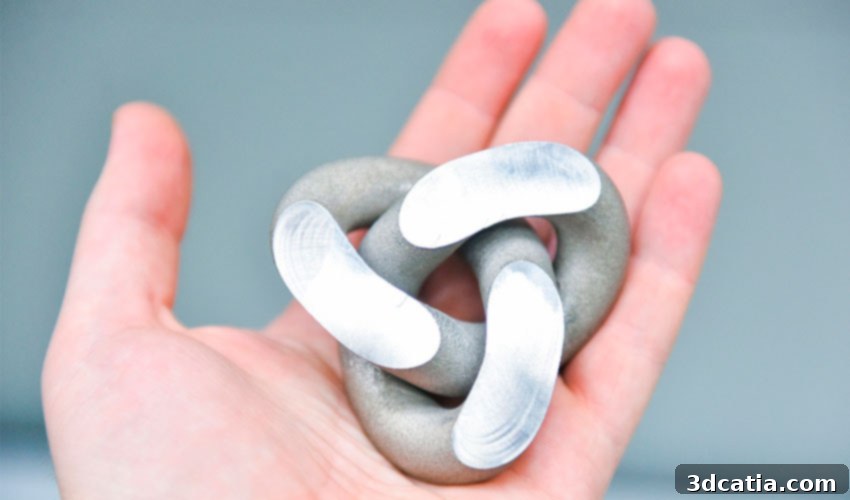
NUST MISIS Breakthrough: Ultra-High Purity Alumina (UHPA) Doubles 3D Printed Aluminum Strength, Rivaling Titanium Alloys
In a groundbreaking development that promises to redefine the landscape of advanced materials, scientists from Russia’s National University of Science and Technology (NUST MISIS) have unveiled a revolutionary method for producing ultra-high purity alumina (UHPA). This innovative material is poised to dramatically enhance the mechanical properties of 3D printed aluminum composites, potentially doubling their strength and bringing them closer to the performance levels of highly sought-after titanium alloys. This achievement addresses a critical limitation in additive manufacturing, offering a pathway to creating lightweight yet incredibly robust components, particularly valuable for demanding sectors such as the aerospace, automotive, and medical industries.
The pursuit of lighter, stronger, and more cost-effective materials is a constant drive across numerous industrial sectors. The automotive industry seeks to reduce vehicle weight for improved fuel efficiency and lower emissions. The aerospace sector prioritizes exceptional strength-to-weight ratios to optimize aircraft performance and payload capacity. Similarly, the medical field requires durable, biocompatible components for implants and devices. These industries consistently explore innovative manufacturing techniques and advanced materials to meet these stringent demands, leading to a growing interest in additive metal manufacturing. While metals like titanium, aluminum, and steel are popular choices for 3D printing due to their desirable properties, each presents unique challenges.
Aluminum, in particular, stands out as an attractive option for additive manufacturing. It is celebrated for its excellent specific strength, thermal conductivity, and corrosion resistance, coupled with its inherent lightness and ease of molding—two fundamental requirements for a metal to be effectively 3D printed. However, despite these advantages, conventionally 3D printed aluminum has historically fallen short in terms of overall strength and resistance when compared to heavier, more expensive alternatives like titanium. Titanium, with a strength approximately six times higher than typical aluminum, often becomes the preferred material for applications where structural integrity is paramount, despite its higher cost and more complex processing. This disparity in mechanical properties has created a significant hurdle, limiting aluminum’s widespread adoption in critical high-performance applications. Recognizing this challenge, researchers at NUST MISIS embarked on a mission to bridge this performance gap, aiming to substantially increase the strength of 3D printed aluminum through the development of a novel powder production method.
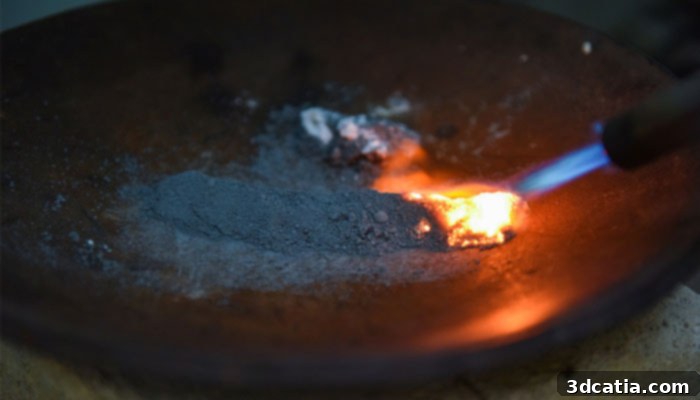
Aluminum is subjected to a burning process during the powder purification stage for UHPA production (photo credits: NUST MISIS)
Pioneering the Production of Purer Aluminum Powder for Enhanced Performance
The core of the NUST MISIS breakthrough lies in their innovative approach to producing ultra-high purity alumina (UHPA), which serves as a crucial modifier for aluminum composites. The team begins with aluminum granules boasting a purity of 99.7%. This starting material then undergoes a meticulously controlled, multi-stage purification and conversion process. The first critical step involves oxidation, where the aluminum granules are treated to form aluminum oxide. This is followed by a series of alkaline and acid treatments, strategically designed to leach out and remove specific impurities from the material. The process culminates in thermal calcination at a high temperature of 1450 °C, which further purifies and converts the treated granules into aluminum hydroxide. This rigorous sequence of chemical and thermal treatments is fundamental to achieving the desired level of purity.
What sets this method apart is the continuous and iterative quality control implemented throughout the process. At each and every stage, the researchers diligently monitor and analyze the impurity levels within the aluminum oxide. Particular attention is paid to trace elements such as iron and potassium, which were identified as the most problematic contaminants affecting the final material’s performance. By collecting precise data on these impurities, the team is able to dynamically adjust and optimize the chemical treatments, washing protocols, and calcination parameters. This adaptive methodology ensures that the process can be fine-tuned to consistently achieve UHPA with exceptionally high purity levels, ranging from 99.99% to an astonishing 99.999%. Such a high degree of purity is paramount, as even minute concentrations of impurities can significantly compromise the mechanical properties of the final 3D printed aluminum composite, making this rigorous purification process a cornerstone of the entire innovation.
Translating Purity into Unprecedented Strength: The Science Behind the Double
While the optimal conditions for powder processing continue to be refined, the NUST MISIS team has already made significant strides in applying this advanced material. They are actively utilizing this high-purity alumina to develop 3D printed prototypes, primarily employing selective laser sintering (SLS), a prevalent additive manufacturing technique. Early results from these prototypes are highly promising, indicating that the new aluminum composites possess a strength approximately one-third that of pure titanium. This represents a substantial improvement over traditional 3D printed aluminum, pushing the boundaries of what is achievable with this lightweight metal.
Professor Alexander Gromov, a lead researcher on the project, elucidated the intricate mechanism behind this remarkable strengthening effect: “We have developed a technology to strengthen the aluminum-matrix composites obtained by 3D printing, and we have obtained innovative precursor-modifiers by burning aluminum powders. Combustion products — nitrides and aluminum oxides — are specifically prepared for sintering branched surfaces with transition nanolayers formed between the particles. It is the special properties and structure of the surface that allows the particles to be firmly attached to the aluminum matrix and, as a result, [doubles] the strength of the obtained composites.”
This explanation highlights several key scientific principles at play. Firstly, the team creates “precursor-modifiers” by carefully burning aluminum powders. This combustion process yields precise forms of aluminum nitrides and oxides. These combustion products are not merely added; they are specifically engineered and prepared to form “branched surfaces with transition nanolayers.” These nanolayers act as a sophisticated interfacial bonding mechanism between the UHPA particles and the surrounding aluminum matrix during the sintering process. The unique structure and properties of these surfaces facilitate an exceptionally strong and stable attachment of the UHPA particles within the aluminum, effectively reinforcing the entire composite structure. This robust integration of the ultra-high purity alumina within the aluminum matrix is what ultimately leads to the doubling of the composite’s strength, transforming it into a material capable of withstanding significantly greater stresses and strains.
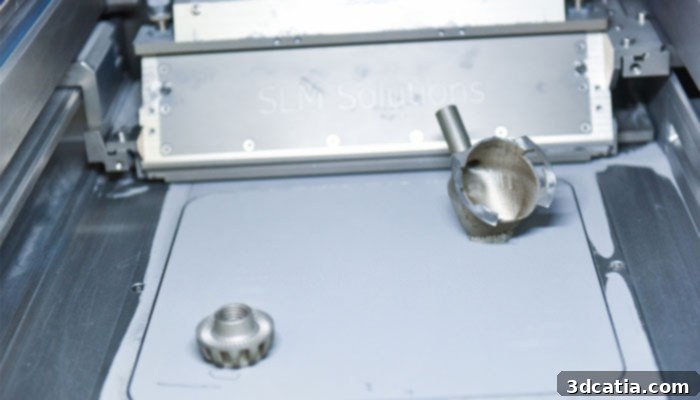
Sample components 3D printed using the revolutionary UHPA powder (photo credits: NUST MISIS)
Revolutionizing Industries: Applications and Economic Impact
The implications of this UHPA powder production method extend far beyond the laboratory. One of its most compelling advantages is its low production cost, a critical factor for industrial scalability and widespread adoption. By maintaining a high profitability margin during the application of this advanced material, NUST MISIS has positioned UHPA as a highly attractive alternative to more expensive, harder-to-process high-strength alloys currently in use. This cost-effectiveness, combined with its enhanced performance, makes the UHPA-modified 3D printed aluminum a game-changer for several key industries.
For the **aerospace industry**, where every gram of weight matters, this breakthrough could lead to the production of lighter aircraft components with comparable, or even superior, strength to some existing titanium parts. This translates into improved fuel efficiency, increased payload capacity, and reduced operational costs. Manufacturers could leverage additive manufacturing to create complex, optimized geometries for structural elements, engine components, and internal fixtures that were previously impossible or impractical with traditional aluminum. The ability to achieve near-titanium strength at a fraction of the cost and weight is a significant competitive advantage.
In the **automotive sector**, the demand for lightweight materials is driven by stringent emissions regulations and the push towards electric vehicles. UHPA-enhanced aluminum offers a solution for manufacturing lighter chassis components, engine blocks, and various structural parts, contributing to better fuel economy and extended range for EVs. The rapid prototyping and customization capabilities of 3D printing, combined with the material’s improved strength, can accelerate design iterations and bring innovative automotive solutions to market faster.
The **medical industry** can also reap substantial benefits. High-strength, lightweight, and biocompatible materials are crucial for orthopedic implants, prosthetics, and surgical instruments. UHPA-modified aluminum could offer a more economical and customizable alternative to titanium for certain applications, allowing for patient-specific devices that are both durable and affordable. The ability to 3D print intricate lattice structures could also lead to implants with improved osseointegration properties.
Beyond these primary sectors, the enhanced capabilities of UHPA-modified 3D printed aluminum could find applications in defense, industrial machinery, and consumer electronics, wherever the combination of strength, light weight, and cost-efficiency is desired. This innovative material not only addresses the strength limitations of conventional 3D printed aluminum but also offers an economically viable path towards high-performance lightweighting, potentially disrupting established material choices and accelerating technological advancement across various fields. You can find comprehensive details of the original research work HERE.
What are your thoughts on this incredible advancement in 3D printed aluminum? Do you foresee it replacing titanium in critical applications, or opening up entirely new possibilities? We’d love to hear your insights! Share your perspective in a comment below, or join the conversation on our Facebook and Twitter pages! And don’t forget to sign up for our free weekly Newsletter to receive all the latest news and innovations in 3D printing directly to your inbox!