
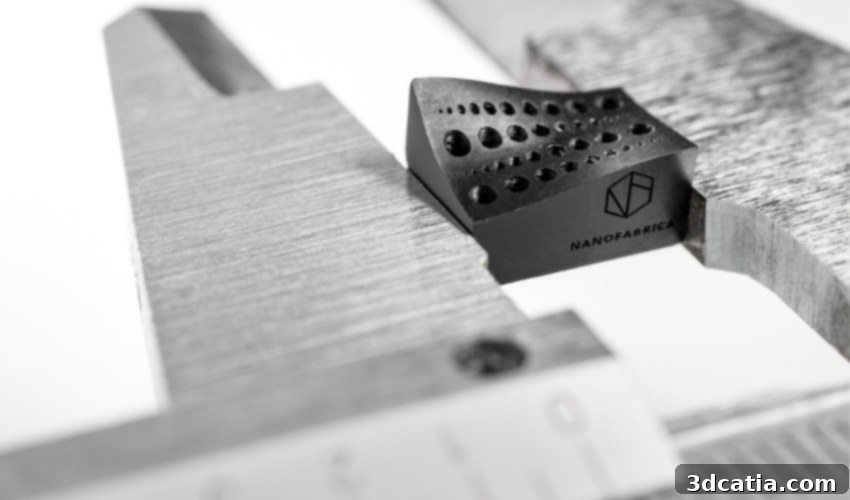
Revolutionizing Micro-Manufacturing: Nanofabrica’s Tera 250 and the Precision of Microscale 3D Printing
Additive manufacturing (AM), commonly known as 3D printing, stands out from conventional production methods primarily due to its unparalleled capacity for customization. This capability extends to parts of any scale, from massive industrial components to intricate, microscopic structures. Nowhere is this transformative power more apparent than in the realm of microscale 3D printing. This specialized field allows for the precise creation of miniature structures, often measured in micrometers or even smaller, opening up a new frontier for innovation and design freedom.
The applications of microscale 3D printing are diverse and rapidly expanding. It is proving invaluable in the development of cutting-edge electronic devices, sophisticated medical implants, and even critical components for the aerospace sector. This technology empowers engineers and designers to produce parts that would be prohibitively expensive, or even outright impossible, to manufacture using traditional techniques. Among the pioneers leading the charge in this highly specialized area is Nanofabrica, a company at the forefront of micro-level 3D printing innovation. We had the distinct opportunity to speak with Avi Cohen, EVP Global Sales at Nanofabrica, to delve into their groundbreaking micro-level resolution technology and explore the extensive benefits and diverse applications of microscale 3D printing across various industries.
3DN: Could you introduce yourself and elaborate on your connection to additive manufacturing?
My name is Avi Cohen, and I recently joined Nanofabrica as the Executive Vice President of Global Sales. My professional journey began with a strong foundation in sales, marketing, and high-level management positions within various biomedical companies. My extensive experience in the additive manufacturing sector spans over two decades, commencing in 1999 when I joined Stratasys, then formally known as Objet. Having operated at the vanguard of the digital manufacturing revolution for so long, I possess a deep, intimate knowledge of — and a strong association with — the international 3D printing community. This background has provided me with a unique perspective on the evolution and future potential of AM, particularly in the micro-manufacturing space.
3DN: What can you tell us about Nanofabrica? How did it get started, and what is its core mission?
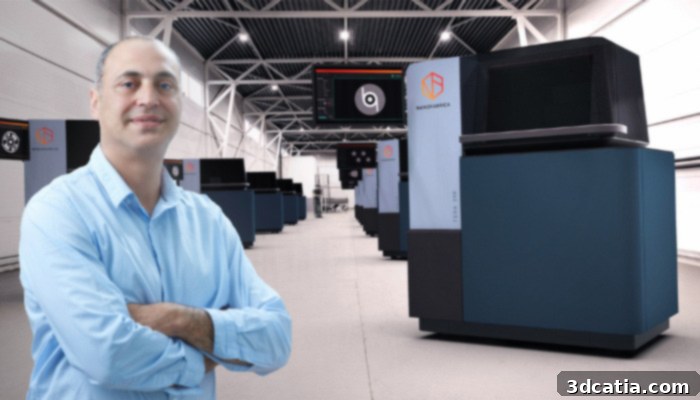
Avi Cohen with Nanofabrica’s TERA 250 (photo credits: Nanofabrica)
Nanofabrica was founded in 2016 with a clear and ambitious mission: to develop an additive manufacturing process specifically engineered for micro-manufacturing. More precisely, our goal was to serve manufacturers who require the ability to produce micro parts with exceptional micron features and tolerances, or to create larger components where specific areas demand extremely tight micron tolerances and intricate fine detail. This niche, yet critical, segment of manufacturing was underserved by existing technologies.
The company strategically identified two powerful, converging trends in the industry. Firstly, there was a substantial and continually growing interest in leveraging AM for production applications. This surge was driven by compelling factors such as the reduction of manufacturing costs, acceleration of time-to-market, the ability to produce parts with previously unattainable geometric complexity, the economic feasibility of smaller volume production runs, and the ever-increasing demand for mass customization. Secondly, there was a widespread, pan-industrial movement towards the miniaturization of parts and components. This drive was motivated by a myriad of reasons, including the development of minimally invasive medical devices, the imperative for lightweighting in industries like automotive and aerospace to enhance efficiency, and the necessity to scale down component sizes for an expanding array of micro-electronic and wearable/smart applications. Nanofabrica positioned itself at the nexus of these two profound industry shifts, aiming to provide a solution that addresses both demands simultaneously.
3DN: Could you tell us more about the Tera 250 as well as your micro-level resolution technology? (Specs, printing speed, material, volume, etc)
The Tera 250 system is built upon a Digital Light Processing (DLP) engine, a well-established technology in 3D printing. However, to achieve truly repeatable micron-level resolution, the Tera 250 incorporates a highly innovative Micro DLP alongside the use of smart adaptive optics. This sophisticated combination is truly revolutionary. This unique tool, integrated with an array of advanced sensors, facilitates a closed feedback loop within the printing process. This feedback mechanism is the fundamental element that empowers the Tera 250 to achieve extraordinarily high accuracy and consistent quality, all while maintaining its cost-effectiveness as a viable manufacturing solution.
Significantly, this marks the very first instance where adaptive smart optics have been successfully applied to an additive manufacturing technology. This breakthrough allows the Tera 250 to manufacture parts at a speed and a cost per part that makes it commercially viable for serious industrial production. Beyond its precision, it also enables large-scale manufacturing of tens of thousands of highly detailed micro-parts. Such capabilities are the direct result of continuous breakthroughs across hardware design, sophisticated software algorithms, and the development of advanced proprietary materials tailored for micro-printing. These innovations collectively ensure that the Tera 250 delivers not just accuracy, but also efficiency and scalability.
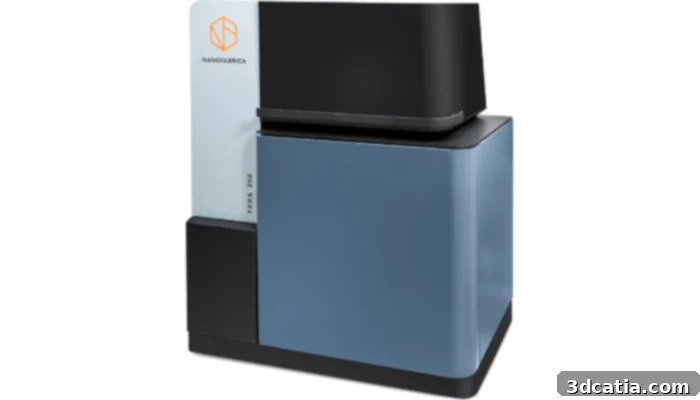
The TERA 250 (photo credits: Nanofabrica)
However, the most distinctive and defining aspect of our technology, and indeed the inspiration behind its name, lies in its extraordinary voxel capacity. Nanofabrica’s AM system boasts an astonishing 250 tera voxels within the printer’s build volume – hence, the “Tera 250.” To put this into perspective, 250 tera voxels translates to 250 trillion (250 x 1012) individual volumetric pixels available across the entire build area of the printer. There is simply no other machine available today with such an immense voxel capacity. This unparalleled capability means the Tera 250 can apply an extraordinary amount of data and detail to a single part, which is precisely why it can achieve such high precision and consistent micron-level accuracy, down to mere micrometers.
Furthermore, this immense voxel capacity offers another significant advantage: it allows us to fit a very large number of highly detailed, end-use parts within a single build volume. This not only optimizes production throughput but also further enhances the cost-effectiveness of manufacturing micro-components at scale. The combination of precision, speed, and volume makes the Tera 250 a truly transformative tool for micro-manufacturing.
3DN: What are the primary challenges and significant benefits of utilizing a microscale 3D printing process?
When it comes to the challenges of adopting microscale 3D printing, one notable hurdle is the increasingly stringent demands from customers. Companies today are rightly seeking clear, quantifiable benefits before investing in new manufacturing technologies. They need solid assurance that their transition to additive manufacturing as an alternative or complementary process to conventional methods will genuinely deliver advantageous returns, whether through cost savings, improved performance, or accelerated innovation. Demonstrating this tangible value proposition and educating the market on the distinct advantages of micro-AM is a continuous effort.
Conversely, the benefits are numerous and fundamental to the ongoing drive towards innovative, cost-effective, and timely production of micro parts and components. Perhaps the most compelling advantage is that additive manufacturing is entirely agnostic to part complexity. This means engineers have unprecedented freedom to design and manufacture unique, intricate geometries, including internal structures that are impossible with traditional subtractive or molding techniques. As such, the Tera 250 system acts as an immensely enabling technology and a true stimulator of innovation, making the manufacture of parts and features previously considered impossible, now entirely feasible and economically viable.
Nanofabrica is known for its micro-resolution technology (photo credits: Nanofabrica)
Another significant benefit is the elimination of setup costs associated with tooling. Traditional manufacturing processes, especially those involving injection molding, require expensive and time-consuming tooling to create molds. This not only has a negative impact on a product’s time to market but also renders such processes uneconomical for small or even medium-sized production runs. For AM technologies like the Tera 250, however, small and medium-sized runs are highly cost-effective; in fact, these production volumes could even be considered the “sweet spot” for the technology, where it offers maximum economic advantage.
Adding to this compelling mix, AM inherently allows for unparalleled mass customization and personalization. Products can be tailored to individual specifications without incurring additional costs or delays. Furthermore, the ability to utilize the exact same manufacturing platform for prototyping, producing small batches, and transitioning seamlessly to mass manufacturing drastically streamlines the product development cycle. When you consider all these advantages collectively, it becomes clear that a myriad of new possibilities now exist for micro manufacturers, enabling them to innovate and compete in ways previously unimaginable.
3DN: One of the touted benefits of micro-level resolution technology is its ability to enable the creation of parts impossible with traditional manufacturing, especially in the medical sector. Do you have specific examples of parts that truly can only be made using this process? How should we fundamentally rethink part design considering the possibilities of additive manufacturing?
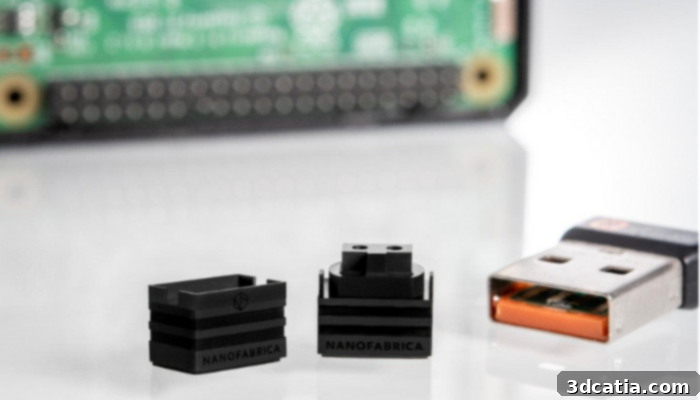
Indeed, we possess countless examples of products that are either technically impossible or economically unviable to produce via conventional manufacturing processes, yet which we can effortlessly create on the Tera 250. Let’s take, for instance, a micro-sized connector, a ubiquitous yet critically important component in many precise electronic applications. This is a particularly challenging part due to its extremely small overall dimensions, its highly complex internal geometry and features, and its exacting fit and form requirements. Traditional molding technologies struggle immensely with such intricate designs, especially at this scale.
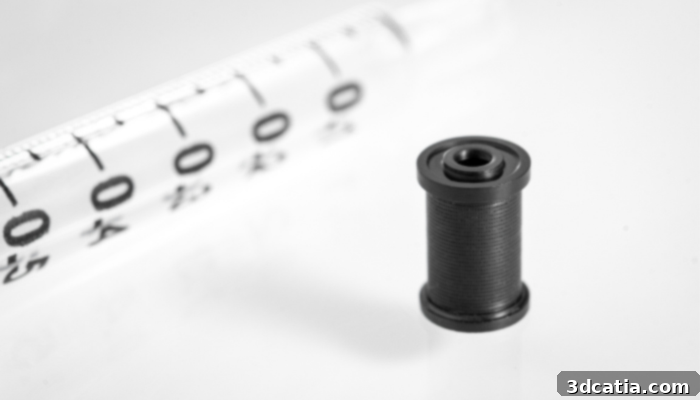
Microscale 3D printing can be used to print parts that might be too costly or even impossible to make using traditional manufacturing (photo credits: Nanofabrica)
To manufacture such a component conventionally, particularly with its complex internal characteristics, would necessitate the creation of extremely expensive and time-consuming steel tooling. This tooling alone can add months to the development cycle and significantly increase unit costs, especially for lower volumes. However, with additive manufacturing, such tooling is simply not required. This fundamental difference means these highly complex parts can be produced both cost-effectively and in a remarkably timely fashion. This paradigm shift allows designers to focus on optimal functionality and performance rather than being constrained by manufacturing limitations.
Beyond electronics, in the medical sector, think about micro-surgical instruments with integrated channels for fluids or optics, or intricate drug delivery systems with incredibly precise orifices. Traditional methods would struggle with the sterilization, biocompatibility, and extreme precision required for these internal structures. Micro-AM allows for single-piece production of such devices, minimizing assembly needs and enhancing reliability. The way we should be thinking about parts possible only through additive manufacturing is to envision “design for function,” rather than “design for manufacturability.” It’s about liberating engineers from the constraints of traditional processes and empowering them to create optimal, integrated solutions, regardless of geometric complexity or scale.
3DN: What do you consider the most relevant applications for micro-level resolution technology currently? And looking ahead, where do you see this technology evolving in the future?
Truly, the opportunities for micro-level resolution technology are vast, and its applications are only restricted by human imagination. However, there are several obvious areas where our technology can, and already is, making a profound impact and disrupting traditional manufacturing processes. We have meticulously identified a series of “killer applications” where there is burgeoning market demand, yet the current routes to market rely on disproportionately expensive, slow, or restrictive traditional manufacturing technologies. In these specific sectors, the strategic integration of additive manufacturing can unlock significant advancements in terms of both design flexibility and enhanced functionality.
For instance, consider the critical fields of medical devices, the semiconductor industry (for producing precision tools, jigs, and holders), micro-electronics, Micro-Electro-Mechanical Systems (MEMS), microfluidics, and life sciences, among others. Microfluidics serves as an excellent case study of how a true micro-AM technology can decisively outperform traditional manufacturing processes. Microfluidic channels are specifically designed to manipulate and move incredibly small volumes of liquid, and many incorporate intricate functioning components such as integrated filters and pumps within these tiny pathways. Traditional micro-manufacturing processes, like micro-molding, severely limit the freedom of design for such microfluidic channels, often making it almost impossible to manufacture complex functional substructures within them. With micro-AM, we can print these intricate channels and integrated components as a single, highly functional unit, vastly expanding design possibilities and system performance.
Looking to the future, we foresee micro-level resolution technology becoming an indispensable tool in the development of next-generation wearables, advanced sensors, even smaller and more efficient micro-robots, and highly integrated biomedical devices. As the demand for smaller, smarter, and more interconnected products grows, the ability to rapidly and economically produce complex micro-components with exceptional precision will be paramount. We anticipate further advancements in materials science, pushing the boundaries of what can be printed, alongside software innovations that streamline the design-to-print workflow for even greater efficiency. The future of micro-manufacturing is incredibly bright and promises to reshape numerous industries.
3DN: Do you have any final thoughts or words of wisdom for our readers?
These are undeniably exciting times for the entire additive manufacturing industry, and particularly exhilarating for Nanofabrica. A significant portion of the industrial landscape is now actively analyzing and strategizing ways to effectively incorporate additive manufacturing processes to optimize their production workflows, enhance efficiency, and foster innovation. Concurrently, an even larger segment of the market is intensely focused on discovering new methods to miniaturize parts and components, driven by the relentless demand for smaller, lighter, and more integrated products. Nanofabrica finds itself uniquely positioned at the confluence of these two powerful, transformative trends, essentially allowing us to ride and influence both waves simultaneously.
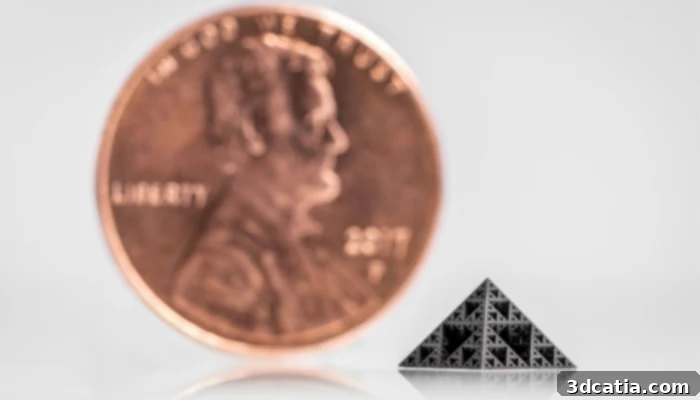
Nanofabrica can print complex pieces that are smaller than a penny (photo credits: Nanofabrica)
As I mentioned earlier, the only genuine restriction on the vast opportunities that exist within micro-manufacturing is our collective imagination. It is with this philosophical mindset that we at Nanofabrica approach our work. We collaborate pragmatically and partner closely with our customers to thoroughly assess how the Tera 250 system can best assist their specific manufacturing endeavors. Therefore, we wholeheartedly encourage an open conversation. Through mutual engagement and collaborative effort, we believe we can together stimulate the widespread manufacture of innovative, high-performance, and ultimately profitable solutions across a diverse range of industries. We invite you to explore further and discover more about Nanofabrica and our cutting-edge micro-manufacturing capabilities HERE.
What are your thoughts on Nanofabrica and its revolutionary micro-resolution technology? We’d love to hear from you! Please share your insights and comments below, or connect with us on our Facebook, Twitter, and LinkedIn pages! Don’t miss out on the latest advancements in 3D printing – sign up for our free weekly Newsletter here to get the freshest news delivered straight to your inbox!
*Thumbnail photo credits: Nanofabrica