
London Marathon’s Eco-Friendly Revolution: Scaled’s 3D Printed Mile Markers Pave the Way for Sustainable Events
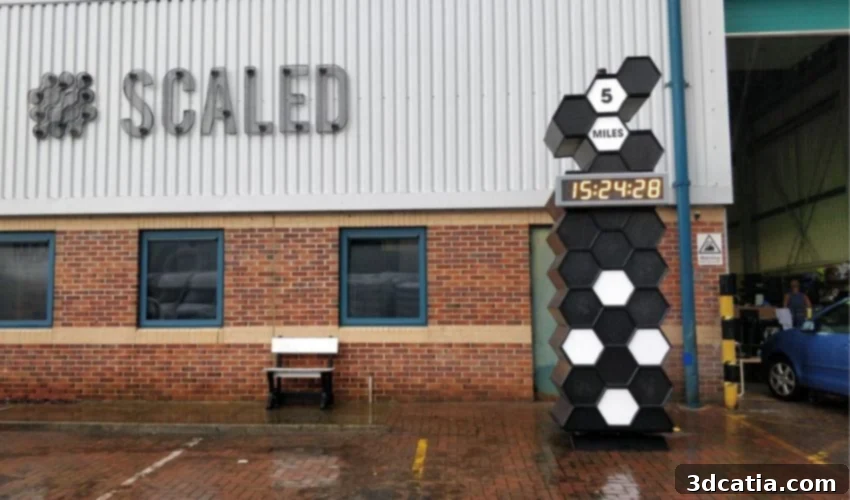
Sunday, October 2nd, marked a significant milestone: the 42nd anniversary of the renowned London Marathon. This iconic race, celebrated as one of the world’s premier running events, drew an impressive crowd of over 40,000 dedicated participants and captivated countless thousands of spectators. For every runner who crosses the starting line, the Marathon represents a colossal undertaking, a personal triumph, and an unparalleled opportunity to excel. Yet, beyond the individual achievements on the track, a quiet revolution was unfolding behind the scenes, spearheaded by UK-based innovation firm Scaled (stylized as Scal3D). This visionary company took on the monumental task of producing the race markers, transforming a seemingly mundane logistical requirement into a powerful statement of environmental stewardship and technological prowess. Scaled successfully 3D-printed 51 robust and visually striking mile markers, all crafted from an astonishing 14 tons of recycled waste plastics. As David Speight, CEO of Scaled, eloquently stated, “the real winner was the planet,” underscoring the profound impact of their sustainable approach.
The genesis of this groundbreaking project can be traced back to the innovative minds of design students. These aspiring talents had entered a competition organized by the then-named Stephen Lawrence Charitable Trust (now recognized as Blueprint for All). The challenge presented to them was to reimagine and redesign the crucial 18th-mile marker for the marathon course. Their creative designs caught the attention of Scaled, who, with their expertise in advanced manufacturing, saw the potential to transform these concepts into tangible realities using cutting-edge 3D printing technology. Impressed by their initial collaboration and Scaled’s capabilities, the company subsequently secured a successful bid to design and produce the markers for the entire event. This expansion elevated the project to an immense scale, demanding significant resources, innovation, and dedicated effort. Over an intensive period of 78 consecutive days, Scaled’s facilities operated continuously, bringing to life more than 2,000 individual parts through 3D printing. The assembly phase alone required an additional 60 hours of meticulous drilling to ensure the structural integrity and perfect alignment of each component. This intricate process exemplified Scaled’s engineering prowess, demonstrating how additive manufacturing could tackle large-scale, complex projects with precision and efficiency, while simultaneously championing sustainable practices.
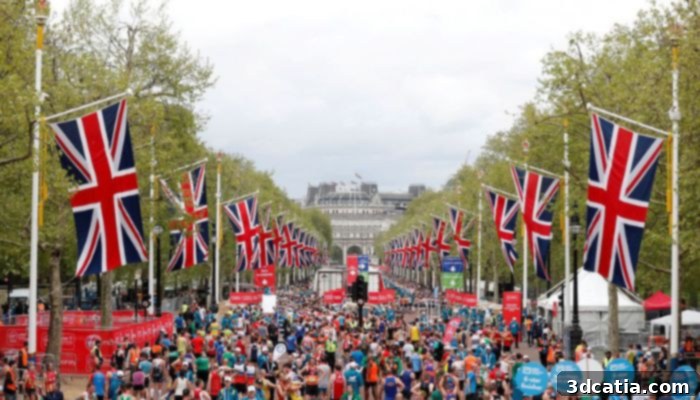
Participants in the TCS London Marathon. Photo credit: Reuters
Sustainable Material Sourcing: A Circular Economy Masterclass
As previously highlighted, the integral role of 3D printing was paramount in the preparations for the London Marathon. However, the true innovation extended beyond the manufacturing process itself, delving deep into the very origins of the materials used. Scaled embarked on an ambitious journey to source materials in the most sustainable way possible, fostering crucial collaborations with several key sustainability organizations. These included Stormboard, an expert in creating durable materials from recycled plastics; Keep Britain Tidy, a leading environmental charity dedicated to reducing litter and improving public spaces; and Fillosophy, a company focused on circular economy solutions. Additionally, they partnered with Hill’s Premier Polymers, specialists in plastic reprocessing. Together, this powerful consortium undertook the gargantuan task of collecting and preparing the impressive 14 tons of waste plastics that would form the foundation of the innovative mile markers. This collaborative effort was a testament to the power of partnership in tackling environmental challenges on a large scale.
The process of transforming various forms of waste plastic into a usable, high-quality material for large-format 3D printing presented its own unique set of challenges and required significant ingenuity. Scaled, alongside its partners, meticulously removed four tonnes of plastic directly from Britain’s beaches, actively contributing to marine cleanup efforts and preventing further ocean pollution. An additional 6.5 tonnes were salvaged from correx signage, much of it originating from previous London Marathons. This particular source exemplifies a true circular economy approach, where materials from past events are not discarded but are instead given a new life, closing the loop on event waste. The remaining 3.5 tonnes were carefully collected from a diverse range of other waste streams, showcasing a comprehensive and inclusive approach to plastic recovery. This meticulous sourcing strategy goes far beyond simple recycling; it represents a commitment to upcycling and valorizing materials that would otherwise contribute to landfill overburden or environmental degradation. The groundbreaking aspect of this initiative is not just that plastics were rescued from landfill, but also the promise of their future. These robust and eye-catching mile markers are designed with end-of-life recyclability in mind, meaning they can be re-processed and repurposed once again at the conclusion of their current use, contributing to an endless cycle of sustainable creations. David Speight reiterated this triumphant outcome, stating, “the planet wins again,” perfectly encapsulating the enduring environmental benefit of this project.
The successful completion of this project filled the entire Scaled team with immense satisfaction and pride. A spokesperson for the company reflected on the journey, stating, “The journey has been incredibly interesting; we learned so much along the way, pushing the boundaries of what’s possible with large-format additive manufacturing and recycled materials. We are immensely proud of how well the markers have turned out – they stand as a vibrant testament to our engineering skills and, crucially, to the brilliant design concepts of the winning students, especially Chantal Banker and Davina Lyn. This collaboration not only delivered a functional product but also highlighted the immense talent of young designers, giving them a platform to see their visions materialize on a grand scale.” This sentiment underscores the dual success of the project: not only did it produce innovative, sustainable race infrastructure, but it also fostered new talent and demonstrated the power of bringing creative academic ideas to industrial realization. The durability and aesthetic appeal of the markers proved that sustainability does not equate to compromise in quality or visual impact, setting a new benchmark for event branding and infrastructure.
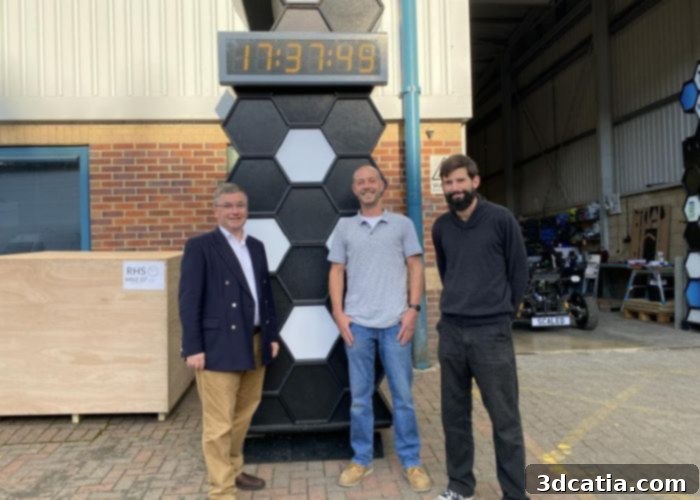
Co-founders Bob Bradley and David Speight with South Swindon MP Sir Robert Buckland. Photo credit: Swindon Advertiser
The pioneering efforts of Scaled at the London Marathon offer a compelling case study for the future of event management and sustainable manufacturing. Their innovative use of large-format 3D printing combined with a commitment to leveraging recycled waste plastics provides a scalable model for other large-scale events worldwide. This project demonstrates that it is entirely possible to host globally recognized competitions with a significantly reduced environmental footprint, transforming waste into valuable assets and promoting a truly circular economy. It champions the idea that sustainability can be a driver for innovation, leading to more efficient processes and inspiring new partnerships between industry, academia, and environmental organizations.
To delve deeper into the technical marvels and collaborative spirit behind this project, understanding how the Scaled team ingeniously employed 3D printing to revolutionize the Marathon’s infrastructure, we invite you to explore Scaled’s detailed LinkedIn post. There, you can discover more about the intricate engineering processes, the challenges overcome, and the invaluable contributions of everyone involved. We are keen to hear your thoughts on these remarkable recycled markers and the broader implications of such sustainable initiatives. Please share your opinions in a comment below or engage with us on ourLinkedIn,Facebook, andTwitter pages! Don’t miss out on the latest advancements and news in the world of additive manufacturing and sustainability – sign up for our free weeklyNewsletter here to get the most recent 3D printing insights delivered straight to your inbox! Additionally, you can find all our engaging videos and in-depth discussions on our dedicatedYouTube channel. Join the conversation and become part of the movement shaping a more sustainable future through advanced technology.
*Cover Photo Credits: Scaled Ltd on LinkedIn