
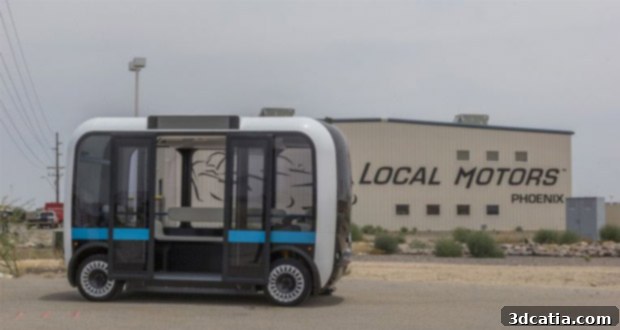
Local Motors: Driving the Future with 3D Printed Autonomous Electric Shuttles Like Ollie
In a monumental leap forward for both the automotive industry and additive manufacturing, Local Motors continues to captivate global attention with its groundbreaking innovations. The manufacturing powerhouse, renowned for its agile micro-factory approach, has successfully engineered and produced ‘Ollie,’ the world’s first autonomous shuttle bus created primarily through advanced 3D printing techniques. This significant achievement was realized at their state-of-the-art micro-factory located in Knoxville, Tennessee, marking a new era for personalized and sustainable transportation.
Local Motors isn’t new to pushing the boundaries of what’s possible with additive manufacturing. Their journey into revolutionizing vehicle production began in earnest in 2016, with the unveiling of the Strati. Fabricated in one of their pioneering micro-factories in National Harbor, Maryland, the Strati distinguished itself as the world’s first 3D printed car. Its sleek design and innovative production method quickly turned heads. Soon after its creation, the Strati graced the streets of Washington D.C., attracting widespread public fascination and, critically, drawing the attention of major players in the transportation sector. Among them was the esteemed German railway company, Deutsche Bahn, which subsequently expressed keen interest in integrating such advanced mobility solutions. Deutsche Bahn is now actively planning to conduct extensive testing of Local Motors’ self-driving shuttles throughout the remainder of the year, a clear testament to the potential and reliability of these novel vehicles.
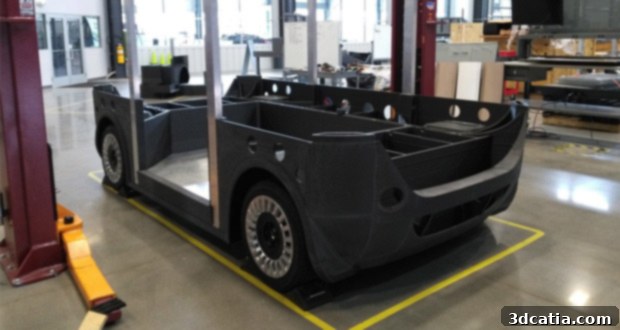
The development of Ollie exemplifies Local Motors’ core philosophy: localized, customizable, and sustainable manufacturing. Operating out of their innovative micro-factory in Knoxville, the team leveraged advanced 3D printing to construct the shuttle’s primary components. Ollie features a distinctive small, cubic frame, designed with versatility in mind. This modular architecture allows for unparalleled customization, enabling the vehicle to be precisely tailored to the specific wants and needs of various customers, whether for corporate campuses, urban environments, or specialized logistical operations. Beyond its adaptable design, Ollie is also a beacon of eco-friendliness, powered entirely by electricity. This commitment to electric propulsion significantly reduces carbon emissions and operational noise, making Ollie an ideal solution for environmentally conscious communities seeking to enhance their public and private transportation networks.
The revolutionary aspect of Local Motors’ approach lies in its ability to defy traditional manufacturing constraints. As explained by Local Motors themselves regarding their self-driving, 3D printed shuttle, “Now campuses and cities don’t have to fit a generic shuttle to it, rather a new shuttle can be designed and printed to fit to it instead. This is completely revolutionary.” This statement perfectly encapsulates the paradigm shift they are driving. Instead of adapting existing vehicle models to diverse environments, Local Motors offers the unprecedented flexibility to design and produce vehicles that are purpose-built for their intended use cases. This level of bespoke manufacturing was previously unimaginable in the mass-production dominated automotive industry, promising a future where transportation solutions are as unique as the communities they serve.
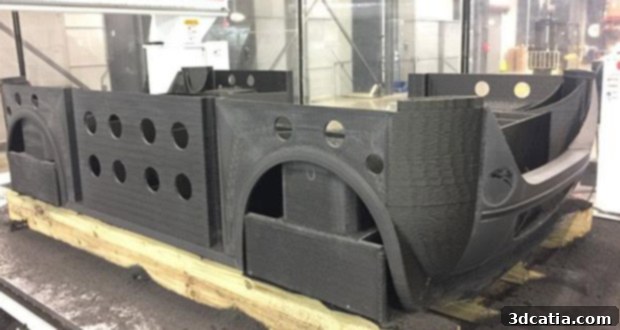
Local Motors has consistently highlighted how their advanced 3D printing process unlocks unprecedented levels of customization. This is a game-changer for vehicle design, where characteristics like shape and size can be radically altered and optimized to meet the precise requirements of the end customer. Unlike traditional manufacturing, which often involves extensive retooling and long lead times for even minor modifications, 3D printing allows for rapid iteration and significant design flexibility. This means that a configuration that might have posed insurmountable challenges in conventional production can now be easily realized. Traditional vehicle manufacturing typically demands years of intensive engineering, design, and costly tooling for a single make or model, which is then produced on an enormous, standardized scale. This method, while efficient for mass markets, stifles innovation and limits niche applications. In stark contrast, 3D printing has flung open the doors to tailored production, operating effectively on a much smaller, more localized scale. This enables Local Motors to respond quickly to market demands, implement design improvements swiftly, and deliver highly specialized vehicles without the prohibitive costs and timeframes associated with conventional methods.
The advantages extend beyond mere aesthetics; functional improvements, integrated components, and optimized material usage are all within reach. For instance, parts can be designed with internal lattice structures that are lighter yet stronger, or with integrated channels for wiring and cooling, simplifying assembly and reducing overall part count. This holistic approach to design and manufacturing is not just about making things differently; it’s about making fundamentally better, more efficient, and more adaptable vehicles for the diverse needs of modern society. The ability to produce bespoke vehicles on demand allows Local Motors to cater to a variety of niche markets, from specialized logistics to last-mile transportation in smart cities, effectively democratizing access to cutting-edge vehicle technology.
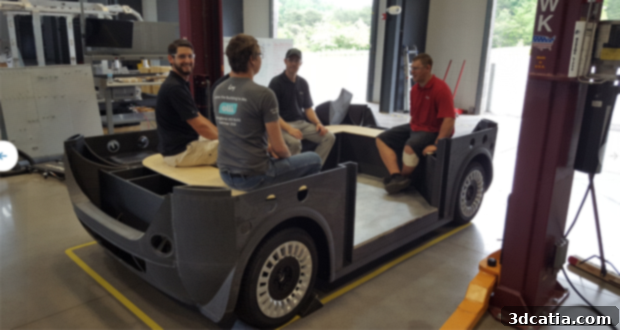
The highly anticipated debut of Ollie is slated for this Fall in Knoxville, Tennessee, a location that underscores the strong partnership between innovation and regional support. This autonomous shuttle bus is engineered to operate seamlessly without a human driver, relying on a sophisticated network of advanced cameras, lidar, radar, and other cutting-edge sensors. These technologies work in concert to provide a 360-degree environmental awareness, enabling Ollie to navigate complex urban landscapes, detect obstacles, and react to dynamic traffic conditions with remarkable precision and safety. The integration of artificial intelligence and machine learning algorithms further enhances Ollie’s ability to learn and adapt, continuously improving its performance and predictive capabilities in real-world scenarios. This level of technological sophistication positions Ollie as a leader in the nascent but rapidly expanding field of autonomous public transportation.
The strategic choice of Knoxville for Ollie’s premiere is no accident. As Local Motors CEO Jon B. Roger Junior eloquently articulated last month, “Tennessee is one of the first eight states to allow driverless cars on public roads.” This forward-thinking regulatory environment provides a crucial testing ground and a supportive ecosystem for autonomous vehicle development and deployment. Roger Junior further highlighted the historical connection: “Knoxville is the town in which Local Motors 3D printed its first car.” This makes Knoxville a symbolic birthplace for their additive manufacturing revolution in automotive. He elaborated on the profound impact of this technology, stating, “3D printing unlocks vehicle makers of the future to adopt technologies of the future faster than ever before. Therefore, it is no surprise that Knoxville, Local Motors and Tennessee would see Olli on the road first.” This synergy between progressive legislation, innovative manufacturing techniques, and a supportive local community perfectly aligns to accelerate the adoption of advanced mobility solutions, making Tennessee a pivotal state in shaping the future of transportation.
The implications of Ollie’s deployment extend far beyond mere novelty. It represents a significant step towards addressing critical urban challenges such as traffic congestion, air pollution, and the need for more efficient and accessible public transportation. By offering a customizable, autonomous, and electric shuttle, Local Motors is providing a scalable solution for last-mile connectivity, campus mobility, and even specialized delivery services. The flexibility afforded by 3D printing means that future iterations of Ollie can quickly incorporate new technological advancements, adapt to evolving regulatory landscapes, and cater to an even wider array of functional and aesthetic preferences, ensuring that Local Motors remains at the forefront of this transformative industry.
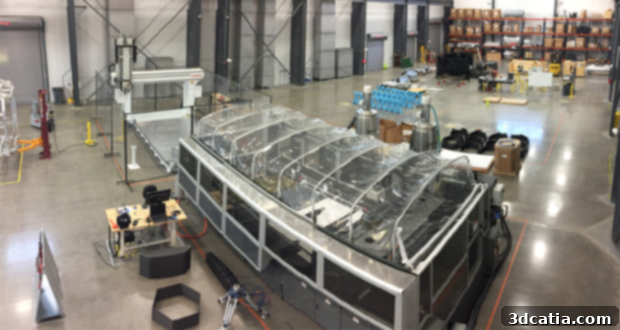
Local Motors’ commitment to the micro-factory model is fundamental to their success. These localized manufacturing hubs are designed to be highly efficient, significantly reducing the capital expenditure typically associated with traditional automotive plants. By bringing production closer to the point of consumption, Local Motors minimizes transportation costs and supply chain complexities, contributing to a more sustainable and responsive manufacturing ecosystem. Each micro-factory can serve a regional market, allowing for rapid deployment of new vehicle models and immediate integration of customer feedback into the design process. This decentralized approach contrasts sharply with the centralized, monolithic factories of conventional automakers, offering a leaner, more agile, and ultimately more resilient production paradigm. It’s not just about building cars; it’s about building a smarter way to build cars, tailored for the demands of the 21st century.
The impact of such innovation ripples through various sectors. For urban planners, Ollie offers a vision of cities with fewer privately owned cars, reduced traffic, and improved air quality. For transportation providers, it presents an opportunity to optimize routes, reduce operational costs through automation, and enhance passenger experience with personalized services. For passengers, it promises a convenient, safe, and environmentally friendly mode of travel, potentially available on demand. Local Motors is not just manufacturing vehicles; they are crafting the building blocks of future smart cities and redefining what mobility means for individuals and communities worldwide. Their relentless pursuit of integrating additive manufacturing with cutting-edge autonomous technologies positions them as a true pioneer, setting benchmarks for an industry in flux and inspiring a new generation of engineering and design.
What are your thoughts on this revolutionary 3D printed, self-driving shuttle? Do you see autonomous electric vehicles like Ollie transforming urban mobility in your city? We invite you to share your perspectives in the comments section below or join the conversation on our Facebook and Twitter pages!