
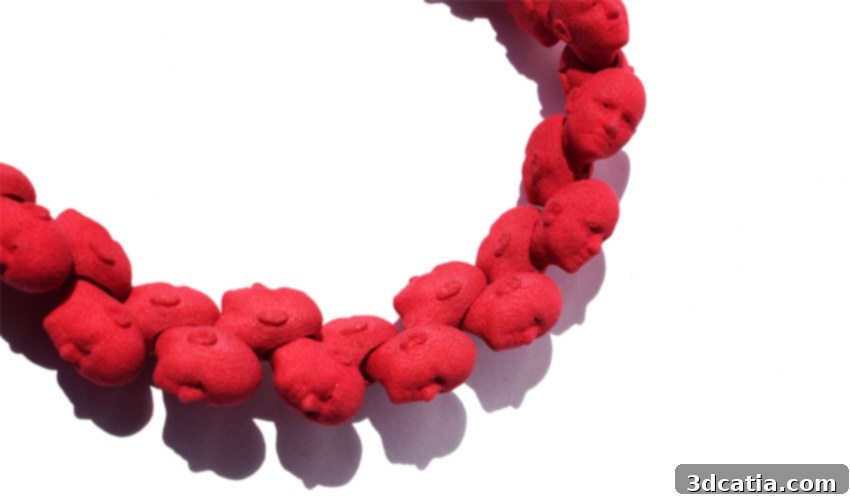
Unleashing Creativity: Caroline Auraix’s Vision for the Future of 3D Printed Jewelry
In the dynamic and evolving jewellery sector, additive manufacturing, commonly known as 3D printing, presents a myriad of advantages, particularly when it comes to fostering creative expression and innovation. This revolutionary technology empowers designers to conceptualize and bring to life intricate, complex shapes and geometries that would be virtually impossible to achieve using conventional manufacturing methods. Beyond technical capabilities, 3D printing also significantly expands the scope for personalization, directly addressing the growing demand from discerning consumers who are constantly seeking unique, novel, and highly original jewelry pieces. For many artists, 3D printing technologies serve as an invaluable complementary tool, allowing them to express their boundless imagination and push artistic boundaries, often in conjunction with time-honored traditional techniques. Caroline Auraix, a distinguished French designer, stands as a prime example of this innovative approach. She skillfully integrates 3D modeling and printing into her workflow to craft truly unique pieces that boast surprising forms and a distinct artistic voice. We had the privilege of interviewing her to gain deeper insights into her inspiring creative process, the influences that shape her work, and the cutting-edge technologies she employs today.
3DN: Can you introduce yourself and explain your connection to 3D printing?
My name is Caroline Auraix, and I am a visual artist based in the vibrant city of Paris. For a decade, I honed my skills and expertise as a collection director and workshop manager, working closely with the renowned designer Tzuri Gueta, celebrated for his innovative silicone fashion accessories. This extensive and fruitful collaboration concluded at the end of 2016, marking a pivotal moment when I decided to embark on my solo artistic journey, driven by a desire to tell my own stories through my creations. I felt a strong pull to orient my work towards themes centered on the “human” experience, which serves as my primary source of inspiration. My artistic practice revolves around creating sculptural jewelry pieces imbued with surrealist and metaphysical accents, designed to provoke thought and question our fundamental relationship with reality. My fascination with synthetic materials, ranging from various plastics to resins and silicone, has been a constant throughout my career. I strive to elevate these materials, transforming them into captivating “trompe l’oeil” compositions that cleverly play with perception and delightfully disturb the senses.
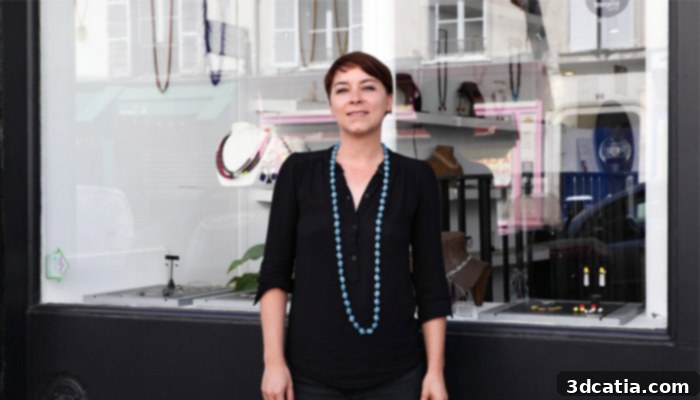
Caroline Auraix
I first encountered the concept of 3D printing many years ago, and I was immediately captivated by the seemingly infinite possibilities this technology promised for the world. It felt as though reality was finally catching up with the most fantastical elements of fiction! At that time, my knowledge in the field of 3D modeling was non-existent. I perceived this technological advancement as something inherently inaccessible, reserved exclusively for a scientific elite – engineers, programmers, and other high-flying computer scientists. This perception persisted until a definitive moment when I realized that I, too, at my humble level, could harness this powerful technology to serve my creative endeavors. And so, my exciting adventure into the world of 3D began.
3DN: Why do you integrate 3D technologies into your artistic practice?
When I transitioned into working as an independent artist, I was immediately confronted with the overwhelming challenge of the “time factor.” The artistic process involves so many distinct stages: conceptualizing, designing, manufacturing, marketing, selling, promoting, communicating, and managing the business aspects – each more demanding and time-consuming than the last. It became clear that I needed to discover a viable solution to bring this deeply personal project to fruition, especially after having dedicated everything to it. This urgent need for efficiency and innovation is precisely how 3D printing came into my life and artistic practice. Thanks to this advanced process, I have dramatically reduced the time spent on the production of my unique jewelry pieces. This efficiency also allows me to offer my creations at significantly more accessible prices compared to if they had been produced using purely traditional methods. All these factors contribute directly to my overarching desire to democratize art, making it possible for a wider audience to acquire an authentic artist’s piece without incurring unreasonable expenses.
3DN: How do you specifically utilize 3D technologies in your creative process?
My primary design tool is Rhino3D, which is widely recognized as the industry-standard software in the jewellery sector due to its robust capabilities for complex surface modeling. I initially gained a foundational understanding of this powerful software during an intensive one-week internship, and from there, I largely self-trained, exploring its nuances and functionalities. In addition to Rhino3D, I also leverage free 3D modelers. These platforms allow me to quickly convert my more structured Rhino models into forms that resemble “modeling pastes” effects – designs that would typically require a much longer time to craft within Rhino. I also find inspiration and utility in character generators, which evoke fond memories of countless hours spent customizing avatars in my video games, allowing me to bring a playful and personalized touch to some of my designs.
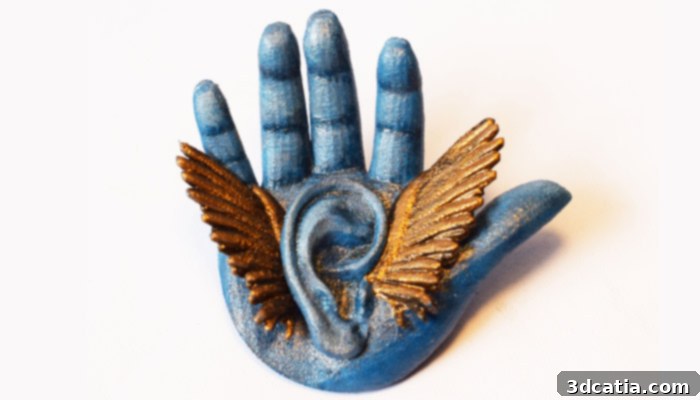
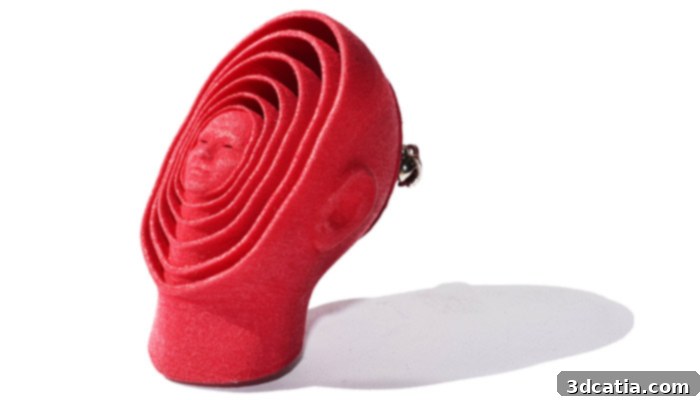
A pin designed thanks to 3D printing | Credits: Caroline Auraix
Once I have painstakingly crafted a composition that meets my artistic vision – a process that can often span several days – I then rely on external service providers for the actual 3D printing. I frequently collaborate with Shapeways, a platform I find offers an excellent balance between quality and price. However, one notable limitation is their 64 MB file size restriction, which can sometimes pose a significant challenge when working with highly detailed or very large models. In such instances, models must be reduced, which unfortunately can lead to a compromise in the overall definition and intricacy of the final printed piece.
3DN: What specific 3D printing technologies and materials do you predominantly use?
Having not yet invested in my own 3D printer, I have experimented with various materials through different 3D printing service providers. Through extensive testing, I’ve discovered that Selective Laser Sintering (SLS) technology, utilizing nylon as the material, is exceptionally well-suited to my artistic requirements. The inherent porosity of SLS nylon allows for an incredible absorption of dyes, yielding unique and vibrant coloring effects that are central to my aesthetic. Furthermore, when printed in very thin layers, specifically around 0.60 mm, nylon exhibits a fascinating translucency, allowing light to pass through. This characteristic makes it an ideal material for creating luminaires and other light-emitting sculptural pieces. Its robust durability combined with its remarkable lightness also positions it as a perfect choice for jewelry, ensuring comfort and longevity for the wearer.
I deliberately choose white nylon as my base material. This strategic decision provides me with complete creative freedom to customize my creations at will, ensuring that each piece possesses a truly unique and distinctive character. I achieve rich material effects by meticulously hand-painting them with a ceramic paint, which offers a more intense and nuanced rendering compared to, for instance, standard acrylic paints. While exploring different options, I also experimented with metal sintering, trying various finishes like bronze and silver. However, I found this solution to be less durable for jewelry applications, as the plating tends to wear off quite rapidly with friction. Nevertheless, I recognize that this metal printing technology holds immense potential for the creation of smaller, intricate decorative objects.
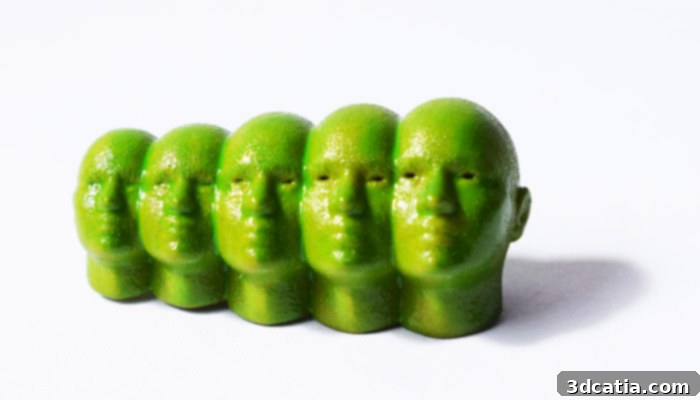
With 3D printing you can achieve original designs | Credits: Caroline Auraix
3DN: What have been the primary challenges you’ve encountered in developing your 3D printed products?
The most significant and persistent challenge I have faced, and continue to navigate, is the intricate process of modeling my parts for 3D printing. It is a common misconception that once a 3D model is visually complete, one can immediately proceed to the printing stage. This couldn’t be further from the truth! It is absolutely crucial to meticulously consider the specific material with which the object will be printed, as different materials have different printing requirements and limitations.
I acquired all this critical knowledge through hands-on experience, learning directly from my mistakes. I can no longer count the number of “unprinted” models I’ve painstakingly created – designs that looked perfect on screen but failed during the physical printing process. Furthermore, there’s the inherent difficulty of ensuring a “clean” file, which means a model free of structural imperfections such as holes or non-manifold edges. Non-manifold edges, for instance, are essentially duplicate or inconsistent edges on a part’s geometry that confuse the printer. Finally, as I mentioned earlier, the definition (resolution) of the model and its computational weight (file size) are fundamental cornerstones of a successful print job. Sometimes, to bring a project to life, one must regrettably sacrifice certain intricate details to meet file size or printing constraints. While all these considerations seem incredibly obvious to me today, for the beginner I once was, I had to personally confront and systematically resolve each of these complex problems to advance my skills and perfect my craft.
Credits: Caroline Auraix
3DN: What do you consider to be the most significant benefits that 3D printing offers to your work and the creative industry?
3D printing truly unlocks a multitude of groundbreaking perspectives across a wide array of fields, and particularly within the creative sector. It profoundly pushes back the conventional boundaries of what’s possible, primarily through its remarkable ability to fabricate structures and forms that a human hand, using traditional techniques, simply could not achieve. I am specifically referring to complex parts featuring intricate internal structures, often interwoven in highly elaborate and diverse forms. This also includes the creation of precise, highly complex geometries that 3D printing can render with exceptional accuracy and consistency, designs that would be prohibitively long, tedious, and often impossible to execute through traditional production methods.
The significant amount of time saved by directly printing your designs, bypassing numerous classic stages such as physical mock-ups, molding, foundry work, extensive reworking, and more, is another immense benefit. This efficiency allows creators to very quickly ascertain whether a prototype meets their initial expectations, accelerating the design iteration process. Ultimately, this streamlined approach translates into more attractive and affordable prices for the end customer, making unique art more accessible. In essence, embracing 3D printing for your projects means achieving greater autonomy in your creative process and, most importantly, experiencing an unparalleled sense of artistic freedom.
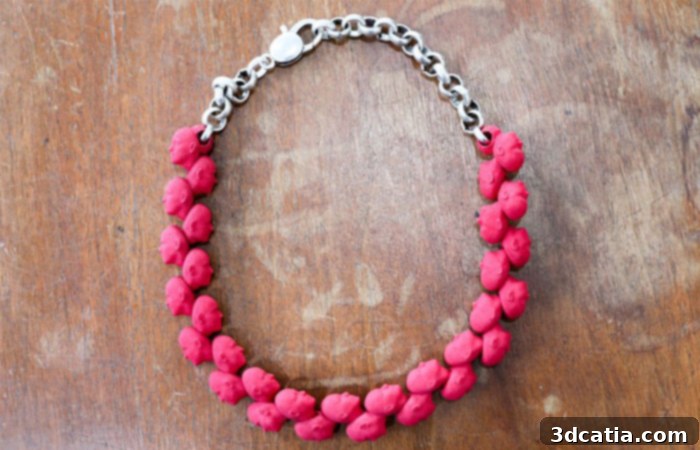
A bracelet designed using 3D technologies | Credits: Caroline Auraix
3DN: What is your outlook on the future of 3D printing within the jewelry sector?
Currently, many large jewellery companies primarily utilize 3D printing for rapid prototyping, enabling them to quickly visualize and present designs to clients, or for manufacturing complex molds that would otherwise be difficult to produce. However, a significant portion of the industry remains deeply committed to and attached to traditional manufacturing methods, which they believe best showcase their established craftsmanship and historical know-how. Despite this, technical advancements in additive manufacturing are continuously evolving, now allowing for the precise printing of precious metals with incredibly fine definition and intricate detail. The Francéclat committee, a key organization dedicated to the economic development of the French jewelry and watchmaking profession, recognized this potential early on. Since 2017, they have actively promoted this innovative method of jewelry creation by launching a dedicated competition. This initiative clearly demonstrates that the idea of integrating advanced digital fabrication into fine jewelry is steadily gaining traction and beginning to carve out its significant place in the industry.
3DN: Do you have any final words of advice or encouragement for our readers?
For many years, 3D printing fueled my wildest dreams, and my advice to anyone considering it is simple: don’t wait to get started! With a combination of patience and consistent practice, you truly can bring your most ambitious projects to life. The internet is an incredible resource, brimming with advice, tutorials, and communities of all kinds. Don’t hesitate to experiment, to try new approaches, to embrace mistakes as learning opportunities, and to start over when necessary. Regardless of your specific business or creative field, 3D printing is poised to become an increasingly indispensable technology in the years ahead. Making the digital shift now means proactively ensuring the sustainability and future relevance of your craft or enterprise.
Many traditional artisans still harbor resistance towards this technology, mistakenly believing that the “machine” will somehow usurp their handcrafted work. However, I firmly believe the opposite is true. The expanded manufacturing possibilities afforded by 3D printing will enable them to offer innovative, highly customizable, and more accessible services to their clientele. This is the essence of the discussion: the mass standardization that characterized much of yesterday’s production will increasingly be replaced by a profound need for authenticity, personalized items, and unique expressions. This shift moves us away from the unsustainable model of mass production and the over-exploitation of resources that it has historically generated, paving the way for a more bespoke and sustainable future in creation.
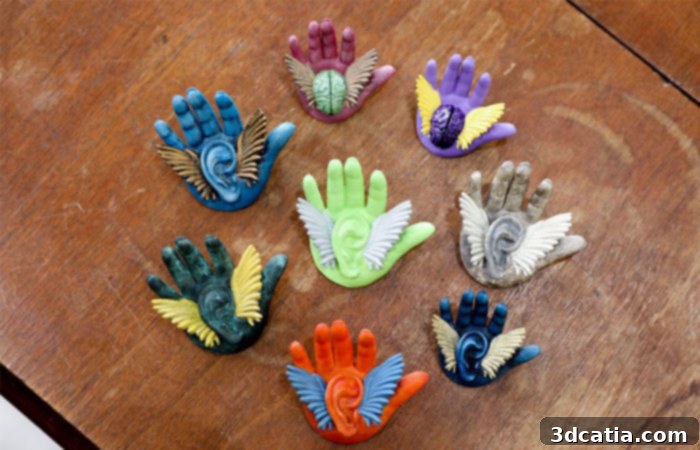
Credits: Caroline Auraix
Discover more of Caroline Auraix’s inspiring work on her official website HERE.
What are your thoughts on Caroline Auraix’s innovative approach to jewelry design? We invite you to share your comments below or connect with us on our Facebook and Twitter pages! Don’t forget to subscribe to our free weekly Newsletter to receive all the latest news and insights in the world of 3D printing directly in your inbox!