
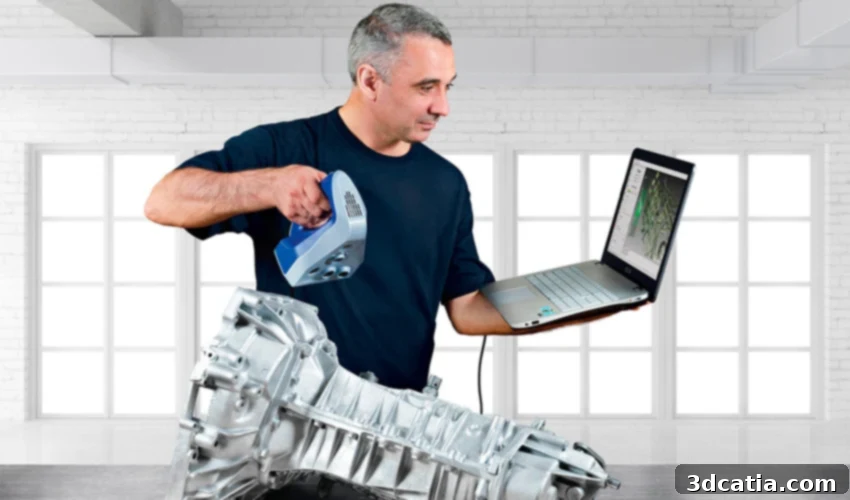
Expert Guide: How to Choose the Perfect 3D Scanner for Your Needs
In today’s rapidly evolving digital world, 3D scanning technology has become indispensable across numerous industries, from manufacturing and design to healthcare and cultural heritage preservation. Just a few months ago, our experts provided comprehensive guidance on selecting the right 3D printer and its corresponding filament. Building on that foundation, we now delve into the intricate world of 3D scanners, offering essential insights to aid your purchasing decision. To bring you the most authoritative advice, we’ve consulted three leading experts from renowned companies: Artec 3D, Thor3D, and 3DChimera. They will help demystify the complexities of 3D scanning, guiding you through the critical considerations for acquiring a scanner that perfectly suits your requirements.
The journey to choosing the right 3D scanner often begins with fundamental questions: Which 3D scanning technology aligns best with my project? What are the paramount criteria when evaluating a 3D scanner – is it accuracy, scan volume, measurement frequency, or perhaps ease of use? And with a myriad of models available, which one truly stands out? This article aims to address these questions comprehensively, providing you with clarity and confidence in your selection process.
Our esteemed panel of experts brings a wealth of experience to this discussion. We connected with Andrei Vakulenko, the Chief Business Development Officer at Artec 3D, a globally recognized developer and manufacturer of advanced 3D scanning hardware and software. Headquartered in Luxembourg, Artec 3D’s innovative products and services are widely adopted across various industries, with their handheld scanners particularly noted for their precision and versatility. We also engaged with an expert from Thor3D, a Russian-based manufacturer celebrated for its handheld, wireless scanners. Thor3D recently made waves with the launch of Calibry, a fast yet compact 3D scanner designed for diverse applications, including arts, medical fields, and reverse engineering. Finally, we had the privilege of speaking with Alex Hussain, Co-Founder and CEO of 3DChimera. His company specializes in holistic 3D scanning and 3D printing solutions, offering tailored services to clients. A remarkable anecdote that highlights 3DChimera’s expertise involves their recent collaboration with National Geographic, where they utilized 3D scanning to assist a tortoise with a severely damaged shell. The data gathered from the 3D scan enabled them to design and subsequently 3D print a custom prosthetic shell cover, showcasing the transformative power of 3D scanning in practical, life-changing applications.
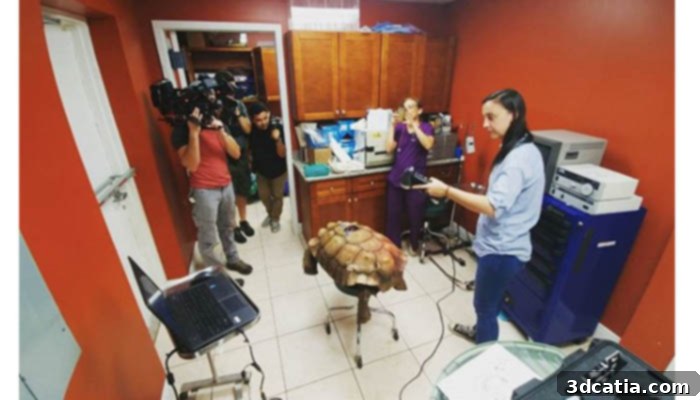
3DChimera successfully utilized 3D scanning technology to create a prosthetic shell for a tortoise | Credits: 3DChimera, Instagram: @3dchimera
Understanding 3D Scanning Technologies: Which One Reigns Supreme?
When it comes to selecting a 3D scanner, one of the first considerations for many is the underlying technology. However, our experts offer a nuanced perspective. Andrei Vakulenko from Artec 3D posits that all 3D scanning technologies are valuable and serve distinct purposes. He strongly emphasizes that the true determinant in choosing a 3D scanner is not the technology itself, but rather its suitability for the specific object you intend to scan and the desired outcome. “When choosing a scanner, there is no need at all to think about what technology the scanner is based on,” he asserts. “This isn’t relevant. For example, if you need to scan something very small, you need to choose a scanner that is able to capture the small details of the object in high resolution. If you need to scan something from a distance of 100m, you need to choose a long-range scanner.” He draws a compelling analogy: “When you buy a TV, for example, you don’t think about what is inside. You care how it works and the quality of the picture.” This perspective shifts the focus from technical specifications to practical application and performance.
Delving into specific technologies, the expert at Thor3D explained their company’s preference for ‘structured light’ technology. This method projects a known light pattern (like lines or grids) onto an object and then analyzes the distortion of these patterns to calculate its 3D geometry. Thor3D finds this technology particularly advantageous for producing handheld devices, offering greater flexibility compared to more rigid, tripod-mounted systems. Furthermore, structured light scanners excel in scenarios involving human subjects, as they are less susceptible to minor movements, such as breathing, which can compromise scan quality. This capability is evident in their newest product, the Calibry scanner, a versatile handheld device engineered to accurately digitize objects ranging from medium to large sizes (approximately 10cm to 10m in length). Structured light scanners are known for capturing fine details and color information, making them ideal for applications requiring high fidelity and realistic texture mapping.
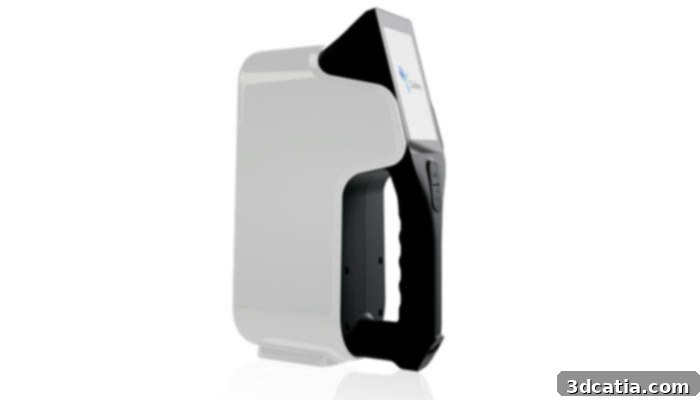
The Calibry 3D scanner offers a fast and compact solution for digitizing medium to large objects | Credits: Thor3D
Alex Hussain, Co-founder and CEO of 3DChimera, sheds light on the technologies his company primarily employs: ‘structured light’ and ‘laser scanning’. Laser scanning, typically involving a laser beam or line projected onto the object, measures distances to create a point cloud. Hussain notes, “We find that structured light systems are best for 3D scanning objects where color and texture data are important, in addition to the underlying 3D geometry. By contrast, our laser scanners tend to be faster and a better option when speed and details are the key criteria for a scan.” This distinction highlights that while structured light often delivers rich visual data, laser scanning can offer superior speed and precision for intricate geometric details, especially in industrial or engineering applications where color might be secondary. The choice, therefore, hinges on the specific project requirements, emphasizing the importance of aligning technology with application.
Crucial Criteria for Selecting a High-Performance 3D Scanner
Navigating the vast market of 3D scanners requires careful consideration of several key criteria beyond just the underlying technology. While obvious steps like checking reviews and researching products are important, the dynamic nature of this industry, with constant new launches and evolving features, necessitates a more informed approach. Our experts have identified several critical factors that buyers, especially first-timers, should prioritize.
Alex Hussain from 3DChimera emphasizes a holistic problem-solving approach. “At 3DChimera, we are very focused on finding the best solution to highly technical problems. When considering a 3D scanner we look at the trade-off of accuracy, ease of use, and desired scan object size. We like to think of each 3D scanning technology as a tool in the toolbox, each with its own strengths and weaknesses for any given application.” This ‘tool in the toolbox’ mentality is crucial, as it suggests that no single scanner or technology is universally superior. Instead, the optimal choice arises from balancing these three core elements according to the project’s demands. For instance, a scanner with extremely high accuracy might be more complex to operate, or a scanner designed for small objects might not be practical for large-scale industrial components. Understanding these inherent compromises helps set realistic expectations and guides towards a practical solution.
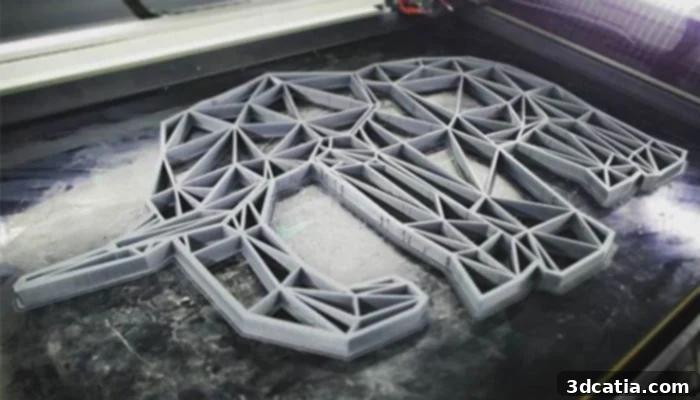
3DChimera demonstrates the artistic potential of 3D printing and scanning | Credits: 3DChimera, Instagram: @3dchimera
Andrei Vakulenko of Artec 3D underscores the significance of resolution, often more immediately apparent than abstract accuracy figures. “Accuracy is very important, but it’s hard to check this on the spot. But you can see the quality of the resolution with your eyes and so you can immediately compare the scans produced from different scanners.” Resolution refers to the level of detail a scanner can capture, often measured by point distance or mesh density. A higher resolution means more intricate features can be accurately represented. While accuracy (how close the scan is to the true dimensions of the object) is paramount for precision applications like metrology, resolution gives an immediate visual indication of the scanner’s capability to capture fine textures and geometries.
Beyond technical specifications, the quality of post-purchase support is a vital, yet often overlooked, factor. “It’s a good idea to read reviews and see what users are saying about the scanner and the company that makes it. And what kind of support the company provides. This is particularly important. A 3D scanner will last you around 10 years, so you need to know what support you will receive over this long period of time.” Investing in a 3D scanner is a significant commitment, and robust customer support, including technical assistance, warranty, and repair services, can greatly impact the long-term usability and return on investment. A scanner might be technologically advanced, but without reliable support, any issues can lead to significant downtime and frustration.
Another critical aspect highlighted by Vakulenko is the ease of use and the overall workflow efficiency. “Try to understand how easy it is to use the scanner. How long will you have to spend on training before you are able to get the best results from the scanner? And also how easy will the process be in general? Do you need to add markers to the object, or can the scanner keep good track of the object without them? The easier it is to scan, the faster your whole workflow will be.” The learning curve associated with a scanner can directly impact productivity. Scanners that require extensive training or cumbersome preparation steps, such as placing tracking markers, can slow down projects. Opting for a more intuitive system, especially for new users, can lead to quicker mastery and more efficient operations.
Finally, Andrei Vakulenko points out a factor that even experienced users might sometimes overlook: the integral role of software. “The software is an integral part to 3D scanning. How good is the scanner’s software and how often is it updated? If it’s not updated regularly, then in five years’ time, you are not going to be a very happy user.” The scanner’s hardware is only as good as the software that processes the data. High-quality software offers intuitive interfaces, powerful processing algorithms, efficient data alignment and meshing tools, and features for editing and optimizing the 3D model. Regular software updates are crucial for bug fixes, performance improvements, compatibility with new operating systems, and the introduction of new features, ensuring the scanner remains a valuable asset over its lifespan.
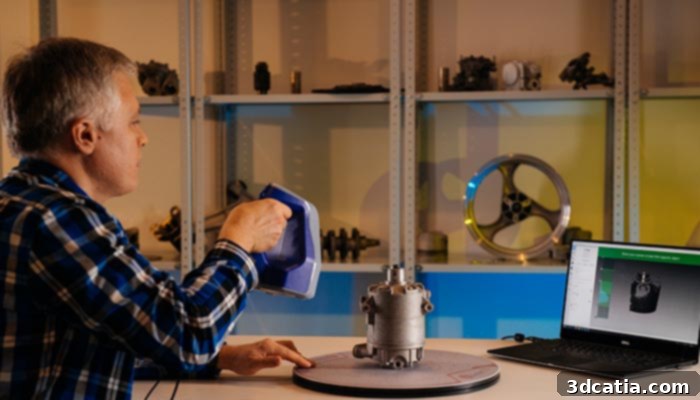
The Space Spider 3D Scanner by Artec 3D, known for its high precision | Credits: Artec 3D
Thor3D adds that the very first question a potential user must answer is regarding the size of the objects they intend to scan. “A scanner meant for small items (like jewelry), will be extremely difficult to use to digitize a car and vice-versa. Once you determine the size of the objects, the next question is your budget. Granted, it’s human nature to want to spend as little as possible, but your budget will determine the quality of your data. To scan an automobile, you can use a $200 scanner or a $200,000 scanner.” This crucial point underscores that scanners are often specialized. Desktop scanners are perfect for tiny, intricate objects, while handheld scanners offer flexibility for medium to large items, and long-range scanners are essential for massive structures or terrains. The object’s scale directly dictates the scanner’s required field of view, depth of field, and tracking capabilities. Naturally, these capabilities, along with the desired accuracy and speed, correlate directly with the investment level. While budget constraints are real, it’s vital to align your spending with your project’s quality and performance needs to avoid purchasing a tool that underperforms or over-complicates your workflow.
Essential Advice for First-Time 3D Scanner Buyers
For individuals venturing into 3D scanning for the first time, the journey can seem daunting. Our experts offer invaluable advice to help novice users navigate the initial learning curve and make informed decisions that prevent common pitfalls.
Thor3D offers a dose of realism and encouragement: “Be patient. 3D scanning is not yet automated. There is not a single device on the market that can give you a finished product with a push of a button. In the first 2-4 weeks, expect to be frustrated during scanning itself and even more frustrated during post-processing sitting behind a PC. There is a definite learning curve. That being said, about 2-4 weeks after starting, you will begin to see good results and within several months, you will wonder how you ever lived without this technology.” This advice highlights that 3D scanning, while powerful, requires practice and dedication. Users should anticipate a learning period, particularly concerning scanner operation, optimal scanning techniques, and post-processing software. Embracing this learning curve rather than expecting instant perfection will lead to greater satisfaction and successful outcomes. There are numerous online tutorials, communities, and manufacturer resources available to help accelerate this learning process.
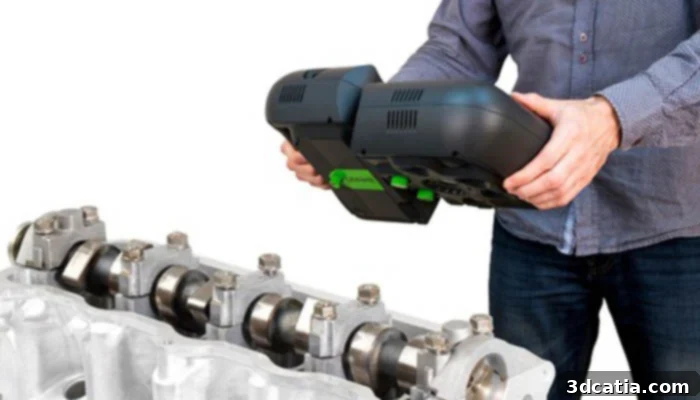
The Drake 3D Scanner from Thor3D provides wireless scanning capabilities | Credits: Thor3D
3DChimera’s Alex Hussain stresses the importance of foresight: “Start with your end application for the 3D scan data in mind and work backwards. Often, we see customers jump into 3D scanning without fully understanding the entire workflow required to move from the 3D scanner to their ultimate goal – which may be reverse engineering, preparation for part reproduction via 3D printing, or even metrology-level inspection. If you do not consider all of the potential tools – both hardware and software – required to complete the job, you may find yourself with an expensive 3D scanner that only partially solves your problem.” This is perhaps one of the most crucial pieces of advice. Defining the ultimate purpose of the scan data (e.g., for architectural modeling, quality control, animation, or custom prosthetics) will dictate the necessary level of detail, accuracy, file format, and post-processing steps. Understanding the entire workflow from capture to final output ensures that all hardware and software components are compatible and capable of achieving the desired results, preventing expensive missteps.
Artec 3D provides a practical, hands-on recommendation: “Bring a typical part that you will be scanning to an exhibition such as Formnext and take it to all the 3D scanning companies exhibiting there. Ask them to scan it for you, watch how they do it and check the final result. Compare the scanning workflow, the processing and the final model created by each scanner.” This suggestion is invaluable for direct comparison. Exhibitions offer a unique opportunity to witness different scanners in action with your specific objects. Observing the ease of operation, the speed of data capture, the immediate quality of the raw scan, and the subsequent processing steps can provide a clearer picture than any brochure or online video. This real-world comparison helps evaluate factors like user-friendliness, tracking stability, detail capture, and overall efficiency, which are critical for making an informed decision.
Recommendations from the Experts: Which Scanner to Choose?
When asked for specific scanner recommendations, both Artec 3D and Thor3D naturally highlighted their own innovative products, showcasing the unique strengths and applications of their respective lines. For example, Artec 3D offers a range of renowned handheld scanners like the Eva, known for its versatility in scanning medium-sized objects quickly, and the Space Spider, optimized for small, intricate objects with exceptional detail. Thor3D, on the other hand, emphasizes its handheld, wireless devices like the Calibry and Drake, designed for ergonomic use and efficient scanning of medium to large objects, often excelling in environments where mobility is key.
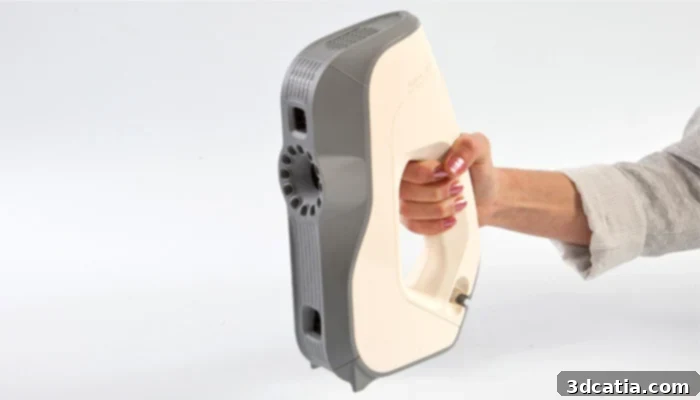
Eva Lite, the budget version of Artec 3D’s bestselling Eva 3D scanner, offers accessibility without compromising quality | Credits: Artec 3D
Alex Hussain of 3DChimera, with his company’s focus on providing tailored solutions across various technologies, offers a broader perspective. “It is hard to recommend a single scanner, as each technology, brand and even model have their own strengths and weakness for any given application. With that said, the most versatile, and simultaneously most affordable, 3D scanner that we work with is the HP S3 3D scanner. Unlike most 3D scanners, this system is modular and has an independently adjustable camera / projector which allow the system to be calibrated to scan a broad array of objects. We often say that you can scan “anything from a coin to a couch” with the HP S3 3D scanner.” This recommendation underscores the value of flexibility. A modular system like the HP S3 allows users to adapt the scanner’s configuration to suit different object sizes and complexities, offering a cost-effective solution for those with diverse scanning needs who might otherwise require multiple specialized devices. Its ability to handle a wide range of object scales makes it an excellent choice for general-purpose scanning or for users who anticipate varying project requirements.
Choosing the right 3D scanner is an investment that can significantly enhance your workflow, capabilities, and project outcomes. By carefully considering the insights from our experts – focusing on your specific application, understanding the trade-offs in technology, prioritizing resolution, support, and software, and taking a hands-on approach to evaluation – you can confidently select a 3D scanner that not only meets your current needs but also empowers your future endeavors in the dynamic world of 3D technology.
For those just starting their 3D scanning journey, explore our curated list of the best 3D scanners for beginners HERE. Additionally, for more in-depth information and to explore their product lines, you can visit the official websites of Artec 3D, Thor3D, and 3DChimera.
Did this comprehensive guide prove useful in helping you understand how to choose a 3D scanner? We’d love to hear your thoughts! Share your feedback in a comment below or connect with us on our Facebook and Twitter pages! Don’t forget to sign up for our free weekly Newsletter to receive all the latest news and updates in the exciting world of 3D printing directly in your inbox!