
Transforming Advertising: How 3D Printing Creates Unforgettable Marketing Campaigns
In the dynamic world of marketing, advertisements often leave a lasting impression on us – a catchy jingle, a compelling slogan, or memorable characters that become synonymous with a brand. The power of advertising is immense, and companies are constantly seeking innovative strategies to ensure their message resonates with target audiences. Today, one groundbreaking tool is rapidly reshaping the landscape of promotional campaigns: additive manufacturing, commonly known as 3D printing. What could be more impactful than designing an advertising campaign in three dimensions, bringing a brand’s message to life through a tangible, physical object? Leveraging the unique advantages of 3D printing, brands are creating immersive and unforgettable experiences that capture attention and foster deeper consumer connections. This article delves into various pioneering advertising projects that have successfully harnessed 3D technologies, from striking large-format billboards to intricate TV commercials, showcasing truly creative success stories.
H-E-B’s Innovative 3D Printed Stage
The American supermarket giant H-E-B demonstrated an exceptionally original application of 3D printing as an advertising tool. On May 22nd, the brand extended its presence beyond traditional supermarket aisles to sponsor a free outdoor concert series, hosted by the Long Center for the Performing Arts in Austin, Texas. As the primary sponsor, H-E-B made a significant mark on the event by commissioning a striking three-meter-long 3D-printed stage. This impressive structure was produced by ICON, a renowned Texas-based company specializing in advanced construction technologies. The stage’s upper design cleverly evoked a bass drum or tambourine, prominently featuring the H-E-B name. This not only provided a visually captivating focal point for the concert-goers but also solidified H-E-B’s association with community engagement and cultural events. Beyond the stage itself, the brand also actively supported recycling initiatives throughout the entire concert series, further reinforcing its commitment to sustainability and local communities through an innovative and visible platform.
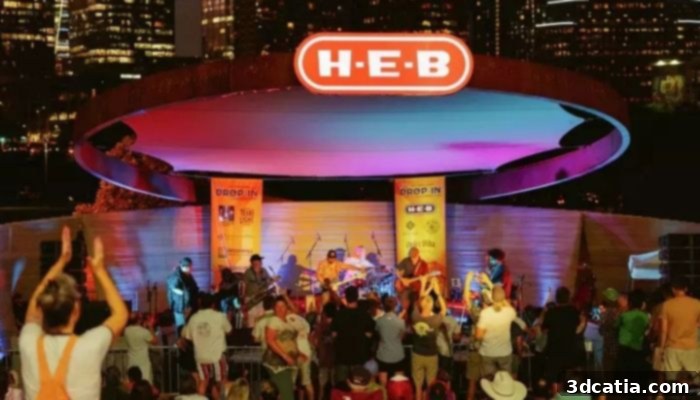
View of the 3D-printed stage at a concert (Photo Credits: MYSA)
The Giant Replica of L’Occitane en Provence’s Iconic Shower Gel
Another compelling illustration of how modern advertising campaigns are embracing new technologies comes from the esteemed French brand L’Occitane en Provence. In 2024, to commemorate the 20th anniversary of its beloved almond shower oil, the brand installed a monumental 4.2-meter-high replica of the iconic product in Chelsea. This larger-than-life installation served as a powerful visual tribute, transforming a familiar product into an unmissable landmark. The design and manufacturing of this impressive replica were entrusted to Pink Sparrow, a design studio celebrated for its extensive collaborations with numerous leading brands. To achieve such a grand scale and intricate detail, they utilized MASSIVIT’s cutting-edge Gel Deposition Printing (GDP) technology, specifically employing the Massivit 5000 printer. This particular machine is engineered to produce exceptionally large-format parts with remarkable speed and precision, notably without the need for complex support structures, making it ideal for creating stunning advertising props that truly stand out.
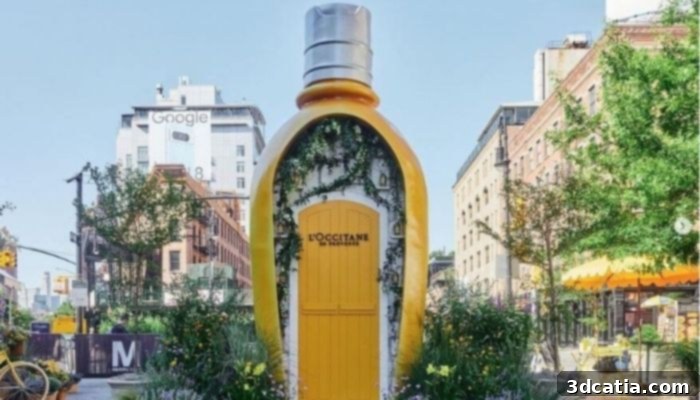
The 3D-printed L’Occitane shower oil replica (Photo credits: MASSIVIT)
Unforgettable Film Marketing: The Angry Birds Movie
For the advertising launch of its highly anticipated Angry Birds movie, Sony Pictures sought to create an extraordinary campaign that transcended traditional marketing. Alongside numerous strategic partnerships with major companies like McDonald’s, Hasbro, and Home Depot, the studio aimed for a truly unique promotional element. The innovative solution came in the form of 3D-printed city bus wraps. American company Carisma was brought on board for this ambitious project. Their expert team designed intricate structures, approximately five meters in length, which were then manufactured using a Massivit 1800 3D printer. More specifically, Carisma’s team printed specialized molds that were used to produce lightweight plates from SAV (a type of self-adhesive vinyl plastic), which were then seamlessly attached directly to the city buses. Thanks to advanced coating techniques, these 3D-enhanced plates achieved a remarkably striking visual appearance, making the buses instantly recognizable and generating significant buzz.
The efficiency of 3D printing proved invaluable, enabling the production of all these elaborate advertising elements in an astonishingly short period of just ten days. This expedited turnaround was crucial for the campaign’s timely execution and ultimately contributed to its resounding success. As Moshe Gil, CEO of Carisma, enthusiastically explained, “Sony was immediately taken with the quality and scale and increased its order in the run-up to the movie. Then, they were so blown away by the attention generated around the campaign, they sought something similar for Ghostbusters.” This powerful endorsement highlights the transformative potential of 3D printing in creating high-impact, rapidly deployable, and incredibly memorable advertising.
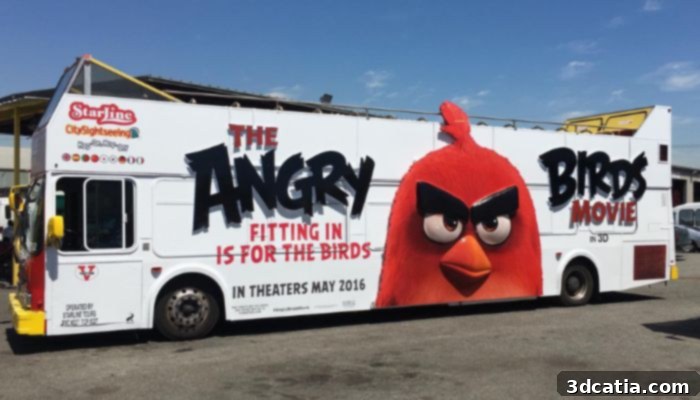
Photo Credits: Signmedia
McDonald’s Innovative Stop-Motion Animation Campaign
According to Yves Geleyn, the acclaimed director behind McDonald’s 2016 Happy Meals advertising campaign, the core concept revolved around a singular, powerful idea: continuous improvement. The campaign’s objective was to weave a captivating narrative, illustrating the fast-food giant’s unwavering commitment to consistently enhance its iconic Happy Meal offerings. In an impressive feat of production, Geleyn’s team, within a mere twelve weeks, brought to life a enchanting 60-second video. This intricate animation was crafted across six distinct sets and featured hundreds of meticulously designed 3D-printed characters. Each individual figure underwent a detailed modeling process before being precisely printed. To streamline the complex stop-motion animation, the team ingeniously designed separate heads and bodies for these miniature “actors,” allowing for greater flexibility and realism in movement. Following their printing, each character was then painstakingly hand-painted, adding a unique, artisanal touch.
Animation, particularly stop-motion, is notoriously a painstaking and time-consuming art form. However, the countless hours invested in every minute detail of this McDonald’s campaign yielded an unparalleled level of authenticity and charm, a quality that computer-assisted animation often struggles to replicate. Yves Geleyn emphatically stressed, “A lot of miniature work is now done with CGI. Stop motion possesses an authenticity, a human touch, that adds so much to a story. It allows you to create something whimsical that is grounded in something authentic.” Producing such a high-quality spot within a remarkably short timeframe was exclusively achievable thanks to the strategic integration of 3D printing. This technology significantly accelerated the creation of numerous unique characters and props, empowering the team to animate a multitude of engaging and memorable scenes that deeply resonated with viewers.
Coca-Cola’s Personalized “Mini-Me” Experience
In 2013, Coca-Cola launched an exceptionally creative and interactive campaign to generate excitement around its new range of miniature bottles. Developed by the innovative ad agency Gefen Team, this campaign ingeniously centered around a bespoke mobile application that empowered users to create customizable “mini-me” avatars. Through this engaging app, participants could personalize their digital mini-mes, selecting various attributes and even making them perform actions like dancing, eating, and, of course, sipping Coca-Cola. Users who actively engaged with the application were entered into a contest with a truly unique grand prize: an exclusive visit to Coca-Cola’s specially constructed 3D printing lab, located within its main factory in Israel. At this cutting-edge facility, winners experienced a revolutionary process where they were scanned, and subsequently presented with their own 3D-printed miniature versions. This remarkable initiative effectively bridged the gap between the digital and physical realms, transforming their virtual “mini-mes” into tangible, personalized keepsakes and fostering an unparalleled connection with the Coca-Cola brand.
Harnessing 3D Printing for the Ghostbusters Film Promotion
Following the resounding success of the Angry Birds campaign, the promotional efforts for the highly anticipated Ghostbusters film took to the streets with similar innovation. Ten city buses were deployed, crisscrossing roads and captivating commuters, each adorned with spectacular 3D-printed elements created using the Massivit 1800 3D printer. New York-based printing specialist Carisma, building on their previous triumph, meticulously designed and produced a faithful replica of the iconic “No-Ghost” logo, a symbol that has been synonymous with the beloved saga since 1984. These original, eye-catching creations were made possible thanks to the advanced capabilities of Massivit 3D technology. Massivit printers are renowned for being among the largest on the market, capable of producing impressive objects up to 1.80 meters in height within just a few hours, all while offering unparalleled freedom of design. This allowed the Ghostbusters campaign to achieve an unprecedented level of visual impact and brand recognition, making the promotional buses into moving pieces of art that truly stood out in urban landscapes.
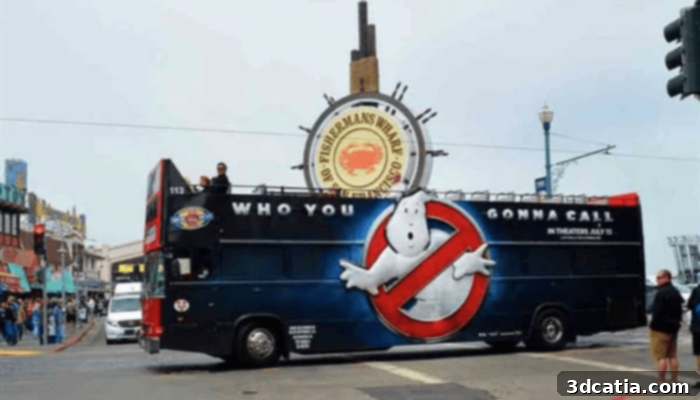
Photo Credits: Massivit
belVita’s Engaging 3D Trophy Campaign
In 2014, the popular breakfast cookie brand belVita launched an exceptionally engaging advertising campaign in the USA, aptly titled “#MorningWin – Consistent Energy, All Morning.” belVita’s innovative concept aimed to powerfully underscore the energy-boosting attributes of its cookies by actively rewarding consumers for their daily “winning mornings.” To achieve this, the brand orchestrated a captivating contest, inviting followers of its Twitter account to share their most triumphant morning successes. The most amusing and creative entries were then carefully selected and transformed into tangible, real-world 3D-printed trophies. This unique approach not only celebrated consumer engagement but also created a physical manifestation of their social media participation. The company further amplified the campaign’s impact by renting a chic boutique in New York City, where these custom-made trophies were proudly displayed. This pioneering initiative stands out as one of the first marketing campaigns to seamlessly integrate the dynamic reach of social networking with the innovative capabilities of 3D printing technology, creating a memorable and interactive brand experience.
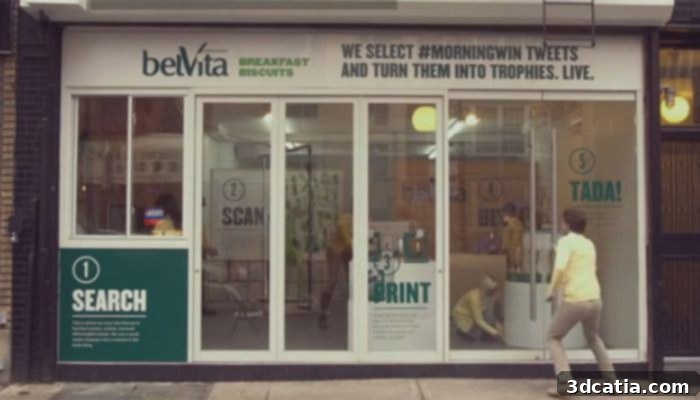
Photo Credits: belVita
Carolina Herrera and Adaequo: Luxury Branding with Large-Format 3D Printing
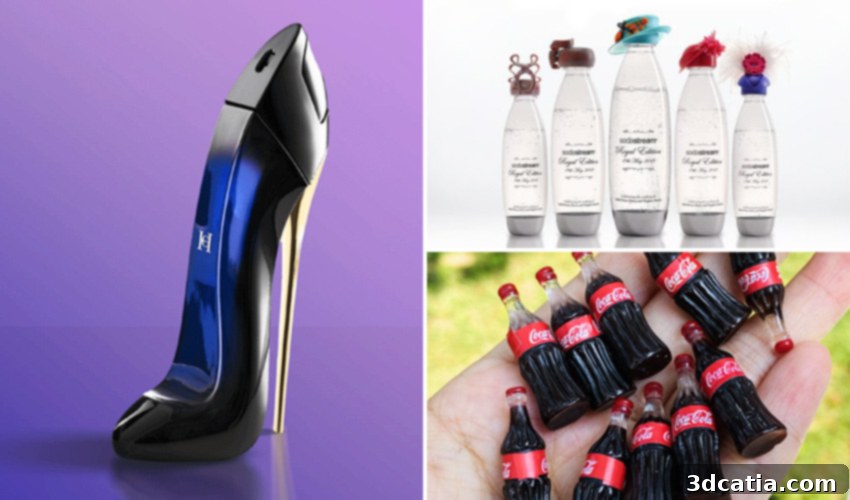
Adaequo, a distinguished Spanish company renowned for its expertise in creating high-impact advertising displays, strategically integrated large-format 3D printing into its operations several years ago. Operating from its headquarters in Barcelona, the company invested in a state-of-the-art Massivit 3D 1800 printer, a machine capable of producing expansive and intricate parts with remarkable precision and exceptional speed. A prime example of this technology’s powerful application is the creation of a gigantic reproduction of Carolina Herrera’s iconic Good Girl perfume bottle. Instantly recognizable by its distinctive pump-shaped design, this oversized replica has generated a profound visual impact in various promotional campaigns, serving as a captivating centerpiece that draws significant attention. Thanks to the versatility of 3D printing, Adaequo is now able to offer more creative, truly tailor-made advertising solutions, significantly expanding the possibilities available to prestigious luxury brands like Carolina Herrera. Furthermore, the company has made substantial investments in developing its own sophisticated finishing processes, ensuring that every project achieves the highest quality results and maximizes the visual impact of their elaborate advertising campaigns, setting a new standard for luxury brand promotion.
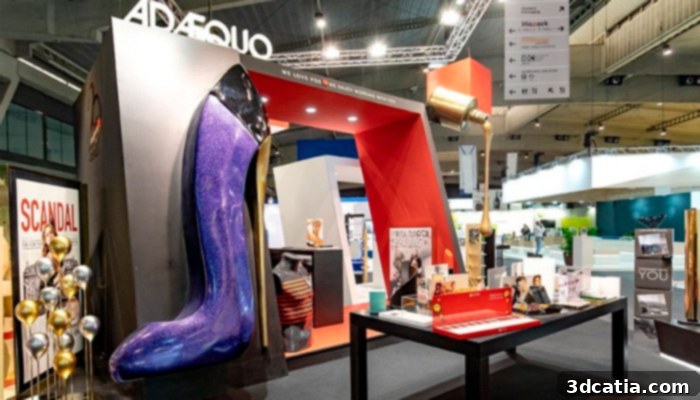
Photo Credits: Adaequo
Hasbro’s Innovative “My Little Pony” Fan Creation Platform
Hasbro is pioneering a novel approach to fan engagement and product co-creation through the strategic use of 3D printing. The company launched the SuperFanArt website, an innovative platform designed to empower My Little Pony enthusiasts to purchase unique figurines meticulously crafted by independent artists. Before any creation is made available for sale, it undergoes a stringent validation process by Hasbro, ensuring compliance with brand guidelines and preventing any inappropriate content. This system not only provides a robust legal framework for fan-generated content but also enables Hasbro to offer a diverse array of original figurines that are often too specific or niche for conventional mass production methods. The project initially commenced with five curated artists, but Hasbro actively encourages other talented designers to participate and contribute to the platform. Once accepted, designers gain the ability to publish their own 3D models, set their pricing, and share revenues with the brand. This collaborative partnership represents a forward-thinking model for other companies seeking to harness the immense creative potential of their fan base while simultaneously safeguarding their intellectual property and expanding their product offerings in highly personalized ways.
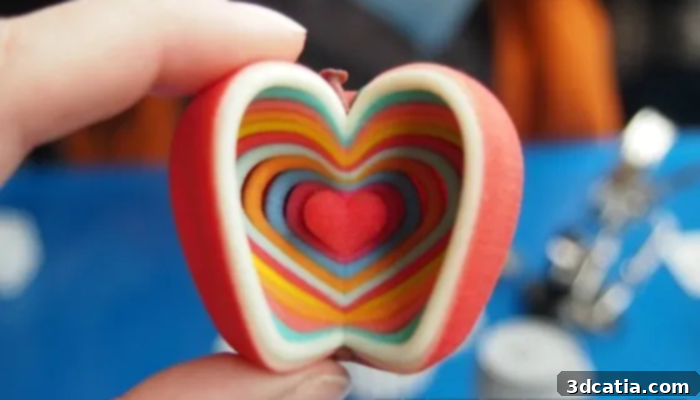
Photo Credits: Hasbro
SodaStream’s Royal Wedding Bottles with 3D Printed Hats
To commemorate the highly anticipated wedding of Prince Harry and Meghan Markle, SodaStream unveiled a unique royal limited edition of its iconic bottles. This campaign was particularly poignant given the royal couple’s well-known commitment to environmental causes, especially their advocacy for reducing pollution and combating single-use plastic bottles. The special SodaStream bottles were elegantly adorned with five distinct designs of miniature hats, each meticulously inspired by actual headwear famously worn by prominent members of the British royal family. These charming mini hats were not only crafted using advanced 3D printing technology but were also designed to be 100% recyclable, reinforcing the campaign’s eco-conscious message. The innovative idea originated from the collaborative efforts of the Israeli agency Gefen Team and SodaStream’s internal marketing division. Launched just before the royal wedding on May 19, 2018, the royal bottles experienced overwhelming demand, selling out in an astonishing less than 72 hours. Furthermore, in a gesture reflecting the couple’s philanthropic spirit, all proceeds generated from the “Royal Wedding Bottles edition” were generously donated to the Surfers Against Sewage charity. Hugo Tagholm, Chief Executive of Surfers Against Sewage, lauded the initiative, stating: “SodaStream’s commitment to eliminate plastic and promote reusable bottles is a great step in the right direction towards plastic-free coastlines, and sends a strong message to the beverage industry. This fun and quirky project to celebrate the royal wedding further highlights the importance of stopping the single-use plastic epidemic.” This campaign perfectly blended topicality, brand values, and cutting-edge 3D printing for a truly impactful result.
The Future of Advertising is 3D
As these diverse case studies demonstrate, 3D printing is rapidly emerging as an indispensable tool for modern advertising and marketing professionals. Its unique capabilities enable brands to transcend traditional two-dimensional campaigns, offering an unparalleled avenue for creativity, engagement, and memorability. From fabricating colossal replicas of iconic products that dominate urban landscapes to crafting intricate characters for compelling stop-motion animations, additive manufacturing empowers companies to bring their visions to life with unprecedented speed and precision.
The benefits of integrating 3D printing into advertising strategies are manifold. It allows for rapid prototyping and quick deployment of unique promotional items, significantly reducing lead times compared to conventional manufacturing methods. Furthermore, the technology offers immense flexibility for customization and personalization, enabling brands to create highly tailored experiences that resonate deeply with individual consumers. Beyond the sheer visual spectacle, 3D-printed elements foster a sense of physical engagement, transforming passive viewing into an interactive, experiential journey. This innovative approach not only generates significant buzz and social media traction but also reinforces brand identity in a tangible, unforgettable way, ultimately leading to stronger consumer connections and enhanced brand loyalty.
What are your thoughts on these groundbreaking advertising projects leveraging 3D printing? We’d love to hear your insights in a comment below or join the conversation on our LinkedIn or Facebook pages! Don’t miss out on the latest advancements and news in the additive manufacturing world – subscribe to our free weekly Newsletter to receive updates directly in your inbox. You can also explore all our fascinating videos and insights on our YouTube channel. Embrace the future of marketing with 3D printing!