News
How Warping Occurs in 3D Printing and What You Can Do About It
If you’re involved in 3D printing, you’ve probably encountered other challenges besides ghosting and stringing. Especially if you are using an FDM 3D printer, you may have encountered warping. Warping is an upward curvature in the additively manufactured object that&h
- 3 min read
- News
- Six more stories
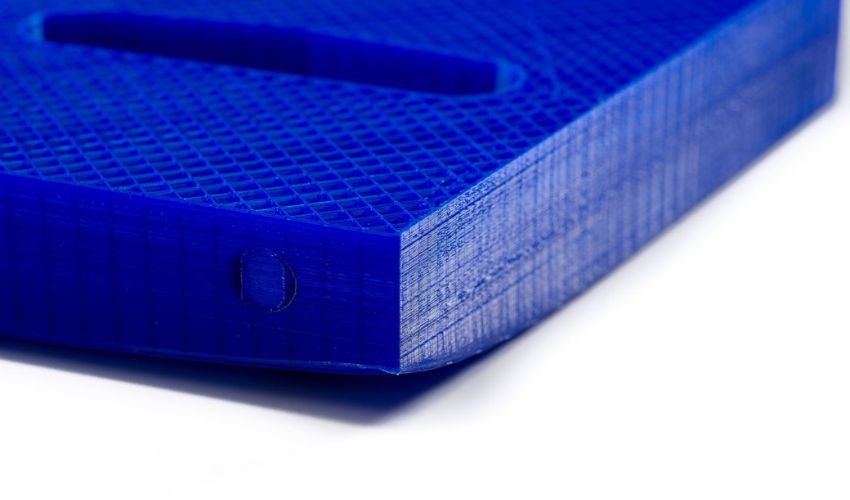
If you’re involved in 3D printing, you’ve probably encountered other challenges besides ghosting and stringing. Especially if you are using an FDM 3D printer, you may have encountered warping. Warping is an upward curvature in the additively manufactured object that occurs primarily in the first layers that adhere to the print bed. Here, the curvature of the individual layers can be so strong that even during the printing process, the upwardly curving part of the model detaches from the print bed and thus the entire 3D printing process fails. But why does this unpleasant phenomenon occur during 3D printing and how could this be prevented for your future printing? We took a closer look!
To first answer the question of ‘why’, warping is at its heart connected to temperature. As such, it can happen on any part but especially those made with high temperature materials. Extremely large or long parts made with said materials may also be particularly at risk due to the fact that temperature control may be more difficult. This is due to the fact that the plastic used tends to shrink after cooling. If, for example, you use ABS at a printing temperature of more than 200 °C and then let it cool down to a usual room temperature, you can expect a reduction of almost 1.5 % – or even more, depending on the size of the part! And since the curvature effect starts with the first layers, it will continue throughout the entire printing process until the part is finally almost completely deformed.
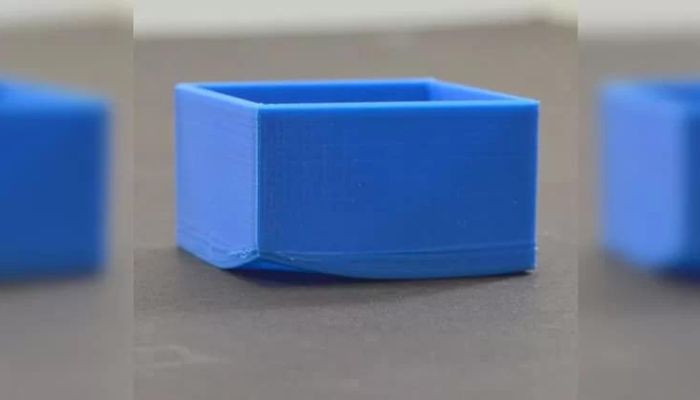
Photo Credits: Two Trees
Physically explained, when the material is heated, thermoplastics become liquid, but at the same time they expand. When they subsequently cool down again (to room temperature, for example), they also contract again, which means that movement occurs. And it is precisely during this movement in the already extruded plastic that the reason for warping during 3D printing is to be found! The already cooler layer contracts and at the same time takes the still heated layers with it, which in the end results in the material warping.
More from the desk
Six other notes from the rest of the bench.
 NewsETH Zurich Will Use Robots to Make a 3D Printed Cultural SiteETH (Swiss Federal Institute of Technology) Zurich is very active in the field of additive manufacturing. This is shown not only by the numerous partnerships but also by the long list of spin-offs, among which some companies, such as 9T…
 NewsDutch city set to construct a 3D printed bridge for cyclistsEindhoven University of Technology in the Netherlands has begun construction on an 8-meter, 3D printed bridge for cyclists in the town of Gemert. The Royal BAM Group, a construction company who was established in 1869, will be carrying out this latest…
 Applications3D Bioprinting of Elastic Ear CartilageThere is a widespread belief that we are on the verge of 3D printing functional organs, but the reality in the lab is far more complex. Although that goal remains distant, a team of researchers at ETH Zurich has reached…
 PrintersExclusive interview with the creators of the 3D printer with 6-axisLast week, we presented you with a 6-axis printer that was created by two Swiss students from the University of Applied Sciences in Zurich, Switzerland. This printer allowed you print without having any material support. We wanted to know more…
 MaterialsDeveloping 3D printing filament from recycled plasticsIn Denmark, a professor at the University of Aarhus, Mogens Hinge, is conducting a research project to recycle plastic waste into a standardised 3D printing filament for the entire market. Called “Development of filament for 3D printing based on recycled…
 News3D Printed Beets: A New Tool for Plant PhenotypingTechnology in the agricultural industry is continually advancing. In recent years, the adoption of tools such as drones, agrarian robots, scanners, precision planters, and artificial intelligence has significantly increased. These innovations have primarily enhanced crop yields a