Printers
Exclusive interview with the creators of the 3D printer with 6-axis
Last week, we presented you with a 6-axis printer that was created by two Swiss students from the University of Applied Sciences in Zurich, Switzerland. This printer allowed you print without having any material support. We wanted to know more…
- 3 min read
- Printers
- Six more stories
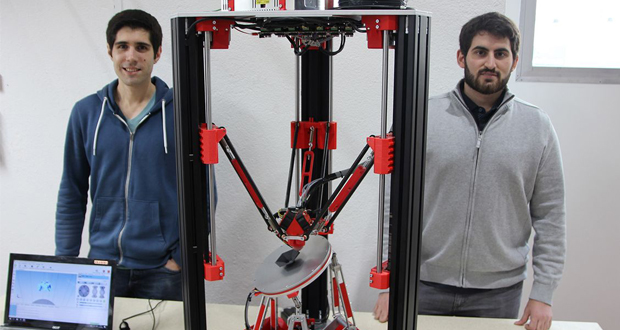
Last week, we presented you with a 6-axis printer that was created by two Swiss students from the University of Applied Sciences in Zurich, Switzerland. This printer allowed you print without having any material support. We wanted to know more about this ambitious project, so we decided to meet with Oliver Tolar and Denis Herrmann, the two masterminds behind this new innovative machine.
3DN: How did you discover 3D printing?

Oliver Tolar
We used a 3D printer for the first time when we were enrolled in a systems-engineering course at the University of Applied Sciences in Zurich. We had to run a 3D printer and make different parts, but we were never happy with the results and so, assisted by one of our teachers, we decided to develop our own printer in the third year of our degree that was capable of using several materials like PLA, ABS and TPE. The printer is still being used by the Institution of Mechatronics Systems in Zurich, where we work part-time. We also print prototypes for the R&D department of the institution.
3DN: What was the idea behind a 6-axis 3D printer?

Denis Herrmann
Our goal was to go further in Fused Deposition Modeling. The technology in its very form is now well developed, and so we have further focused on the movement of the axis and print media. Geometrics need to be designed so that they can be printed without support, but the problem is that the support often leaves unattractive traces on the printed object. Professional machines have supports that can be removed very well in a water-soluble solution. But for personal 3D printers, it’s a challenge and removing it represents an extra expense. It is thus more desirable to avoid this problem by orienting the printing plate.
More from the desk
Six other notes from the rest of the bench.
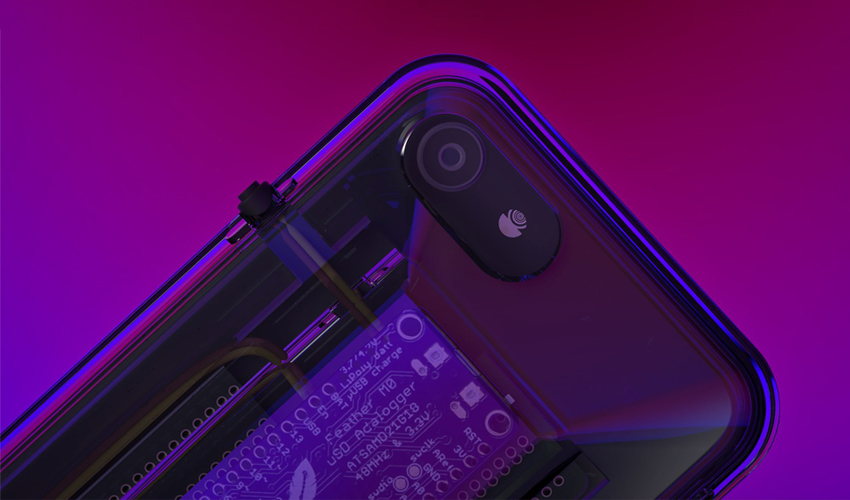 NewsTypeCase, the 3D printed mobile keyboard for blind people3D printing applications for disabled people are giving hope to thousands of people, and one such application is TypeCase, a keyboard integrated into the mobile phone case for blind people. The creator and designer, Dougie Mann, is a recent university…
 Applications3D Technology Helps Battle Against Childhood CancerAt the INCLIVA Health Research Institute of the Hospital Clínico de Valencia in Spain, a research team has used 3D technology to learn about the behavior of certain tumors that cause childhood cancers. Specifically, they analyzed the application of digital…
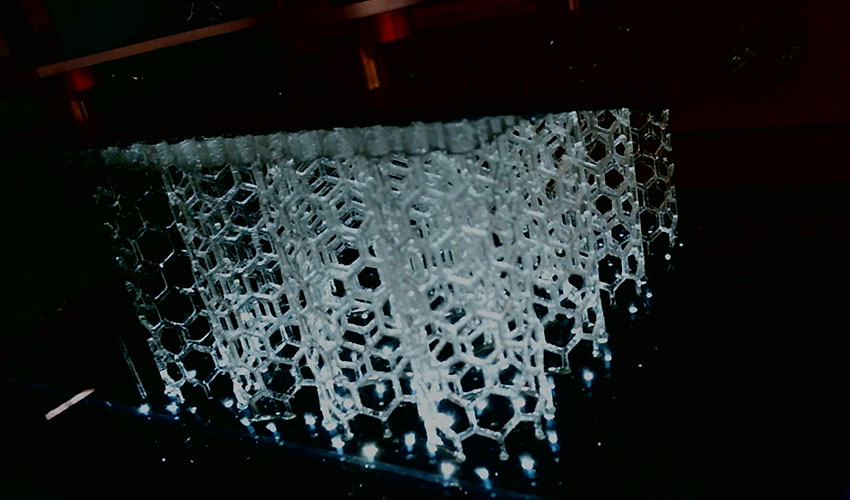 PrintersHARP 3D printer delivers record throughput in 3D printingResearchers at Northwestern University in Illinois have developed a new 3D printer that can supposedly print at record speed, around half a yard (46 cm) per hour, a ground-breaking throughput in the world of 3D printing. The system is known…
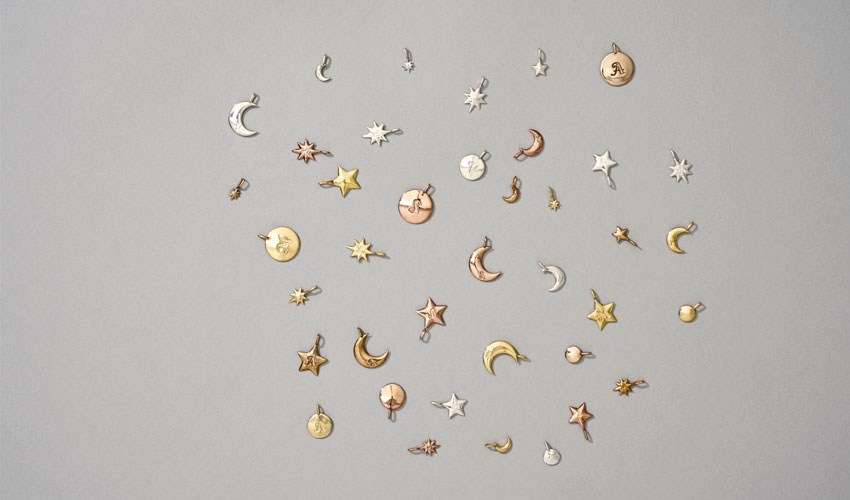 NewsSpring and Wonder: Tailor-made, 3D printed jewelryThe growth of the Shapeways 3D printing service has accelerated since its inception; After several successful fundraisers, the US has announced a range of new services including the production of personalized jewelry designs. Called Spring & Wonder, the jewelry range…
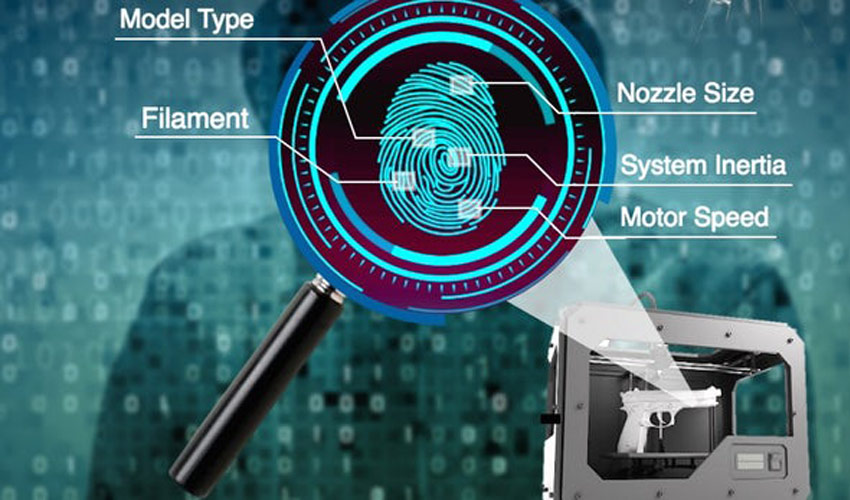 NewsPrinTracker; A system to identify 3D printers from the created 3D partAt the University of Buffalo in New York, a team of researchers developed a 3D printer identification system. This would be able to identify the machine at the origin of a particular 3D printed piece. The system is called PrinTracker,…
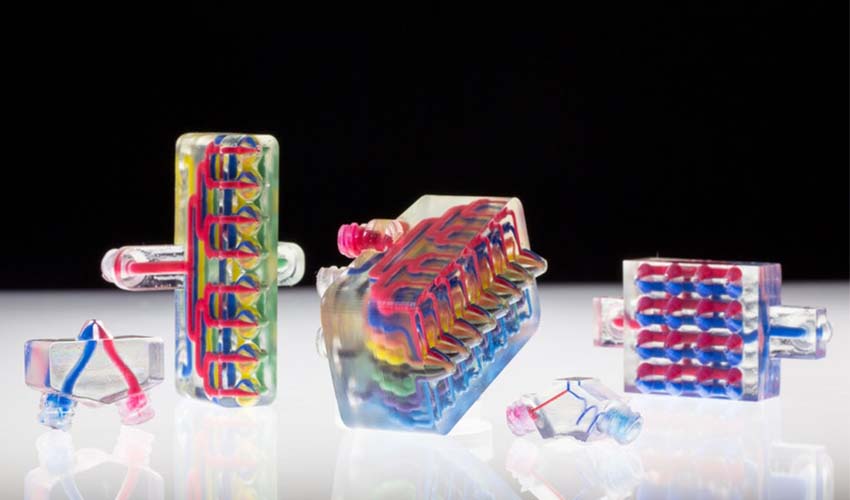 MaterialsHarvard researchers develop multinozzle 3D printer that can switch between 8 inksYou might be aware that most commercial extrusion-based 3D printers are only able to build objects from a single material at a time. And when they do allow for multiple materials and colors to be used, the process is slow.…